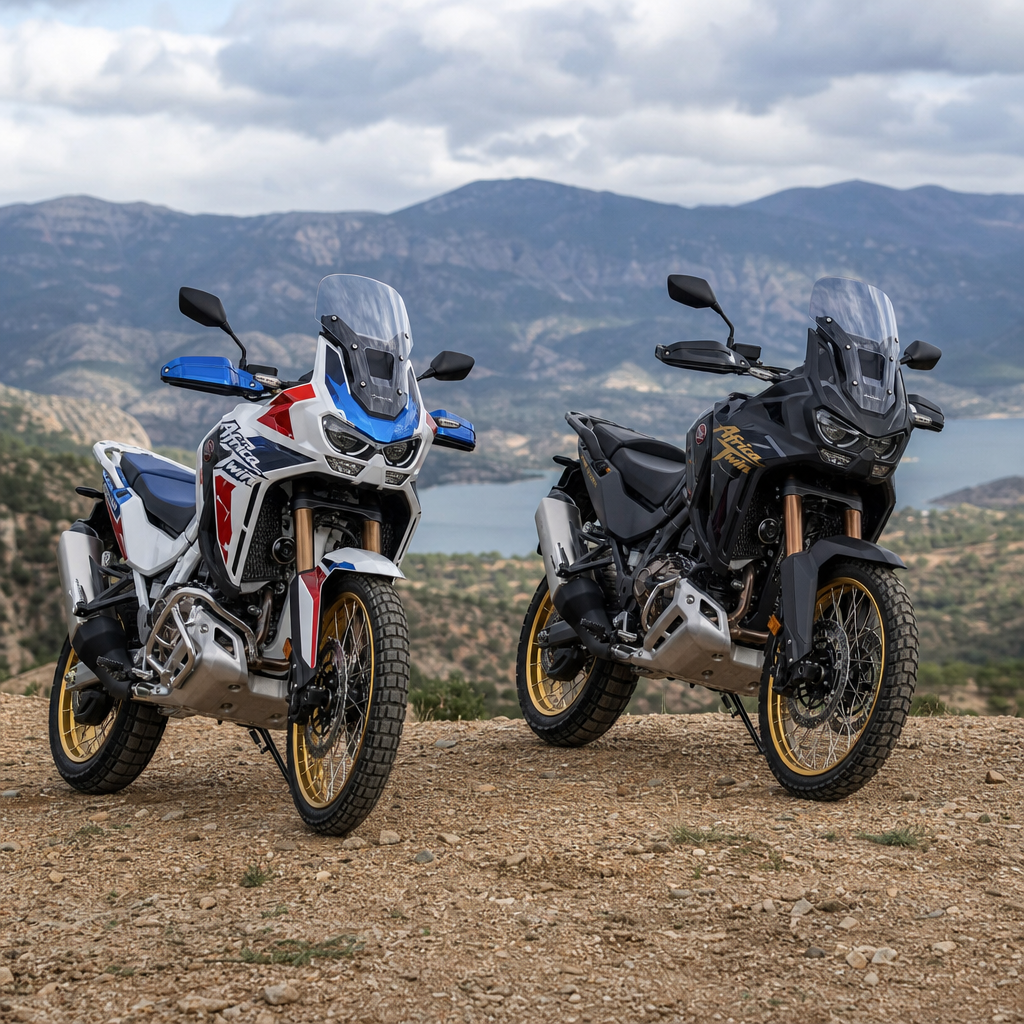
The 2026 Honda Africa Twin Adventure Sports sits at the center of the modern adventure and touring market because it combines long-distance comfort, genuine off-road credibility, and one of motorcycling’s most debated choices: DCT or manual transmission. For riders shopping the new generation of big-bore ADV machines, that debate is not academic. It shapes fatigue levels on cross-country trips, confidence in technical terrain, passenger comfort, fuel use, maintenance expectations, and even resale appeal. I have spent years around large adventure bikes on highways, broken pavement, gravel fire roads, and slow, rocky climbs, and the transmission question consistently becomes the deciding factor for buyers who already know they want Honda reliability and Africa Twin versatility.
Adventure touring, in plain terms, means a motorcycle designed to cover long pavement miles while still handling unsealed roads, weather changes, luggage loads, and occasional rough terrain. The Africa Twin Adventure Sports version emphasizes range, wind protection, electronic rider aids, and touring comfort more than the standard model. The DCT, or dual-clutch transmission, automates gear changes using two clutches and electronic control logic, while the manual version uses a conventional clutch lever and foot shifter. Both share the same platform fundamentals, but they create very different riding experiences. Choosing correctly matters because no accessory can fully change how a bike delivers power every minute you ride.
This hub article covers the full Adventure & Touring picture around the 2026 Honda Africa Twin Adventure Sports, using the DCT versus manual comparison as the organizing lens. If you are also researching luggage systems, tire choices, touring electronics, suspension setup, and rival bikes, this page should serve as your starting point and reference map. The core question is simple: which transmission fits the way you actually ride? The answer depends on where you ride, how often you ride two-up, whether you prioritize involvement or ease, and how much control you want over every shift decision. Honda gives buyers two legitimate answers, not one right answer for everyone.
What makes the 2026 Africa Twin Adventure Sports a true adventure-touring hub bike
The Adventure Sports trim matters because it frames the transmission debate in a touring-first context. This is the version riders look at for multi-day travel, commuting plus weekend escapes, and mixed-surface route planning. Compared with lighter middleweight ADV models, the Africa Twin Adventure Sports targets buyers who want a planted highway feel, substantial weather protection, sophisticated electronics, and a chassis that still tolerates dirt. In real use, that means a bike capable of eating interstate miles in the morning, climbing a scenic gravel pass after lunch, and carrying camping gear without drama.
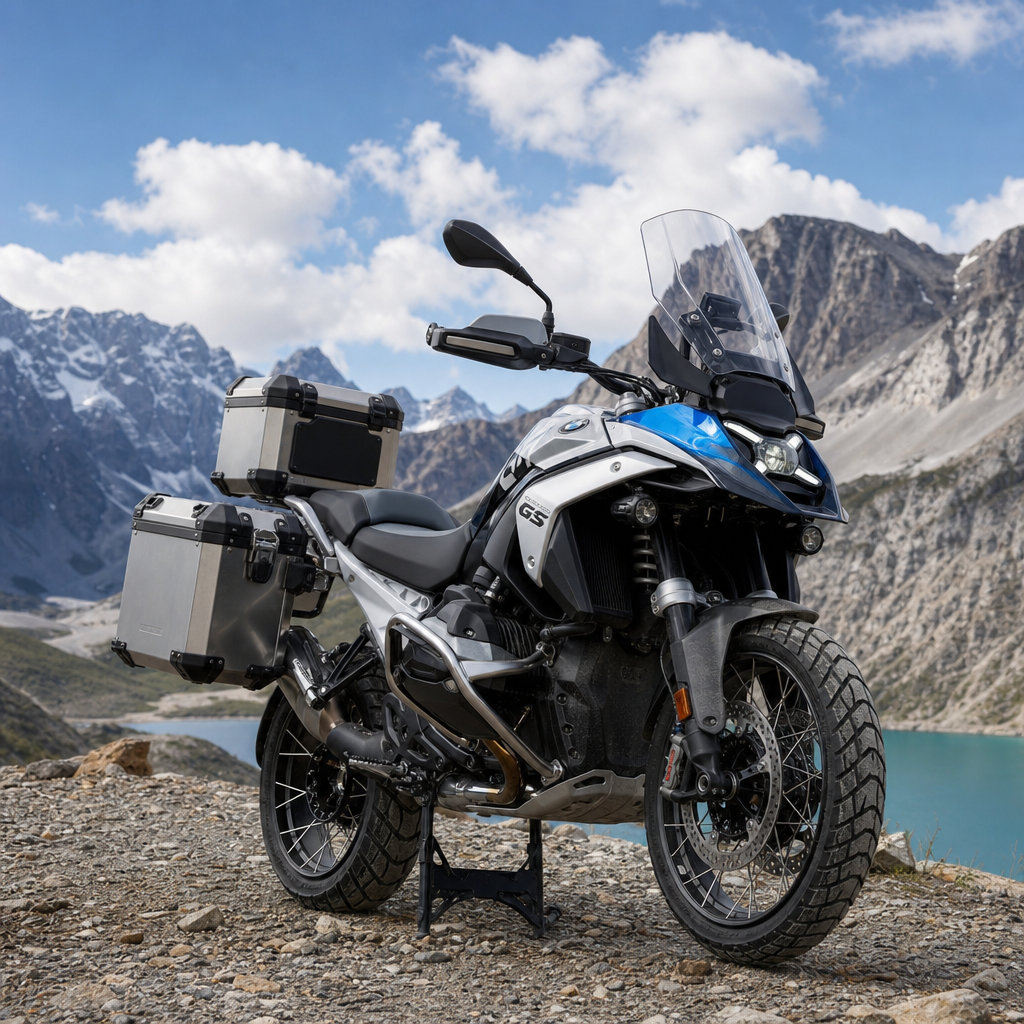
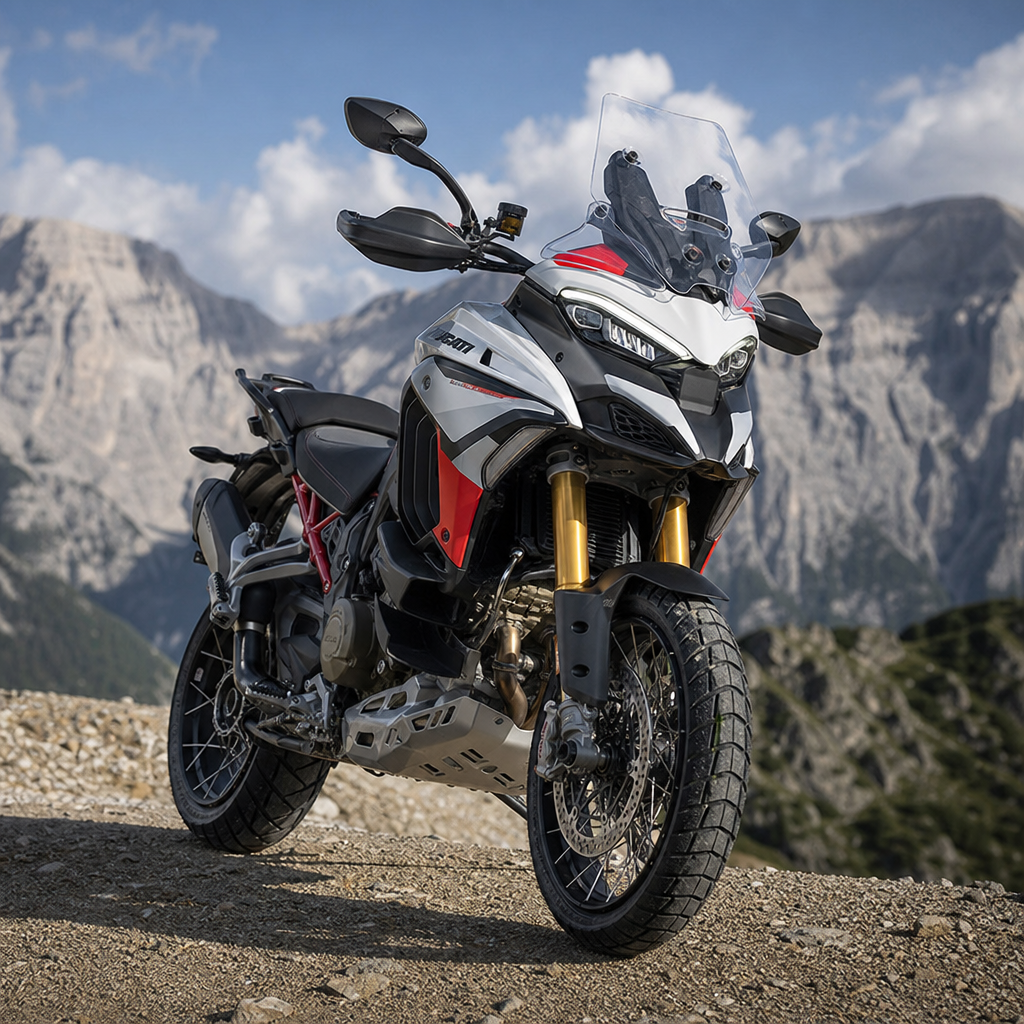
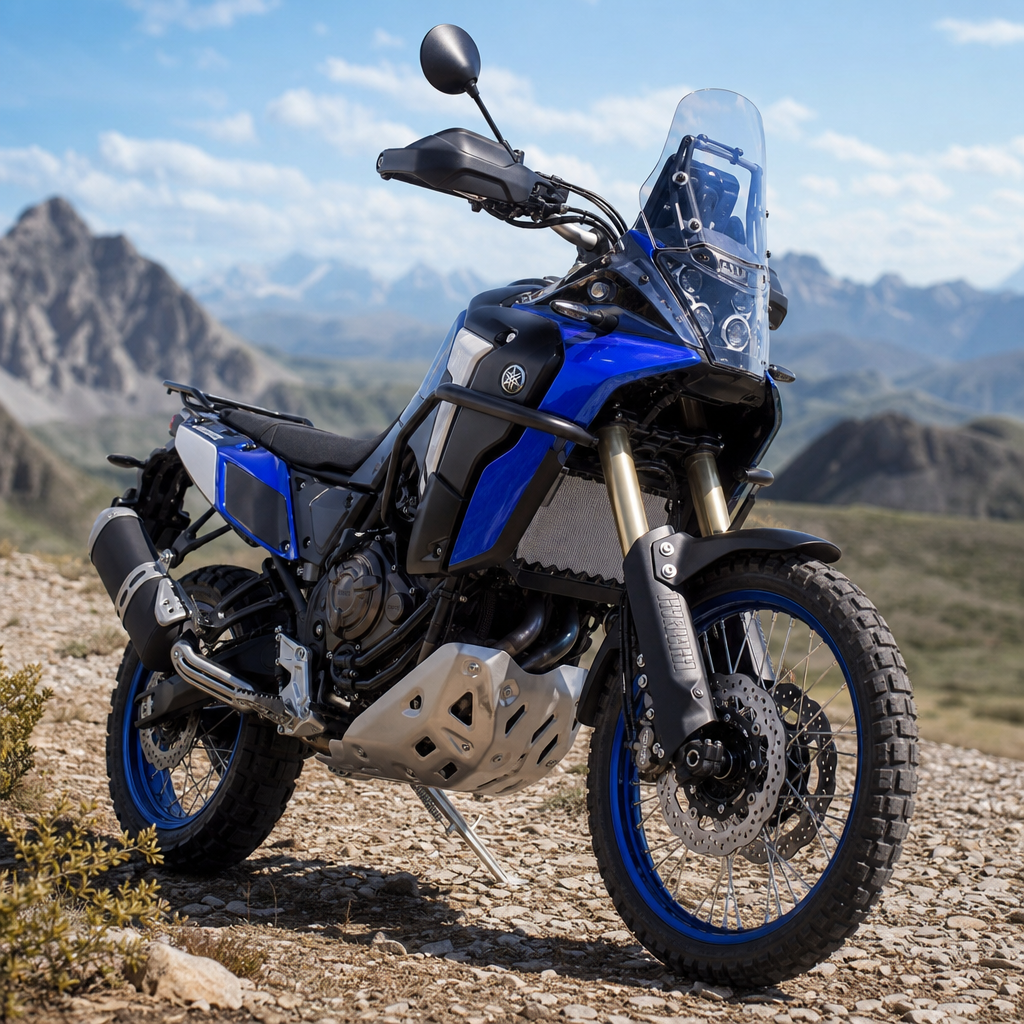
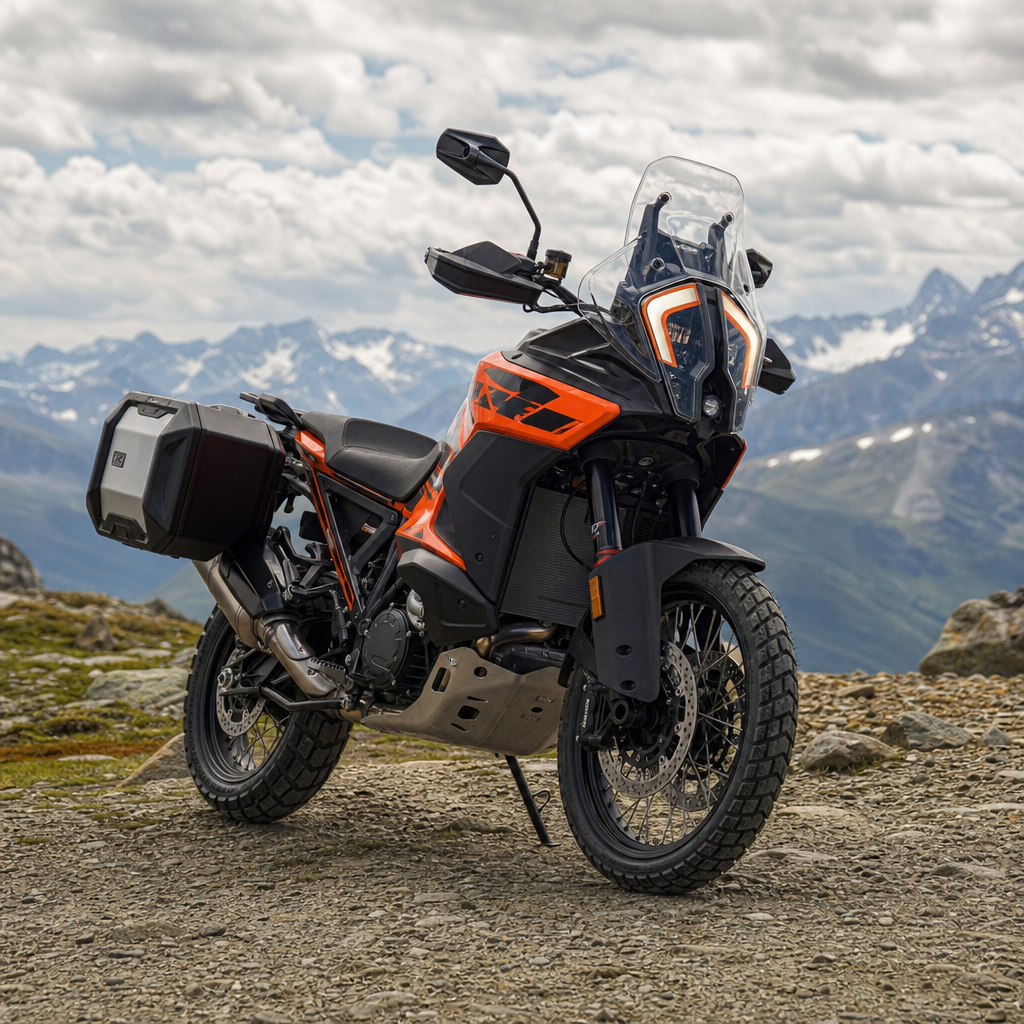
Honda’s broader Africa Twin identity has always balanced tractability, control, and durability. The parallel-twin engine delivers usable torque rather than peaky top-end theatrics. The electronics package, typically including selectable ride modes, traction control, ABS calibration, and suspension adjustment depending on specification, gives the rider multiple personalities in one machine. That broad competence is why the model works as a sub-pillar for Adventure & Touring content. Shoppers cross-link naturally from this topic to tires, panniers, GPS units, crash protection, heated gear, and rival comparisons against the BMW R 1300 GS, Yamaha Ténéré 700, KTM 890 Adventure, Ducati Multistrada V4, and Suzuki V-Strom 1050.
Transmission choice sits at the center because it affects every one of those use cases. Add aluminum panniers and a passenger, and DCT smoothness becomes more attractive. Strip the bike down for solo backcountry exploration, and the manual’s directness gains appeal. That is why this article functions as a hub: the transmission question touches ergonomics, control, technology, touring comfort, and ownership costs.
DCT explained: how Honda’s dual-clutch system changes the ride
Honda’s DCT is not a scooter-style CVT and it is not a basic automatic. It uses two clutches to preselect gears, allowing fast, smooth shifts with minimal interruption to power delivery. One clutch handles odd gears, the other even gears. Electronic logic decides shifts based on throttle input, speed, load, gradient, and selected riding mode, while paddle controls let the rider override with manual commands. In practice, that means the bike can feel calm and seamless in traffic, surprisingly intelligent on fast roads, and less tiring over long distances.
On the 2026 Africa Twin Adventure Sports, DCT’s biggest advantage remains workload reduction. In stop-and-go traffic, mountain switchbacks with a passenger, or wet-weather commuting, not having to modulate a clutch lever can lower fatigue immediately. I have seen riders who were skeptical of DCT become converts after one full day in mixed conditions, especially when descending from paved routes onto loose gravel where there is already plenty to process. Removing one control task frees attention for line choice, braking surfaces, and body position.
DCT also improves consistency. Upshifts are clean, and downshifts are generally well timed, particularly in higher modes tuned for touring. That helps passengers because abrupt head knocks from sloppy shifting largely disappear. For long-distance riders covering 400-mile days, that refinement is not trivial. The tradeoff is that DCT can occasionally choose a gear a rider would not pick instinctively in slow technical off-road work or very aggressive corner exits. Honda’s software has improved over the years, but no automated system perfectly predicts every rider preference.
Manual transmission strengths: control, connection, and lower complexity
The manual Africa Twin Adventure Sports remains the purist’s choice because it gives complete authority over clutch engagement, shift timing, and power delivery. On loose climbs, deep sand, rutted tracks, and trials-like maneuvers, that direct control matters. Skilled riders can feather the clutch precisely, hold a chosen gear through a section, and modulate traction with subtle inputs that no automated logic fully replicates. If your idea of adventure riding includes low-speed technical terrain rather than mostly graded roads, the manual still offers the most nuanced control.
There is also the involvement factor. Many riders simply enjoy shifting. They want mechanical participation, especially on a machine with genuine character and travel ambition. On a mountain road, matching revs into a bend and driving out in exactly the chosen gear creates a satisfying rhythm that some riders will never trade for convenience. That is not nostalgia; it is part of how they judge connection with the motorcycle.
The manual version also brings simplicity in one important sense: fewer specialized transmission components and less dependence on electronic shift strategy. Honda manuals are durable, and while any modern motorcycle can become expensive when neglected, the manual option is easier for traditional riders and independent shops to understand at a glance. Resale can work either way depending on market, but there is always a pool of buyers who specifically seek the standard gearbox because it feels familiar and confidence inspiring.
DCT vs. manual: where each option wins in real-world adventure touring
The strongest comparison is use-case based, not ideology based. Riders often ask, “Which is better?” The accurate answer is that DCT is better for reducing fatigue and smoothing the touring experience, while the manual is better for riders who prioritize direct control and technical precision. Both can travel globally. Both can handle dirt. The difference is how much effort and decision-making you want to invest minute by minute.
| Scenario | DCT advantage | Manual advantage |
|---|---|---|
| Urban commuting | No clutch work, smoother traffic crawling | More rider control in tight filtering |
| Two-up touring | Smoother shifts, less passenger helmet bump | Preferred by riders who manage load manually |
| Highway travel | Lower fatigue over long days | More engaging for riders who like active shifting |
| Technical off-road | Less stall risk, easier for less experienced riders | Best clutch modulation and gear holding |
| Resale and familiarity | Appeals to tech-forward buyers | Appeals to traditional ADV buyers |
For most riders doing 80 percent pavement and 20 percent dirt, DCT is easier to recommend than it was even a few years ago. For riders doing demanding off-road work, especially solo in remote areas where technique and self-recovery matter, the manual still edges ahead. That distinction is practical, not emotional.
Off-road behavior, rider aids, and learning curve
One of the most common questions around the Africa Twin Adventure Sports is whether DCT hurts off-road performance. The honest answer is no, but it changes the skill set. DCT can be excellent on loose surfaces because it reduces stall risk and lets newer riders focus on standing posture, braking balance, and vision. On rocky climbs, however, experienced manual riders often prefer clutch control to meter torque exactly. The issue is not capability. It is technique preference.
Electronic aids play a large role here. Adjustable traction control, off-road ABS settings, engine braking management, and ride modes can make either transmission more manageable. A rider who learns how those systems interact with tire pressure, throttle mapping, and suspension preload will get far more from the bike than someone choosing solely on gearbox type. In training environments, I have watched riders gain speed and confidence faster by properly configuring electronics than by debating transmission theory.
The learning curve differs too. DCT often feels intuitive within minutes on pavement but can require trust off-road because the absence of clutch habit is mentally disruptive at first. Manual feels natural to experienced motorcyclists but demands more physical coordination in slow technical riding. Neither is inherently difficult. Each rewards practice in different ways.
Ownership, maintenance, and long-term value
From an ownership perspective, both versions benefit from Honda’s reputation for durability, broad dealer support, and strong parts availability. Routine maintenance still revolves around engine oil, filters, brake service, chain care, tires, and valve inspections. The manual adds clutch wear as a normal consideration. DCT adds system complexity, but in real-world Honda ownership, that has not translated into widespread fearworthiness. The key is following service intervals and using technicians familiar with the platform.
Cost matters. DCT usually carries a higher purchase price and can add some weight, which may influence shorter riders or those who frequently manhandle the bike off-road. Insurance differences are usually minor, but depreciation can vary by region. In some markets, DCT-equipped Africa Twins sell quickly because Honda’s system is unique and highly regarded. In others, manuals move faster because traditional ADV buyers dominate the used market. Checking local listings before buying is smart, especially if you trade often.
Accessories affect value too. A well-equipped Adventure Sports with crash bars, panniers, auxiliary lights, skid plate, GPS mount, and documented service history is easier to sell than a bare bike regardless of transmission. Buyers in this segment care about preparation and proof of maintenance. Keep records, use quality components, and avoid questionable electrical modifications.
How to choose the right 2026 Honda Africa Twin Adventure Sports for your riding
The best buying decision starts with brutally honest self-assessment. If your riding calendar includes commuting, touring, frequent passengers, and mixed but not extreme dirt, choose DCT. You will enjoy the bike more often because it removes effort where effort adds little value. If your routes include hard off-road sections, deliberate skill development, and you already enjoy clutch-based control, choose the manual. You will appreciate its precision every time traction gets inconsistent or terrain gets awkward.
Test rides matter more here than with many motorcycles because both options can feel excellent in a showroom and very different after two hours. Ride in traffic if possible. Find uneven pavement. Simulate a hill start. Think about luggage and passenger use. Notice whether the bike disappears beneath you or asks for constant attention. The right transmission should support your riding goals, not challenge your identity as a rider.
As the Adventure & Touring hub under New Rides, this page should guide your next research steps as well. From here, compare the Africa Twin Adventure Sports with major rivals, study suspension setup for load carrying, evaluate adventure tire categories, and map the accessories needed for your style of travel. The headline takeaway is straightforward: the 2026 Honda Africa Twin Adventure Sports remains one of the smartest large ADV choices on the market, and the DCT versus manual debate is a strength, not a weakness, because Honda gives serious riders two genuinely capable paths. Pick the version that matches your terrain, your travel habits, and your tolerance for workload, then go ride farther than planned.
Frequently Asked Questions
1. What is the biggest real-world difference between the 2026 Honda Africa Twin Adventure Sports DCT and the manual?
The biggest real-world difference is how each bike changes the riding experience over time, not just how it shifts gears. The DCT version automates clutch operation and gear changes, which means the bike can reduce rider workload dramatically in traffic, on long highway days, and in stop-and-go touring conditions. That lower workload matters more than many shoppers expect. On a cross-country ride, fewer repetitive clutch pulls and fewer shift decisions can translate into less fatigue, smoother low-speed operation with a passenger, and a more relaxed overall pace. For many touring-focused riders, that convenience becomes one of the strongest reasons to choose the Africa Twin Adventure Sports in DCT form.
The manual version, however, gives the rider direct control over clutch engagement, shift timing, and gear choice in every situation. That matters most for riders who want maximum involvement and who prefer to manage traction and power delivery themselves, especially in technical off-road riding or spirited backroad use. A manual gearbox can feel more intuitive to experienced riders who are used to feathering the clutch over rocks, modulating drive at very low speeds, or deliberately holding a gear longer than an automatic system might choose. Even though Honda’s DCT is highly advanced and offers manual override through paddle controls, some riders still prefer the mechanical connection and predictability of a traditional clutch lever.
In other words, the DCT is not simply “easier” and the manual is not simply “more fun.” The DCT tends to favor efficiency of effort, consistency, and smoothness, while the manual favors engagement, deliberate technique, and rider-controlled precision. The right answer depends on whether you value reduced fatigue and touring comfort more than full-time shift control and a classic rider-machine relationship.
2. Is the DCT better for adventure touring, or is the manual still the smarter choice for mixed on-road and off-road riding?
For pure adventure touring, especially the kind that includes long pavement stretches, changing weather, passenger duty, luggage, and urban traffic, the DCT has a very strong argument. It shines in situations where rider energy conservation matters. On multi-day trips, the ability to let the transmission manage shifting can make the ride feel less demanding, particularly when the bike is fully loaded. DCT can also deliver very smooth acceleration and gear changes, which helps passenger comfort and reduces the jerky inputs that sometimes happen when riders are tired or dealing with steep grades, rough roads, or stop-and-go conditions.
That said, “better for adventure touring” does not automatically mean “better for every ADV rider.” If your version of adventure riding includes regular technical off-road sections, deep gravel climbs, rutted two-track, or low-speed terrain where clutch modulation is part of your riding technique, the manual remains highly appealing. Skilled off-road riders often like having immediate control over exactly how the rear tire hooks up and how power is delivered at walking pace. The manual can also feel more natural if you come from a dirt-bike background and instinctively use the clutch as a traction-management tool.
The key distinction is use case. If the 2026 Africa Twin Adventure Sports will spend most of its life as a long-range adventure-tourer with occasional dirt roads and fire trails, the DCT may be the smarter and more versatile choice. If your route planning regularly prioritizes demanding terrain, and you actively enjoy the physical skill of managing the clutch and gearbox yourself, the manual may still be the better fit. The decision is less about which transmission is objectively superior and more about whether your riding style emphasizes endurance and convenience or hands-on control and technical input.
3. How does DCT affect off-road confidence and low-speed control compared with the manual Africa Twin Adventure Sports?
DCT can improve off-road confidence for some riders because it removes the possibility of stalling and reduces the number of tasks the rider has to manage at once. In loose terrain, steep climbs, awkward switchbacks, or uneven surfaces, that can be a major advantage. Instead of thinking about clutch, throttle, balance, line choice, and momentum all at the same time, the rider can focus more on body position and traction. For newer ADV riders or those transitioning from street-oriented touring bikes, that reduction in mental load can make the bike feel less intimidating and more manageable.
However, low-speed control off-road is where the manual still has a loyal following. Many experienced riders like the ability to slip the clutch exactly as needed in a rocky section or when negotiating ledges, sand, or tight turns. That direct control can feel especially valuable when traction changes suddenly and the rider wants immediate, nuanced response. While Honda’s DCT system has become increasingly refined and offers settings tailored to different riding conditions, it still delivers power in a way that some expert riders consider slightly less customizable than a clutch lever in skilled hands.
So confidence can go both ways. A rider who wants fewer opportunities for mistakes may feel more secure on the DCT. A rider who has developed years of clutch-based off-road technique may feel more confident on the manual because it behaves exactly as expected. The important point is that the DCT is no longer a novelty in this category. It is a serious adventure-riding option. But for riders who define control as direct mechanical authority over engagement and drive, the manual continues to offer a familiar advantage in technical terrain.
4. Are there major differences in maintenance, reliability, fuel economy, and long-term ownership between the DCT and manual versions?
In terms of Honda ownership standards, both versions are generally expected to be durable, but buyers still tend to compare them differently. The manual is mechanically simpler in the sense that it uses a conventional clutch and gearbox setup that most riders and technicians understand intuitively. Some owners prefer that simplicity because it feels easier to live with over the long run, especially if they plan to keep the bike for many years, ride in remote areas, or perform some of their own maintenance. There is comfort in knowing the manual transmission is a familiar system with fewer electronic and hydraulic layers involved in shifting operation.
The DCT, on the other hand, adds complexity, but complexity does not automatically mean fragility. Honda’s dual-clutch systems have built a strong reputation for real-world dependability when maintained properly. The more relevant ownership question is often whether the buyer is comfortable with a more sophisticated transmission architecture and whether they have access to qualified service if needed. For many owners, the DCT’s convenience more than offsets concerns about complexity, especially because the bike is still built around Honda’s reputation for engineering and everyday usability.
Fuel economy differences are usually not dramatic enough to drive the buying decision on their own. Riding style, luggage load, wind protection, speed, tire choice, and terrain tend to influence consumption just as much, if not more. In some conditions, DCT can optimize shifts efficiently; in others, a skilled manual rider may match or exceed it. The same goes for wear and tear. A manual clutch can wear based on rider technique, especially under heavy loads or repeated off-road slipping. DCT removes some of that variable, but it introduces a more advanced system overall. Resale can also go either way depending on market demand. In some regions, DCT attracts buyers looking for premium touring ease, while manual bikes remain desirable among traditionalists who specifically want a clutch lever. Long-term ownership comes down less to fear of one system or the other and more to honest alignment between the transmission and the way you actually ride.
5. Which transmission should most buyers choose on the 2026 Honda Africa Twin Adventure Sports?
Most buyers should choose based on their riding priorities, not on internet arguments about what a “real” adventure bike should have. If you want the Africa Twin Adventure Sports primarily as a long-distance machine that can handle pavement, poor roads, weather changes, commuting, and occasional unpaved exploration with minimal rider fatigue, the DCT is likely the better choice. It supports the bike’s touring mission exceptionally well. Riders who cover high annual mileage, ride with a passenger, deal with traffic often, or simply want a more relaxed ownership experience tend to appreciate the DCT more the longer they live with it.
If you are the kind of rider who values full involvement every time you ride, regularly ventures into terrain where precise clutch work is part of your technique, or simply does not want to give up the traditional feel of rowing through the gears, the manual is still an excellent and very valid choice. It is not the “old-fashioned” option so much as the more interactive one. Many experienced adventure riders continue to prefer it because it keeps them fully connected to what the chassis and rear tire are doing.
A practical rule of thumb is this: choose DCT if you want the bike to reduce workload and expand comfort across the broadest possible range of riding situations. Choose manual if you want maximum involvement and the ability to control every shift and clutch input yourself. Both versions fit the Africa Twin Adventure Sports character, but they emphasize different strengths. The best choice is the one that matches your travel style, skill set, and what you want to feel after eight hours in the saddle.