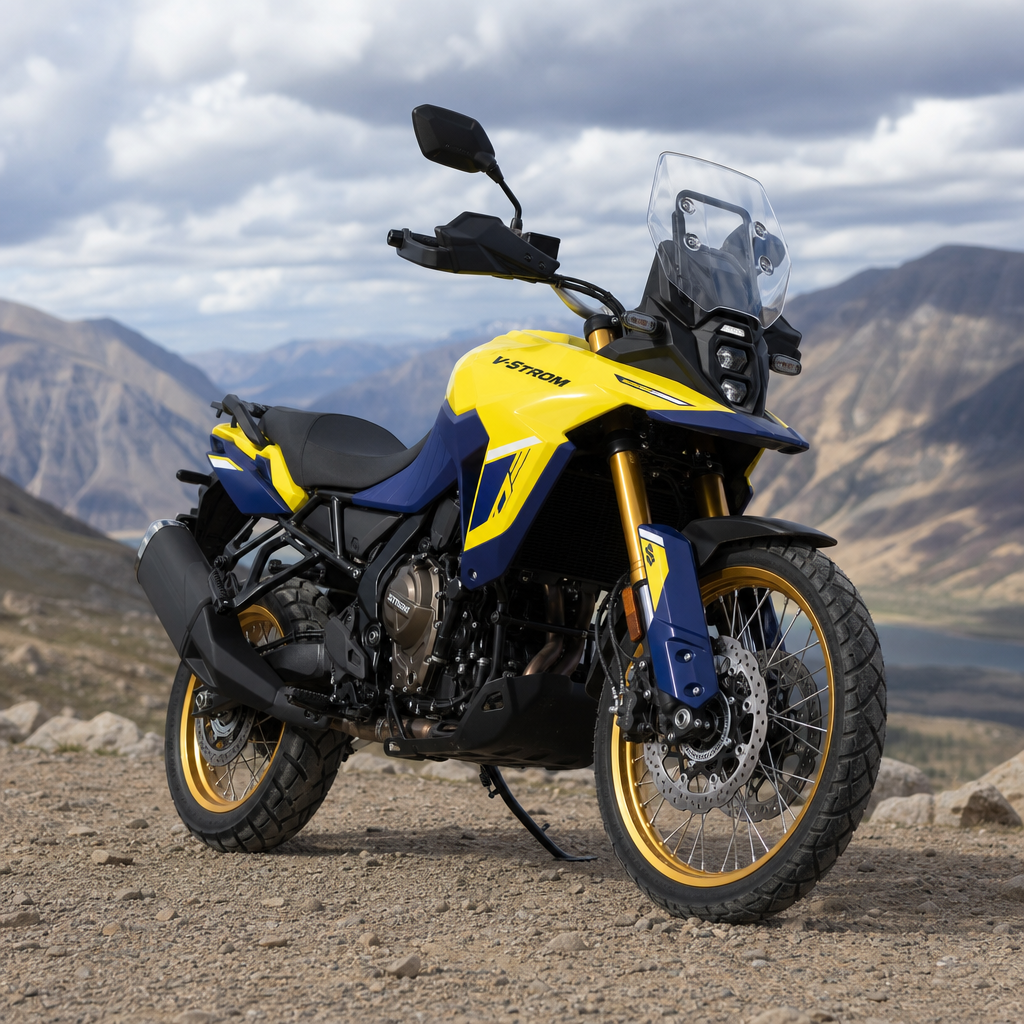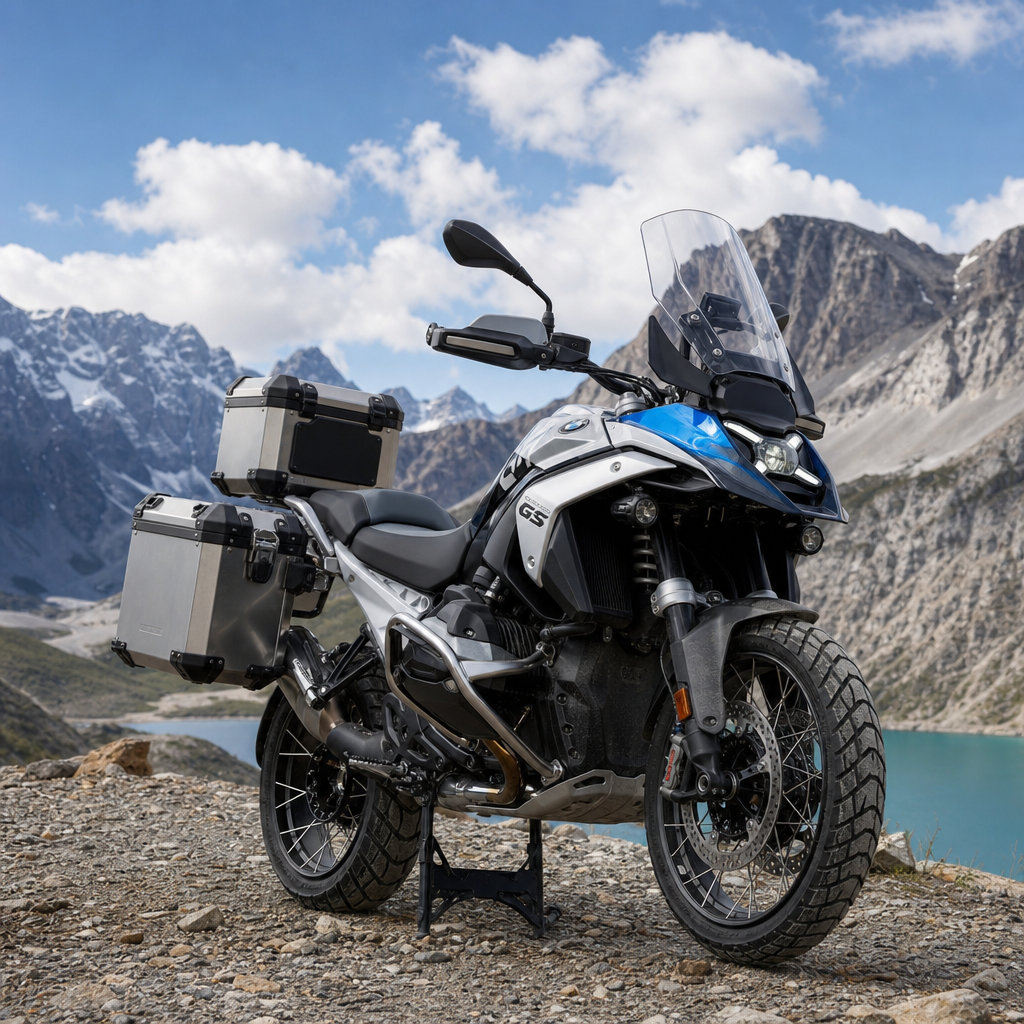
The BMW R1300GS (2026) remains the king of adventure motorcycles because it blends road comfort, off-road competence, everyday usability, and long-distance touring better than any direct rival. In adventure and touring circles, that claim matters because this category asks one machine to do almost everything: commute on Monday, cross a state on Saturday, and handle broken gravel or a fire road on Sunday. The latest R1300GS continues that rare all-round ability with a lighter platform than the old R1250GS, a stronger boxer engine, smarter electronics, and chassis updates that improve control without sacrificing the relaxed confidence riders expect from a GS.
Adventure motorcycles are designed for mixed-surface travel, upright ergonomics, luggage capacity, and range. Touring motorcycles prioritize comfort, wind protection, passenger space, and carrying ability over long distances. The R1300GS sits at the center of both needs, which is why it works so well as the hub model for Adventure & Touring. After years of riding heavyweight ADV bikes on highways, mountain passes, and rough backroads, I have learned that the best machine is not the one with the most extreme specification. It is the one that lets a rider keep going with less fatigue, fewer compromises, and more confidence in changing conditions. That is where BMW has stayed ahead.
For 2026, the conversation around the BMW R1300GS is not only about horsepower. It is about how the bike integrates engine character, Telelever front suspension, rider aids, ergonomics, and luggage-ready practicality into a complete travel platform. Buyers searching for the best adventure touring motorcycle usually ask the same direct questions: Is it good off-road? Is it comfortable on the highway? Is it reliable for long trips? Is it worth the premium price? This article answers those questions comprehensively while positioning the R1300GS as the central reference point for the broader Adventure & Touring category.
Engine, chassis, and the performance advantage
The 2026 BMW R1300GS uses BMW’s 1,300 cc liquid-cooled boxer twin, an engine that makes roughly 145 horsepower and 110 lb-ft of torque depending on market specification. Those numbers matter, but the delivery matters more. The boxer layout keeps mass low, gives the bike a planted feel at speed, and delivers strong drive from low and mid rpm where adventure riders actually spend their time. On steep mountain roads or while overtaking with aluminum panniers and a passenger, the R1300GS feels effortless rather than strained.
Compared with the previous R1250GS, the newer bike is more responsive and feels tighter everywhere. BMW revised the transmission packaging by placing it under the engine for more compact mass centralization. In practice, that gives the chassis a lighter feel during low-speed maneuvers and quick transitions. The steel sheet-metal main frame and aluminum rear frame contribute to a more modern, rigid structure, while the EVO Telelever front and EVO Paralever rear suspension preserve the signature GS stability under braking and acceleration. Riders coming from conventional forks often notice the reduced dive first; riders covering 500-mile days appreciate the lower fatigue later.
The R1300GS remains unusually broad in its performance envelope. It is not a dirt bike, and anyone claiming otherwise is overselling what a 500-plus-pound adventure machine can do. Yet on graded gravel, rocky two-track, rain-cut forest access roads, and rough pavement, it is composed, predictable, and forgiving. That is a more meaningful standard for most owners than a showroom fantasy about singletrack. For real-world adventure touring, stability, tractable torque, and suspension control beat aggressive styling every time.
Why the GS still leads in long-distance touring
Touring excellence is where the R1300GS earns its crown repeatedly. The upright riding position, broad bars, legroom, and neutral peg placement reduce strain across shoulders, wrists, and hips. BMW’s seat options allow riders to tailor fit more effectively than many rivals, and the adjustable windscreen gives useful wind management across mixed temperatures and speeds. On cold, wet highway days, that protection has a direct impact on concentration and safety, not just comfort.
The boxer engine’s smoothness at cruising speed is another touring asset. At interstate pace, the bike settles into a relaxed rhythm that encourages distance. Electronic cruise control, heated grips, optional heated seats, navigation integration, and robust accessory support make the GS one of the easiest bikes to set up for multi-day travel. Riders who tour regularly know that these details matter more after day three than on a 20-minute test ride. The BMW also carries luggage well, maintaining composure when loaded with panniers, a top case, camping gear, and tools.
Fuel range remains central to any serious touring discussion. Exact range varies with speed, luggage, terrain, tires, and riding mode, but the GS typically delivers practical tank-to-tank distance suitable for long regional travel. More important, it manages that range without feeling oversized or cumbersome at fuel stops. That balance between capacity and maneuverability is one reason the R1300GS is often chosen for continental travel over pure road-focused tourers or heavier luxury ADV bikes.
As the hub for Adventure & Touring, this page naturally connects to deeper topics such as touring gear, pannier systems, GPS units, tire selection, and route planning. The R1300GS sits at the center of those decisions because it is often the benchmark machine when riders compare comfort, carrying capacity, weather protection, and all-surface versatility.
Technology, safety systems, and everyday usability
BMW has made the R1300GS easier to ride quickly, safely, and consistently through its electronics package. Standard and optional systems typically include multiple ride modes, lean-sensitive traction control, cornering ABS, engine brake control, hill start assistance, radar-assisted features on selected trims, and semi-active suspension adjustment. These are not gimmicks. Used properly, they expand the conditions in which an owner can ride confidently, especially when weather, road quality, and load change during a trip.
In day-to-day use, the benefit is simple: the bike adapts. A rider can leave home solo in Dynamic mode, pick up a passenger, add luggage, hit rain in the mountains, and adjust the machine in seconds. Semi-active suspension is especially valuable here because it keeps chassis attitude controlled as conditions change. I have ridden loaded adventure bikes with manual suspension that felt excellent in one setting and wrong everywhere else. The BMW reduces that compromise dramatically.
The user interface is also stronger than many critics admit. BMW’s TFT display is bright, clear, and information-dense without becoming chaotic once familiar. Smartphone integration, trip data, tire pressure monitoring, and service information are practical features for travel, not showroom distractions. The controls take a brief learning period, but the logic is consistent. For an adventure touring motorcycle that may serve as commuter, weekend explorer, and cross-country platform, that consistency matters because it lowers cognitive load over time.
| Model | Engine Character | Touring Strength | Off-Road Character | Best For |
|---|---|---|---|---|
| BMW R1300GS | Strong low-end boxer torque, refined highway power | Excellent comfort, electronics, luggage integration | Stable, confidence-inspiring on rough mixed surfaces | Riders wanting the best all-round ADV tourer |
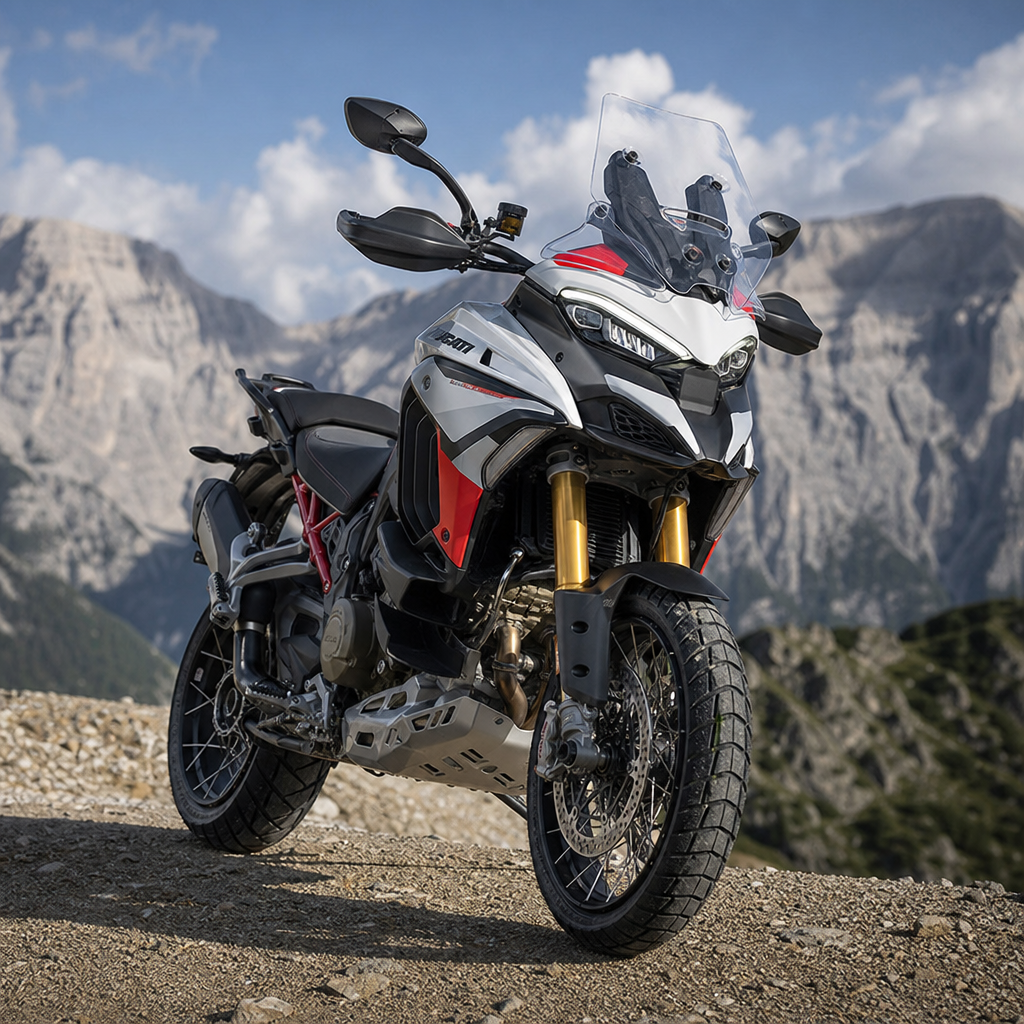
| Ducati Multistrada V4 | Fast, smooth, sport-oriented V4 delivery | Outstanding road speed and premium feel | Capable, but road bias is more apparent | Sport-touring riders who want ADV styling and pace |
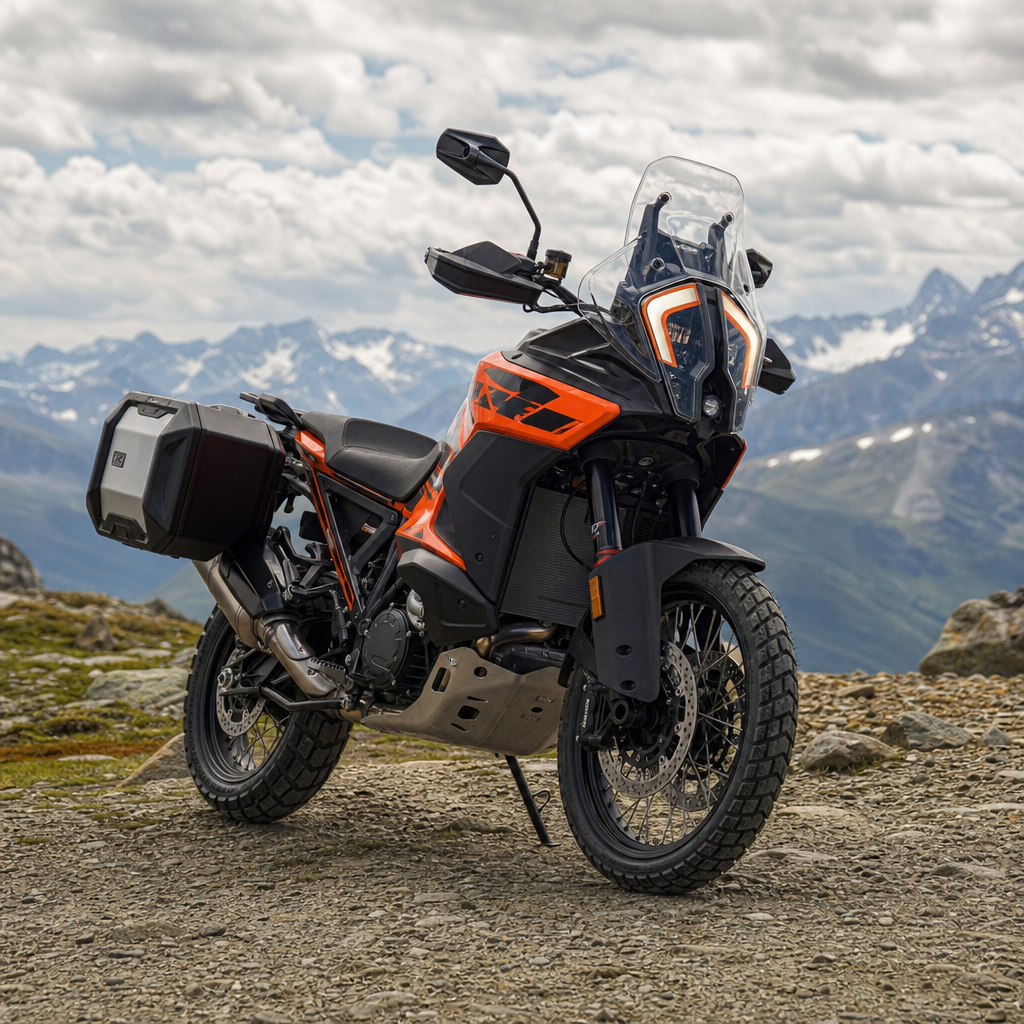
| KTM 1290 Super Adventure | Very strong V-twin punch and aggressive response | Impressive performance, roomy ergonomics | More energetic, less calming than the BMW | Experienced riders who prioritize intensity |
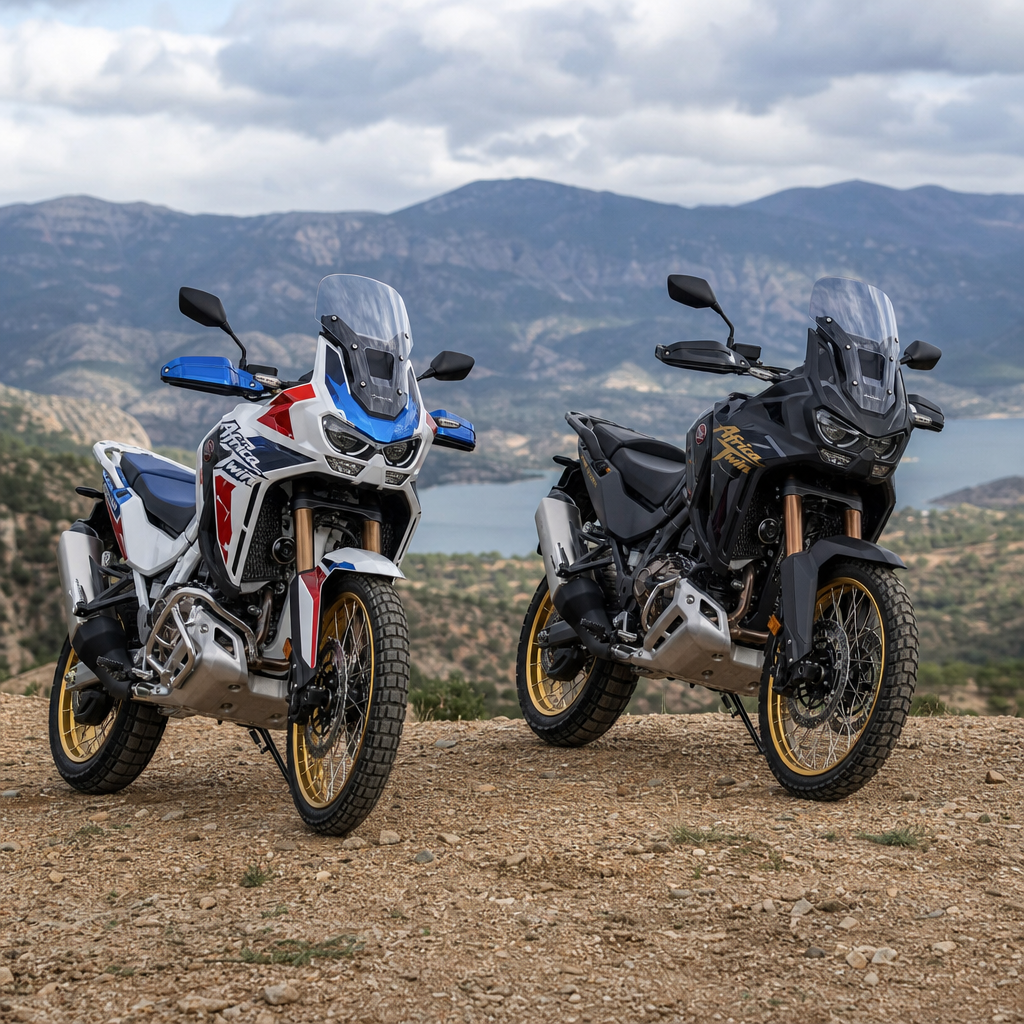
| Honda Africa Twin | Manageable twin-cylinder power, friendly manners | Comfortable and practical, especially value focused | Feels more dirt-oriented in many setups | Riders balancing price, reliability, and versatility |
Real-world ownership: comfort, reliability, and cost
No premium adventure motorcycle should be judged on purchase price alone. Ownership is a combination of service intervals, dealer support, accessory ecosystem, resale value, and how often the bike genuinely gets used. On that measure, the BMW R1300GS scores well. BMW’s GS platform has one of the deepest global support networks in the category, and that matters for touring riders who may be hundreds of miles from home. Parts access, luggage options, crash protection, seats, windscreens, lights, and navigation mounts are all widely available from BMW and major aftermarket brands.
Reliability discussions need nuance. Modern flagship ADVs are complex machines with extensive electronics, emissions systems, and adjustable components. Complexity always creates some failure risk. However, BMW’s boxer GS line has decades of development behind it, and the overall platform is proven in exactly the kind of use that destroys weak motorcycles: high mileage, extreme temperatures, poor fuel quality, heavy loads, and repeated weather exposure. Routine maintenance still matters. Shaft drive reduces chain care, but tires, brake pads, battery health, software updates, and suspension wear remain part of serious ownership.
Cost is the clearest objection. The R1300GS is expensive, and once buyers add luggage, adaptive features, protection, and premium packages, the total rises quickly. That is the tradeoff. Yet strong residual values partly offset the initial hit, and many riders keep a GS longer because it replaces multiple roles effectively. When one motorcycle can commute, tour, carry a passenger, handle mild off-road travel, and support a broad accessory setup, its real value becomes easier to justify.
How it compares with rivals in Adventure & Touring
The adventure touring market is stronger than ever, so the BMW’s leadership is not automatic. Ducati offers greater outright road performance in the Multistrada V4. KTM often delivers a more aggressive, athletic feel. Honda’s Africa Twin remains a favorite for riders who prioritize off-pavement friendliness and simpler value logic. Triumph’s Tiger 1200 deserves mention for comfort, equipment, and British triple character. Each of these motorcycles can be the right answer for a specific owner.
What keeps the R1300GS at the top is not dominance in one isolated metric. It is the absence of major weakness. The Ducati is thrilling but can feel more road-first. The KTM is exciting but less calming over long, mixed-use ownership. The Honda is highly credible but generally less premium in power, feature density, and highway authority. The Triumph is refined, yet the BMW still feels more natural at the intersection of balance, confidence, and support. In product strategy terms, BMW owns the center of the category, and the center is where most Adventure & Touring riders actually live.
That centrality also makes the R1300GS an ideal hub topic. From here, readers can branch naturally into comparisons, luggage guides, maintenance planning, riding modes, off-road training, touring apparel, and best adventure routes. The bike’s relevance spans every one of those supporting subjects, which is exactly what a strong sub-pillar hub should do within a New Rides content structure.
Who should buy the 2026 BMW R1300GS?
The 2026 BMW R1300GS is best for riders who want one premium motorcycle that can cover commuting, weekend escapes, two-up travel, and ambitious long-distance touring with occasional dirt or gravel use. It suits experienced riders best, but its balance and electronic aids also make it less intimidating than raw specifications suggest. Shorter riders should test seat height carefully, and riders focused on serious off-road routes may prefer a lighter middleweight ADV. Those who spend nearly all their time on pavement may also find a sport-tourer or road-biased crossover more logical.
Still, for the broadest group of buyers in Adventure & Touring, the GS remains the benchmark because it asks the fewest sacrifices. It is fast without being nervous, comfortable without being dull, advanced without becoming unusable, and capable off pavement without pretending mass does not matter. That honesty is part of its appeal. The R1300GS does not win by hype. It wins by making difficult riding days feel easier and long trips feel more possible.
The BMW R1300GS (2026) remains the king of adventure motorcycles because it solves the full adventure touring brief better than anything else on sale. It combines a muscular boxer engine, stable and intelligent chassis design, genuine long-range comfort, extensive technology, and a mature ownership ecosystem into one cohesive package. Few motorcycles are as easy to recommend across so many rider profiles and use cases. That is why the GS continues to define the category rather than simply participate in it.
For riders exploring Adventure & Touring under the New Rides umbrella, this is the machine to measure everything else against. Use it as the starting point for deeper comparisons, gear decisions, and trip planning. If your goal is one motorcycle that can confidently do almost all of it, put the 2026 BMW R1300GS at the top of your shortlist and test ride it before making any final decision.
Frequently Asked Questions
Why is the BMW R1300GS (2026) still considered the king of adventure motorcycles?
The BMW R1300GS (2026) continues to lead the adventure motorcycle class because it delivers the most complete balance of abilities in a single machine. Many motorcycles in this category are excellent in one or two areas, but the R1300GS stands out by being genuinely strong across nearly every use case that matters to riders. It is comfortable enough for long highway days, agile enough for twisty back roads, capable enough for gravel and light off-road terrain, and practical enough for everyday commuting and weekend escapes. That versatility is exactly why it remains such a benchmark.
BMW’s latest formula also improves on the strengths that made the GS name so influential in the first place. The 2026 R1300GS benefits from a lighter platform than the older generation, which helps it feel more manageable at low speeds and more responsive when the pace picks up. Combined with the boxer engine’s low center of gravity, that reduced weight contributes to a planted, confidence-inspiring feel that is especially valuable in the real world, where riders encounter traffic, uneven surfaces, parking lots, and long-distance fatigue—not just perfect roads.
Just as important, the R1300GS remains exceptionally refined. Its ergonomics, wind protection, electronic rider aids, touring capability, and day-to-day usability create a package that feels premium without becoming intimidating. Riders often describe the GS as a motorcycle that makes difficult conditions feel easier and long miles feel shorter. That quality is hard to quantify on a spec sheet, but it is a major reason the bike continues to dominate conversation in the adventure-touring space. In short, the R1300GS is still king because it does more things well than almost any rival, and it does them with an ease that appeals to both experienced riders and ambitious newcomers.
What makes the 2026 BMW R1300GS better for both road touring and off-road riding?
The key to the 2026 BMW R1300GS is that it does not force riders to choose between highway comfort and off-pavement ability. On the road, it offers the kind of stability, weather protection, and ergonomic comfort that make all-day touring realistic instead of exhausting. The upright seating position, wide bars, and relaxed rider triangle support long hours in the saddle, while the chassis remains composed at freeway speeds and on rough pavement. Add in advanced electronics, strong brakes, and refined suspension behavior, and the bike feels built for crossing serious distance with very little drama.
Off the pavement, the R1300GS continues to excel because it carries its capability in a manageable, confidence-building way. It is not a lightweight enduro machine, and it is not pretending to be one. Instead, it is designed for the kind of off-road riding most adventure owners actually do: gravel roads, washboard surfaces, forest routes, muddy connectors, and rough secondary trails. The boxer layout helps centralize mass low in the chassis, which improves balance and reduces the top-heavy sensation some large adventure bikes can have. That matters enormously when standing on the pegs, picking through loose terrain, or maneuvering at low speed.
BMW’s suspension and rider-assistance technology also play a major role. Adjustable ride modes, traction management, ABS calibration, and modern chassis control allow the bike to adapt to changing surfaces quickly and effectively. Riders can enjoy a composed, plush ride on pavement and still access usable control when the road ends. That broad bandwidth is what sets the GS apart. It is not simply competent in multiple environments—it feels intentionally engineered to transition between them with minimal compromise. That is a defining trait of a true adventure motorcycle, and it is one of the strongest reasons the 2026 R1300GS remains at the top of the category.
Is the BMW R1300GS (2026) a good everyday motorcycle, or is it mainly for long trips?
The BMW R1300GS (2026) is absolutely a good everyday motorcycle, and that is one of the biggest reasons it remains so highly regarded. While its image is often tied to epic touring and cross-country adventure, the bike’s real genius is how well it fits into normal life. It can handle commuting, errands, weekend rides, and occasional long tours without feeling like a specialized machine that only shines on one kind of journey. In a category full of aspirational motorcycles, the GS remains one of the few that consistently lives up to its promise in day-to-day use.
Its upright riding position gives the rider a strong view of traffic, which is especially useful in urban and suburban environments. The comfortable ergonomics reduce strain in stop-and-go conditions, and the engine’s broad, usable power makes the bike easy to ride without constant shifting or aggressive input. The boxer twin also has a character that feels calm and controlled at everyday speeds, which helps the bike feel less demanding than its size might suggest. For many riders, that combination of commanding visibility, accessible torque, and balanced handling makes the R1300GS surprisingly practical as a regular companion.
Touring, of course, remains one of its strongest talents. With luggage options, wind protection, rider aids, and long-distance comfort, the GS can transform from commuter to continent-crosser with very little adjustment. But what keeps it ahead of many direct rivals is that it does not become cumbersome or awkward when the trip is over. It still works in the grocery store parking lot, in morning traffic, and on a quick ride across town. That everyday usability is a major part of the GS formula. It is not just a motorcycle for big adventures—it is a motorcycle that makes ordinary riding better too.
How does the BMW R1300GS compare with other large adventure motorcycles in its class?
Compared with other large adventure motorcycles, the BMW R1300GS (2026) tends to lead by being the most rounded and broadly capable option rather than the most extreme in any one category. Some rivals may offer more peak horsepower, a more aggressive off-road personality, or a lower price point. Others may specialize in sportier road manners or more dirt-focused design. But the GS has long dominated this class because it consistently delivers the best blend of refinement, comfort, usability, technology, and real-world versatility. For many riders, that makes it the smartest choice rather than just the most exciting one on paper.
One major advantage is the BMW’s composure across different riding environments. A lot of big adventure bikes feel especially brilliant in one setting and merely acceptable in another. The R1300GS is different because it remains convincing almost everywhere. It can sit at highway speeds for hours with excellent stability, then tackle broken pavement or gravel roads with an ease that belies its size. It feels engineered to simplify mixed-use riding, which is exactly what many buyers want from a premium adventure platform.
There is also the matter of ownership experience and platform maturity. BMW’s GS line carries decades of development, and that history shows in the details: ergonomic intelligence, accessory support, touring readiness, and broad market confidence. Riders know what the GS is built to do, and BMW has refined that mission over generations. The 2026 R1300GS benefits from that evolution while bringing a lighter, more modern package than before. So while competitors continue to close the gap in specific areas, the BMW still often emerges as the bike with the fewest compromises. In a class built around compromise management, that is a powerful advantage.
Who should buy the BMW R1300GS (2026), and is it worth the premium price?
The BMW R1300GS (2026) is best suited to riders who want one motorcycle to handle a very wide range of duties at a very high level. It makes particular sense for people who value comfort, technology, confidence, and versatility more than chasing a single extreme. If you want a machine that can commute during the week, cover serious distance on the weekend, carry luggage and a passenger effectively, and still explore gravel roads or remote routes when the pavement ends, the GS is exactly the kind of motorcycle designed for that lifestyle.
It is also a strong choice for riders moving up into the premium adventure segment and wanting to invest in a motorcycle with a proven reputation. The GS name carries weight not because of marketing alone, but because generations of riders have used these bikes as genuine do-everything tools. The R1300GS continues that tradition with a more modern, lighter, and more refined interpretation of the formula. Riders who prioritize a polished overall experience often find the price easier to justify once they spend time with the bike, because the benefits show up not just in performance but in comfort, ease of use, long-distance durability, and confidence over varied terrain.
As for value, the answer depends on what you expect from your motorcycle. If your priority is simply the lowest purchase price or the most specialized performance in one area, then another bike may make more sense. But if your goal is to buy a premium adventure motorcycle that can do almost everything well and remain satisfying over years of ownership, the BMW R1300GS is often worth the premium. It earns that reputation by delivering a complete package rather than just headline specifications. For riders who truly want one machine to cover everyday life, touring, and adventure travel with minimal compromise, the 2026 R1300GS remains one of the strongest buys in the category.