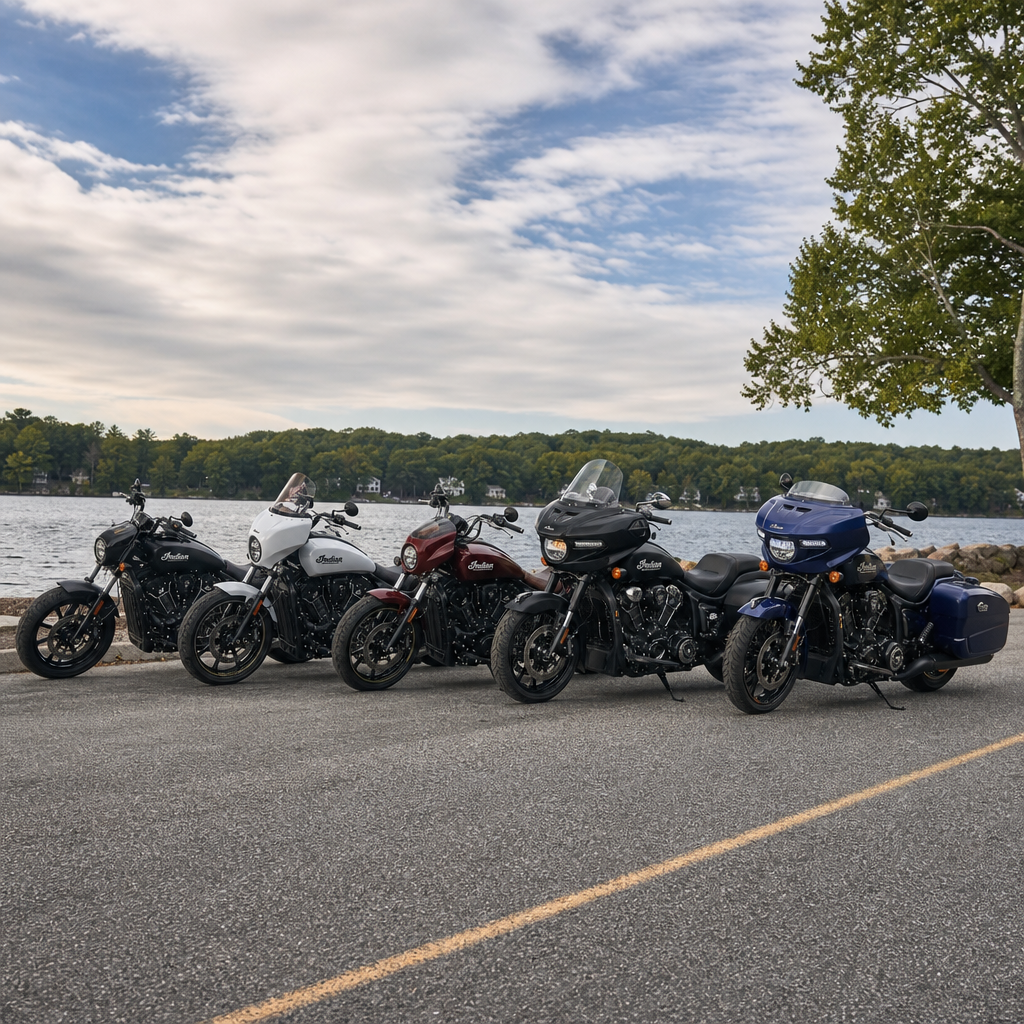
The 2026 Indian Scout lineup gives American cruiser buyers a clearer, broader menu than ever, with five trim levels built on the same modern platform but tuned for different priorities: price, style, comfort, touring range, and technology. In this guide, I will break down every 2026 Indian Scout trim level, explain how the Scout family fits within the broader American cruiser category, and show which model makes sense for different riders. If you are shopping for a midsize V-twin cruiser, comparing Harley-Davidson alternatives, or trying to understand where the Scout sits in the current market, this is the hub page to start with.
American cruisers are motorcycles designed around relaxed ergonomics, strong low-end torque, distinctive V-twin character, and styling rooted in long-wheelbase road presence. The Indian Scout name sits at the lighter, more approachable end of that category compared with heavyweight baggers and full-dress tourers. For 2026, the Scout lineup continues to matter because it combines classic cruiser proportions with modern engineering: a liquid-cooled SpeedPlus 1250 V-twin, available rider aids, optional integrated navigation, and several factory personalities built from one core architecture. That approach helps new riders, returning riders, and experienced cruiser owners shop by use case instead of getting lost in overlapping model names.
When people search for the 2026 Indian Scout lineup, they usually want direct answers to a few practical questions. What are the five trim levels? How do they differ in ergonomics and equipment? Which one is best for commuting, canyon roads, or longer weekend trips? How does Indian position the Scout against other American cruisers? Having worked through model comparisons, dealer walkarounds, and spec-sheet audits across multiple cruiser launches, I can say the important differences are rarely the headline horsepower figure alone. Seat shape, wheel choice, suspension tuning, bar position, and electronic package often determine whether a bike feels right after fifty miles instead of five.
As a sub-pillar hub under New Rides, this article also frames the Scout family within the wider American cruiser landscape. In this segment, buyers usually compare Indian Scout models not just to each other, but to the Harley-Davidson Nightster, Sportster S, Low Rider S, Kawasaki Eliminator, Honda Rebel 1100, and Triumph Bonneville Bobber. The Scout stands out because it keeps a traditional cruiser silhouette while delivering competitive performance and a relatively low seat height. Understanding the five trims is the key to understanding the whole subcategory, because they map neatly to the major buyer intents inside American cruisers: value, blacked-out custom style, aggressive stance, comfort-first cruising, and light touring.
What Defines the 2026 Indian Scout Platform
Before comparing trim levels, it helps to understand what the entire 2026 Indian Scout lineup shares. At the center is Indian Motorcycle’s SpeedPlus 1250 engine, a liquid-cooled 60-degree V-twin that gives the Scout family much of its identity. On paper, Indian has positioned this engine as delivering strong acceleration and a broad torque curve, which matters more in real-world cruiser riding than chasing top-end numbers. In practice, that means easy launches from stoplights, confident passing on two-lane roads, and less need to wring out the motor. Compared with older air-cooled American cruiser engines, the Scout powertrain is smoother, more thermally stable in traffic, and easier to package without sacrificing performance.
Another defining trait is the chassis layout. The Scout platform uses a low seat, accessible riding position, and dimensions that make the bike feel less intimidating than larger American V-twins. That accessibility is one reason the Scout family pulls in such a broad audience, including shorter riders, people moving up from beginner cruisers, and experienced owners downsizing from touring machines. The suspension and geometry vary by trim, but the family resemblance is obvious: these are midsize American cruisers built to be manageable without feeling stripped down. Depending on the trim, you get different expressions of the same formula, from clean minimalist bobber styling to a small-fairing touring setup.
Technology is also a larger part of the Scout story than many casual shoppers expect. Higher trims offer a 4-inch round display with integrated navigation and connected features, while some versions can be equipped with rider-assist functions such as traction control, ABS, ride modes, and cruise control. These tools do not change the Scout into a sport-tourer, but they do make it easier to live with day to day. In the American cruiser market, that matters because buyers increasingly want classic aesthetics without giving up the practical benefits now common across the industry.
All 5 Trim Levels at a Glance
The five trim levels in the 2026 Indian Scout lineup are Scout Classic, Scout Bobber, Sport Scout, Super Scout, and 101 Scout. Think of them as five factory interpretations of one core cruiser platform. Scout Classic is the traditionalist option with heritage styling cues and straightforward cruiser ergonomics. Scout Bobber pushes toward the blacked-out custom look with a lower, more stripped visual profile. Sport Scout adds a more assertive stance and equipment aimed at riders who want sharper style and a slightly more performance-oriented personality. Super Scout is the comfort and light-touring entry, while 101 Scout is the top-performance expression of the lineup.
| Trim Level | Primary Focus | Best For | Key Traits |
|---|---|---|---|
| Scout Classic | Traditional cruiser styling | Everyday cruising | Relaxed ergonomics, heritage look, balanced equipment |
| Scout Bobber | Minimalist custom attitude | Urban riders, style-focused buyers | Blacked-out finishes, lower visual mass, bobber stance |
| Sport Scout | Aggressive modern cruiser feel | Riders wanting sharper road presence | Sportier posture, distinctive trim details, more assertive setup |
| Super Scout | Comfort and light touring | Weekend travel, longer days | Windscreen, passenger practicality, travel-friendly equipment |
| 101 Scout | Maximum performance within the Scout family | Experienced riders, premium buyers | Upgraded suspension and braking focus, flagship character |
For hub-page purposes, that breakdown is useful because it covers the main branches of the American cruiser buying journey. If you are browsing all new American cruisers, start by deciding whether your priority is classic style, custom attitude, sporty feel, comfort, or top-spec performance. Once that is clear, the Scout lineup becomes easier to navigate. Indian’s naming structure is more logical than it first appears, and each trim fills a distinct role rather than existing as a cosmetic package with no practical difference.
Scout Classic and Scout Bobber: Two Core Entry Points
Scout Classic is the trim most aligned with what many riders picture when they hear the term American cruiser. It emphasizes timeless proportions, cleaner chrome or heritage-inspired detailing depending on finish, and a riding position intended for easy all-day use. If your riding consists of commuting during the week and relaxed backroad loops on weekends, Scout Classic often makes the most sense. It captures the Scout formula without leaning too far into a niche. Riders coming from models like the Honda Rebel 1100 or Kawasaki Vulcan S often appreciate that the Scout Classic feels purpose-built as a cruiser rather than a standard motorcycle dressed in cruiser styling.
Scout Bobber appeals to a different buyer even when the shared engine and basic platform are similar. The Bobber formula is about visual minimalism: darker finishes, shorter-looking bodywork, and a more compact custom vibe. In dealer showrooms, Bobber trims often draw riders who care deeply about stance and silhouette before they ask about luggage or passenger comfort. That does not make the Bobber impractical, but it does mean style leads the conversation. I have seen many shoppers choose the Bobber because it delivers the factory-custom look they want without immediately budgeting for bars, wheels, lighting, and paint changes.
Where these two diverge most is in daily experience. Scout Classic generally favors a more accommodating posture and broader appeal, especially for newer cruiser riders still learning what they value over longer distances. Scout Bobber usually asks you to accept some compromise in exchange for attitude. In plain terms, if you want the most versatile Scout for mixed use, start with Classic. If you want the strongest curb appeal and a stripped-down urban character, start with Bobber. Both are foundational models in the 2026 Indian Scout lineup, and both serve as logical entry points into American cruisers for riders not ready to jump to heavyweight machines.
Sport Scout and Super Scout: Purpose-Built Middle Trims
Sport Scout exists for riders who like the Scout platform but want a more aggressive interpretation than the Classic or Bobber. This trim typically combines a more assertive bar setup, a quarter fairing or sport-influenced front treatment, and details that visually shift the bike away from retro nostalgia toward modern muscle. In the current market, that matters because many American cruiser buyers want performance cues without moving fully into the power-cruiser class. A Sport Scout bridges that gap. It still looks like a cruiser, but it signals that the rider cares about sharper handling feel, wind management, and a less laid-back overall posture.
Compared with competitors, Sport Scout occupies an interesting middle ground. The Harley-Davidson Nightster is lighter and more stripped back in concept, while the Sportster S pushes much harder toward performance-forward design and forward controls that divide opinions. The Sport Scout tends to feel more traditionally cruiser-like than a Sportster S, but more energized than a base classic cruiser. For riders who spend time on faster secondary roads, the added wind deflection and more planted road demeanor can make a real difference. It is often the trim I point to when someone says they want a Scout that feels lively without becoming extreme.
Super Scout serves almost the opposite mission. This trim is for riders who plan to cover distance, carry a passenger more often, or simply want a cruiser that asks less of their body on a long Saturday. Equipment such as a windscreen, passenger accommodations, and travel-friendly accessories shifts the Scout from style object toward usable weekend machine. In the American cruiser segment, this role is important because not every rider wants a full-size bagger, yet many still want some touring function. Super Scout answers that need by giving the midsize Scout platform a more road-trip-ready personality without losing its approachable dimensions.
If you are deciding between Sport Scout and Super Scout, the cleanest question is this: do you want a sharper ride feel or a more relaxed long-range setup? Sport Scout is better for solo riders who prioritize stance and road presence. Super Scout is better for riders who value comfort, weather protection, and practical versatility. Both expand the usefulness of the 2026 Indian Scout lineup and help explain why the Scout family now acts as a full hub for American cruisers rather than a single-model nameplate.
101 Scout: The Flagship Performance Cruiser
The 101 Scout is the premium trim and the performance benchmark within the 2026 Indian Scout lineup. The 101 name carries historical weight for Indian, and on the modern bike it signals the most focused chassis and component package in the family. Expect upgraded suspension, stronger braking hardware, and trim-specific tuning choices intended to deliver the sharpest road manners of any Scout. This matters because engine output alone does not make a cruiser feel athletic. Brake feel, damping control, cornering confidence, and rider triangle determine whether a bike actually rewards a spirited pace.
From experience evaluating performance-oriented cruisers, the riders who benefit most from a flagship trim are not always the ones chasing the biggest specification sheet. They are usually riders who can feel the difference between basic and well-controlled suspension on imperfect pavement, or who understand how upgraded brakes reduce fatigue over a full day of riding. On a bike like the 101 Scout, those refinements add confidence. That confidence shows up in cleaner corner entries, less chassis upset over midcorner bumps, and better consistency when the road turns technical. It is the trim for riders who want the Scout platform at its most polished and capable.
That said, the 101 Scout will not be the right answer for everyone. Premium hardware raises the price, and if most of your riding is casual urban cruising, the extra capability may be underused. This is a common truth across American cruisers: the top trim is best for riders who know why they want it. If you simply want the nicest Scout available and your budget allows it, the 101 Scout is easy to justify. If your needs are more basic, another trim may deliver a better value. The key is to match the motorcycle to the riding you actually do, not the fantasy ride you imagine once a year.
How to Choose the Right Scout and Why This Hub Matters
Choosing among the five trims comes down to honest use-case matching. Pick Scout Classic if you want the broadest traditional American cruiser experience. Pick Scout Bobber if factory-custom style matters most. Pick Sport Scout if you want a more aggressive road feel and stronger visual edge. Pick Super Scout if you need better comfort and light-touring practicality. Pick 101 Scout if you want the highest-spec version and will appreciate the upgraded chassis. Those are the simple answers, and they hold up because Indian has given each trim a real identity rather than relying on badge engineering.
As the hub page for American cruisers within New Rides, this guide matters beyond one model family. The 2026 Indian Scout lineup is one of the clearest examples of how the American cruiser segment is evolving. Buyers no longer have to choose between old-school style and modern usability. They can get liquid-cooled performance, selectable technology, and trim-specific personalities in motorcycles that still look and feel unmistakably American. That makes the Scout family a useful reference point when comparing the entire class, from entry-friendly cruisers to premium midsize V-twins.
The main takeaway is straightforward: the best 2026 Indian Scout is not the most expensive one, but the one aligned with your riding habits, comfort needs, and aesthetic priorities. Start with the mission, then choose the trim. If you are building out your shortlist of new American cruisers, use this page as your starting map, then continue into detailed model comparisons, buying guides, and ride-focused breakdowns across the rest of the New Rides hub.
Frequently Asked Questions
What are the five 2026 Indian Scout trim levels, and how do they differ from one another?
The 2026 Indian Scout lineup is built to give riders a much clearer choice than many cruiser families offer. While all five trims share the same basic modern Scout platform, each one is aimed at a different kind of buyer. At the entry point, the standard Scout is typically the value-focused option, giving riders the core experience of the platform without extra touring equipment or premium trim-specific styling. It is usually the best place to start if price matters most and you want a clean, straightforward midsize American V-twin cruiser.
From there, the lineup branches into more specialized personalities. The Scout Bobber generally emphasizes a stripped-down, blacked-out custom look with a lower, more aggressive stance and minimalist styling details. The Sport Scout is usually positioned as the more assertive, performance-flavored trim, often adding visual and ergonomic touches that suggest a sharper attitude for riders who want a cruiser with a slightly sportier edge. The Super Scout tends to move toward practical comfort, often with equipment and ergonomics that make longer rides easier. At the top of the comfort-and-technology conversation, the 101 Scout is commonly treated as the premium expression of the lineup, aimed at riders who want the most elevated factory package in terms of hardware, performance feel, or feature content.
The important takeaway is that these are not five completely unrelated motorcycles. They are five interpretations of the same core idea. That makes comparison easier for shoppers because the decision is less about choosing between totally different bikes and more about deciding what matters most to you: affordability, custom style, sporty attitude, day-to-day comfort, or a more premium specification.
Which 2026 Indian Scout trim level is best for beginners or first-time cruiser buyers?
For most first-time cruiser buyers, the standard Scout is usually the smartest place to begin. The reason is simple: it tends to deliver the purest version of the platform without layering on trim-specific priorities that may raise the price or narrow the bike’s appeal. A newer rider often benefits from a neutral, well-rounded motorcycle rather than one heavily biased toward minimalist styling, aggressive ergonomics, or long-distance equipment. The base Scout generally gives you the easiest entry into the family while still delivering the character people want from an American midsize V-twin.
That said, “best for beginners” does not always mean “cheapest trim only.” Rider fit matters just as much as MSRP. Some first-time buyers are more comfortable on a model whose seat shape, handlebar position, or general riding triangle feels natural right away. For example, a rider drawn to the Scout Bobber’s look should think carefully about whether its more stylized setup suits regular use, while someone considering the Super Scout should decide whether they actually need the extra comfort and touring-oriented equipment. In many cases, a beginner who plans to use the bike for commuting, weekend rides, and general ownership simplicity will be happiest with the trim that asks for the fewest compromises.
It is also worth remembering that the Scout lineup sits in a sweet spot within the cruiser market. Compared with some larger heavyweight cruisers, these bikes can feel more approachable in size and overall manageability while still offering authentic V-twin character. That makes the Scout family attractive to newer riders who have already developed enough confidence for a midsize cruiser and want something they can keep for years instead of outgrowing quickly. The safest recommendation is to start with the standard Scout, then move up the range only if a specific trim directly matches your priorities.
How does the 2026 Indian Scout lineup compare with other American cruiser options?
The 2026 Indian Scout lineup stands out because it offers a broad range of personalities on a shared platform, which is something many cruiser shoppers appreciate when comparing brands. In the broader American cruiser category, buyers often have to choose between bikes that differ significantly in size, weight, mission, and price. The Scout range simplifies that process by keeping the underlying formula consistent and then tailoring the trims around specific rider needs. That creates a more transparent shopping experience, especially for people deciding between style-focused, value-focused, and comfort-focused motorcycles.
Compared with larger traditional cruisers, the Scout family typically occupies a very appealing middle ground. It gives riders classic American V-twin identity, strong road presence, and genuine brand heritage without automatically pushing them into the heavier, more expensive end of the market. That matters because a lot of riders want the look, feel, and sound of an American cruiser but do not necessarily want a full-size touring machine or an oversized boulevard bike. The Scout lineup is especially compelling for riders who want something substantial enough to feel premium yet manageable enough for everyday use.
Another advantage is trim clarity. Some competing cruisers are offered in fewer distinct personalities, forcing buyers to accessorize heavily after purchase. With the Scout lineup, riders can often choose a version that already aligns more closely with how they plan to use the bike. If you want stripped-down visual attitude, there is a trim for that. If you want a more capable long-ride setup, there is a trim for that. If you want a flagship feel, there is a trim for that as well. In practical terms, that makes the 2026 Scout family one of the more shopper-friendly entries in the midsize American cruiser segment.
Which 2026 Indian Scout trim is best for long-distance riding and everyday comfort?
If long-distance riding and everyday comfort are high on your list, the Super Scout is typically the trim most riders should look at first. In the Scout family, it is generally the model that leans most clearly toward practical all-around usability, especially for riders who want more support for extended saddle time. Cruiser buyers often discover that a bike they love visually is not always the one they want to spend hours on, and the Super Scout usually addresses that concern by prioritizing real-world comfort over a purely minimalist aesthetic.
That does not automatically mean the Super Scout is the right answer for every touring-minded buyer, but it is usually the most logical starting point. A rider planning highway runs, weekend getaways, or frequent two- to three-hour rides will likely appreciate a trim that feels purpose-built for that role. Even within a shared platform, trim-specific details can make a big difference in fatigue, wind exposure, carrying practicality, and general satisfaction over time. A comfort-oriented trim often saves buyers from having to add several aftermarket parts immediately after purchase.
For everyday use, comfort also means versatility. The best daily cruiser is not just a bike with a comfortable seat; it is one that remains enjoyable in traffic, on back roads, and during longer stretches of open-road riding. That is where the Super Scout tends to make the strongest case. Riders who value style first may still choose the Bobber or Sport Scout, and riders who want the most premium experience may prefer the 101 Scout, but for balanced, repeatable, day-in/day-out usability, the Super Scout is generally the trim that makes the most sense.
Is the 2026 Indian Scout 101 worth buying over the other trims?
The 101 Scout is worth buying if you already know you want the most elevated version of the Scout experience and you are willing to pay for a trim that sits above the others in desirability, equipment, or performance feel. For the right buyer, the answer is yes. The 101 Scout is the model that tends to appeal to riders who do not want the lineup’s “good enough” option. Instead, they want the one that feels most special from the factory. If you are the kind of rider who notices premium hardware, appreciates a more refined top-tier specification, and wants the strongest statement model in the range, the 101 Scout can absolutely justify itself.
However, “worth it” depends on how you ride and what you value. If your main goal is simply to get into the Scout platform at the best price, the standard Scout will almost always be the better value. If your heart is set on a darker, stripped custom style, the Scout Bobber may be more emotionally satisfying. If you want comfort and distance capability, the Super Scout may fit your real-world use better. In other words, the 101 Scout is not automatically the best trim for everyone; it is the best trim for the buyer who specifically wants the lineup’s premium expression.
The most helpful way to think about the 101 Scout is not as a mandatory upgrade but as a targeted choice. It exists for riders who want the highest-spec interpretation of the platform rather than the most affordable or most specialized value proposition. If you are comparing monthly payments, practical daily use, and overall return on investment, another trim may make more sense. But if you want a Scout that feels like the fullest, most complete statement of what the platform can be, the 101 Scout is exactly the model designed to deliver that.