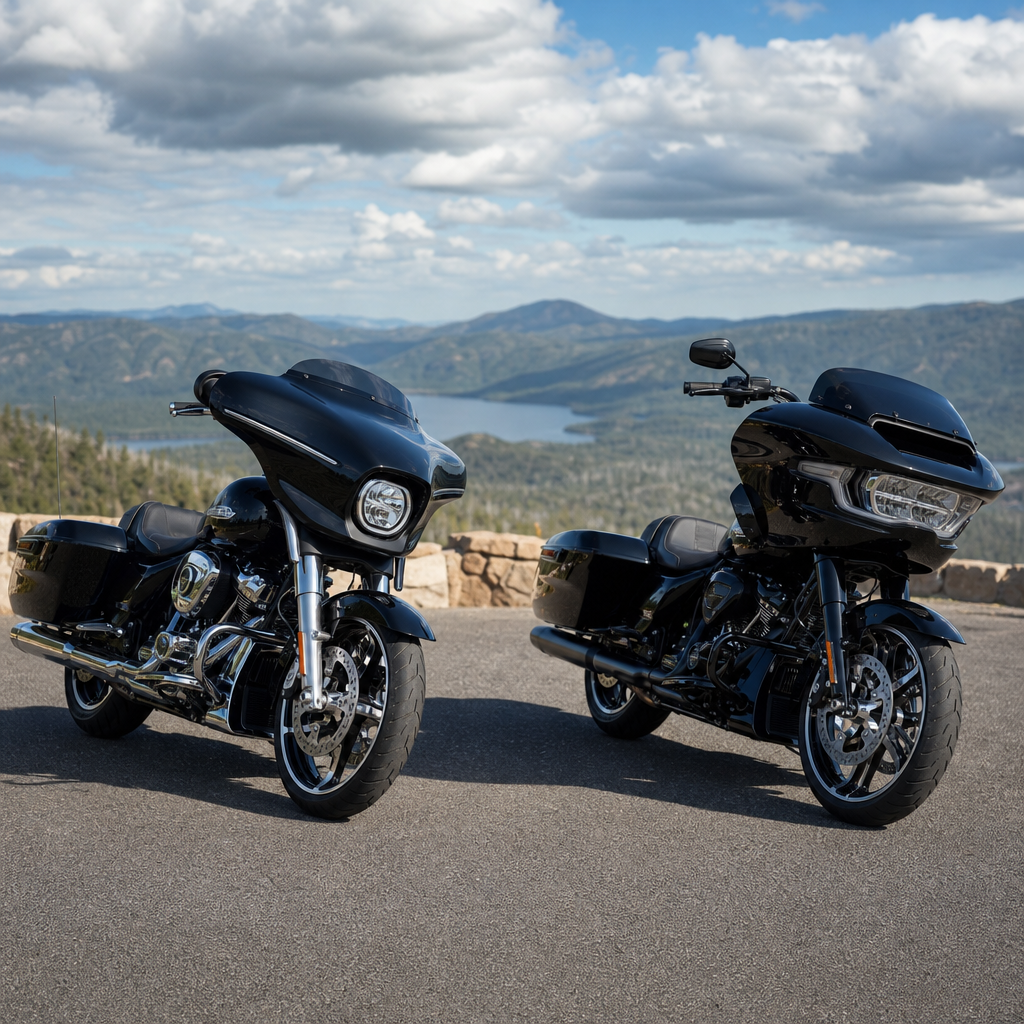
The 2026 Harley-Davidson Street Glide vs. Road Glide debate sits at the center of today’s American cruisers market because both bikes pair Milwaukee-Eight 117 V-Twin power with long-distance comfort, premium touring technology, and unmistakable Harley-Davidson identity. For riders shopping the New Rides landscape, this comparison is the natural hub for understanding not only these two flagship baggers, but also the wider American cruisers category they represent. In plain terms, a bagger is a touring-focused cruiser with hard saddlebags, a relaxed riding position, and enough wind protection and luggage capacity for serious highway miles. The Street Glide uses a fork-mounted batwing fairing, while the Road Glide uses a frame-mounted sharknose fairing. That single design difference shapes handling feel, airflow, cockpit character, and rider preference more than spec sheets alone suggest.
I have spent years around heavyweight V-Twin touring bikes, and this is one of the clearest split decisions in motorcycling. Riders rarely argue about whether either bike is good. They argue about which one feels right at speed, in crosswinds, in traffic, and after six hours in the saddle. That matters because modern American cruisers are no longer defined only by style or nostalgia. Buyers now expect strong torque, refined electronics, infotainment, rider safety technology, and suspension capable of carrying a passenger and loaded bags without punishing the rider. Harley-Davidson understands that shift, which is why the 2026 Street Glide and Road Glide continue to act as benchmarks for premium V-Twin touring motorcycles.
This article covers that benchmark role in detail. It explains how each model fits within American cruisers, what the Milwaukee-Eight 117 brings to real-world performance, which fairing design works better for specific riders, and where these bikes sit against alternatives from Indian Motorcycle and other manufacturers. If you are comparing touring cruisers, planning a dealership visit, or narrowing your next long-haul machine, this guide answers the practical questions first: Which bike is easier to manage at low speed? Which one feels steadier on the interstate? Which offers better passenger comfort, weather protection, and value? The goal is simple: help you choose the right 2026 Harley-Davidson bagger while also giving you a reliable map of the broader American cruisers segment.
Why the Street Glide and Road Glide define modern American cruisers
American cruisers traditionally emphasize low-slung styling, V-Twin character, broad torque, and a feet-forward or neutral-relaxed riding posture. Within that family, full-dress and bagger models represent the touring end of the spectrum. The Street Glide and Road Glide define this class because they combine classic Harley-Davidson design language with current expectations for rider assistance, comfort, and connected technology. In dealer conversations, these are the two bikes most often used as reference points. A rider may walk in asking about a Heritage Classic, Low Rider ST, Indian Chieftain, or Indian Challenger, but the comparison usually comes back to Street Glide versus Road Glide because these models clarify priorities fast.
The Street Glide appeals to riders who want a more traditional Harley silhouette. Its batwing fairing turns with the handlebar, creating a cockpit that feels compact and familiar. At city speeds and during parking-lot maneuvers, many riders describe the steering feel as intuitive because the fairing visually follows their line of sight. The Road Glide takes a different approach. Its sharknose fairing is frame mounted, so the handlebar moves independently. That reduces steering load from the fairing itself and often produces a calmer feel at interstate speed, especially in turbulent air. Neither system is universally better. Each serves a different riding preference, and that is exactly why the comparison remains alive year after year.
These two bikes also anchor the American cruisers subtopic because they sit at the premium edge of what many buyers actually aspire to own. They are not entry-level machines. They are destination motorcycles, often purchased by riders who have moved up from midsize cruisers, performance cruisers, or older touring models. As a hub for the category, this page helps connect the full range of cruiser questions: classic versus modern styling, air-cooled heritage versus current thermal management strategies, analog simplicity versus touchscreen dashboards, and weekend cruising versus coast-to-coast practicality. Understanding the Street Glide and Road Glide gives you a framework for assessing nearly every heavyweight American-style touring cruiser on the market.
Milwaukee-Eight 117 performance: what the 117 V-Twin actually changes
The heart of this showdown is the Milwaukee-Eight 117, and the number matters because displacement still drives buying decisions in American cruisers. A 117 cubic-inch V-Twin delivers the kind of low-end and midrange thrust that suits heavy touring bikes. On the road, the benefit is not top-speed bragging. It is effortless passing, stronger roll-on acceleration when loaded with luggage, and less need to downshift on grades. Harley-Davidson’s modern 117 also reflects years of refinement in balancing traditional V-Twin character with smoother operation, cleaner fueling, and heat management that is more acceptable in traffic than older big-inch designs.
In practice, what riders notice first is torque delivery. You crack the throttle at 55 mph in top gear, and the bike responds with immediate forward drive instead of hesitation. That matters more than peak horsepower in this class. Touring riders spend far more time rolling on from 40 to 80 mph than chasing redline. The 117’s broad torque curve supports exactly that use case. It also complements six-speed gearing well. The engine lopes at highway pace without feeling asleep, and it still has enough reserve to make two-up travel feel relaxed rather than strained. For a motorcycle weighing hundreds of pounds before rider, passenger, and cargo, that reserve is essential.
There is also a mechanical character difference that keeps the 117 relevant in an era of increasingly smooth liquid-cooled rivals. Harley’s big V-Twin still feels alive beneath you. There is pulse, sound, and texture, but not the excessive vibration that used to fatigue riders on older platforms. That balance is a key reason these bikes remain so compelling. Riders want authenticity, but they also want to finish a 400-mile day without numb hands or cooked legs. The 117, as tuned in current touring applications, gets very close to that ideal.
| Comparison area | Street Glide | Road Glide | What it means on the road |
|---|---|---|---|
| Fairing type | Fork-mounted batwing | Frame-mounted sharknose | Street feels more traditional; Road often feels steadier at speed |
| Cockpit feel | Closer, enclosed, classic | More open, separated from bars | Rider preference strongly affects comfort and confidence |
| Low-speed impression | Direct steering feel | Lighter bar feel | Parking-lot manners differ more than raw weight suggests |
| Highway behavior | Stable, with more fairing influence at bars | Excellent in wind and turbulence | Frequent interstate riders often favor the Road Glide |
| Styling appeal | Classic Harley bagger look | Aggressive modern touring look | Emotional connection is often the deciding factor |
Street Glide riding experience: classic bagger feel and urban confidence
The Street Glide remains the choice for riders who want their touring bike to feel unmistakably like a traditional Harley every time they walk up to it and every time they turn into a corner. The batwing fairing shapes that experience. Around town, the bike feels visually cohesive because the fairing, gauges, and front wheel all seem to rotate together. That can make the motorcycle feel easier to place in tight traffic and during low-speed turns. Riders coming from older Electra Glide variants, Heritage models with windshields, or even large Japanese V-Twin tourers usually adapt to the Street Glide immediately.
On mixed roads, the Street Glide often feels slightly more intimate than the Road Glide. The cockpit wraps around the rider in a way that many owners love on cooler mornings and medium-speed backroads. You sit in the motorcycle rather than behind a remote nose section. The tradeoff appears when wind gets rough. Because the fairing is attached to the fork, steering inputs can feel more affected by air pressure, passing trucks, or strong crosswinds than on the Road Glide. This does not make the bike unstable. It simply means the rider receives more feedback through the bars.
That feedback is not a flaw for everyone. In fact, many experienced Harley riders prefer it because it feels connected and mechanical rather than isolated. If your riding includes commuting, short touring weekends, scenic two-lane routes, and frequent stops, the Street Glide makes a strong case. It carries all the benefits of a premium touring cruiser without losing the personable, direct feel that made the model famous. For many buyers, it is the better all-rounder if interstate mileage is only part of the mission rather than the whole mission.
Road Glide riding experience: long-haul stability and high-speed composure
The Road Glide earns its reputation on fast roads. The frame-mounted sharknose fairing changes the bike’s behavior in a way riders can feel within the first hour. Because the fairing mass is not moving with the handlebar, steering effort can feel lighter and less influenced by wind load. On the interstate, that difference becomes meaningful. In crosswinds, dirty air behind trucks, and sustained 75 mph travel, the Road Glide often feels calmer and less busy at the bars. Riders who regularly cover long highway distances notice reduced fatigue, and fatigue reduction is one of the most important advantages any touring bike can offer.
The cockpit also feels different. Instead of the fairing surrounding the controls, the rider looks through a space toward the fixed nose. Some people immediately prefer that layout because it creates a sense of separation between steering and weather protection. Others never warm to it because it feels less traditional. This is why test rides matter so much. Spec sheets will not tell you whether the Road Glide’s visual and aerodynamic character matches your instinctive riding style. Only seat time will.
Where the Road Glide clearly excels is heavy-mile travel. If you ride all day on major highways, often carry a passenger, or frequently encounter open-country wind, this is usually the more confidence-inspiring motorcycle. It has become especially popular among riders who value modern performance bagger culture, where long-distance capability and aggressive custom styling intersect. Even stock, it communicates purpose. For riders who treat touring as a serious discipline rather than an occasional escape, the Road Glide often becomes the default answer.
Comfort, technology, and ownership considerations
Beyond the fairing debate, buyers should judge these motorcycles on comfort, electronics, carrying capacity, and total ownership fit. Modern Harley-Davidson touring models typically include an infotainment touchscreen, navigation capability, Bluetooth integration, premium audio, cruise control, and rider-assistance features such as cornering-aware ABS, traction control, and drag-torque slip control. These systems matter because they improve safety and reduce workload on long rides. The best touring cruiser is not merely powerful. It lets the rider stay alert, comfortable, and informed over hundreds of miles.
Suspension and seat support deserve equal attention. A touring bike can feel impressive on a short demo route yet become tiring after three hours if the saddle shape, floorboard position, and rear shock tuning do not suit the rider’s body. Harley’s touring platform is generally strong here, but setup still matters. I always advise buyers to evaluate preload adjustment, passenger room, and how the bike behaves with loaded saddlebags. A motorcycle that feels plush solo can become underdamped when carrying travel gear. This is where dealer setup and aftermarket support make Harley ownership attractive. Seats, bars, windshields, and suspension upgrades are widely available and well understood.
Cost also enters the equation. Premium American cruisers are expensive, and accessories can quickly push transaction prices higher. The upside is resale strength, broad service familiarity, and a large owner community. Harley-Davidson’s dealer network remains a practical advantage for touring riders who cover multiple states. If your plan includes long trips, that support footprint matters almost as much as horsepower. Against rivals like the Indian Chieftain and Indian Challenger, Harley’s strengths remain brand heritage, customization depth, and a touring ecosystem that is hard to match. The Indian alternatives deserve consideration, especially for riders prioritizing liquid-cooled performance or different ergonomics, but the Street Glide and Road Glide remain the reference point.
How to choose the right 2026 Harley bagger and where it fits in the cruiser market
The best answer to the 2026 Harley-Davidson Street Glide vs. Road Glide question is straightforward. Choose the Street Glide if you want classic Harley bagger style, a more wrapped cockpit, and a riding feel that stays engaging in town and on backroads. Choose the Road Glide if you prioritize interstate composure, reduced steering influence from the fairing, and maximum confidence in wind and long-distance travel. Because both bikes share the Milwaukee-Eight 117 character, premium touring features, and core Harley-Davidson design values, this is not a choice between good and bad. It is a choice between two highly developed interpretations of the same American touring idea.
As a hub for American cruisers under New Rides, this comparison also points to the wider category. Riders wanting lighter, less expensive options may explore heritage cruisers and midsize V-Twins. Riders wanting sharper performance may compare performance baggers and sport-oriented touring cruisers. Riders focused on passenger luxury may move toward full-dress tourers. Yet the Street Glide and Road Glide remain the center of gravity because they show what the segment does best: abundant torque, strong road presence, real luggage capacity, and mile-eating comfort with emotional appeal intact.
If you are narrowing your next motorcycle, start by identifying your actual riding mix, then schedule back-to-back test rides. Spend time at low speed, on rough pavement, and at highway pace. Pay attention to wind management, seat support, and how natural the cockpit feels after thirty minutes. The right bike will make its case quickly. For many riders, the 117 V-Twin showdown ends not with a spec comparison, but with that first stretch of open road. Explore the rest of our New Rides American cruisers coverage, compare related models, and use this hub as your starting point for the bagger that fits your miles best.
Frequently Asked Questions
What is the main difference between the 2026 Harley-Davidson Street Glide and Road Glide?
The biggest difference between the 2026 Harley-Davidson Street Glide and Road Glide comes down to fairing design, rider feel, and how each bike delivers comfort on the road. The Street Glide uses Harley-Davidson’s classic batwing fairing, which is mounted to the handlebars. That gives the bike a more traditional touring look and a steering feel many riders describe as more connected and more familiar, especially if they have spent time on earlier Harley baggers. The Road Glide, by contrast, uses the brand’s distinctive sharknose fairing, which is frame-mounted rather than attached to the bars. That setup changes both the look and the on-road character of the motorcycle.
In practical terms, the Street Glide often appeals to riders who want timeless Harley-Davidson style, a strong sense of front-end presence, and a touring machine that still feels rooted in the company’s heritage. The Road Glide typically attracts riders who prioritize high-speed stability, long-distance wind management, and reduced handlebar load because the fairing weight is not moving with the bars. Both bikes sit in the same premium bagger space, both are built for serious miles, and both showcase the Milwaukee-Eight 117 V-Twin, but they create different riding experiences from the cockpit. For many buyers, choosing between them is less about engine performance and more about whether they prefer the classic batwing personality of the Street Glide or the mile-eating, frame-mounted confidence of the Road Glide.
Do the Street Glide and Road Glide have the same Milwaukee-Eight 117 V-Twin performance?
At the heart of this 2026 Harley-Davidson Street Glide vs. Road Glide comparison is the fact that both motorcycles are centered around Milwaukee-Eight 117 V-Twin power. That matters because it puts both baggers on very even footing when the conversation turns to torque-rich acceleration, highway passing ability, and the signature feel riders expect from a big American touring twin. In day-to-day use, both bikes are designed to deliver strong low-end and midrange thrust, which is exactly what makes a bagger satisfying in the real world. Whether pulling away from a stoplight, rolling on the throttle for a pass, or climbing grades with a passenger and luggage, the 117 engine is built to provide easy, effortless drive.
That said, riders may still perceive small differences in how each bike feels even when the engine output is closely matched, and those differences usually come from aerodynamics, rider position, fairing design, and weight distribution rather than from the engine itself. The Street Glide may feel a little more direct and traditional in the way the front of the bike responds, while the Road Glide may feel more planted at speed due to its frame-mounted fairing layout. In other words, the showdown is not really about one 117-powered bike being dramatically faster than the other. It is about how the same core Harley-Davidson touring performance is delivered through two distinct bagger personalities. Buyers comparing these motorcycles should expect strong V-Twin character from both, with the final decision shaped more by preferred feel, wind protection, and long-range riding style than by outright power differences.
Which bagger is better for long-distance touring: the 2026 Street Glide or the 2026 Road Glide?
Both are serious long-distance touring motorcycles, but the better choice depends on the kind of highway experience you want. The Street Glide is a proven touring platform with a more classic Harley-Davidson cockpit and visual identity. Riders who like the iconic batwing fairing, a strong sense of front-end engagement, and a traditional American bagger feel often find the Street Glide exceptionally satisfying on all-day rides. It blends comfort, style, luggage-ready practicality, and premium touring technology in a way that has made it one of the most recognizable names in the category.
The Road Glide, however, often gets the nod from riders who regularly stack up high mileage and prioritize wind management and composure at highway speed. Its frame-mounted sharknose fairing can reduce the amount of mass moving with the handlebars, which many riders appreciate during long interstate stretches and in varied wind conditions. Over a full day in the saddle, that difference can translate into a ride that feels calmer and more planted, particularly for riders who spend much of their time at faster touring speeds. Still, comfort is never about one factor alone. Seat shape, handlebar reach, riding posture, passenger needs, suspension tuning, and personal preference all play major roles. The bottom line is that both bikes are premium baggers built for distance. The Street Glide leans toward classic Harley touring character, while the Road Glide often stands out for riders who want a more purpose-built long-haul feel.
What exactly is a bagger, and why are the Street Glide and Road Glide so important in the American cruisers market?
A bagger is a touring-style motorcycle that combines cruiser attitude with built-in hard saddlebags, strong road presence, and equipment intended for longer rides. In simple terms, it is a bike that keeps the visual appeal and relaxed stance of a cruiser while adding the storage, comfort, wind protection, and highway capability riders need for travel. Bagger motorcycles often feature larger-displacement engines, comfortable ergonomics, infotainment or navigation technology, substantial fairings or windscreens, and premium finishes. They are especially popular with riders who want one bike that can handle weekend escapes, cross-state trips, and daily enjoyment without losing that unmistakable American V-Twin identity.
That is exactly why the 2026 Harley-Davidson Street Glide and Road Glide matter so much. These two motorcycles are not just individual models; they are benchmark baggers that help define what the wider American cruisers category looks like at the premium end of the market. They blend big Milwaukee-Eight 117 power, recognizable Harley-Davidson design, and long-distance touring capability in two different forms that appeal to different kinds of riders. For shoppers exploring new rides, comparing the Street Glide and Road Glide is often the clearest way to understand the entire segment. If someone wants to know what a modern American bagger is supposed to deliver in terms of style, comfort, technology, torque, and road-trip readiness, these two Harleys are often the reference point.
How should riders choose between the 2026 Street Glide and Road Glide before buying?
The smartest way to choose between the 2026 Harley-Davidson Street Glide and Road Glide is to focus on riding experience first and spec sheets second. Since both bikes offer premium touring features, Harley-Davidson heritage, and Milwaukee-Eight 117 V-Twin performance, the real decision comes down to how each machine fits your body, your taste, and your travel habits. Start by asking where and how you ride most. If you value classic batwing styling, a traditional Harley bagger appearance, and a cockpit feel that many riders associate with the brand’s long-standing touring identity, the Street Glide may be the stronger emotional and practical fit. If you regularly ride long highway distances, prefer the look of the sharknose fairing, and want the kind of stability many riders associate with a frame-mounted setup, the Road Glide may make more sense.
It is also important to think about passenger use, storage needs, weather exposure, and how a bike feels after more than just a short test ride. A quick loop around the dealership can tell you about basic fit, but a longer ride is far more useful for understanding wind protection, shoulder and arm comfort, low-speed confidence, and highway fatigue. Riders should also compare seat comfort, handlebar reach, visibility through or over the windscreen, and how each bike responds in urban traffic versus open-road conditions. In the end, there is no universal winner in the Street Glide vs. Road Glide debate. There is only the better match for your riding priorities. Both are top-tier Harley-Davidson baggers, and the right choice is the one that feels natural the moment the miles start adding up.