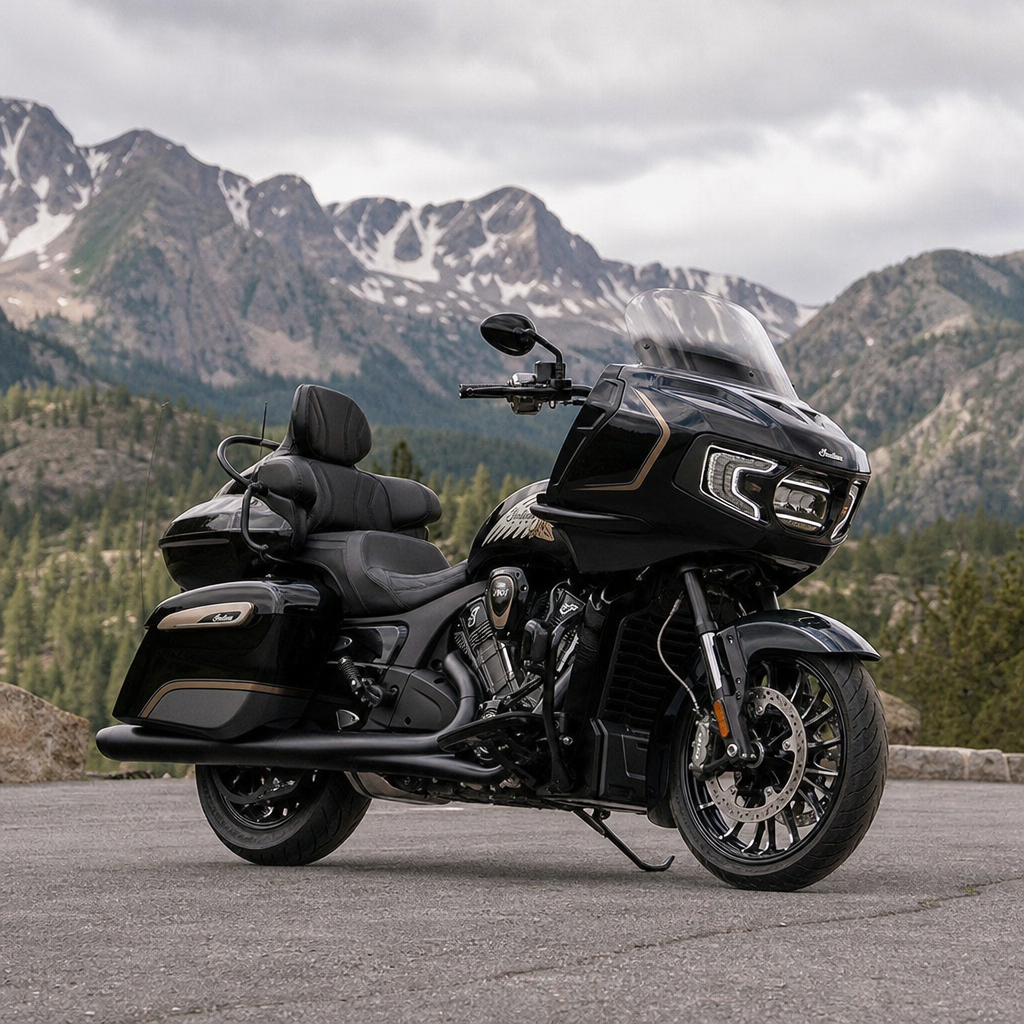
The 2026 Indian Challenger Elite arrives at a moment when American cruisers are being redefined by power, electronics, touring comfort, and premium factory customization. A bagger, in simple terms, is a motorcycle with hard saddlebags, a relaxed riding position, and road-trip capability, but the latest generation adds technology once reserved for sport-touring machines. Indian Motorcycle has pushed that shift for several years, and the Challenger Elite now sits at the sharpest edge of the category. The core question is not whether it is impressive. The real question is whether this is the most advanced bagger ever built.
That matters because American cruisers are no longer judged only by chrome, exhaust note, and brand heritage. Buyers now compare infotainment systems, rider-assistance features, suspension travel, engine cooling, maintenance intervals, and luggage practicality alongside styling and torque. I have spent years testing heavyweight V-twins on interstates, broken pavement, mountain sweepers, and slow urban loops, and the gap between a traditional air-cooled dresser and a modern performance bagger is no longer subtle. It changes how these bikes accelerate, stop, corner, and handle heat in everyday riding.
As the hub page for American cruisers under New Rides, this article covers the Challenger Elite itself and places it in the wider landscape. That includes what makes an American cruiser distinct, how baggers fit within the class, where the Challenger Elite stands against rivals, and what kind of rider will actually benefit from its technology. The aim is practical clarity. If you are shopping premium touring motorcycles, comparing factory customs, or tracking the future of performance baggers, this guide should give you a complete baseline and point you toward the right follow-up reviews in this subtopic.
At its heart, the 2026 Indian Challenger Elite combines a liquid-cooled PowerPlus V-twin, frame-mounted fairing, advanced electronics, premium paintwork, and limited-production positioning. Those elements sound familiar on paper, but together they represent a decisive move away from nostalgia-first engineering. To judge whether it is the most advanced bagger ever, you need to look beyond the badge and inspect the machine the way experienced riders do: engine architecture, chassis design, braking hardware, digital integration, weather protection, passenger accommodation, and how confidently it performs when loaded for real travel.
What Makes the 2026 Indian Challenger Elite Different
The Challenger platform already stood apart because Indian chose a liquid-cooled overhead-cam engine rather than a large traditional air-cooled pushrod twin. That decision affects nearly everything. A liquid-cooled engine manages heat more consistently in traffic, supports tighter performance tolerances, and usually delivers stronger high-rpm breathing. On the road, that translates into more repeatable acceleration and less heat soak on hot days. Riders who spend time in desert states, congested suburbs, or two-up touring immediately notice the difference compared with older heavyweight cruisers that roast the right leg and lose composure in stop-and-go conditions.
The Elite treatment adds exclusivity, upgraded finishes, and a more curated equipment package aimed at buyers who want top-tier specification from the factory rather than building a custom bagger afterward. That matters in the real world because integrated engineering beats piecemeal modification. A stock premium setup preserves electrical reliability, warranty coverage, suspension balance, and software compatibility. In my experience, many heavily accessorized touring bikes end up looking expensive while feeling mismatched. The best factory baggers work as complete systems, and the Challenger Elite is designed with exactly that philosophy.
PowerPlus Engine, Chassis, and Real Performance
The PowerPlus engine remains the technical center of the Challenger story. Indian developed it as a modern V-twin with liquid cooling and overhead cams, and that architecture gives the bike a broader performance envelope than many heritage-focused rivals. The result is not just headline horsepower. It is usable roll-on power for highway passes, steadier thermal management during summer travel, and stronger top-end drive when the road opens up. In practical terms, a rider carrying luggage and a passenger can overtake traffic with less drama and less mechanical strain.
Chassis design is equally important. The Challenger uses a frame-mounted fairing rather than a fork-mounted one, which changes steering feel significantly. Fork-mounted fairings can preserve classic style, but they add weight to the steering assembly. A frame-mounted design keeps the bars lighter and improves stability at speed, especially in crosswinds and on long interstate days. That is one reason performance bagger riders often prefer the Challenger platform. It feels more planted and less cumbersome when pace increases or pavement quality drops.
Suspension and braking complete the picture. A premium bagger has to cope with varied rider weights, luggage loads, and rough roads without wallowing. Strong braking matters even more because these motorcycles are heavy, fast, and frequently used for distance riding. When manufacturers combine quality suspension with modern braking hardware and electronic support, the bike becomes less tiring and safer to ride. That is where the Challenger Elite earns its reputation. It is not advanced because it has a screen. It is advanced because its power, structure, and control systems are designed to work together under real load.
Technology, Rider Aids, and Touring Equipment
Advanced baggers are increasingly defined by electronics, but not all electronics are equally useful. The features that matter most are those a rider actually notices on a thousand-mile trip: ride modes, traction control, cornering-aware systems, cruise control, integrated navigation, quality audio, clear switchgear, charging options, and intuitive menus. A confusing interface is a liability, not a luxury. Indian’s better touring bikes have generally improved by making digital features more readable and easier to operate with gloves, which is exactly the standard a flagship machine must meet.
Safety technology is another dividing line. On a heavyweight touring motorcycle, electronic assistance can be more than convenience. It can help manage low-grip pavement, abrupt braking, and emergency maneuvers on a loaded machine. Riders transitioning from older cruisers are sometimes skeptical of these systems, but after using them in rain, on mountain descents, or during surprise lane changes, many do not want to go back. The best implementation stays mostly invisible until needed, then intervenes smoothly enough that confidence rises rather than control feeling diluted.
| Feature Area | Why It Matters on a Bagger | Challenger Elite Advantage |
|---|---|---|
| Liquid cooling | Improves heat control in traffic and during hot-weather touring | More consistent performance and rider comfort |
| Frame-mounted fairing | Reduces steering heaviness at highway speed | Better stability and less fatigue on long rides |
| Ride modes and traction systems | Adjusts response for weather, road surface, and rider preference | Broader usability across touring conditions |
| Premium infotainment | Supports navigation, communication, and audio without add-on clutter | Cleaner factory integration and easier control |
| Limited-production finish | Adds collector appeal and factory custom presence | High-end appearance without aftermarket compromise |
How It Compares With Other American Cruisers
American cruisers cover several overlapping categories: stripped cruisers, boulevard customs, touring dressers, and performance baggers. The Challenger Elite belongs to the last group, but buyers often cross-shop it with traditional full-dress touring motorcycles and premium V-twin baggers from Harley-Davidson and Indian’s own lineup. The most obvious comparison is with Harley’s Road Glide and CVO bagger family, because they share the frame-mounted fairing concept and target riders who want long-distance comfort with stronger handling than old-school dressers usually provide.
The difference comes down to engineering priorities. Traditional American cruisers often emphasize visual heritage, low seat height, abundant torque, and relaxed geometry. Performance baggers keep some of that character but add better chassis control, more sophisticated electronics, and engines that tolerate hard use more gracefully. Indian’s PowerPlus platform has helped shift expectations by proving that a modern American V-twin can feel muscular without being mechanically dated. Riders who once accepted vague handling and excess heat as part of the experience now have alternatives.
Within the broader American cruiser market, the Challenger Elite also acts as a halo product. Even if many buyers ultimately choose a less expensive Indian Springfield, Chieftain, Sport Chief, Scout, or a rival Harley model, the Elite influences what they expect across the segment. Features such as integrated rider aids, high-output charging, connected infotainment, and factory premium finishes increasingly trickle down. That is why this motorcycle matters beyond its limited production numbers. It is a signal of where top-tier American cruisers are going over the next few product cycles.
Who Should Buy It and Where It Fits in the New Rides Hub
The ideal Challenger Elite buyer is not simply someone who wants the most expensive bagger on the showroom floor. It suits riders who cover serious miles, appreciate modern chassis behavior, and want a flagship machine that feels complete from day one. If your riding is mostly short local loops, a lighter cruiser may be more enjoyable and easier to store, maneuver, and justify financially. If you travel two-up, ride in varied climates, or demand strong passing power without sacrificing comfort, the Challenger Elite makes much more sense.
There are tradeoffs. A technologically dense, premium bagger costs more to buy and may intimidate riders who prefer mechanical simplicity. Weight remains substantial, as it does with every true bagger, and no amount of electronics changes that reality at parking-lot speed. Insurance, tire replacement, and premium accessories also tend to run higher in this class. Still, advanced engineering can reduce other compromises. Better heat management, stronger brakes, and improved stability are not gimmicks. They directly improve ownership and long-distance usability.
As a sub-pillar hub for American cruisers, this page should help you branch into deeper model-specific coverage. From here, the logical next reads are comparisons between the Indian Challenger and Harley Road Glide, guides to the best performance baggers, overviews of Indian touring technology, and breakdowns of how modern liquid-cooled cruisers differ from air-cooled classics. Those internal paths matter because cruiser shoppers rarely buy on spec sheets alone. They compare feel, purpose, maintenance expectations, passenger needs, and brand identity before making a final decision.
The strongest case for calling the 2026 Indian Challenger Elite the most advanced bagger ever is not one feature but the completeness of the package. It blends modern engine design, stable chassis architecture, meaningful electronics, long-distance comfort, and factory custom execution in a way few American cruisers have matched. Many motorcycles are excellent in one or two areas. Far fewer feel thoroughly engineered for real-world touring, aggressive highway riding, rider confidence, and premium ownership at the same time.
For the American cruiser category as a whole, that is the bigger story. The best new baggers no longer ask riders to choose between heritage and capability. They are proving that a V-twin touring motorcycle can still deliver presence, sound, and road-trip charisma while embracing better cooling, smarter software, stronger braking, and more composed handling. That evolution benefits every buyer, even those who end up choosing a simpler or cheaper machine.
If you are exploring new rides in American cruisers, use the Challenger Elite as a benchmark. Compare every contender against its engine design, touring equipment, rider aids, and chassis logic rather than styling alone. Then follow through to the rest of this hub for side-by-side comparisons, buyer guides, and deeper reviews that match your budget and riding style. That is the fastest way to decide whether this flagship Indian is your next motorcycle, or simply the standard everyone else now has to chase.
Frequently Asked Questions
What makes the 2026 Indian Challenger Elite different from a standard bagger?
The 2026 Indian Challenger Elite stands apart from a standard bagger because it blends traditional long-distance cruiser design with a much more modern performance and technology philosophy. In basic terms, a bagger is defined by hard saddlebags, comfortable ergonomics, and real touring ability, but the Challenger Elite pushes far beyond that formula. It is designed not just to carry gear and cover miles, but to deliver high-output power, chassis confidence, advanced rider electronics, and a premium factory-custom feel that used to require extensive aftermarket work.
What really changes the conversation is how complete the package is from the factory. Rather than being a simple heavyweight cruiser with luggage attached, the Challenger Elite is positioned as a top-tier touring-performance machine. That means strong acceleration, a frame and suspension setup intended to feel more controlled at speed, premium trim and finishes, and a technology suite that supports both comfort and confidence on long rides. For buyers who want the visual presence of a bagger without giving up refinement or modern capability, this model represents a much more evolved interpretation of the class.
Is the 2026 Indian Challenger Elite really one of the most advanced baggers ever built?
There is a strong case for saying yes. The reason is not just one standout feature, but the way multiple advanced elements are integrated into a single motorcycle. Modern high-end baggers are no longer judged only by engine size, chrome, and luggage capacity. They are increasingly judged by how well they combine power delivery, rider-assistance systems, infotainment, touring comfort, braking performance, and premium factory engineering. The Challenger Elite appears to sit right at the center of that shift.
What makes it especially notable is that it reflects the broader evolution of American V-twin touring motorcycles. Riders now expect more than style and highway comfort. They want seamless ride modes, electronics that improve control without feeling intrusive, high-quality displays, useful connectivity, and a ride experience that feels precise rather than merely heavy and relaxed. If the 2026 Challenger Elite delivers on those expectations with the polish Indian is aiming for, it absolutely belongs in the conversation as one of the most advanced baggers ever offered from a major manufacturer.
It is also important to understand what “advanced” means in this segment. It does not necessarily mean chasing superbike numbers. In the bagger category, advanced usually means delivering serious touring practicality and traditional V-twin character while adding smarter electronics, better suspension behavior, stronger chassis dynamics, and a more premium ownership experience. By that standard, the Challenger Elite represents the kind of motorcycle that pushes the category forward rather than simply refining old formulas.
How does the Challenger Elite balance performance with touring comfort?
That balance is exactly what defines a great modern bagger, and it is one of the main reasons the Challenger Elite generates so much interest. Riders shopping this category want two things that used to feel contradictory: real comfort for long-distance travel and enough performance to make the bike feel engaging, responsive, and composed in more demanding riding situations. The Challenger Elite is built around the idea that you should not have to choose one or the other.
On the touring side, the essentials remain critical. A relaxed riding position helps reduce fatigue, hard saddlebags provide practical storage, and the overall layout is intended to make long highway days more manageable. Wind protection, seat comfort, and a stable road presence all matter in this class, and a premium bagger is expected to deliver a calm, confidence-inspiring ride over hundreds of miles. That is the baseline expectation.
Where the Challenger Elite goes further is in how it adds performance without sacrificing that comfort-first mission. A more assertive powertrain character gives the bike stronger roll-on acceleration and more authority when passing or carrying luggage and a passenger. Better suspension tuning and chassis control can help the motorcycle feel more planted in corners and less unsettled over imperfect pavement. Advanced electronics can further refine the experience by adapting the bike’s responses to different road conditions or rider preferences. In practical terms, that means a motorcycle that still feels luxurious and road-trip ready, but far less old-school and compromised when the pace picks up.
Who is the 2026 Indian Challenger Elite best suited for?
The Challenger Elite is best suited for riders who want the commanding style and long-range usability of a traditional American bagger but are not interested in outdated dynamics or stripped-down equipment. It appeals most to buyers who appreciate premium factory engineering and want a motorcycle that feels complete from day one. Instead of starting with a base touring bike and then adding performance parts, electronics upgrades, cosmetic enhancements, and touring accessories, these riders are looking for a machine that arrives already positioned at the top of the lineup.
It is an especially strong fit for experienced riders who spend meaningful time on the highway, value comfort and luggage capacity, and still want a motorcycle that feels powerful and sophisticated. It also makes sense for owners cross-shopping other premium American touring motorcycles who care about exclusivity, finish quality, and the newest generation of rider-focused technology. For those riders, the Challenger Elite is not simply transportation or weekend cruising equipment. It is a flagship statement bike that combines status, capability, and convenience.
That said, it may not be ideal for every buyer. Riders who prefer simpler, lighter, or more minimalist cruisers may find a premium elite-level bagger to be more machine than they need. But for the rider who wants a top-shelf American touring V-twin with strong performance, modern features, and upscale presentation, the Challenger Elite is aimed squarely at that sweet spot.
Why does the 2026 Indian Challenger Elite matter in the bigger picture of the bagger market?
The 2026 Indian Challenger Elite matters because it highlights how quickly the bagger category is changing. For decades, baggers were primarily about visual presence, highway comfort, and brand identity. Those qualities still matter, but they are no longer enough on their own. Today’s premium buyers increasingly expect a bagger to feel like a complete high-end motorcycle, not just a classic cruiser with storage. They want more performance, more convenience, more connectivity, and a more refined riding experience overall.
The Challenger Elite reflects that shift in a very visible way. It suggests that the future of the American touring motorcycle is not about abandoning tradition, but about upgrading it. The formula still includes big style, relaxed ergonomics, and long-distance practicality, yet it now also embraces electronics, performance-minded engineering, and premium factory customization. That is significant because it raises expectations across the segment. When a flagship bagger arrives with a more ambitious feature set and a sharper overall concept, competing models are pushed to evolve as well.
In that sense, the Challenger Elite is important beyond its own sales numbers. It serves as a marker for where the category is headed. If riders respond positively, it reinforces the idea that modern baggers can be luxurious, technologically sophisticated, and genuinely dynamic without losing their identity. That is why this motorcycle is being discussed not merely as another upscale touring model, but as a sign of what the next phase of the bagger market may look like.