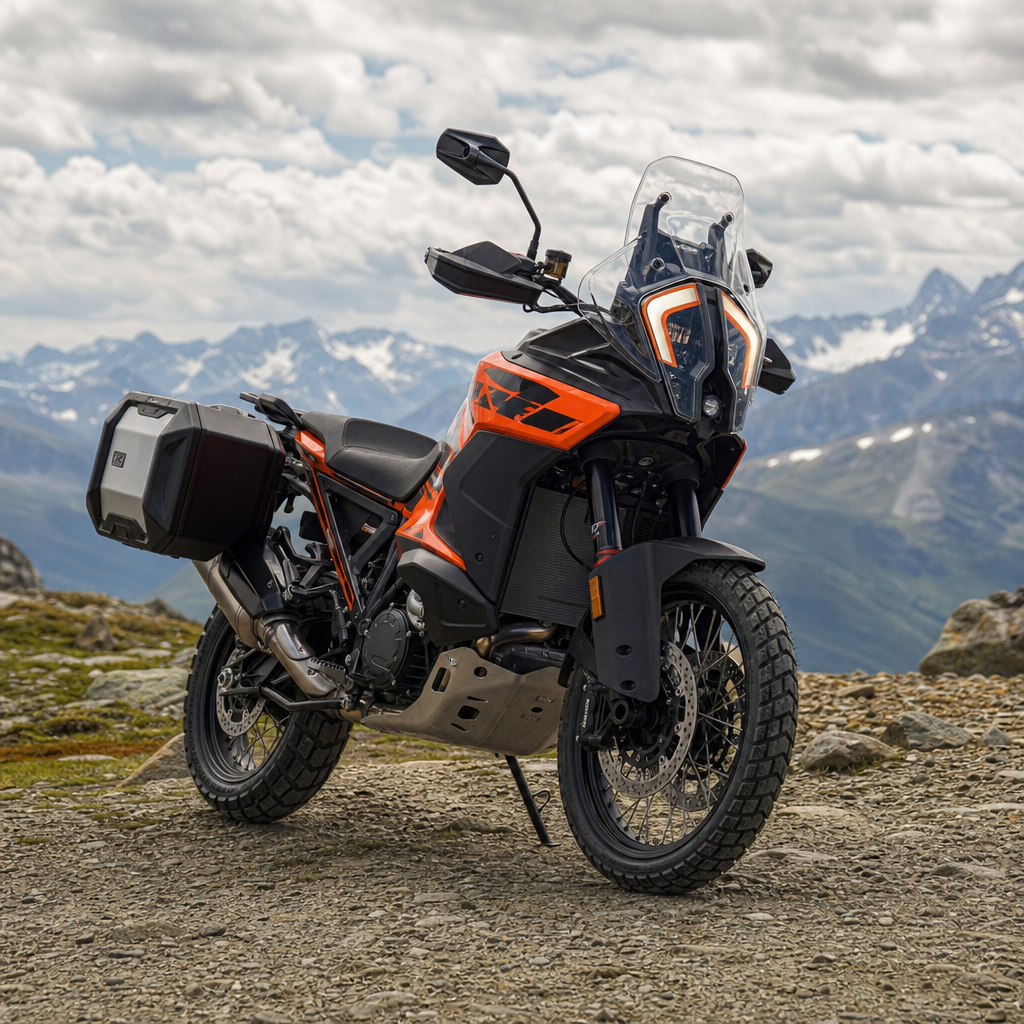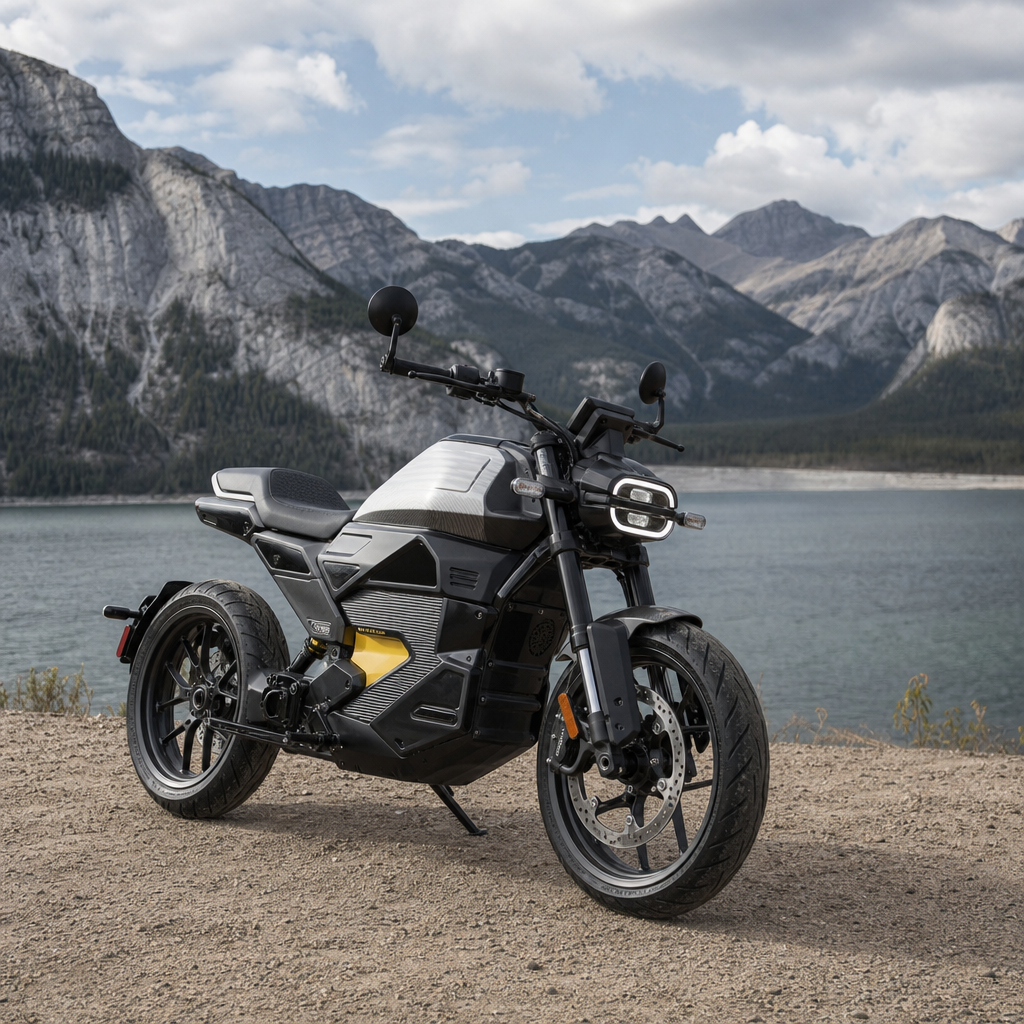
The 2026 Can-Am Origin marks BRP’s most consequential return to motorcycles in decades, and it arrives at a moment when the electric frontier is shifting from novelty to practical transportation. Can-Am, a brand long associated with off-road performance, three-wheel touring, and Rotax engineering, is using the Origin to re-enter the two-wheeled market with an electric motorcycle built for mixed-use riding. That matters because electric motorcycles have often split into narrow categories: urban commuters with limited capability, premium sport machines with premium prices, or dirt-focused models with minimal street comfort. The Origin is positioned to bridge those gaps.
In simple terms, the Can-Am Origin is a dual-sport style electric motorcycle designed to handle paved roads, rough city streets, gravel, and light trail duty. Dual-sport means the bike blends on-road legality with off-pavement versatility. Electric motorcycle means propulsion comes from a battery pack and electric motor rather than an internal combustion engine. BRP, the parent company behind Can-Am, Ski-Doo, Sea-Doo, and Rotax, is betting that its manufacturing scale, dealer network, and powersports experience can solve a problem that has limited adoption: riders want electric performance without sacrificing reliability, service access, or real-world usability.
I have watched electric two-wheel launches stumble on exactly those points. Some startups delivered exciting prototypes but weak dealer support. Others built competent commuters that never felt emotionally engaging. The Origin looks different because BRP is approaching the market like an established vehicle manufacturer, not a venture-funded experiment. The company has highlighted liquid-cooled power delivery, a structural battery integration strategy, and the use of a chaincase final-drive system intended to reduce maintenance compared with exposed chain setups. Those are not flashy talking points for casual shoppers, but they matter deeply to riders comparing ownership realities, especially in wet climates and mixed terrain.
As the hub page for the Electric Frontier topic, this article explains what the 2026 Can-Am Origin is, where it fits in the market, what technologies make it significant, which buyers should care, and what tradeoffs remain. If you are researching electric motorcycles for commuting, weekend exploring, or your first entry into the category, the Origin deserves attention because it represents a major manufacturer treating electric two-wheel transport as a long-term product line rather than a side project.
What the 2026 Can-Am Origin is and why BRP is returning now
The Origin is part of Can-Am’s new electric motorcycle family, paired with the more street-oriented Pulse. Where the Pulse targets urban riding with supermoto and naked-bike cues, the Origin is aimed at riders who want broader capability. Its stance, suspension travel, wheel setup, and ergonomics clearly signal adventure-lite and dual-sport intent. That gives BRP two distinct entry points into the electric motorcycle market without fragmenting development costs across unrelated platforms. It is a practical product strategy: one core electric architecture, two use cases, and enough differentiation to speak to separate rider habits.
BRP’s timing is strategic. Battery costs have gradually improved, public charging is more widespread than it was five years ago, and rider expectations have matured. Early electric motorcycles were often judged against unrealistic touring scenarios. Today, more consumers understand that many bikes are used for daily travel under 50 miles, regional recreation, and short mixed-route rides. In those scenarios, electric propulsion can be a strength because it delivers instant torque, low operating cost, and easy home charging. The market is now ready for products that are not trying to replace every gasoline motorcycle, but instead excel in the riding most owners actually do.
There is also a brand reason for the return. Can-Am built motorcycles in the 1970s and 1980s and retains credibility among enthusiasts who know the company’s off-road history. Re-entering on electric power lets BRP avoid a direct fight with entrenched gasoline middleweight bikes while creating a fresh identity. It can claim heritage without copying the current internal-combustion playbook. That positioning is smart because consumers forgive category differences when a product clearly offers a new benefit, and silence, torque, and reduced routine maintenance are benefits riders feel immediately on a test ride.
Powertrain, battery design, and the practical engineering behind the Origin
The most important story with the Origin is not just that it is electric, but how BRP has engineered the system for durability and repeatable performance. Electric motorcycles live or die by thermal management. A bike can have strong peak output on paper, yet feel disappointing if heat buildup quickly reduces power. BRP has emphasized liquid cooling for the motor, inverter, charger, and battery. That is a serious engineering choice because thermal stability affects acceleration consistency, battery longevity, and charging behavior. It also suggests the company is designing for regular use in varied climates rather than ideal laboratory conditions.
Another notable feature is the enclosed chaincase. On many motorcycles, the final drive is exposed, requiring regular cleaning, lubrication, and adjustment, especially after rain or dust exposure. Can-Am’s enclosed system is intended to cut maintenance and reduce mess. For riders coming from bicycles, scooters, or cars into motorcycles, this matters more than spec-sheet horsepower. Lower maintenance reduces ownership friction. It also aligns with the electric promise: fewer service demands, less mechanical fuss, and more time riding.
Battery placement is equally critical. Electric motorcycles must balance range, center of gravity, crash protection, and frame stiffness. BRP has presented the battery as a structural component within the chassis architecture, a method that can improve rigidity while keeping weight centralized. In practice, centralized mass helps a bike feel more manageable at low speed and more predictable during quick transitions. On dual-sport style machines, that is especially important because riders may move from asphalt to broken pavement, gravel, or standing-on-the-pegs riding in a single trip.
| Engineering area | Why it matters on the Origin | Real-world rider benefit |
|---|---|---|
| Liquid-cooled battery and motor systems | Controls heat during repeated acceleration and charging | More consistent performance and better component longevity |
| Enclosed chaincase final drive | Shields drivetrain from dirt and moisture | Less maintenance than a typical exposed chain setup |
| Dual-sport chassis layout | Supports mixed on-road and light off-road riding | Useful for commuters who also ride gravel or trails |
| Centralized battery mass | Improves balance and handling response | More confidence at low speed and on uneven surfaces |
Charging is the other practical question buyers ask immediately. For a hub article like this, the key point is that charging speed matters less in isolation than in context. Riders need to know where the bike will charge, how often, and for what type of use. If the Origin supports home charging efficiently and can top up at public stations during longer urban or regional rides, it becomes genuinely useful. For apartment dwellers without dedicated parking, the equation is harder. That is not a flaw unique to Can-Am; it remains one of the category’s main barriers. Electric motorcycles are strongest when they match a rider’s charging reality.
How the Origin fits the electric motorcycle market in 2026
The Origin enters a market that is more crowded than it was in the early 2020s, but still far from mature. Premium brands such as Zero and LiveWire established the performance benchmark for mainstream electric motorcycles. At the lower end, urban scooters and small commuter bikes expanded accessibility. Off-road specialists showed how electric torque can transform trail riding. Yet there has been a persistent opening in the middle: a well-supported electric motorcycle from a major powersports company with broad dealer reach, approachable ergonomics, and genuine versatility. That is the lane the Origin targets.
Compared with a premium electric naked bike, the Origin is less about outright speed and more about useful adaptability. Compared with lightweight electric trail bikes, it appears more road-ready and ownership-friendly. Compared with gasoline dual-sports in the 300cc to 700cc range, it offers smoother power delivery, easier operation for new riders, and reduced routine service, while giving up the instant refueling and long-range flexibility of combustion. That tradeoff is central. Riders choosing the Origin are not choosing theoretical perfection; they are choosing a bike optimized for a specific pattern of life.
That pattern includes suburban commuting, secondary-road exploration, campus or downtown travel, and recreational rides where noise restrictions matter. I have seen electric bikes win over skeptical riders in exactly these environments. Silent departures at dawn, easy lane-to-lane torque in traffic, and the absence of clutch work in stop-and-go conditions change the experience more than many expected. For land managers and neighborhood-conscious riders, low noise is not a side benefit; it can preserve access and reduce conflict. In that sense, the Origin is part of a broader shift in how motorcycles fit public space.
Who should buy the Can-Am Origin and who should wait
The best buyer for the 2026 Can-Am Origin is a rider whose week includes predictable local travel and whose weekends include spontaneous route changes. If you commute 15 to 40 miles a day, can charge at home or work, and enjoy exploring rough backroads, the Origin makes practical sense. It also suits riders returning to motorcycling who want less mechanical complexity. Electric motorcycles remove fuel management, oil changes, clutch modulation, and many vibration-related annoyances. For some former riders, that lowers the re-entry barrier considerably.
New riders are another logical audience, though with caveats. Instant torque can be easier than managing a manual transmission, but it also requires throttle discipline. The Origin’s upright ergonomics and dual-sport posture should help confidence, especially on poor surfaces. Dealer support will matter here. A first-time rider benefits from professional setup, accessory guidance, charging education, and software update support. BRP’s established retail footprint could become one of the bike’s biggest competitive advantages if dealerships treat electric delivery as education, not just handover.
Who should wait? Riders who regularly cover long highway distances, lack reliable charging, or expect deep backcountry range should look carefully before buying. Battery range is always variable, with speed, terrain, temperature, tire choice, rider size, and accessory load all affecting results. High sustained highway speed is especially demanding. If your riding involves 150-mile days at fast interstate pace with limited charging opportunities, a gasoline or hybrid-use strategy still makes more sense. The Origin is compelling because it is honest about where electric works best, not because it magically erases current infrastructure limits.
Why this bike matters for the broader Electric Frontier
The Origin is more than a single model launch; it signals that electric motorcycles are entering a new phase of legitimacy. When a company like BRP commits real product development, dealer training, parts support, and platform planning to electric two-wheel vehicles, the category gains stability. Consumers gain confidence that service will exist beyond a startup’s funding cycle. Suppliers gain a reason to invest in components. Competing manufacturers gain pressure to improve battery management, software integration, and ownership experience. One credible product can move an entire segment forward by making the market look less speculative.
For the Electric Frontier hub, that is the key takeaway. This subtopic is not only about battery specs or launch headlines. It is about how electrification changes vehicle design, maintenance, infrastructure, rider behavior, and market structure. The 2026 Can-Am Origin touches all of those themes at once. It blends recognizable motorcycle form with new packaging logic, reduces maintenance through drivetrain enclosure and electric simplicity, depends on charging ecosystems, and asks riders to think differently about range and trip planning. That makes it a strong central reference point for any reader exploring where new rides are headed.
The bigger benefit is choice. Riders do not need every motorcycle to become electric. They need credible options that fit real use. The Origin suggests BRP understands that distinction. If your riding life aligns with local travel, mixed surfaces, and practical ownership, keep the 2026 Can-Am Origin on your shortlist and follow the rest of our Electric Frontier coverage to compare the bikes, charging solutions, and technologies shaping the next generation of new rides.
Frequently Asked Questions
What makes the 2026 Can-Am Origin such a significant motorcycle for BRP and the electric market?
The 2026 Can-Am Origin is significant because it represents far more than a single new model launch. It marks BRP’s serious return to the two-wheeled motorcycle category after decades away, and it does so in one of the most strategically important segments in powersports: electric mobility. For BRP, this is not a casual experiment or a branding exercise. It is a statement that the company believes electric motorcycles are finally maturing from niche products into viable, everyday machines with broader appeal.
That matters because the electric motorcycle market has often felt fragmented. Many models have been designed primarily for short-distance urban commuting, while others have leaned hard into premium pricing, futuristic design, or narrowly defined performance roles. The Origin appears positioned to challenge that pattern by aiming for mixed-use versatility. In practical terms, that means it is intended to be more than a city runabout and more than a specialty toy. It is designed to appeal to riders who want flexibility, utility, and recognizable motorcycle proportions from a brand with a real powersports pedigree.
The Origin is also important because Can-Am brings history, engineering credibility, and name recognition that many EV startups simply do not have. BRP already understands vehicle development, dealer networks, service support, and rider expectations across multiple categories. That foundation gives the Origin a different kind of legitimacy. It suggests that this bike is part of a larger long-term plan, not just a one-off launch timed to capitalize on EV headlines. For buyers who have been curious about electric motorcycles but cautious about brand stability, dealer access, and after-sales support, that could be a major differentiator.
What kind of rider is the 2026 Can-Am Origin built for?
The 2026 Can-Am Origin appears to be built for riders who want one motorcycle that can handle a wide range of real-world use cases. Instead of targeting only urban commuters or only hardcore off-road enthusiasts, the Origin is aimed at people who value versatility. That includes riders navigating city streets during the week, taking longer suburban or secondary-road rides on weekends, and possibly exploring light adventure-style routes or mixed-surface terrain depending on setup and local conditions.
This broader mission is especially important in the electric space. One reason some riders have hesitated to adopt electric motorcycles is that many options feel too specialized. If a bike is excellent in dense downtown traffic but less convincing outside the city, buyers may struggle to justify it as their primary motorcycle. The Origin’s mixed-use identity suggests Can-Am is trying to solve that problem. It appears intended for riders who want the instant torque, low maintenance, and quiet operation of an EV without sacrificing the upright ergonomics, confidence, and flexibility associated with more traditional dual-purpose or crossover motorcycles.
It could also appeal to newer riders who want a less intimidating ownership experience. Electric motorcycles remove some of the mechanical complexity that can discourage first-time owners, such as clutch management, frequent service intervals, and engine heat. At the same time, experienced riders may be drawn to the Origin because it promises a more mature interpretation of electric riding—one rooted in practical usability rather than novelty alone. In that sense, the bike may bridge multiple audiences: EV-curious commuters, returning riders, tech-minded early adopters, and established motorcyclists looking for a capable second bike or even a new daily rider.
How does the Can-Am Origin differ from many other electric motorcycles on the market?
The biggest distinction is positioning. Many electric motorcycles have traditionally fallen into tight categories: lightweight urban commuters, ultra-premium performance machines, or small-volume boutique offerings. The Can-Am Origin appears to take a more balanced approach by emphasizing practical mixed-use riding. That gives it a potentially wider audience and makes it easier to compare with mainstream motorcycles rather than only with other EVs.
Another key difference is brand context. Can-Am is not entering the segment as an unknown startup trying to prove it can manufacture, distribute, and support vehicles at scale. It is part of BRP, a company with extensive engineering resources and longstanding credibility in powersports. That matters for everything from battery integration and drivetrain durability to dealer support and parts availability. For many buyers, confidence in the company behind the vehicle is almost as important as the product itself, especially in a category where long-term serviceability has been a concern.
The Origin also stands out because it connects electric propulsion with a familiar powersports identity. Can-Am’s history is tied to performance, adventure, and rugged recreation, not just transportation. If BRP successfully brings that DNA into the Origin, the motorcycle could feel less like a compromised eco-commuter and more like a legitimate rider’s machine. That is a crucial shift. The next stage of electric motorcycle adoption will likely come not from novelty seekers alone, but from riders who want an EV that fits naturally into their lifestyle and expectations. The Origin’s importance lies in its attempt to normalize electric motorcycling by making it useful, recognizable, and purposefully designed for more than one narrow task.
Why is the timing of the 2026 Can-Am Origin launch so important?
The timing is important because the broader EV landscape is changing. A few years ago, electric motorcycles were often discussed as futuristic experiments, premium curiosities, or idealized city solutions. Today, the conversation is more practical. Riders want to know whether an electric motorcycle can fit into everyday life, how easily it can be charged, whether it offers enough range for realistic riding, and whether the ownership experience feels dependable rather than experimental. The Origin arrives right as those questions are becoming central to purchase decisions.
This shift creates an opportunity for established brands. Early EV adoption was often driven by enthusiasts willing to accept tradeoffs in exchange for innovation. The next wave of buyers is typically more pragmatic. They want convenience, proven engineering, a support network, and a machine that delivers value beyond its novelty factor. BRP’s re-entry through the Can-Am Origin is well timed because it meets a market that is increasingly ready to judge electric motorcycles on utility and trust, not just on acceleration figures or futuristic styling.
There is also a larger industry context. Legacy manufacturers and powersports companies are under growing pressure to define their electric strategy, but not all have moved aggressively in the motorcycle space. By launching the Origin now, BRP signals that it sees a legitimate opening to shape this category rather than simply react to it later. If the bike succeeds, it could help validate the idea that electric motorcycles do not need to be confined to either premium halo products or low-speed urban machines. It could push the segment toward broader acceptance by showing that established brands can build EV motorcycles with genuine everyday relevance.
What does the 2026 Can-Am Origin suggest about the future of electric motorcycles?
The Origin suggests that the future of electric motorcycles may be defined less by extremes and more by balance. Instead of treating EVs as either radical performance showcases or minimalist commuter tools, manufacturers are beginning to explore motorcycles that blend practicality, versatility, and brand identity. That is a meaningful evolution. It indicates that the industry is moving toward products designed for actual ownership patterns rather than headline-grabbing specs alone.
If Can-Am gets the formula right, the Origin could help reinforce several important ideas about where the market is headed. First, electric motorcycles will likely gain traction fastest when they solve multiple use cases at once. Riders want flexibility, not a machine that only makes sense in one narrow environment. Second, strong brand backing matters. As the category matures, consumers are likely to favor manufacturers that can offer stable service networks, clear product roadmaps, and confidence in long-term support. Third, design and identity still matter. Riders do not just buy transportation; they buy experience, character, and connection to a brand or riding style.
In that broader sense, the 2026 Can-Am Origin is not just another electric motorcycle. It is a test case for whether a major powersports company can make electric two-wheelers feel mainstream, capable, and desirable all at once. If it succeeds, it may encourage more manufacturers to develop electric motorcycles that are less compromised, more versatile, and better aligned with the way people actually ride. That would be a major step forward for the category and could accelerate the transition from electric motorcycles as niche alternatives to electric motorcycles as genuinely competitive everyday options.