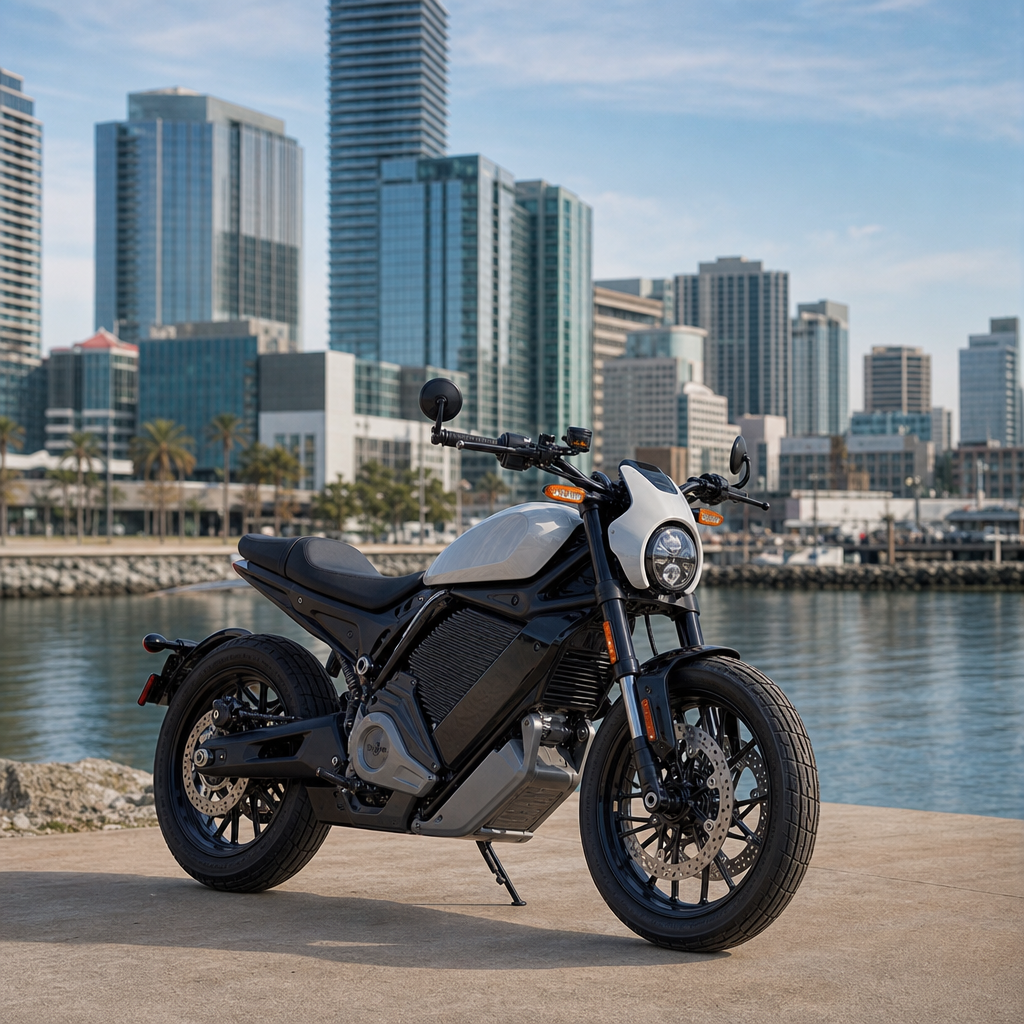
The LiveWire S2 Del Mar stands out as one of the best electric motorcycles for urban commuters because it combines quick acceleration, practical city range, approachable ergonomics, and premium technology in a package built for real streets rather than marketing slogans. For riders navigating dense traffic, short highway hops, and daily stop-and-go conditions, an electric motorcycle has to do more than look futuristic. It must deliver instant torque, predictable charging, manageable weight, and low operating costs while still feeling engaging enough to replace a gas bike without compromise. The S2 Del Mar earns attention because it addresses those needs directly and because it anchors the broader Electric Frontier, the fast-growing category of battery-powered two-wheelers reshaping urban mobility.
Electric Frontier refers to the evolving ecosystem of electric motorcycles, scooters, charging infrastructure, battery technology, software updates, rider aids, and ownership models that are changing how people commute and how manufacturers design motorcycles. In practical terms, this frontier matters most in cities, where average trip lengths are short, emissions rules are tightening, parking is limited, and riders value responsiveness over top-speed bragging rights. I have tested and reviewed urban motorcycles across gas and electric segments, and the pattern is consistent: commuters care less about peak horsepower than about how a bike launches from lights, threads through traffic, handles potholes, and fits into a daily routine. That is exactly where the Del Mar makes its strongest case.
As a sub-pillar hub under New Rides, this guide covers the LiveWire S2 Del Mar in depth while connecting the main topics riders research before buying into the Electric Frontier. Those topics include battery range, charging time, platform design, maintenance, ride modes, total cost of ownership, city practicality, and how this model compares with both electric rivals and lightweight internal-combustion alternatives. The goal is simple: answer the questions an urban commuter actually asks. Is the range enough for a workweek? How fast does it charge? Does the premium price justify the experience? What tradeoffs come with an electric drivetrain? By the end, you should know whether the S2 Del Mar is the right everyday motorcycle and why it has become a reference point in modern electric commuting.
What Makes the LiveWire S2 Del Mar a True Urban Commuter Motorcycle
The best urban commuter motorcycles share a specific set of traits: fast low-end response, compact dimensions, easy maneuverability, upright ergonomics, and minimal daily hassle. The LiveWire S2 Del Mar was designed around those priorities. Built on LiveWire’s Arrow architecture, which integrates the battery pack as a stressed component and keeps the bike visually compact, the Del Mar feels purpose-built for city use instead of adapted from a larger sport or cruiser template. Its upright seating position, wide handlebar, and relatively accessible geometry make slow-speed control easier in traffic, while the direct drive electric powertrain eliminates clutch work and gear changes that can become tiring on crowded routes.
In day-to-day commuting, the biggest advantage is immediate torque delivery. Electric motorcycles do not wait for revs to build, and the Del Mar makes that benefit obvious every time the light turns green or a gap opens in traffic. Riders can merge decisively and overtake predictably without downshifting. That performance is not just entertaining; it improves safety by shortening the time spent exposed in intersections or beside distracted drivers. LiveWire also tuned the bike to feel lively without becoming abrupt, which matters for newer riders and for wet urban pavement where smooth throttle transitions matter more than headline numbers.
Another reason the Del Mar suits city duty is reduced routine maintenance. There is no oil to change, no spark plugs, no clutch wear, and no chain adjustment if the final-drive setup avoids it. While tire wear, brake service, suspension inspection, and software diagnostics still matter, ownership complexity is lower than on many gas motorcycles. For commuters who ride frequently but do not want weekend wrenching, that simplicity is a real benefit. In my experience, riders switching from middleweight gas bikes often notice that the biggest quality-of-life improvement is not acceleration but the absence of vibration, heat, and drivetrain fuss during repeated short trips.
Performance, Range, and Charging in Real-World City Riding
Performance specifications only matter if they translate into useful urban capability. The LiveWire S2 Del Mar delivers brisk acceleration that suits city commuting exceptionally well, especially from 0 to 60 mph where electric motorcycles often outperform larger gas bikes. Instant torque gives the bike a responsive, almost elastic feeling in traffic. For urban riders, that means easier lane positioning, quicker starts from lights, and less drama when joining faster-moving roads. Top speed matters less in commuter use, but stable midrange punch matters every single ride, and the Del Mar provides it.
Range is the central buying question for any electric motorcycle. LiveWire positions the S2 Del Mar around urban use, where regenerative braking, lower average speeds, and frequent stop-start conditions help efficiency. In plain terms, city range will usually look stronger than sustained highway range, because aerodynamic drag rises sharply with speed and drains batteries faster. A commuter covering 15 to 30 miles each way with home charging access is the ideal use case. Riders doing long freeway runs every day need to calculate more carefully. The bike is practical when your routine matches its energy profile, and less practical when high-speed distance dominates your week.
Charging time is equally important because convenience often matters more than raw range. A motorcycle that recharges overnight at home can fit seamlessly into a commuter’s life even if it cannot match the distance of a gasoline tank. Public charging can extend usability, but urban owners should think of home charging as the foundation and public networks as backup. I advise commuters to map their real weekly mileage, not their occasional longest ride. Most riders overestimate how much daily range they need and underestimate how much convenience they gain from plugging in at home instead of visiting gas stations.
| Commuter Factor | Why It Matters | LiveWire S2 Del Mar Advantage |
|---|---|---|
| Instant torque | Faster launches in traffic and easier overtakes | Strong low-speed acceleration without shifting |
| Urban range | Determines whether daily commuting is stress-free | Best suited to city and mixed-use distances |
| Charging flexibility | Affects convenience more than brochure range | Works best with regular home charging |
| Weight distribution | Influences low-speed balance and confidence | Compact platform improves city maneuverability |
| Maintenance load | Reduces downtime and ownership effort | Fewer routine service items than gas bikes |
Real-world ownership always involves tradeoffs. Cold weather can reduce battery efficiency. Fast highway stretches can cut range significantly compared with city riding. Public charging availability varies by region, and charging etiquette remains inconsistent in some urban areas. Those are not reasons to dismiss the bike; they are planning realities. The best electric motorcycle for urban commuters is not the bike with the most dramatic spec sheet. It is the one that fits actual daily patterns with the least friction, and that is where the S2 Del Mar remains compelling.
Design, Technology, and Everyday Practicality
The LiveWire S2 Del Mar succeeds partly because it looks and feels like a modern motorcycle first and a tech product second. That distinction matters. Some electric two-wheelers lean so heavily into futuristic styling that they alienate riders who want familiar control layouts and credible road presence. The Del Mar balances fresh design with functional packaging. Its flat-track-inspired silhouette, exposed structural elements, and compact mass communicate agility, while the overall stance remains substantial enough to feel premium rather than toy-like. In urban commuting, visual compactness helps riders judge gaps and parking spaces quickly, but a planted chassis still matters for confidence.
Technology on the bike serves practical riding needs. Ride modes allow different throttle maps and regenerative braking behavior, which can meaningfully change the commuting experience. A softer mode can make wet-weather riding smoother, while a more aggressive map sharpens response for dry traffic. Rider aids such as traction control and cornering-sensitive systems, where equipped, are especially useful on city streets with painted lines, metal covers, and uneven surfaces. A bright, readable display also matters more than many buyers expect. Commuters check state of charge, estimated range, and charging status constantly, so instrumentation must be clear at a glance in sunlight and in rain.
Practicality extends beyond the ride itself. The Del Mar benefits from the ownership expectations now common in premium electric vehicles: software integration, diagnostic support, and a cleaner day-to-day experience with no fuel smell or engine heat baking the rider at stoplights. For apartment dwellers, charging access remains the biggest challenge, not the motorcycle. If you have dedicated parking with power, electric ownership becomes straightforward. If you depend entirely on public charging, convenience drops sharply. That is why the best buying advice is infrastructure-first. Confirm how and where you will charge before comparing colors, accessories, or accessory finance terms.
As the Electric Frontier develops, the Del Mar also serves as a gateway product. Riders researching this model often go on to explore battery longevity, software-enabled updates, public charging standards, and the growing distinction between commuter-focused electrics and high-performance halo bikes. In that sense, this hub page connects the core topics of the subtopic: how electric motorcycles are engineered, how they fit urban life, and how to evaluate them without falling for either hype or outdated skepticism.
How the S2 Del Mar Compares With Gas Bikes and Electric Rivals
Comparing the LiveWire S2 Del Mar with gasoline motorcycles requires using the right benchmark. Its natural competitors are not liter-class sport bikes or long-distance touring machines. They are premium urban motorcycles, standard bikes, and lightweight middleweights used for commuting and short recreation. Against those bikes, the Del Mar wins on instant acceleration, drivetrain smoothness, low routine maintenance, and novelty that remains enjoyable long after the first ride. It loses on refueling speed for long trips, purchase price in many markets, and flexibility for riders who do frequent unplanned distance. Those tradeoffs are manageable when the bike is purchased for its intended mission rather than as an all-things machine.
Against electric rivals, the Del Mar benefits from brand recognition, premium finish, and a more motorcycle-like riding experience than some scooter-adjacent alternatives. The competitive field includes models from Zero and a growing number of international manufacturers experimenting with urban EV formats. Some rivals offer different strengths, such as lighter weight, lower pricing, removable batteries, or wider dealer coverage. However, the S2 Del Mar distinguishes itself through design maturity and road presence. It feels like a product built to move the category forward, not merely to check an emissions box. That matters to commuters who want their daily ride to feel aspirational as well as practical.
Total cost of ownership is another essential comparison point. Electricity is typically cheaper per mile than gasoline, and service intervals are generally simpler, but insurance rates, tire wear from strong torque, financing terms, and depreciation must be considered honestly. Premium electric motorcycles can carry a higher upfront cost, so the value equation depends on usage. Riders with high annual urban mileage, reliable home charging, and a preference for premium tech often find the numbers easier to justify. Riders who commute infrequently or lack charging access may not. A smart purchase decision here is less about ideology than about fit.
Who Should Buy the LiveWire S2 Del Mar
The ideal LiveWire S2 Del Mar owner is an urban or inner-suburban rider with predictable daily mileage, access to overnight charging, and a desire for a premium commuter that feels special every time it leaves the curb. This rider values quick response, clean operation, and reduced maintenance more than maximum touring range. They may already own a larger gas bike for weekends or may be replacing a car for short commutes altogether. They also understand that electric motorcycles reward routine. If your weekdays are structured and your charging setup is easy, the ownership experience becomes refreshingly simple.
The Del Mar is less ideal for riders whose lives revolve around long highway distances, spontaneous rural detours, or charging uncertainty. It can handle mixed use, but it is at its best in the environment it was designed for: dense streets, short connectors, and regular charging opportunities. That focus is not a flaw. It is what makes the bike one of the best electric motorcycles for urban commuters. It excels because it is specific.
The LiveWire S2 Del Mar proves that the Electric Frontier is no longer a niche experiment; it is a practical, premium option for riders whose daily reality is city mobility. Its strengths are clear: immediate torque, low-maintenance ownership, useful urban range, strong design, and technology that supports rather than distracts from riding. Its limitations are equally clear: charging access matters, highway range is finite, and the purchase price demands careful consideration. When those variables align with your routine, the Del Mar becomes more than an interesting EV. It becomes an excellent commuter motorcycle.
For anyone exploring New Rides and looking for a hub into the Electric Frontier, start with the fundamentals this bike highlights: define your real commuting distance, confirm your charging plan, compare total ownership costs, and prioritize everyday usability over spec-sheet theater. Do that, and the LiveWire S2 Del Mar will make immediate sense to the right rider. If your routine fits the mission, take a test ride, review your charging setup, and use this page as your starting point for deeper research into the next generation of urban motorcycles.
Frequently Asked Questions
Why is the LiveWire S2 Del Mar considered such a strong electric motorcycle for urban commuting?
The LiveWire S2 Del Mar is especially well suited to urban commuting because it focuses on the traits city riders actually use every day. In traffic, quick acceleration matters more than top speed, and the S2 Del Mar delivers the immediate torque electric motorcycles are known for. That instant response makes it easier to pull away from lights, merge into gaps, and stay ahead of surrounding traffic without constantly working through gears. For commuters riding through crowded streets, that smooth and direct power delivery can make the bike feel both faster and less stressful than many traditional gas motorcycles.
It also fits the practical realities of city use. Urban commuting usually means repeated stop-and-go riding, lower average speeds, short to moderate daily distances, and occasional highway connections rather than all-day touring. The S2 Del Mar is designed around that kind of riding, with a range profile that makes sense for regular commutes and errands rather than unrealistic long-haul expectations. Its ergonomics are approachable, its chassis feels built for maneuverability, and its overall setup supports confidence in dense traffic, tight parking situations, and frequent starts and stops.
Another reason it stands out is that it does not rely only on futuristic styling to make its case. Riders need manageable weight, predictable charging, real-world usability, and quality technology that improves the experience rather than complicates it. The S2 Del Mar brings premium components and modern rider-focused features into a format that feels practical on real streets. For urban commuters who want an electric motorcycle that is engaging, refined, and genuinely useful every weekday, it makes a compelling argument as one of the best options in the category.
Is the LiveWire S2 Del Mar practical for daily commuting range and charging needs?
Yes, for many riders, the LiveWire S2 Del Mar is very practical for daily commuting, especially if the commute is primarily urban or suburban with occasional short highway sections. Most city commuters are not covering extreme mileage every day. They are riding to work, making a few stops, heading home, and maybe adding errands along the way. In that context, what matters is not just a headline range number, but whether the motorcycle can reliably handle normal use without creating charging anxiety. The S2 Del Mar is designed to fit that pattern, giving commuters a realistic electric option for daily transportation.
Charging practicality is just as important as riding range, and this is where ownership habits matter. Riders who can charge at home or at work will usually find electric commuting far easier than people who depend entirely on public chargers. If you can plug in overnight, the motorcycle effectively starts each day ready to go, which removes the routine inconvenience of fuel stops. For urban users, that can be one of the biggest quality-of-life advantages of going electric. Instead of planning around gas stations, the bike becomes part of a normal charging routine, much like a phone or laptop, only with much greater transportation value.
It is also important to evaluate your own commute honestly. If your daily riding involves mostly moderate distances and predictable routes, the S2 Del Mar can be a strong fit. If you expect to do frequent long-distance highway runs with little access to charging, then it may be less ideal than a larger gas bike designed for extended travel. But for the commuter who wants dependable city range, simple day-to-day charging, and a motorcycle optimized for short to medium real-world rides, the S2 Del Mar checks the right boxes.
How does the LiveWire S2 Del Mar perform in stop-and-go traffic and tight city streets?
The S2 Del Mar performs very well in stop-and-go traffic because electric power delivery naturally suits repetitive urban riding. There is no clutch work in the traditional sense, no gear hunting at low speed, and no delay between throttle input and response. That means smoother launches from traffic lights, easier low-speed control in congestion, and less rider fatigue over the course of a commute. In a city environment where you are constantly accelerating, slowing, and repositioning around traffic, this type of immediate and linear power can feel especially refined.
Maneuverability is another major advantage. Urban riders need a motorcycle that feels manageable when filtering through dense traffic, changing lanes quickly, negotiating uneven pavement, or pulling into cramped parking spaces. A commuter-focused electric motorcycle has to inspire confidence at low and medium speeds, not just look good in promotional photos. The S2 Del Mar’s design priorities make it more usable in those real-world conditions, helping riders feel connected and in control rather than overwhelmed by bulk or complexity.
There is also a comfort factor that should not be overlooked. City riding can be mentally tiring because of frequent interruptions, close vehicle interactions, and constant awareness demands. A motorcycle that reduces mechanical distraction can make the entire ride more pleasant. With its smooth operation, quiet drivetrain, and quick but predictable response, the S2 Del Mar can turn a routine commute into something far more enjoyable. For riders who spend a lot of time in traffic rather than on open roads, that everyday ease is one of its biggest strengths.
What technology and premium features make the LiveWire S2 Del Mar stand out from other commuter motorcycles?
The LiveWire S2 Del Mar distinguishes itself by pairing commuter practicality with a more premium technology experience than many riders expect in this segment. On many motorcycles, tech can feel like an afterthought or a list of features added mainly for marketing. On the S2 Del Mar, the goal is to create a more polished ownership and riding experience. That includes the kind of modern interface, rider aids, and electronic integration that make the bike feel contemporary, not just electrically powered.
For urban commuters, premium technology is valuable when it improves confidence and convenience. Rider modes, electronic controls, quality display information, and connected features can all make daily riding more intuitive. Instead of simply offering raw performance, the S2 Del Mar presents that performance in a way that is easier to manage in changing city conditions. Whether the road is slick, the traffic is unpredictable, or the route changes mid-ride, a well-executed electronics package helps the motorcycle feel more adaptable and rider-friendly.
Beyond software and screens, premium quality also shows up in how the bike is built and tuned. Riders notice it in throttle calibration, chassis feedback, braking feel, materials, and the overall sense of refinement. That matters because a commuter motorcycle gets used frequently, often daily, and small quality differences become much more noticeable over time. The S2 Del Mar appeals to riders who want more than basic transportation. It offers a blend of advanced electric performance, thoughtful technology, and upscale execution that can make the daily commute feel significantly more rewarding.
Who is the ideal rider for the LiveWire S2 Del Mar, and are there any limitations to consider before buying?
The ideal rider for the LiveWire S2 Del Mar is someone who spends most of their time in urban or near-urban environments and wants a motorcycle that feels modern, responsive, and practical for everyday use. It is a great match for commuters who deal with traffic, frequent stops, surface streets, and occasional short highway stretches. It also suits riders who value clean design, premium engineering, and a more refined electric riding experience over traditional gas-bike habits. For someone who wants a motorcycle that feels purpose-built for real commuting rather than weekend-image appeal, the S2 Del Mar makes a lot of sense.
It can also appeal to newer riders and returning riders, depending on their comfort level, because approachable ergonomics and smooth electric power delivery can reduce some of the intimidation associated with conventional motorcycles. At the same time, experienced riders may appreciate how quick, direct, and engaging it feels in city conditions. The bike’s personality is not about chasing extreme long-distance capability. It is about making daily transportation more enjoyable, efficient, and technologically current.
That said, buyers should be realistic about limitations. Electric motorcycles still require more planning than gas motorcycles if your riding regularly exceeds commuter-style distances or depends on fast refueling in remote areas. Charging access is a major factor, and the ownership experience will be much better if home or workplace charging is available. Riders who want a bike primarily for long interstate travel may find a different type of motorcycle more suitable. But if your priorities are acceleration, simplicity, city-friendly usability, and premium commuter-focused design, the LiveWire S2 Del Mar is one of the strongest electric options available.