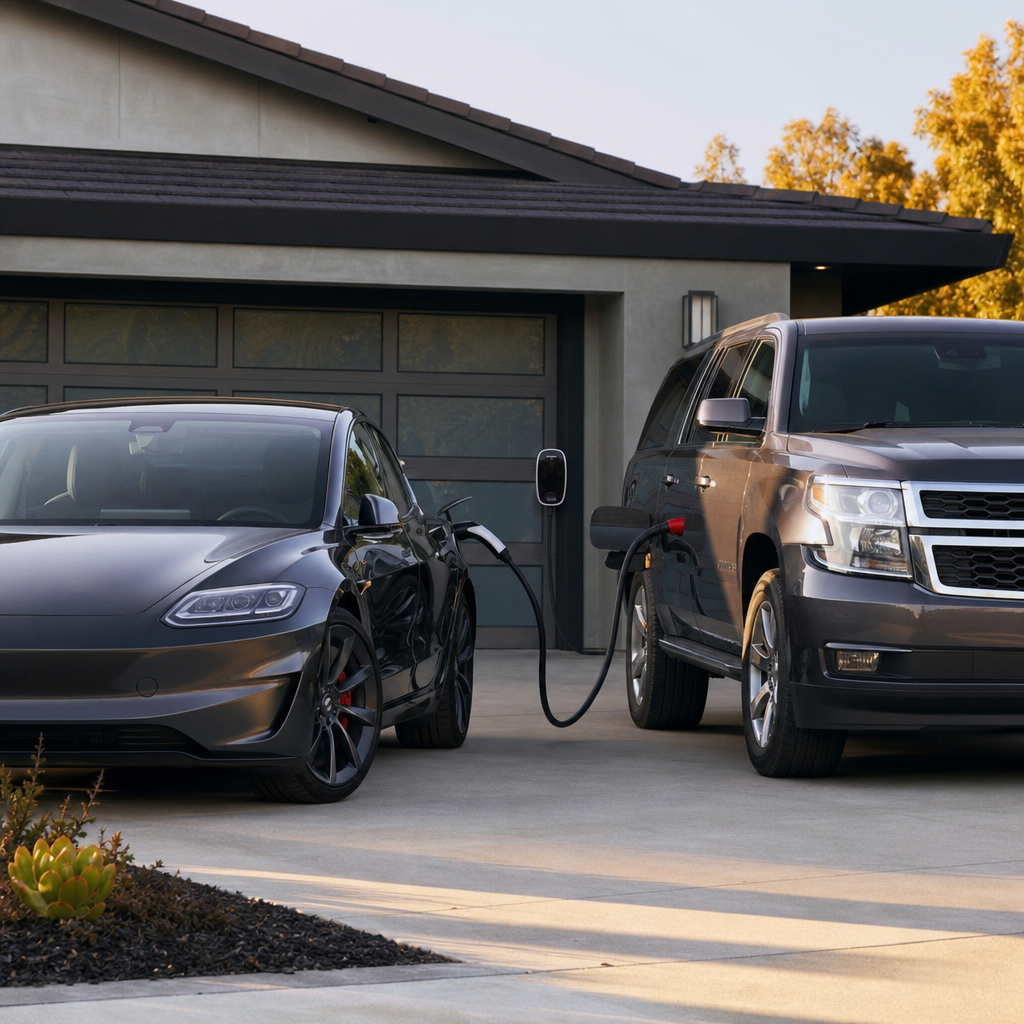
Choosing between an electric vehicle and a gasoline vehicle in 2026 is no longer a question of novelty versus tradition; it is a hard financial decision shaped by purchase price, charging access, maintenance patterns, insurance, depreciation, and how people actually drive. In this Electric Frontier hub, I am comparing real-world cost of ownership rather than brochure claims, because shoppers need to know what happens after the test drive. Total cost of ownership means every major expense over several years: upfront price, taxes and incentives, fuel or electricity, servicing, repairs, tires, insurance, registration, and resale value. That full-picture view matters because the cheapest car on day one is often not the cheapest car by year five.
The stakes are higher in 2026 because the market is maturing fast. Battery prices have fallen dramatically over the past decade, public charging networks have expanded, and more automakers now build electric models on dedicated platforms instead of adapting gasoline designs. At the same time, interest rates remain meaningful, electricity prices vary sharply by region, and many drivers still depend on home charging to unlock the strongest savings. I have worked through these ownership calculations for commuters, rideshare drivers, and families replacing a second vehicle, and the answer is never one-size-fits-all. Some households save thousands by going electric. Others are still better served by efficient hybrids or conventional gas vehicles.
This hub article explains where electric vehicles win, where gasoline cars still hold an advantage, and how to run the comparison honestly. It also serves as the central guide to the broader Electric Frontier subtopic, connecting the key questions buyers ask: Is charging practical? Do batteries last? What does winter do to range? Which costs are predictable, and which are easy to underestimate? By the end, you should be able to compare electric vs. gas in 2026 using your own mileage, local energy prices, and ownership horizon instead of relying on marketing claims or outdated assumptions.
Upfront Price, Incentives, and Financing Reality
The first number buyers see is the sticker price, and in 2026 that still usually favors gasoline vehicles. A comparable battery-electric vehicle often costs several thousand dollars more than a similarly sized gas model before incentives. That gap has narrowed, especially in compact crossovers and sedans, but it has not disappeared. For example, a mainstream electric crossover may start in the low-to-mid $30,000 range, while a similar gas crossover may begin in the high $20,000s. Premium segments behave differently, because electric models can compete more directly when gas counterparts are already expensive.
In real ownership math, incentives can change the opening equation. Depending on where you live, buyers may qualify for federal credits, state rebates, utility discounts, or reduced registration and toll costs. Eligibility rules matter. Battery sourcing requirements, income caps, leasing structures, and dealer pass-through practices can alter the effective transaction price significantly. I have seen two buyers in the same metro area pay materially different net prices for near-identical vehicles because one leased and captured a commercial clean vehicle credit while the other financed and did not qualify for a consumer incentive.
Financing can narrow or widen the gap. If an electric model costs $6,000 more and you borrow at a moderate interest rate, that price premium compounds over the loan term. But if the electric vehicle saves $100 to $180 per month in energy and maintenance, the cash-flow picture can still favor the EV quickly. The practical lesson is simple: compare monthly total ownership cost, not monthly payment alone. A lower payment on a gas car can hide higher fuel and service costs that persist every year you keep it.
Energy Costs: The Biggest Everyday Difference
Fuel savings are the clearest advantage for most electric vehicles, but they depend heavily on charging behavior. Home charging at residential rates usually makes an EV much cheaper to run per mile than a gas vehicle. Public fast charging shrinks that advantage, and in some high-cost markets it can erase much of it. The right comparison starts with efficiency. Electric vehicles use kilowatt-hours per 100 miles, while gasoline vehicles use miles per gallon. To compare them fairly, convert both into cost per mile using local utility rates and local gas prices.
Here is a straightforward example. Suppose an electric crossover averages 31 kWh per 100 miles and a comparable gas crossover returns 30 mpg. If home electricity costs $0.16 per kWh, the EV uses about $4.96 of electricity per 100 miles. If regular gasoline costs $3.60 per gallon, the gas crossover uses $12.00 per 100 miles. Over 12,000 miles per year, that is roughly $595 for the EV versus $1,440 for the gas vehicle, a savings of about $845 annually. Increase annual mileage to 18,000, and the savings become more compelling.
Charging profile is the key variable I always test first with clients. An owner charging 80 percent at home and 20 percent on road trips will usually preserve the EV advantage. An apartment dweller relying mostly on DC fast charging may pay rates equivalent to expensive gasoline, especially during peak periods. Time-of-use plans can be decisive. Utilities in many regions offer overnight rates that dramatically cut charging cost, while unmanaged evening charging can cost much more. The cheapest mile in personal transportation is often an electric mile charged at home after midnight.
| Scenario | Energy Rate | EV Cost per 100 Miles | Gas Price / MPG | Gas Cost per 100 Miles |
|---|---|---|---|---|
| Home charging | $0.16/kWh | $4.96 | $3.60 / 30 mpg | $12.00 |
| Time-of-use overnight | $0.10/kWh | $3.10 | $3.60 / 30 mpg | $12.00 |
| Mostly public fast charging | $0.42/kWh | $13.02 | $3.60 / 30 mpg | $12.00 |
The table shows why blanket statements fail. Electric vehicles are usually cheaper to fuel, but not always. If your charging is mostly at home, the savings are substantial. If your charging is mostly high-priced public fast charging, the cost edge can disappear. That is why any honest electric vs. gas cost of ownership comparison in 2026 must begin with where you will charge, not just what you will drive.
Maintenance, Repairs, and Wear Items Over Time
Electric vehicles generally require less routine maintenance because they have fewer moving parts, no oil changes, no spark plugs, no exhaust system, and no multi-speed transmission servicing in the conventional sense. Regenerative braking also reduces brake wear, often extending pad life well beyond what gas drivers expect. In fleet data and owner reports, that difference is real. Over five years, many EV owners spend meaningfully less on scheduled service than owners of comparable gas vehicles.
That said, lower maintenance does not mean zero maintenance. EVs still need cabin air filters, brake fluid checks, coolant on some systems, tires, suspension work, alignments, and software-related service. Tires deserve special attention. Many electric vehicles are heavier and deliver instant torque, which can accelerate tire wear if drivers are enthusiastic with the accelerator. I have reviewed ownership logs where tire replacement arrived earlier than expected, partly offsetting maintenance savings. The effect is especially noticeable on performance EVs and large battery SUVs.
Gas vehicles have a more familiar maintenance profile, but the costs accumulate steadily: oil and filter changes, engine air filters, belts, plugs, transmission fluid, emissions-related components, and a broader set of potential failure points as mileage rises. Modern gas powertrains are more durable than many people assume, especially naturally aspirated engines paired with proven automatic transmissions, but complexity still adds cost. Turbocharged engines, start-stop systems, and direct injection have improved efficiency while also creating more expensive long-term service scenarios in some models.
Battery replacement remains the most misunderstood EV issue. In 2026, it is still an expensive out-of-warranty event, but it is also uncommon relative to public fear. Most manufacturers provide eight-year or roughly 100,000-mile battery warranties, and some go further. Real-world degradation is usually gradual, not catastrophic. A battery losing 10 to 15 percent capacity over many years affects convenience and resale more often than it triggers full pack replacement. Buyers should still check thermal management design, warranty terms, and model-specific reliability history, because battery durability varies by engineering quality.
Insurance, Taxes, and Depreciation
Insurance costs can materially shift the total cost equation. Electric vehicles often cost more to insure because they have higher replacement values, pricier body parts, advanced driver-assistance hardware in bumpers and windshields, and, in some cases, longer repair times due to parts availability or specialized labor. Insurers price risk using claim severity as much as claim frequency. Even if an EV is less mechanically complex, a minor collision can be expensive if sensors, cameras, and structural battery protections are involved.
Taxes and registration fees also deserve attention. Some states now charge annual EV registration surcharges to offset lost gasoline tax revenue used for road funding. Those fees are understandable policy tools, but they reduce the operating-cost advantage of electric ownership, especially for low-mileage drivers. On the other hand, some areas still provide tax credits, carpool-lane access, reduced tolls, or local utility rebates for charger installation. A proper comparison includes all of them, because they can add or remove hundreds of dollars per year.
Depreciation is where broad claims become dangerous. Early EV resale values were volatile due to rapid technology improvement and occasional manufacturer price cuts. That volatility has not vanished. A used EV’s value depends on brand, charging standard, battery reputation, software support, and how much newer competitors have improved range and charging speed. Gas vehicles are not immune to depreciation pressure, but their resale patterns are often easier for the market to price because buyers understand them better. In practice, the strongest EV values tend to come from models with efficient drivetrains, trusted battery management, and broad charging compatibility.
For shoppers planning to keep a vehicle for eight to ten years, depreciation matters less than for those trading every three. I tell short-cycle buyers to examine resale very closely. I tell long-term buyers to focus on durability and energy cost. A vehicle you keep beyond the steepest depreciation years can deliver excellent value even if its used-market curve looked scary in year two.
Charging Access, Time Cost, and Daily Usability
The most important nonfinancial factor in electric vehicle ownership is charging convenience, because convenience affects cost indirectly. If home charging is easy, ownership usually feels simpler than stopping for gas. You plug in overnight and wake up with a full battery. If home charging is difficult, the experience can become frustrating and expensive. That distinction is why the same EV can be a brilliant ownership choice for a suburban homeowner and a poor fit for a renter without reserved parking.
Level 1 charging from a standard household outlet is workable only for low-mileage use or emergency backup. Level 2 charging at 240 volts is the practical home standard and usually adds enough range overnight for daily commuting. Installation cost varies widely depending on panel capacity, wiring distance, permit requirements, and whether service upgrades are needed. I have seen simple installs under $1,000 and more complex ones exceed $3,000. Those costs belong in your ownership model, especially if you may move before fully benefiting from them.
Public charging has improved materially, but reliability and speed still vary by provider, location, and weather. Road-trip charging is not just about maximum charging speed on paper; it is about battery preconditioning, charger uptime, payment simplicity, stall availability, and route planning. Drivers covering long interstate distances every week should weigh this carefully. Gasoline still wins on refill speed and universal station access. Electric vehicles win on the convenience of routine local refueling, but only when charging is integrated into home or workplace life.
Who Saves More With Electric in 2026
Electric ownership makes the strongest financial case for high-mileage drivers with dependable home charging, stable electricity rates, and a plan to keep the vehicle for several years. Commuters driving 15,000 to 20,000 miles annually often recover an EV’s upfront premium through fuel and maintenance savings faster than low-mileage households. Families using an EV as the daily commuter and keeping a second vehicle for infrequent long trips can also optimize the economics. In those cases, the electric vehicle handles the cheapest miles, which is exactly where it shines.
Gasoline vehicles still make sense for buyers with low annual mileage, limited access to home charging, very high local electricity prices, or frequent towing and long-distance driving in remote areas. They also remain practical for shoppers prioritizing low upfront cost above all else. In many markets, a reliable used gas car still offers the cheapest path to transportation, even if its long-term operating costs are higher. That is not a failure of EV economics; it is a reminder that budget constraints are real and immediate.
The balanced conclusion is this: in 2026, electric vehicles usually deliver lower total running costs, but they do not automatically deliver lower total ownership costs for every driver. The answer depends on your charging setup, miles driven, financing terms, local incentives, insurance quote, and ownership horizon. Use this Electric Frontier hub as your starting point, then build your comparison with your own numbers. Check home charging feasibility, calculate cost per 100 miles, price insurance before you buy, and compare five-year ownership instead of focusing on sticker price alone. Do that work, and you will choose the right powertrain for your life rather than the loudest narrative.
Frequently Asked Questions
Is an electric vehicle actually cheaper to own than a gas car in 2026?
In many real-world cases, yes, but not automatically for every driver. The biggest mistake shoppers make is comparing only the sticker price. A true 2026 cost of ownership comparison has to include purchase price, financing, fuel or electricity, maintenance, insurance, depreciation, taxes, and how long the vehicle will be kept. Electric vehicles often still start with a higher upfront price than comparable gasoline models, although that gap continues to narrow in many segments. Where EVs usually make up ground is in day-to-day operating cost. Charging at home is often substantially cheaper per mile than buying gasoline, and EVs generally have fewer routine maintenance needs because they do not require oil changes, spark plugs, exhaust repairs, or many of the transmission-related services common with internal combustion vehicles.
That said, whether an EV wins on total cost depends heavily on use case. A driver with reliable home charging, average-to-high annual mileage, and ownership plans of five years or more is often in a strong position to come out ahead in an EV. By contrast, someone who drives very little, rents without easy charging access, or depends heavily on expensive public fast charging may find the savings much smaller. Depreciation also matters. Some EVs hold value well, while others can be more volatile depending on incentives, battery concerns, and changes in new vehicle pricing. Gas vehicles remain easier for some buyers to understand financially because the market is mature and fueling is universally available, but that does not always mean they are cheaper in the long run. In 2026, the financially correct answer is less about electric versus gas in theory and more about your mileage, charging setup, and ownership horizon.
What costs should be included in a real-world electric vs. gas total cost of ownership comparison?
A serious comparison should include every major expense that shows up over several years, not just the monthly payment. Start with the out-the-door purchase price, including destination fees, dealer markups or discounts, taxes, registration, and any incentives or rebates that actually apply to your situation. Then include financing costs, because interest can significantly change the real price of the vehicle. After that, estimate energy costs based on how you truly drive. For a gas vehicle, that means realistic fuel economy rather than ideal EPA assumptions. For an EV, it means your actual charging mix: home Level 2 charging, workplace charging, public Level 2, and DC fast charging, each of which can have very different costs per kilowatt-hour.
Maintenance is another major category. Gasoline vehicles usually need regular oil changes, engine air filters, belts, fluid services, brake work, and more complicated mechanical repairs as they age. EVs tend to have lower routine maintenance costs, but they still need tires, cabin filters, brake fluid service, suspension work, and eventually out-of-warranty repairs like any other vehicle. Insurance should be estimated separately because EV premiums can be higher in some markets due to repair complexity and parts pricing, even if fuel and maintenance are lower. Depreciation is also essential, because it is often one of the largest ownership costs regardless of powertrain. Finally, include practical access costs such as installing a home charger, paying for apartment charging, or absorbing the time and pricing penalties of frequent public charging. Without these categories, a comparison is not measuring ownership; it is measuring marketing.
How much does charging at home versus public fast charging change EV ownership costs?
It can change the math dramatically. Home charging is usually where EV economics look strongest because residential electricity rates are often far cheaper per mile than gasoline, especially for drivers who charge overnight on time-of-use plans. If you can plug in at home consistently, you gain both lower energy cost and convenience, which means the vehicle behaves more like a household appliance than something that requires weekly fuel stops. Over several years, that lower per-mile energy cost is one of the strongest financial arguments in favor of going electric.
Public fast charging is different. It is valuable for road trips and for drivers without home charging, but it is often much more expensive than home electricity and can narrow the operating-cost advantage of an EV. In some regions, frequent fast charging can bring the energy cost per mile surprisingly close to that of an efficient gasoline or hybrid vehicle, especially when gas prices are moderate. There can also be membership fees, idle fees, and price variation by time of day or network. For shoppers trying to compare electric vs. gas in 2026 honestly, the right question is not “What does electricity cost?” but “Where will I actually charge most of the time?” If the answer is mostly at home, an EV usually has a stronger ownership-cost case. If the answer is mostly public fast chargers, the savings may be smaller, less predictable, and more dependent on local pricing infrastructure.
Do electric vehicles really save money on maintenance and repairs over time?
In general, EVs do reduce routine maintenance costs, and that advantage is real, not just a talking point. Electric vehicles have fewer moving parts in the drivetrain and eliminate many service items that gas vehicles require regularly. There are no oil changes, no spark plugs, no exhaust system repairs, and no traditional multi-speed transmission maintenance in the way most gasoline cars have. Regenerative braking can also reduce brake wear, particularly for drivers who spend a lot of time in city traffic. Over a multi-year ownership period, these differences often add up to meaningful savings.
However, “lower maintenance” does not mean “maintenance-free,” and it definitely does not mean “repair-proof.” EVs still need tires, alignments, suspension components, coolant service in some systems, cabin air filters, and occasional brake service. Tire wear can be higher on some EVs due to weight and instant torque, which is a real ownership cost people sometimes overlook. Insurance-related repair costs can also be higher for some EVs if body repairs, battery-pack inspections, or specialized parts are expensive. Battery longevity remains a concern for some buyers, but in 2026, most mainstream EVs are expected to retain strong battery performance for many years under normal use, and long battery warranties help reduce immediate risk. The practical takeaway is that EVs usually win on routine maintenance, but buyers should still budget for normal wear items and understand that repair economics vary a lot by brand, model, and service network.
Who is more likely to save money with an EV, and who may still be better off with gas in 2026?
The drivers most likely to save money with an EV are those who have dependable home charging, drive a moderate or high number of miles annually, and plan to keep the vehicle long enough to let lower operating costs offset the purchase price. Commuters with predictable driving patterns are often ideal EV owners because they can charge cheaply at home and avoid the volatility of gas prices. Households that can install a Level 2 charger and take advantage of off-peak electricity rates often see the clearest cost benefit. EVs can also make strong financial sense for drivers who value reduced maintenance hassle and want a vehicle that is inexpensive to run day after day.
Gasoline vehicles may still make more sense for drivers with low annual mileage, no realistic home charging option, or a lifestyle that involves frequent long-distance travel through areas where charging is less convenient or more expensive. They can also remain the safer financial choice for shoppers focused on the lowest possible upfront cost, especially in used markets where gas cars may offer more options at lower entry prices. In some cases, a high-efficiency hybrid sits in the middle and delivers the best balance of fueling convenience and operating cost. The most accurate way to decide in 2026 is not by asking which powertrain is universally cheaper, but by matching the vehicle to your real driving habits, energy access, budget, and how long you intend to own it. That is where the true cost of ownership story becomes clear.