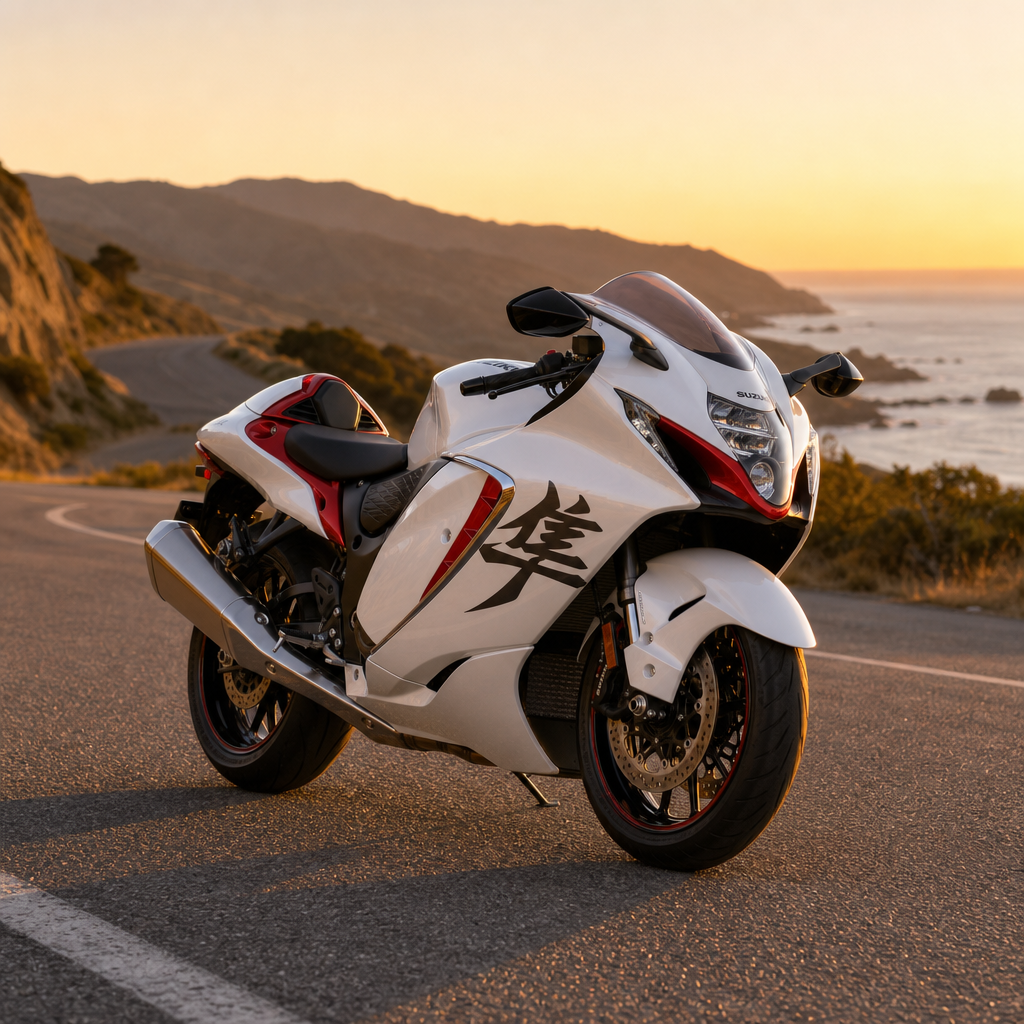
The Suzuki Hayabusa 40th Anniversary Edition is more than a commemorative paint-and-badge package; it is a case study in why Japanese metrics continue to anchor the high-performance motorcycle market in 2026. In this collector’s guide, “Japanese metrics” refers to large-displacement sport and hypersport motorcycles built around metric engineering conventions, global homologation standards, and the specific design philosophy that made brands like Suzuki, Honda, Yamaha, and Kawasaki dominant in speed, reliability, and everyday usability. The Hayabusa sits at the center of that conversation because it never fit neatly into one category. It is not a pure superbike, not a touring rig, and not simply a drag-strip icon. It is a flagship machine defined by top-end power, aerodynamic stability, and long-distance civility. I have worked with buyers, restorers, and insurers on modern collectible motorcycles, and the Hayabusa consistently stands out as the model that attracts both riders and investors. That matters now because anniversary editions tend to create confusion: some become genuine collector pieces, while others are just temporary showroom specials. The 2026 40th Anniversary Edition deserves closer scrutiny because value depends on specification, provenance, market timing, and how this model fits the broader Japanese metric landscape.
For buyers entering the New Rides category, this hub page should function as the foundation for evaluating modern Japanese performance motorcycles. The Hayabusa is the ideal anchor because it connects several buying questions at once: What makes a modern metric bike collectible? How do limited editions differ from standard production models in long-term value? Which features matter more, factory exclusivity or rider appeal? The answers start with context. Since its debut in 1999, the Hayabusa has represented excess with discipline: huge speed, broad torque, stable geometry, and real-world comfort. By the third generation, Suzuki refined that formula with updated electronics, Euro-compliant fueling, IMU-supported rider aids, and improved finish quality without diluting the identity. An anniversary edition layered on top of that platform becomes important not only as a special model, but as a marker of where Japanese metrics stand today. Collectors are no longer buying only vintage homologation legends. Increasingly, they are targeting late-model machines with low production visibility, strong brand mythology, and documented factory distinction. That is exactly why the 2026 Suzuki Hayabusa 40th Anniversary Edition warrants a serious collector’s guide rather than a simple first-look review.
Why the Hayabusa matters in the Japanese metrics hierarchy
Among Japanese metrics, the Hayabusa occupies a rare top tier because it created its own segment. The original GSX1300R forced competitors and regulators to respond, and that legacy still shapes demand. In collector terms, market importance starts with historical relevance. Bikes that changed the industry tend to retain attention even when newer machines outperform them on paper. The Hayabusa did that through a mix of 300 km/h-era notoriety, unmistakable styling, and a level of refinement that made extreme performance usable. Unlike a race-replica liter bike with cramped ergonomics and a narrow powerband, the Hayabusa delivered speed with comfort. That broad appeal is why clean examples from multiple generations keep moving through enthusiast auctions, dealer consignments, and private sales with unusual consistency.
For a 40th Anniversary Edition, hierarchy matters because collectors compare it not only with earlier Busas but with the full Japanese metric field: Kawasaki’s ZX-14R legacy, Yamaha’s increasingly electronic hyper-nakeds, Honda’s engineering-led sport platforms, and Suzuki’s own GSX-R bloodline. The Hayabusa remains distinct because it combines halo-model status with practical ownership. It has a mature aftermarket, excellent parts support relative to many niche sport machines, and a reputation for engine durability when maintained correctly. In plain terms, that means collectors are not buying an ornament they are afraid to start. They are buying a machine that can be preserved, ridden selectively, and documented without fighting impossible service logistics. In my experience, that balance is what separates lasting collectible interest from short-lived showroom hype.
What makes the 2026 40th Anniversary Edition collectible
A collectible modern motorcycle needs more than a numbered plaque. It needs factory-recognized distinction, visible differentiation, and a story buyers can repeat without explanation. The 2026 Suzuki Hayabusa 40th Anniversary Edition, if positioned correctly by Suzuki and dealers, checks those boxes through commemorative branding, likely exclusive color treatment, model-year significance, and association with one of the most recognized names in Japanese performance. The strongest modern collector editions usually share four characteristics: they are immediately identifiable, tied to a meaningful milestone, sold in finite quantities or with constrained market availability, and based on a platform enthusiasts already respect. The Hayabusa meets the fourth condition automatically. The anniversary package must deliver the first three to push values beyond standard third-generation bikes.
Collectors should focus on what is factory unique and what is dealer-added. This distinction affects future value more than many buyers realize. Factory paint codes, serialized documentation, original warning labels, mirrors, exhausts, seat trim, and delivery paperwork all matter because they establish authenticity. Dealer-installed accessories can be useful, but they rarely outperform original specification in long-term collector pricing unless they are period-correct, reversible, and fully documented. If Suzuki issues anniversary-specific badging, wheel finishes, embroidered seats, tank emblems, or key presentation items, preserve them exactly as delivered. I have seen modern limited-edition bikes lose premium simply because the owner replaced stock components early, discarded take-off parts, or could not prove the bike’s launch configuration.
How to evaluate rarity, provenance, and market value
Rarity is often overstated. True collector value comes from verified scarcity plus demand. A bike can be uncommon and still not be valuable if few people care. For the 2026 Hayabusa 40th Anniversary Edition, the strongest indicators will be regional allocation numbers, dealer inventory patterns, and whether Suzuki treats the model as a global commemorative release or a market-specific special. Ask for manufacturer literature, original invoice copies, VIN documentation, and any delivery kit issued with the motorcycle. A limited colorway without paperwork is less compelling than a fully documented example with standard mileage and complete accessories.
Condition grading should be strict. On modern Japanese metrics, buyers inspect paint depth, wheel edge rash, brake hardware finish, chain adjustment marks, ECU tampering signs, and evidence of tuning. Because the Hayabusa has a long customization culture, untouched examples matter. A collector-grade bike should ideally retain stock exhaust, emissions equipment where applicable, original ECU mapping, OEM fasteners, and factory bodywork tabs without repair. Service history is equally important. Oil changes, brake fluid intervals, battery tender use, tire date codes, and recall completion all support value. In valuation work, complete records often close the gap between asking price and sale price faster than cosmetic perfection alone.
| Factor | Why It Matters | Best Collector Outcome |
|---|---|---|
| Factory originality | Confirms authenticity and protects future buyer confidence | 100% stock with all take-off-free delivery parts |
| Documentation | Supports provenance, mileage, and edition status | Invoice, title history, manuals, keys, launch materials |
| Production visibility | Helps establish actual scarcity versus marketing language | Published allocation or dealer-confirmed low supply |
| Mechanical condition | Preserves usability and reduces hidden restoration cost | Dealer-serviced, unmodified, no tuning evidence |
| Cosmetic preservation | Anniversary bikes trade heavily on presentation | Original paint, no rash, no UV fade, indoor storage |
Ownership costs, storage, and preservation strategy
Buying the right bike is only half the job. Preserving a modern Japanese metric collectible requires disciplined storage and maintenance. The Hayabusa is robust, but neglect shows quickly on premium finishes and electronic systems. Store the bike in a climate-controlled garage, use a quality battery maintainer approved for the battery chemistry fitted, and avoid long periods with old fuel in the tank. If the motorcycle will sit for months, stabilized fuel and periodic heat-cycle operation are better than complete dormancy, but random idling is not enough. The bike should be run to full operating temperature and moved enough to prevent flat spots, clutch stiction, and brake corrosion.
Insurance deserves special attention. Standard motorcycle policies may not reflect collector replacement realities, especially for limited editions with low-mileage premiums. Agreed-value coverage from a specialist insurer is often the better route once market comps establish a premium over the base model. Keep dated photographs, odometer records, and all purchase documents in digital and physical form. For owners who plan to ride the bike occasionally, mileage discipline matters. There is no universal cutoff, but the market consistently rewards examples that remain low-mileage without appearing unused to the point of mechanical neglect. In practice, that means careful seasonal riding, immediate cleaning, and service by technicians familiar with Suzuki’s current electronics and service intervals.
How the anniversary Hayabusa compares with other Japanese metric collectibles
The 2026 Hayabusa 40th Anniversary Edition will not exist in a vacuum. Buyers cross-shop it against modern Japanese metric alternatives that offer different kinds of desirability. A Kawasaki ZX-14R Final Edition, where available in used channels, appeals to riders who want a rival legend with comparable long-wheelbase performance and a slightly different styling identity. Honda’s premium sport offerings attract collectors who prioritize engineering precision and brand conservatism. Yamaha’s top performance models often draw technology-focused buyers, especially where electronics and chassis agility matter more than hypersport mythology. Suzuki’s advantage is emotional clarity: almost everyone in the market knows what a Hayabusa represents.
That clarity is a genuine asset in collectibility. Future buyers do not need a long explanation to understand the badge. The model has appeared in media, drag culture, sport-touring circles, and mainstream enthusiast conversations for decades. Within the Japanese metrics subtopic, that broad recognition makes the Hayabusa an effective hub model because it connects speed, heritage, usability, and customization history in one machine. It also benefits from a stronger identity than many anniversary editions attached to otherwise less iconic platforms. If you are building a focused Japanese metric collection, the anniversary Hayabusa works as a centerpiece rather than a side note, especially when paired conceptually with homologation-era superbikes, milestone GSX-Rs, or major Kawasaki and Honda performance flagships.
Should you buy one to ride, collect, or both?
The best answer is both, but only with a plan. Pure investment buyers often misunderstand motorcycle collectibility by treating bikes like sealed products. Motorcycles need maintenance, circulation, and informed stewardship. A well-kept anniversary Hayabusa with modest mileage and flawless records can outperform a neglected ultra-low-mile example in actual market appeal. If you intend to ride, preserve every original component, document service professionally, and avoid irreversible modifications. If you intend to collect, do not let the bike deteriorate from inactivity. Mechanical sympathy is part of value preservation.
For most enthusiasts, the smart play is selective use. Ride the bike enough to keep seals lubricated, systems functioning, and ownership enjoyable, but maintain a collector’s standard in cleaning, storage, and paperwork. The 2026 Suzuki Hayabusa 40th Anniversary Edition matters because it captures the enduring strength of Japanese metrics in a single machine: engineering credibility, cultural recognition, and real-world usability. Those are the qualities that keep collector markets healthy long after launch excitement fades. If you are researching New Rides and want a hub for understanding modern Japanese metric desirability, start here: learn the specs, verify originality, buy the best-documented example you can afford, and preserve it with intent. Done properly, this is not just a special edition purchase. It is a long-term ownership decision with genuine enthusiast and collector upside.
Frequently Asked Questions
What makes the Suzuki Hayabusa 40th Anniversary Edition different from a standard Hayabusa?
The Suzuki Hayabusa 40th Anniversary Edition stands apart because it combines the proven mechanical formula of the current-generation Hayabusa with the added historical weight of a factory-backed commemorative release. In practical terms, that usually means the motorcycle remains fundamentally the same in terms of engine architecture, chassis, electronics, braking package, and overall riding character, but receives a distinct anniversary treatment through exclusive paint, graphics, badging, trim details, and model-year positioning. For collectors, that distinction matters more than it may seem at first glance. A standard Hayabusa is already a flagship Japanese hypersport machine with a deeply established reputation, but an anniversary edition adds narrative value, production-era identity, and stronger long-term recognition in the secondary market.
What gives this edition real significance in a 2026 collector context is not simply cosmetic rarity. It represents Suzuki’s willingness to celebrate one of the most recognizable names in motorcycling while the broader industry continues to shift toward electronics-heavy performance platforms, emissions-driven engineering compromises, and increasingly niche ownership demographics. The Hayabusa 40th Anniversary Edition functions as both a modern motorcycle and a historical marker. It signals continuity: a large-displacement Japanese metric machine still built around stable high-speed manners, real-world power delivery, and a globally legible design language that enthusiasts instantly recognize. That makes it appealing to two groups at once: riders who want a usable hypersport icon and collectors who understand how factory anniversary models often age better in memory than ordinary production examples.
From an ownership standpoint, the difference is also psychological. Buyers do not approach a commemorative Hayabusa the same way they approach a base-model high-performance bike. They tend to preserve original finishes more carefully, retain factory documentation, avoid unnecessary cosmetic modification, and pay more attention to provenance. That behavior can influence future desirability just as much as the motorcycle’s specification sheet. So while the 40th Anniversary Edition may not be a wholly separate mechanical platform, it is absolutely a separate collector proposition, and that is where its real distinction lies.
Why is the Hayabusa 40th Anniversary Edition important in the context of Japanese metrics in 2026?
The Hayabusa 40th Anniversary Edition is important because it highlights exactly why Japanese metrics still anchor the high-performance motorcycle market in 2026. In this context, “Japanese metrics” refers to large-displacement sport and hypersport motorcycles designed around precision engineering, global homologation realities, durable mass-production methods, and an unusually refined balance of speed, reliability, and accessibility. Few motorcycles express that philosophy more clearly than the Hayabusa. It has always been more than a top-speed legend. It is a machine built to deliver extreme performance in a way that remains usable, stable, and surprisingly civilized over long ownership periods. That combination is one of the central reasons Japanese manufacturers continue to define the segment.
The 40th Anniversary Edition matters because it shows the staying power of that formula at a time when the market is crowded with specialized superbikes, boutique exotics, and electronically dense performance machines that can sometimes feel detached from everyday ownership. Suzuki’s approach with the Hayabusa has remained recognizably Japanese: measured engineering, broad capability, dependable component integration, and an emphasis on making a very fast motorcycle function consistently in the real world. For collectors and enthusiasts, that matters just as much as outright numbers. The machine represents an era-spanning design philosophy in which performance is not treated as a fragile showcase, but as something repeatable, durable, and globally relevant.
There is also a broader historical angle. Brands like Suzuki, Honda, Yamaha, and Kawasaki built their reputations by mastering the intersection of speed, scale, and standardization. Their motorcycles succeeded not only because they were fast, but because they could be sold, serviced, ridden, and trusted across continents. The Hayabusa 40th Anniversary Edition preserves that legacy in a single package. It reminds buyers that collector value in 2026 is not just about rarity or horsepower. It is also about cultural importance, engineering lineage, and the continued relevance of the Japanese metric approach to building high-performance motorcycles that people actually want to own.
Is the 2026 Hayabusa 40th Anniversary Edition likely to become a strong collector motorcycle?
Yes, it has many of the characteristics that tend to support long-term collector interest, although “strong collector motorcycle” should be understood in a realistic and nuanced way. The Hayabusa name already carries enormous brand equity. It is one of the few motorcycle model names recognized well beyond core enthusiast circles, and that kind of cultural penetration matters over time. Add a factory anniversary designation, limited-era visual identity, and the broader historical significance of the Hayabusa within the hypersport category, and you have a model that is very likely to remain desirable. Collector demand is rarely created by scarcity alone. It is created when scarcity, reputation, recognizability, and emotional resonance converge. The 40th Anniversary Edition checks many of those boxes.
That said, not every anniversary model becomes instantly valuable in the way some buyers hope. Appreciation depends on several variables: total production volume, regional allocation, how many examples remain unmodified, the survival rate of original accessories and documentation, and how the market views internal-combustion halo bikes over the next decade. A Hayabusa with perfect originality, clean ownership history, factory paint intact, stock exhaust system retained, and complete paperwork will almost always be more attractive to serious buyers than a heavily modified example, even if the modifications are expensive. In collector markets, authenticity usually ages better than personalization.
The strongest case for this model lies in its role as a preserved expression of a mature Japanese hypersport platform. By 2026, motorcycles like this are increasingly appreciated not just as performance tools, but as representatives of a particular engineering era. Enthusiasts understand that modern regulations, changing buyer habits, and shifting manufacturer priorities can make these machines harder to replicate in the future. That gives the 40th Anniversary Edition a good foundation for long-term significance. It may not behave like an ultra-low-volume homologation special, but as a blue-chip modern Japanese collectible with broad name recognition and lasting cross-generational appeal, it has a very credible future.
What should collectors look for when buying or preserving a Hayabusa 40th Anniversary Edition?
Collectors should focus on originality, documentation, condition, and traceable history above all else. Start with the basics: verify the VIN, confirm the motorcycle is a genuine anniversary edition rather than a standard model dressed with aftermarket graphics, and compare the paint scheme, badges, trim, and factory equipment against official Suzuki specifications for the market in which the bike was sold. Because anniversary models often derive much of their collector value from factory-correct presentation, even small inconsistencies can matter. Non-original levers, mirrors, exhausts, turn signals, windscreens, seats, and tail tidy kits may not ruin the ownership experience, but they can dilute collectibility if the original parts are missing.
Service history is equally important. A collectible Hayabusa should not be neglected in the name of low mileage. In fact, a bike with sensible mileage and documented maintenance is often a better acquisition than an ultra-low-mileage example that has spent years sitting improperly stored. Fluids age, seals harden, batteries fail, and tires date out. Collectors should look for regular oil and brake fluid changes, battery care, proper tire replacement, chain maintenance, and evidence that recalls or service campaigns have been addressed. The best examples are usually owned by enthusiasts who understood that preservation includes mechanical stewardship, not just cosmetic caution.
For long-term preservation, the strategy is straightforward: keep the motorcycle clean, dry, complete, and as close to stock as possible. Store it in a climate-stable environment, use a quality cover only in conditions where it will not trap moisture, maintain the battery correctly, and avoid fuel-system neglect if the bike is not ridden often. If modifications are made for riding enjoyment, retain every original take-off part and label it clearly. Also preserve the soft assets: owner’s manual, toolkit, sales invoice, spare keys, promotional literature, dealer correspondence, and any anniversary-specific packaging or certificates. Over time, these details can meaningfully strengthen provenance and buyer confidence. In collector terms, the best Hayabusa 40th Anniversary Edition is not simply the shiniest one; it is the one with the clearest story and the fewest unanswered questions.
Should the Hayabusa 40th Anniversary Edition be ridden regularly or stored as an investment?
For most owners, the smartest answer is a balanced one: preserve it carefully, but do not be afraid to ride it responsibly. The Hayabusa was engineered to be used, and one of the reasons Japanese metrics remain so respected is that they combine extreme performance with genuine durability. A modern Hayabusa that is exercised properly, serviced on schedule, and stored correctly will often remain healthier than one that is treated as a static object for years. Mechanical systems benefit from circulation, heat cycles, and regular inspection. From a practical ownership perspective, moderate use can be entirely compatible with long-term collectibility, especially if mileage remains reasonable and the bike stays original.
That said, how you ride it matters. A collector-grade anniversary model should not be subjected to careless cosmetic risk, aggressive modification, or poor maintenance habits. Stone