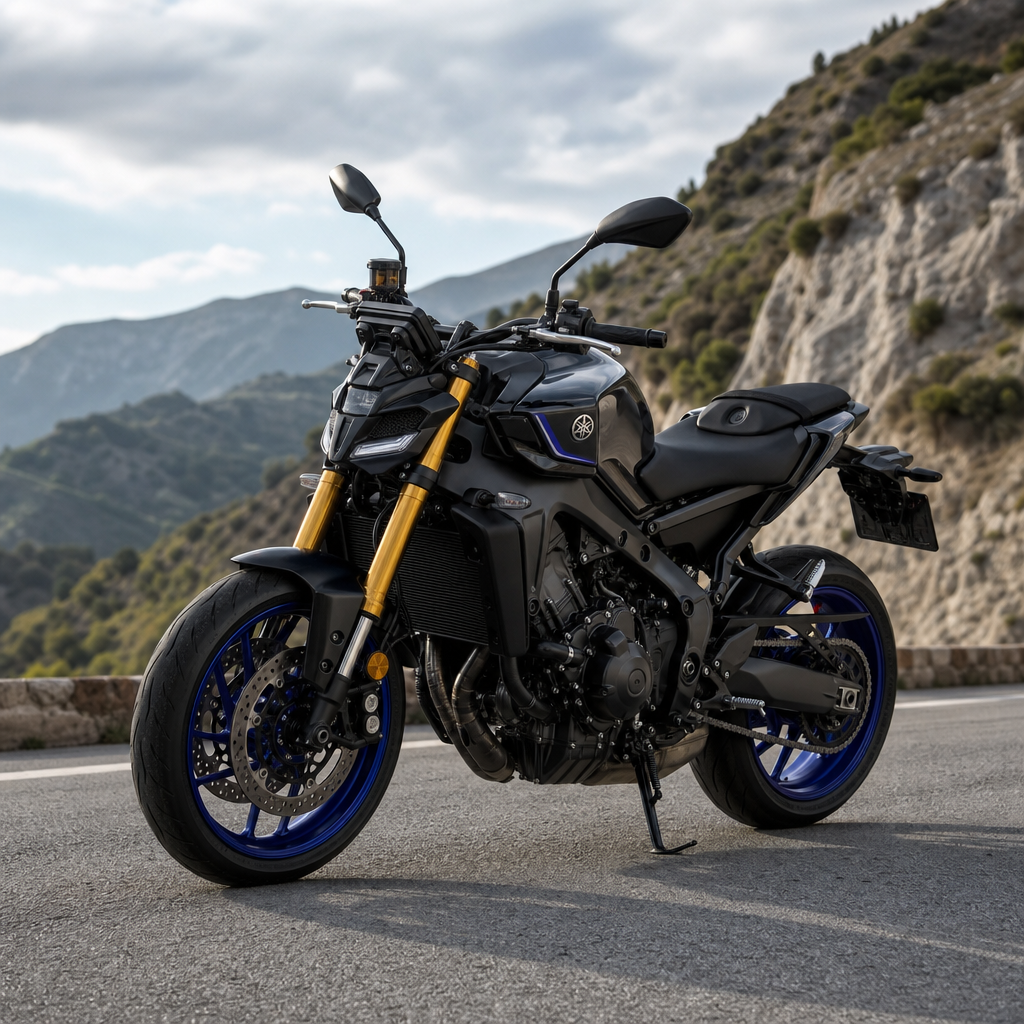
The 2026 Yamaha MT-09 SP sits in a crowded class of middleweight naked bikes, yet it targets a very specific buyer: riders who love the standard MT-09’s triple-cylinder punch but want sharper chassis control, richer component quality, and a machine that feels closer to a street-focused track tool. The central question is simple: is the new suspension worth the premium? After spending years evaluating Japanese metric motorcycles, comparing spec sheets, riding back roads, and watching ownership patterns, I can say the answer depends less on brand loyalty and more on how you ride, what roads you use, and how sensitive you are to suspension quality.
In motorcycle terms, Japanese metrics refers to metric-displacement bikes built by Japan’s four major manufacturers: Yamaha, Honda, Kawasaki, and Suzuki. These machines dominate categories from beginner commuters to litre-class superbikes, and they have long set the benchmark for performance per dollar, reliability, dealer support, and engineering consistency. Within that larger world, the Yamaha MT-09 SP belongs to an especially important segment: premium middleweight naked bikes. These are upright, usable motorcycles with serious engine performance, advanced electronics, and enough chassis sophistication to satisfy experienced riders without the cost or discomfort of a full superbike.
That context matters because the MT-09 SP is not judged in isolation. Buyers cross-shop it against the standard MT-09, Kawasaki Z900 SE, Suzuki GSX-S1000, Triumph Street Triple RS, and sometimes even sport-touring options. The SP badge signals that Yamaha has gone beyond cosmetic upgrades. It typically means premium suspension, upgraded braking hardware or settings, refined rider aids, and a more exclusive finish. On a spec sheet, those changes are easy to list. On the road, the real issue is whether they materially improve confidence, grip, comfort, and control enough to justify the higher price.
This article serves as a hub for Japanese metrics under the New Rides topic, so it also frames the broader buying logic behind performance-focused Japanese bikes. Riders shopping this class usually ask the same practical questions. How much better is premium suspension in everyday riding? Does electronically adjustable hardware matter if you never visit a track? Will a better-equipped middleweight outperform a cheaper bike once roads get bumpy and technical? And does Yamaha’s execution in 2026 move the MT-09 SP closer to the class leaders in finish and composure? Those are the questions that actually determine value, and they deserve direct answers.
What Yamaha Changed on the 2026 MT-09 SP
The biggest talking point is the suspension package. Yamaha has long used the SP trim to separate a good platform from a more polished one, and the 2026 MT-09 SP continues that strategy with upgraded, higher-spec suspension intended to improve front-end feedback, braking stability, and mid-corner composure. On bikes like this, suspension is not just about plushness. It controls pitch under braking, squat under acceleration, wheel tracking over rough pavement, and how consistently the tires maintain contact with the road. When riders say a bike feels settled, planted, or confidence-inspiring, suspension quality is usually the reason.
In practical terms, the SP’s advantage over the standard MT-09 comes from damping quality and adjustment range. Better forks and a better rear shock do not simply make a motorcycle firmer. Good suspension separates low-speed chassis movement from high-speed bump absorption. That means the bike can resist excessive dive when you grab a handful of front brake, yet still absorb sharp pavement edges without deflecting off line. On a fast back road, that difference is obvious within minutes. I have seen many riders assume suspension upgrades only matter at racetrack pace, then change their minds the first time they hit a rippled corner while trail braking.
Yamaha usually supports the SP package with a more premium finish and software calibration that complements the hardware. Expect the same fundamentally excellent CP3 engine character: strong midrange, distinctive intake and exhaust note, and responsive drive out of corners. The triple is one of the best engines in the Japanese metric world because it splits the difference between a revvier inline-four and a torquier twin. It pulls hard in the middle, responds instantly, and stays entertaining at legal road speeds, which is exactly what naked-bike buyers want.
Why Suspension Changes the Riding Experience More Than Most Upgrades
If you want the shortest answer, here it is: suspension is often the most meaningful premium upgrade on a performance street bike because it improves every mile, not just peak horsepower moments. Riders notice engines in bursts. They live with suspension constantly. Every stoplight, freeway expansion joint, decreasing-radius turn, and rough county road reveals whether a bike is merely fast or genuinely refined.
The standard MT-09 has historically delivered strong value but could feel busy or abrupt when pushed on imperfect pavement. That is not unusual in this class. Manufacturers tune base models to satisfy a wide range of riders, price targets, and test conditions. The result can be acceptable control without exceptional damping. The SP version aims to close that gap. Better suspension broadens the bike’s usable envelope. It lets a newer rider make a mistake without the chassis unraveling and lets an experienced rider carry more corner speed with less effort.
Consider a common real-world scenario: a fast two-lane road with patched asphalt, a downhill braking zone, and a corner that tightens unexpectedly. On a lesser setup, the fork may dive too quickly, reducing chassis balance, while the shock struggles to keep the rear settled over bumps. The rider feels movement, uncertainty, and a need to back off. On a better setup, the fork uses travel more progressively and the rear tire stays loaded more consistently. The result is not just speed. It is trust. Trust is the premium product riders actually buy.
Suspension also reduces fatigue. A well-damped motorcycle asks for fewer corrections. You stop fighting bar movement, line changes, and abrupt chassis reactions. Over a full day ride, that matters more than most brochure features. Riders often spend money on exhausts, tail tidies, or cosmetic parts before addressing suspension, but the riding payoff is usually larger with suspension work than any other single modification short of tires.
MT-09 SP Versus Other Japanese Metrics in 2026
As a Japanese metrics hub, this is where the MT-09 SP must be placed against its most relevant alternatives. The Kawasaki Z900 SE remains a key rival because it follows a similar formula: proven engine, upgraded suspension and brakes, and a premium trim aimed at riders who want a better-equipped version of a popular standard model. The Suzuki GSX-S1000 offers more outright power and litre-bike drama, but its value equation differs because it trades some finesse and compactness for bigger-engine acceleration. Honda’s CB1000 Hornet, depending on market availability, also enters the conversation with strong performance credibility and typically polished road manners.
Within Japanese metrics, Yamaha’s advantage is the CP3 engine and the MT platform’s compact, supermoto-adjacent feel. Kawasaki counters with silky inline-four smoothness and a more planted, mature character. Suzuki counters with brute-force value. Honda usually counters with balance and finish. The deciding factor for many riders becomes not horsepower but chassis behavior. On technical roads, a lighter-feeling bike with excellent suspension often delivers more satisfaction than a heavier machine with more top-end power.
| Model | Core Strength | Likely Tradeoff | Best For |
|---|---|---|---|
| Yamaha MT-09 SP | Triple-engine character and premium chassis feel | Higher price than base MT-09 | Riders prioritizing handling and engagement |
| Kawasaki Z900 SE | Smooth inline-four and strong all-round road stability | Less distinctive engine personality | Riders wanting refinement and predictability |
| Suzuki GSX-S1000 | Excellent power-per-dollar | Bigger-bike feel in tighter roads | Riders wanting litre-bike performance value |
| Honda CB1000-class rivals | Balanced engineering and everyday usability | May feel less edgy or playful | Riders wanting polish over drama |
Against those competitors, the 2026 Yamaha MT-09 SP makes its case by delivering premium-road aggression without stepping into superbike pricing. That positioning matters in Japanese metrics because buyers often shop rationally. They compare service intervals, insurance, fuel range, dealer networks, parts availability, and resale. Yamaha usually scores well across those criteria, making the SP premium easier to justify than it would be on a boutique European bike with similar intent.
Who Should Pay the Premium and Who Should Skip It
The riders who should pay for the MT-09 SP are the ones who already notice suspension. If you can feel when a fork rebounds too quickly, if you deliberately seek out twisty roads, if you brake hard and use the front tire aggressively, or if you plan occasional track days, the SP is the smarter buy. It is usually cheaper to buy the better suspension from the factory than to replicate that level of integration later with aftermarket parts, setup time, and tuning labor. Factory-developed systems also preserve resale better because future buyers understand the SP badge immediately.
The SP also makes sense for heavier or more experienced riders who exceed the average assumptions baked into a standard bike’s setup. More capable suspension tends to offer better support and broader adjustability, which means a proper sag and damping setup has a higher ceiling. Riders carrying luggage regularly, riding in the mountains, or commuting over poor pavement can also benefit, because premium suspension is not exclusively a sporting advantage.
Who should skip it? Riders who cruise, commute casually, and rarely push beyond moderate pace may be perfectly happy with the standard MT-09. If your roads are straight, your speed is conservative, and your main priorities are engine character and price, the base bike likely delivers most of what makes the MT-09 great. Riders on tight budgets should also compare the price gap against practical needs like riding gear, insurance, and tires. A base MT-09 with excellent tires, proper setup, and rider training can be a better real-world package than an SP ridden on worn rubber by an underprepared owner.
The key principle is honest self-assessment. Premium suspension is worth real money, but only if you use what it offers. If you are the type of rider who buys the best version and keeps it for years, the SP usually makes emotional and financial sense. If you trade often or ride gently, the standard bike may be the smarter metric purchase.
Ownership Value, Resale, and the Bigger Japanese Metrics Picture
When evaluating any new ride in the Japanese metrics category, purchase price is only one part of the equation. Ownership value includes maintenance, reliability, consumables, financing, depreciation, and how much modification the bike needs after you bring it home. Yamaha has an advantage here because the MT-09 platform is established, the CP3 engine has a strong reputation, and dealer familiarity is widespread. That lowers uncertainty, which is important when spending extra on a premium trim.
Resale is another major factor. In my experience, special trims with clearly understood equipment upgrades hold attention better than cosmetic editions. Buyers know what SP means. They recognize upgraded suspension and are more willing to pay for it on the used market, especially if the bike is clean and unmodified. By contrast, money spent later on aftermarket suspension rarely returns dollar for dollar, even if the parts are excellent. Factory premium models also appeal to financing customers and buyers who want turnkey quality without hunting for setup receipts.
Within the broader Japanese metrics landscape, the MT-09 SP also represents where the segment is heading. Riders increasingly want one motorcycle that can commute Monday, carve canyons Saturday, and survive occasional track use without major changes. Premium middleweights answer that need better than oversized naked bikes for many owners. They are lighter, more approachable, and often more enjoyable at sane road speeds. That is why this class matters so much in New Rides coverage: it reflects how enthusiasts actually ride now, not how they imagine they will ride.
Final Verdict: Is the New Suspension Worth the Premium?
Yes, for the right rider, the 2026 Yamaha MT-09 SP’s new suspension is worth the premium because it improves the part of motorcycling you experience most: chassis control. Better damping, stronger composure under braking, cleaner corner exits, and reduced fatigue are not theoretical benefits. They show up on ordinary roads, in imperfect conditions, at speeds well below a racetrack sprint. If you value handling feel, ride demanding roads, or simply want the most complete version of one of the best Japanese metric naked bikes on sale, the SP is the one to buy.
The standard MT-09 remains an excellent motorcycle and may still be the better value for riders who prioritize price above refinement. But value and worth are not identical. The SP asks for more money and gives you something meaningful in return: more confidence, more polish, and more room to grow as a rider. In a market crowded with fast motorcycles, that distinction matters.
For shoppers using this article as a Japanese metrics hub, the takeaway is clear. Compare engines, electronics, and styling, but do not underestimate suspension. It is often the upgrade that most changes ownership satisfaction. If the 2026 MT-09 SP fits your budget, put it high on your test-ride list, then ride it back-to-back with the standard bike and its closest Japanese rivals. The premium will make sense quickly, or it will not, and a short ride on real roads is the best way to decide.
Frequently Asked Questions
1. What makes the 2026 Yamaha MT-09 SP’s suspension different from the standard MT-09?
The biggest difference is not just that the MT-09 SP has “better parts” on paper, but that its suspension package is aimed at riders who can actually feel and use the extra control. The standard MT-09 is already a capable middleweight naked bike, but the SP adds a more premium suspension setup that is designed to deliver improved damping consistency, clearer front-end feedback, and better composure when the pace rises. In real-world terms, that means the bike feels more settled over broken pavement, more confident when braking hard into corners, and more precise when you begin pushing through fast transitions.
On a street-focused performance bike like the MT-09, suspension quality matters because the chassis has to manage a lot of competing demands. It has to stay compliant enough for rough public roads, but also resist dive, squat, and wallow when the rider starts exploiting the CP3 engine’s strong torque and lively character. The SP’s upgraded components are meant to widen that performance window. Compared with the base bike, the SP typically offers finer adjustability and a more controlled feel, especially when cornering aggressively or riding roads with inconsistent surfaces.
That difference may sound subtle on a spec sheet, but it becomes easier to understand from the saddle. A standard MT-09 is fun, energetic, and highly usable. The SP version feels more polished and more deliberate. Instead of merely reacting to bumps and rider inputs, it tends to feel like it is anticipating them better, holding its line with less drama, and giving the rider more confidence to carry speed. For experienced riders, that added chassis sophistication is often the entire point of stepping up to the SP.
2. Is the new suspension actually worth the premium for everyday street riding?
For many buyers, this is the real question, and the honest answer is that it depends on how you ride, what roads you ride on, and how sensitive you are to chassis behavior. If your typical use is commuting, relaxed weekend cruising, and the occasional spirited blast on smooth roads, the standard MT-09 already delivers a strong value proposition. It has the same core appeal: a charismatic triple-cylinder engine, upright ergonomics, sharp styling, and a playful personality. In that context, the SP’s extra cost may feel more like a luxury than a necessity.
However, “everyday street riding” means different things to different riders. If your daily roads are rough, cambered, patched, or full of mid-corner bumps, the SP’s better suspension can absolutely improve the ownership experience. A more controlled fork and shock setup can reduce harshness without becoming vague, helping the bike stay planted when the pavement is less than ideal. That translates into less rider fatigue, more predictability, and more enjoyment even at sane road speeds. You do not have to ride like you are chasing lap times to appreciate a bike that feels calmer and more composed.
The premium makes the most sense for riders who tend to notice things like brake dive, rear-end movement on corner exits, or a front tire that feels less than perfectly tied down over rough asphalt. Those riders will likely view the SP as money well spent because the suspension upgrade affects the bike’s behavior almost all the time, not just during all-out riding. If you are the kind of owner who keeps a bike for years and wants the best factory-developed version of the MT-09 platform, the SP is easier to justify. If you mainly want the engine, styling, and naked-bike versatility at the strongest price, the standard model remains the smarter buy.
3. Who should buy the 2026 Yamaha MT-09 SP instead of the regular MT-09?
The MT-09 SP is best suited to riders who already know what they value in a performance chassis. That includes experienced street riders, aggressive canyon riders, occasional track-day participants, and owners who are likely to fine-tune suspension settings rather than leave everything in the default position forever. If you have spent time on bikes with premium forks and shocks before, you will probably recognize the SP’s appeal immediately. It is aimed at people who want more than just speed; they want control, feel, and a higher-quality connection between the tires and the road.
It also makes sense for buyers who prefer purchasing the top-spec factory version rather than modifying a base bike later. Upgrading suspension after the fact can get expensive quickly, especially if you want parts that are fully matched, properly installed, and professionally set up. The SP gives you a more complete package from day one, and that matters for riders who want a cleaner ownership path with less aftermarket trial and error. For them, paying more upfront can be a smarter long-term decision than trying to replicate the same result piece by piece.
On the other hand, newer riders or more casual owners may not benefit enough to justify the extra cost. If you are still developing your riding skills, the standard MT-09 is already a highly capable machine, and your money may be better spent on quality tires, rider training, and seat time. Likewise, if comfort, cost efficiency, and general enjoyment rank above ultimate chassis precision, the base bike may hit the sweet spot. The SP is not automatically the better choice for everyone; it is the better choice for the rider who will actually use and appreciate what its upgraded suspension delivers.
4. How much difference does the upgraded suspension make in spirited riding and light track use?
In spirited riding, the difference can be substantial. This is where the SP starts to separate itself from the standard MT-09 in a way that goes beyond marketing language. When you ride harder, the demands on the suspension increase quickly. Hard braking loads the fork heavily, rapid direction changes challenge damping control, and strong acceleration asks the rear suspension to maintain grip without upsetting the chassis. A more advanced suspension package helps the bike remain composed through all of that, which in turn allows the rider to be smoother and more confident.
On a technical back road, the SP is likely to feel sharper and more trustworthy when corner entries get serious. The front end should communicate more clearly, making it easier to judge available grip and hold an intended line. Mid-corner bumps are handled with less disruption, and the rear of the bike tends to stay more settled when you get back on the throttle. That matters because the MT-09’s triple-cylinder engine encourages exactly this kind of aggressive, torque-driven riding style. Better suspension helps the chassis keep up with the engine’s enthusiasm.
For light track use, the value becomes even easier to see. Most stock middleweight naked bikes are capable of surviving a novice track day, but not all of them feel equally refined once pace increases and braking zones shorten. The SP’s upgraded setup is more likely to offer the damping support and adjustability needed for track-oriented settings, especially for riders who want to dial in the bike for their weight, pace, and tire choice. It still is not a full supersport replacement, and it remains a naked street bike first, but the SP better supports that “street tool with track instincts” role. If occasional track days are part of your ownership plan, the premium becomes much easier to defend.
5. Is it smarter to buy the MT-09 SP from the factory or upgrade the standard bike’s suspension later?
In most cases, buying the MT-09 SP from the factory is the cleaner and often more cost-effective decision if premium suspension is already on your wish list. Factory-developed performance variants tend to offer a more integrated package. The suspension, electronics calibration, chassis balance, and overall intended character are designed to work together. That does not mean the SP is magically perfect for every rider, but it does mean Yamaha has already done a large portion of the development work, and you get that refinement immediately without having to experiment with aftermarket combinations.
Upgrading a standard MT-09 later can still be a valid route, especially for riders who want a custom setup tailored to a specific use case. A rider focused primarily on track days, for example, might eventually choose springs, valving, or shock options that go beyond what the SP offers in stock form. But once you factor in premium parts, labor, setup time, and the possibility of getting it wrong the first time, the costs can climb fast. Just as importantly, not every owner wants to deal with the process of diagnosing what the bike needs, sourcing components, and paying for proper tuning.
The factory SP is usually the better answer for buyers who know they want the best out-of-the-box MT-09 experience and prefer convenience, resale appeal, and a complete premium package. The standard bike plus later upgrades makes more sense if budget forces a phased approach or if you are highly particular and committed to building the bike around your own preferences. For the average enthusiast comparing real ownership scenarios, the SP often ends up being the smarter buy because it delivers the suspension advantage immediately, preserves factory cohesion, and removes much of the guesswork. That is exactly why the “is it worth the premium?” debate tends to land in favor of the SP for serious riders, while the regular MT-09 remains the value pick for everyone else.