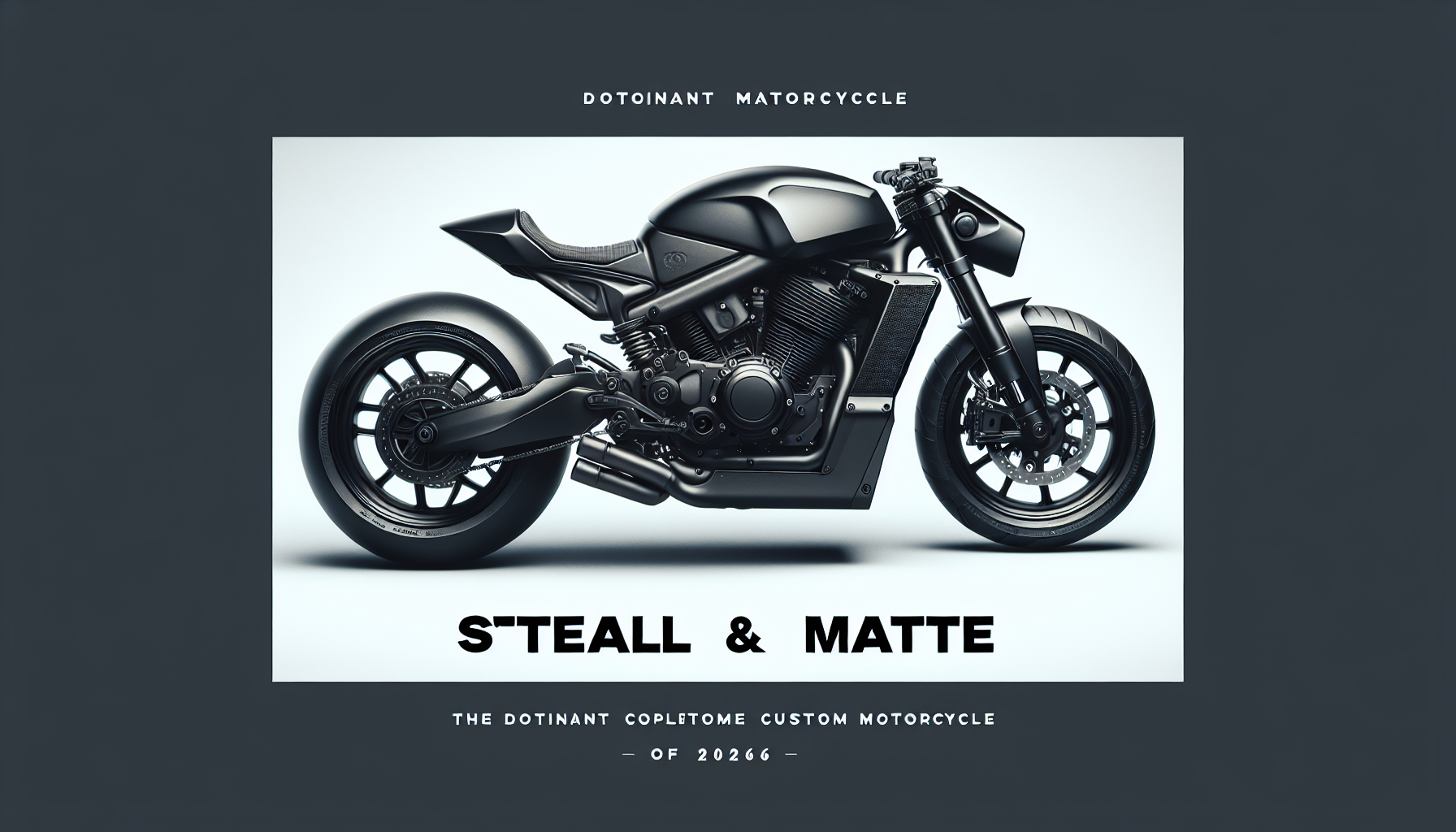
Stealth and matte finishes have become the defining custom motorcycle aesthetic of 2026, shaping everything from garage-built street trackers to premium baggers commissioned through major fabrication shops. In practical terms, “stealth” refers to a restrained, purpose-driven visual language: reduced chrome, darkened hardware, low-gloss surfaces, hidden wiring, compact lighting, and tight body lines that make a bike look faster, leaner, and more intentional. “Matte” describes the finish quality most closely associated with that look, whether it appears as matte black, satin gunmetal, smoked bronze, flat army green, muted tan, or textured ceramic-coated metal. Riders are choosing these surfaces not because they are trendy in a shallow sense, but because they communicate mechanical seriousness and modern taste at a glance.
I have watched this shift happen in real workshops over the last several build cycles. A few years ago, many clients still asked for high-flake paint, polished covers, and bright accent parts. By late 2024 and throughout 2025, briefs changed noticeably. Customers began bringing reference photos with blackout engines, satin exhausts, micro turn signals, Alcantara or distressed leather seats, and wheels finished in powder-coated charcoal rather than gloss black. In 2026, that preference is no longer niche. It dominates custom culture because it works across styles: club-style Harley-Davidsons, performance baggers, neo-retro Triumphs, Yamaha XSR builds, BMW R nineT customs, and even electric concepts all wear the aesthetic convincingly.
This matters because trends and styles are not superficial in custom culture. They influence parts selection, fabrication decisions, maintenance routines, resale value, rider identity, and the way motorcycles are photographed, shared, and judged. A stealth build requires different planning than a chrome-heavy show bike. Surface preparation becomes more critical. Fasteners that once disappeared in polished metal now stand out if the coating tone is wrong. A matte tank demands careful cleaning methods to avoid shiny spots. Lighting has to be integrated cleanly, because the whole look depends on visual discipline. In other words, the dominant custom motorcycle aesthetic of 2026 is not just a color choice. It is a complete design system.
As the Trends and Styles hub within Custom Culture, this article maps that system clearly. It explains why stealth and matte took over, which motorcycles suit the look best, what materials and finishes are driving it, how builders combine style with performance, where the aesthetic can fail, and which adjacent style directions are branching from the same core. If you want to understand what custom motorcycles look like now, what riders are requesting next, and how to plan a build that feels current without becoming disposable, this is the baseline.
Why stealth and matte became the default look in 2026
The rise of stealth and matte styling comes from three forces working together: contemporary industrial design, improved finishing technology, and social media image behavior. Modern consumer products across automotive, tactical gear, cycling, and electronics have shifted toward muted surfaces, hidden seams, and low-reflection materials. Motorcycles followed the same visual logic. On a custom bike, matte and satin finishes emphasize form over sparkle. They let the tank shape, subframe angle, fork stance, and wheel fitment do the talking. That is why a bike with basic paint but excellent proportion often gets stronger reactions than a heavily chromed build with cluttered lines.
Technology also pushed the trend forward. Powder coating quality improved, Cerakote became more common on exhausts and engine parts, paint suppliers refined satin clears, and OEM manufacturers normalized low-gloss finishes on production bikes. Once riders saw factory matte schemes on Ducati, Indian, Harley-Davidson, Honda, and KTM models, they became more comfortable carrying that language into custom work. Builders could then layer higher-end details on top: vapor-honed aluminum, DLC-coated fork tubes, black zinc fasteners, laser-cut bracketry, and hidden LED integrations. The result looked expensive, not unfinished.
The third driver is visual media. Gloss paint can look spectacular in person, but it is hard to photograph consistently because reflections distort surfaces and clutter compositions. Matte and satin finishes read cleanly on phones, in reels, under workshop lighting, and against urban backdrops. That matters because custom culture now lives partly through digital discovery. A style that photographs well spreads faster, wins more saves, and gets copied more often. The stealth aesthetic became dominant because it performs both on the street and on a screen.
The design language: what defines a stealth custom motorcycle
A true stealth build is not simply a black motorcycle. The design language depends on restraint, contrast control, and coherence. The most successful examples use a tight material palette, usually three finishes or fewer across major visible components. A common combination is matte black bodywork, satin charcoal wheels, and brushed or blasted metal on selective mechanical parts. Another is smoked olive paint with black engine cases and dark bronze accents on calipers, reservoir caps, or exhaust shields. What matters is consistency. If gloss, chrome, matte, raw alloy, and colored anodizing all compete at once, the effect collapses.
Builders also reduce visual noise aggressively. They relocate or hide cables, shorten rear sections, use integrated tail lights, trim bulky fenders, and replace oversized stock mirrors with compact homologated options. Seats tend to be flatter and cleaner, often with subtle stitching rather than decorative quilting. Exhausts are tucked tighter to the bike and finished in ceramic black or titanium gray. Even branding is restrained; tank logos are often deleted, ghosted, engraved, or rendered tone-on-tone. This is why stealth styling feels modern: it removes interruption.
There is still room for contrast, but it is controlled contrast. Machined fins on air-cooled cylinders, stainless headers that blue slightly with heat, or a brushed aluminum side cover can create enough visual interest without breaking the subdued mood. I usually advise builders to choose one highlight area only. On a V-twin bagger, that might be the exhaust. On a retro twin, it may be fork lowers or engine side cases. Limiting highlights is the difference between editorial-grade style and a parts catalog look.
Where the aesthetic works best across motorcycle categories
Stealth and matte styling is unusually versatile because it adapts to several custom platforms without losing credibility. Performance baggers use it to reduce the visual bulk of fairings, panniers, and long wheelbases. Club-style Dynas and Low Riders use blackout finishes to amplify aggression and make suspension, brakes, and engine upgrades stand out. Naked sport bikes and streetfighters benefit because the look matches exposed mechanical structure and angular bodywork. Neo-retro platforms, especially the Triumph Bonneville family, BMW R nineT, Yamaha XSR series, and Honda CB-based customs, use matte finishes to bridge heritage shapes with present-day taste.
Adventure and scrambler customs are another strong fit. Matte olive, sand, slate, and storm gray tones align naturally with off-road cues, high-mounted exhausts, handguards, and practical luggage. The finish also hides minor abrasion better than deep gloss in real use. Electric customs, meanwhile, may be the purest expression of the stealth aesthetic. Their simplified drivetrains, smooth battery enclosures, and minimal bodywork pair naturally with satin surfaces and integrated lighting, creating an almost concept-bike effect without excessive fabrication.
| Motorcycle category | Why stealth styling fits | Typical finish choices |
|---|---|---|
| Performance bagger | Visually slims large bodywork and emphasizes stance | Matte black, satin bronze, smoked clear |
| Club-style cruiser | Supports aggressive bars, fairings, and upgraded suspension | Flat black, ceramic black exhaust, dark gray wheels |
| Neo-retro roadster | Balances classic tank shapes with modern minimalism | Satin green, brushed alloy, muted tan seat |
| Scrambler or ADV custom | Matches utilitarian parts and hides wear better in use | Matte sand, textured coatings, black hardware |
| Electric custom | Complements clean architecture and integrated lighting | Satin graphite, smoked acrylic, low-gloss silver |
The key is matching the finish to the bike’s purpose. A stealth style should reinforce how the motorcycle rides and feels, not fight it. That is why a stripped urban tracker in matte charcoal feels authentic, while the same treatment on a highly ornate cruiser can look forced unless the entire build is redesigned around cleaner lines.
Materials, coatings, and color trends shaping current builds
The 2026 palette extends beyond simple flat black. Matte black remains foundational, but the strongest builds use layered neutrals and muted earth tones. Gunmetal, volcanic gray, cinder, satin navy, oxidized bronze, desert tan, and military-inspired greens have all become common because they preserve the stealth mood while adding depth. On premium customs, these colors are often paired with satin clear coats rather than true dead-flat finishes. Satin is easier to maintain, more forgiving of fingerprints, and gives bodywork a richer, more deliberate appearance.
On the materials side, powder coating is still the workhorse for frames, wheels, brackets, and many ancillary parts because it is durable and cost-effective. Cerakote has become especially important for exhaust systems, heat shields, fork lowers, and engine components exposed to high temperatures. Unlike ordinary paint, it offers strong chemical resistance and stable color under thermal stress. For metal parts that should not disappear completely, vapor honing is popular because it leaves aluminum clean and refined without turning it mirror bright. PVD and DLC coatings are showing up more often on premium hardware and suspension components, giving builders durable dark finishes with a technical edge.
Textiles matter too. Seat materials have shifted away from bright vinyls toward micro-textured synthetics, waxed canvas accents, weatherproof suede alternatives, and full-grain leathers in tobacco, charcoal, and worn brown. These surfaces stop the build from feeling one-dimensional. In fact, many of the best matte customs use one warm material, usually the seat or grips, to soften an otherwise dark machine. The contrast reads intentional and keeps the bike from looking generic.
How style and performance now merge in leading custom shops
One reason stealth and matte became dominant is that they pair naturally with performance upgrades. The current custom market values motorcycles that look serious because they are serious. In my experience, customers asking for satin paint and ceramic-coated exhausts are also more likely to ask about cartridge forks, radial brake conversions, piggyback shocks, tune files, forged wheels, and weight reduction. The aesthetic signals function. It says the bike was built to ride hard, not just to sit under lights.
Leading shops understand this relationship and design accordingly. A performance bagger might combine matte bodywork with CNC rearsets, Ohlins suspension, Brembo calipers, and a two-into-one exhaust. A stealthy roadster may wear minimalist body panels but hide significant upgrades: ECU remapping through Woolich or Dynojet tools, stainless brake lines, lithium battery conversion, custom subframe work, and revised ergonomics. The finish is the visual wrapper around engineering choices.
That does not mean every stealth build is high horsepower. It means the style rewards honest function. If the bike has visible improvements in stance, braking, comfort, and mechanical cleanliness, the subdued finish amplifies those upgrades. If the build is mostly cosmetic, the same finish can expose its weakness because there is nowhere for poor fitment or cheap parts to hide. Matte surfaces are unforgiving in that way. They force discipline.
Common mistakes, maintenance realities, and how to build the look well
The biggest mistake in matte motorcycle design is confusing darkness with cohesion. Blacking out every component often creates a lifeless silhouette with no hierarchy. The second mistake is mixing incompatible blacks: gloss frame, matte tank, satin side covers, textured fender, and faded plastic all on one bike. Under daylight, those differences become obvious and cheapen the whole result. Finish planning must happen before parts ordering, not after assembly.
Maintenance is another area where expectations need to be realistic. Matte and satin finishes can be durable, but they are not carefree. Traditional polishes should never be used on matte paint because they create shiny patches that cannot be blended easily. Cleaners must be wax-free and formulated for low-gloss surfaces. Fuel spills should be wiped quickly. Touch-up work is harder than on gloss finishes because sheen matching is difficult. Powder-coated parts resist abuse well, but edges can still chip if tools slip during installation. Ceramic-coated exhausts handle heat impressively, yet road salt and harsh chemicals still shorten finish life.
To build the look well, start with a controlled plan. Choose a dominant color, a secondary finish, and one highlight material. Standardize fasteners. Replace worn plastics rather than painting over them poorly. Decide early which stock elements will be deleted, hidden, or refined. Spend money on stance, fitment, and lighting integration before chasing exotic paint. The strongest stealth customs are not the darkest. They are the most resolved.
What this trend means for the future of custom culture
Stealth and matte styling has earned its position because it answers current rider priorities better than louder aesthetics do. It feels modern without depending on gimmicks. It supports performance narratives, photographs cleanly, adapts across platforms, and gives builders room to express quality through proportion, finish control, and subtle materials. More importantly, it has become the reference point from which other trends now branch. Technical bronze accents, tactical earth tones, retro-industrial alloy contrasts, and minimalist electric customs all grow from the same preference for reduced gloss and stronger visual discipline.
For anyone following Custom Culture, this makes the trend central rather than peripheral. Understanding it helps you evaluate new builds, spot superficial copies, and plan projects that feel current while remaining durable in taste. The lesson is simple: the dominant custom motorcycle aesthetic of 2026 is not about hiding a bike under black paint. It is about refining every visible choice until the motorcycle looks purposeful, cohesive, and ready to ride. Use this hub as your starting point, then apply the principles thoughtfully to your own platform, budget, and style direction.
Frequently Asked Questions
What does “stealth and matte” actually mean in custom motorcycle design in 2026?
In 2026, “stealth and matte” is much more than a paint choice. It describes a complete design philosophy that favors visual restraint, functional detailing, and a more deliberate, performance-oriented look. “Stealth” typically refers to reduced chrome, blacked-out or dark-finished hardware, hidden wiring, compact lighting, simplified bodywork, and tighter visual packaging overall. The goal is to make the motorcycle appear cleaner, lower, faster, and more intentional, whether it is a stripped street tracker, a club-style performance cruiser, or a fully customized bagger.
“Matte,” on the other hand, refers specifically to the finish quality. Instead of glossy paint that reflects light sharply, matte and low-sheen coatings diffuse light and create a flatter, more subdued surface appearance. That quality changes how the motorcycle is perceived. Edges look sharper, body lines stand out more, and the machine takes on a more industrial, tactical, or premium character depending on the color and materials used. In practice, the 2026 aesthetic often combines matte blacks, charcoal grays, gunmetal tones, satin metallics, and selectively contrasted textures such as raw aluminum, Cerakoted parts, suede-style seats, and powder-coated components.
What makes the trend so dominant is that it works across build categories. On smaller custom builds, the aesthetic supports minimalism and garage-built authenticity. On higher-end commissions, it communicates precision and expensive understatement. Rather than trying to impress through excessive shine or visual clutter, stealth and matte builds project confidence through editing, proportion, and detail control. That is why the look has become the defining custom motorcycle language of 2026 rather than just another temporary styling fad.
Why has the stealth and matte motorcycle aesthetic become so popular across so many types of builds?
The popularity comes from a combination of cultural taste, practical design value, and platform versatility. Riders and builders have shifted away from highly decorative customization toward cleaner, more disciplined motorcycles that feel modern and functional. A stealth build suggests purpose. Even when a bike is designed primarily for style, it still appears engineered rather than embellished. That distinction matters in 2026, when buyers increasingly want custom motorcycles to look refined, cohesive, and usable instead of ornamental.
Another reason for the trend’s growth is that stealth and matte finishes translate well across segments. A naked sport standard, a retro-inspired tracker, a performance V-twin, or a luxury touring bagger can all adopt the same design language without losing their identity. The treatment can be aggressive and stripped down on one bike, while appearing premium and architectural on another. Fabrication shops appreciate this flexibility because it allows them to create distinctive machines without relying on flashy one-off paintwork to carry the whole build.
Social media and digital photography have also helped accelerate the trend. Matte and low-gloss surfaces photograph differently than high-gloss custom paint. They emphasize silhouette, shape, contrast, and component quality, which tends to perform well in close-up content and cinematic build reveals. At the same time, major OEMs and premium custom houses have normalized blacked-out engines, dark trim, integrated lighting, and satin finishes, making the aesthetic feel current and aspirational. The result is broad adoption: garage builders use it because it looks clean and achievable, while elite fabrication shops use it because it can look highly sophisticated when executed with precision.
Are matte finishes just about appearance, or do they offer practical benefits on a custom motorcycle?
Matte finishes are primarily aesthetic, but they do offer several practical advantages when chosen and maintained correctly. Visually, they reduce glare and reflections, which helps highlight the motorcycle’s actual form rather than letting shine dominate the presentation. That makes details like tank shape, tail section fitment, frame modifications, and wheel choice more noticeable. On a well-built custom bike, this can be a major strength because the craftsmanship remains visible without being overwhelmed by glossy surfaces or bright plated parts.
From a build strategy standpoint, matte and satin finishes can also support consistency across mixed materials. A custom motorcycle often includes painted body panels, powder-coated brackets, anodized or coated hardware, exhaust treatments, machined components, and aftermarket accessories from multiple brands. Low-sheen finishes make it easier to unify those elements into one coherent design language. In other words, matte surfaces can help different materials look intentionally matched rather than accidentally assembled.
There are also some ownership benefits, though they come with caveats. Matte textures can be more forgiving of minor dust and everyday smudging than mirror-gloss paint in certain lighting conditions, and darker coated hardware can age more gracefully than chrome that quickly reveals pitting or surface blemishes. However, matte finishes require the right care products and cleaning methods because they cannot usually be polished like gloss paint. Any attempt to buff out a mark may create shiny spots and ruin the uniform texture. So while matte is not automatically “easier,” it can be very practical for riders who prefer a less flashy, more durable-looking finish and are willing to follow proper maintenance habits.
What design elements make a stealth custom motorcycle look intentional rather than unfinished or overly blacked out?
The difference comes down to contrast, proportion, and quality of execution. A successful stealth build does not simply remove chrome and paint everything black. That approach often produces a flat, visually dead motorcycle with no hierarchy or focal points. The strongest 2026 builds use controlled variation in texture and tone to create depth. For example, a bike might combine matte bodywork, satin powder-coated chassis parts, semi-gloss engine covers, dark bronze hardware, and a slightly different finish on the wheels or exhaust. Those subtle shifts prevent the build from becoming one-dimensional while still preserving the stealth theme.
Intentionality also shows up in the details. Hidden wiring, compact switchgear, low-profile signals, trimmed fenders, integrated taillights, and carefully selected fasteners all contribute to a cleaner presentation. Tight panel gaps and strong alignment are especially important with matte finishes because low-gloss surfaces tend to emphasize silhouette and fit rather than hide flaws behind reflections. If the tank line fights the seat line, or if aftermarket parts appear bolted on without visual integration, the stealth concept breaks down quickly.
Good builders also understand that a stealth bike still needs visual anchors. That might be a machined brake setup, a textured leather seat, a raw titanium exhaust section, a monochromatic pinstripe, or a muted metallic accent on the tank. These restrained highlights guide the eye and make the motorcycle feel designed rather than erased. In short, the best stealth customs are edited, not empty. They rely on craftsmanship, finish discipline, and selective contrast to create presence without noise.
How should riders maintain a matte-finished custom motorcycle so it keeps its stealth look over time?
Maintaining a matte-finished custom motorcycle starts with understanding that matte surfaces should be cleaned, not corrected in the traditional detailing sense. Unlike gloss paint, matte paint and wraps are not meant to be polished or waxed with products designed to increase shine. Using conventional compounds, glazes, or high-gloss protectants can permanently alter the finish and create uneven reflective patches. That is why owners should always use cleaners and protectants specifically labeled as safe for matte or satin surfaces.
Routine care should be gentle and consistent. Wash the motorcycle with a pH-balanced cleaner, soft microfiber towels, and plenty of water to minimize rubbing grit into the finish. Bug residue, fuel drips, chain fling, and road tar should be removed quickly because contaminants can stain porous-looking low-sheen coatings if left in place too long. It is also important to blot and wipe carefully rather than aggressively scrubbing. On wrapped surfaces, extra care is needed around edges and seams, while on painted matte parts, owners should avoid any spot treatment that could increase sheen in one localized area.
Long-term protection matters as well. Indoor storage, a breathable cover, and regular cleaning of coated metal components help preserve the overall stealth appearance. Because many stealth builds also use black hardware, ceramic-coated exhausts, powder-coated wheels, and dark engine finishes, owners should treat the motorcycle as a system rather than focusing only on painted panels. Keeping brake dust off wheels, preventing chemical staining on exhaust coatings, and checking that touch-up products match the original sheen are all part of preserving the bike’s visual consistency. When maintained correctly, a matte custom motorcycle can age exceptionally well and retain the crisp, controlled character that makes the stealth aesthetic so compelling in the first place.