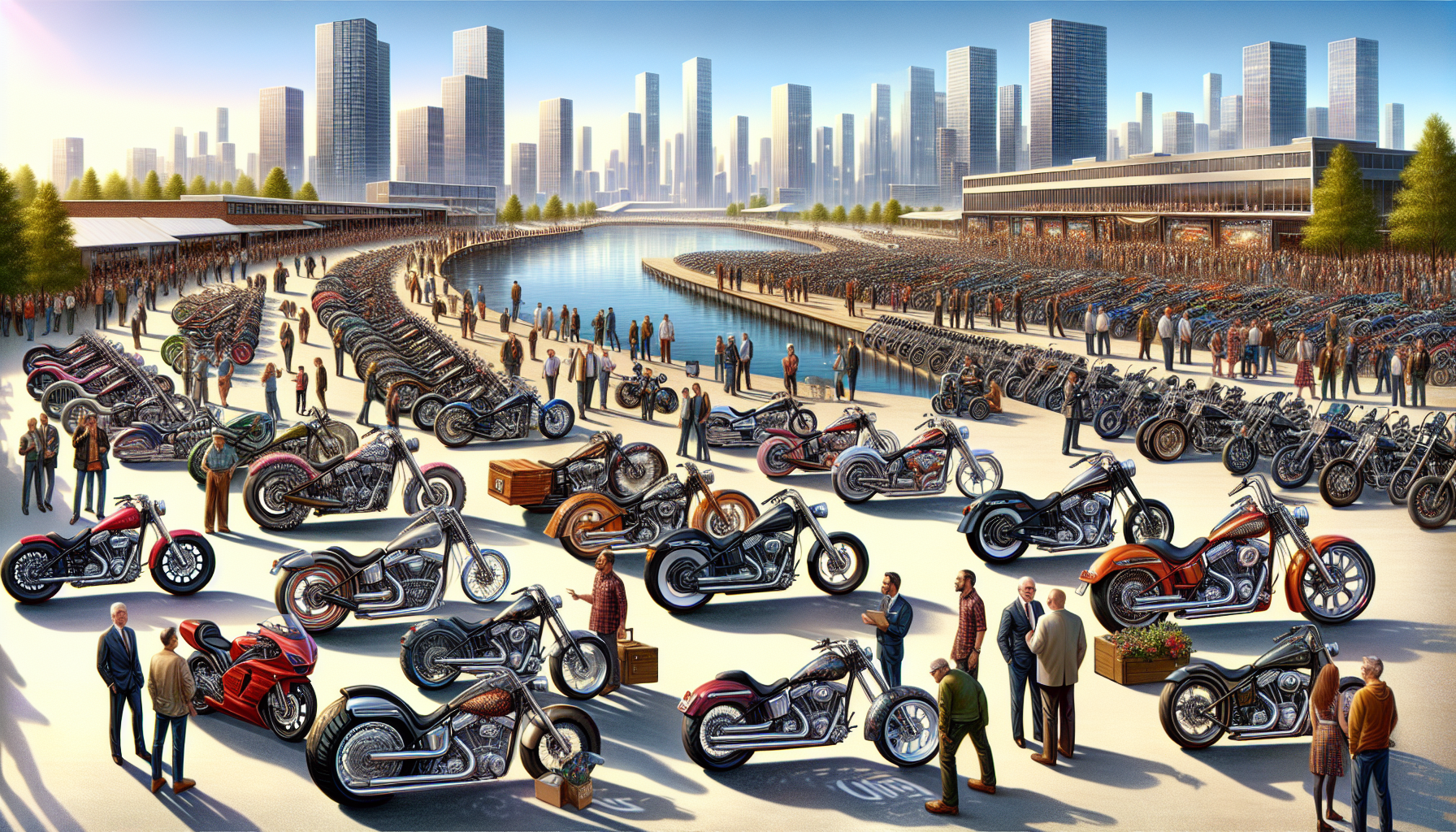
The 2026 Sturgis Motorcycle Rally remains the most important annual checkpoint for the American custom scene because it gathers builders, painters, parts brands, dealers, riders, media, and first-time visitors in one place, then shows exactly where motorcycle style and spending are heading next. When people ask what the Sturgis custom scene looks like today, they are really asking several related questions: What bikes dominate the streets, what events matter, which trends are fading, how expensive serious customization has become, and how the culture is balancing heritage with modern performance? After years of attending the rally, walking Lazelle Street at night, spending mornings at vendor setups, and talking with builders behind display ropes and in dusty parking lots, I can say Sturgis in 2026 is neither a pure throwback nor a full technology showcase. It is a layered custom ecosystem.
Sturgis is not just a rally in the narrow sense of a ride-in gathering. It is a regional event spread across Sturgis, Deadwood, Spearfish, Rapid City, and the Black Hills, with shows, ride routes, brand activations, stunt exhibitions, charity runs, concerts, and bike judging across multiple venues. The custom scene refers to the part of the rally centered on modified motorcycles and the businesses, aesthetics, and communities around them. That includes performance baggers, club-style builds, pro-street machines, vintage choppers, hand-built paintwork, machined parts, suspension upgrades, audio systems, and fabrication culture. For the “Shows & Events” side of custom culture, Sturgis matters because it is where trends move from social media into public proof. If a style can survive ten days of heat, traffic, scrutiny, and thousands of expert eyes in Sturgis, it usually has staying power.
In 2026, the rally’s custom scene is defined by five forces. First, performance remains king; riders want bikes that look finished and ride hard. Second, paint and detail work have become more refined, with cleaner graphics, premium coatings, and restrained color choices replacing some of the louder excess of earlier decades. Third, the event calendar is more segmented, with distinct spaces for old-school choppers, invited builder showcases, ride-and-judge formats, and consumer-facing vendor competitions. Fourth, the money has changed. A credible high-end custom bagger now represents a serious investment, often combining premium wheels, CNC parts, suspension, engine work, and labor-intensive finishing. Fifth, custom culture at Sturgis is more connected than ever to content creation, but the bikes that earn lasting respect are still the ones that hold up in person. That mix makes Sturgis 2026 the clearest hub for understanding custom motorcycle shows and events across the broader culture.
The Center of Gravity Has Shifted Toward Rideable High-End Customs
The biggest change visible at Sturgis today is that the center of gravity has shifted away from pure show bikes toward rideable customs with complete, integrated builds. Twenty years ago, exaggerated rake, radical frames, and ultra-low-mile trophy bikes commanded more attention. Those machines still appear, and some remain beautifully executed, but they no longer define the scene. In 2026, the bikes drawing the strongest crowds usually combine stance, reliability, and road manners. Think performance baggers with upgraded cam packages, quality dyno tuning, inverted front ends, big rotors, radial brakes, tuned rear suspension, and bodywork finished to a near-factory standard. They are expensive, but they are not static sculptures.
Harley-Davidson touring platforms still anchor the market, especially Street Glide, Road Glide, and CVO-based customs, because they offer the best blend of visual mass, aftermarket support, and long-distance usability. M-8-based builds dominate the newer end of the field because the aftermarket around Milwaukee-Eight engines is mature and riders understand the value of torque, cooling upgrades, and calibration. At the same time, Twin Cam bikes remain relevant in club-style and budget-conscious custom builds, particularly where owners want proven parts availability and lower acquisition cost. Indian’s bagger and touring platforms continue to appear in stronger numbers than they did a few years ago, especially in polished, high-spec builds intended to stand out in a Harley-heavy environment.
What matters is execution. At the rally, people notice whether a bike has coherent proportions, whether the wheel choice matches the body lines, whether the audio install looks intentional, and whether brake and suspension upgrades support the power being claimed. Riders have become more educated. They ask who tuned the engine, what trail figures look like after front-end changes, whether the bags are stretched correctly, and how the bike performs on Spearfish Canyon rather than just under parking lot lights. That practical scrutiny has raised the standard for every builder showing work at Sturgis.
Which Custom Bike Styles Stand Out Most in 2026
Several styles now dominate the “Shows & Events” landscape at Sturgis, and each attracts a different audience. Performance baggers remain the headline category because they satisfy both style and use. These bikes often feature aggressive ride height, lightweight wheels, upgraded fork cartridges, premium rear shocks from brands like Öhlins or Legend Suspension, larger displacement builds, and careful ergonomic choices. They photograph well, but more importantly, they perform on real roads. Club-style influences continue to shape this segment through moto bars, fairing choices, compact luggage solutions, and dark hardware finishes.
Traditional choppers have also stabilized into a respected lane of their own. They are no longer the mainstream center of the rally, yet they carry deep cultural authority. Narrow forks, skinny tanks, hand-fabricated sissy bars, molded frames, kick-only setups, and period-correct paint styles still pull knowledgeable crowds because they reflect craftsmanship rather than catalog spending. In Sturgis, a well-built chopper parked outside a small show can draw as much serious attention as a six-figure bagger inside a major venue. That is one reason the rally remains important: it still gives old-school and new-school customs room to coexist.
There is also a growing middle space made up of restomods and heritage customs. These builds start with older Harley platforms, or occasionally metric and British machines, then integrate modern suspension, ignition, braking, and wheel technology without erasing the original character. Builders like this category because it rewards thoughtful problem solving. Owners like it because the result can feel personal rather than trend-driven. At Sturgis 2026, the healthiest custom scene is not one style defeating another. It is a broad field where baggers, choppers, FXR and Dyna-based customs, and modernized classics all have valid places if the work is honest and complete.
The Events That Actually Shape the Scene
Not every Sturgis event carries equal weight. Some are high-traffic spectacles built for broad visibility; others matter because builders, judges, media, and committed enthusiasts treat them as a reference point. The custom scene is shaped by a mix of invite-only showcases, open-entry competitions, vendor-hosted displays, and informal ride-in gatherings where reputation spreads organically. Official schedules matter, but so do side-lot conversations and late-day walkarounds where builders explain why a part was machined a certain way or why a geometry change transformed the bike.
The most influential shows usually have clear judging standards or a respected curator. Good events separate categories sensibly, reward fit and finish as much as obvious spend, and understand that craftsmanship includes hidden details: wiring, hose routing, weld cleanup, panel alignment, and hardware consistency. Crowds often focus on paint, wheel diameter, and chrome, but serious judging looks deeper. That is why the best Sturgis shows still matter in 2026. They help distinguish social-media popularity from disciplined building.
| Event Type | What It Highlights | Why It Matters at Sturgis |
|---|---|---|
| Invited builder showcase | Top-tier fabrication, paint, and concept execution | Sets trend direction and media narratives |
| Ride-and-judge competition | Usable customs with road-tested setups | Rewards bikes that perform beyond the display area |
| Vendor display contest | Parts integration, new products, brand partnerships | Shows what consumers can actually buy |
| Traditional custom gathering | Choppers, period styles, hand-built details | Preserves craftsmanship and historical continuity |
| Informal street and lot scene | Owner-built bikes, regional trends, real rider taste | Reveals what the culture is adopting at scale |
For anyone using this page as a hub to the wider “Shows & Events” topic, that distinction is essential. The rally is not one event but a network of scenes. If you want to understand custom culture, you have to look at all of them together.
How Builders, Brands, and Media Interact at the Rally
One reason Sturgis remains unmatched is that it compresses the entire custom motorcycle supply chain into a walkable and rideable environment. Builders meet wheel companies, tuners compare notes with exhaust manufacturers, suspension brands install products for rally customers, and media teams document every stage from reveal to road test. This interaction changes the custom scene in real time. A part that looked promising online can either win over riders after a week of hard use or quietly disappear when flaws show up under rally conditions.
Brand presence matters, but it has changed in tone. The strongest companies at Sturgis in 2026 are not just selling parts from a booth wall. They are showing complete applications, technical credibility, and after-sales support. Riders want to know whether a brake package works with a certain wheel offset, whether a cooling system helps on long idle-heavy parade traffic, whether a tune is emissions-compliant where applicable, and whether replacement parts are available quickly after the rally. Serious brands answer those questions directly. Weak brands rely on appearance alone, and knowledgeable buyers spot the difference fast.
Media coverage has also matured. The bikes that receive sustained attention are no longer simply the wildest builds. Editors, photographers, and video teams now highlight process, craftsmanship, and riding impressions. A builder who can explain metalwork choices, geometry decisions, and power goals often earns more trust than someone presenting only polished surfaces. That shift benefits the audience because it turns Sturgis coverage into practical education, not just visual consumption. It also makes this rally a natural hub for related stories on custom bike shows, builder interviews, event rankings, and trend analysis across the whole “Custom Culture” category.
The Economics of Customizing in 2026
Anyone evaluating the Sturgis custom scene honestly has to address cost. In 2026, a serious custom build is expensive, and the rally reflects that reality. Prices are driven by parts inflation, labor rates, paint materials, machining costs, shipping, and the simple fact that quality fabrication takes time. A top-flight bagger can easily push into luxury-car territory once you add premium wheels, bodywork, paint, audio, engine upgrades, suspension, braking, custom seat work, and professional assembly. Even smaller projects routinely exceed initial budgets because owners underestimate the cost of making all systems work together.
That does not mean custom culture is only for wealthy buyers. What I see at Sturgis every year is a layered market. At the high end, commissioned builds showcase what is possible. In the middle, smart owners stage modifications over several seasons, starting with suspension, bars, tuning, and wheels before moving into paint or engine work. At the entry level, many riders personalize with targeted upgrades that meaningfully change the look and ride without pretending to be full customs. Good events recognize this spectrum. They make room for craftsmanship and taste, not just invoice totals.
There is also a business lesson embedded in the rally. Shops that thrive are the ones that manage expectations, document work, stand behind installations, and communicate clearly about timelines. Sturgis gives those shops visibility because clients can inspect finished bikes in person. Poorly executed panel gaps, rushed wiring, cheap fasteners, and mismatched finishes are impossible to hide under South Dakota sun. The rally acts as a real-world audit of quality, which is one reason its custom scene still influences buying decisions nationwide.
What the Crowd Is Looking For Now
Audience taste in Sturgis has become more selective. Big wheels still draw eyes, but oversized components without proportion or performance support no longer earn automatic respect. Loud paint can still work, yet many of the most admired builds now use subtler palettes, deep finishes, layered metallics, ghost graphics, and flawless prep. Blacked-out hardware remains common, though mixed finishes are returning where they create contrast rather than clutter. Precision is the new spectacle.
Riders also care more about proof. If a builder claims 140 horsepower from a bagger, people ask about heat management, clutch setup, fuel system support, and who performed the tuning. If a bike sits unusually low or high, they ask how it handles rough pavement. If a traditional chopper is presented as period-correct, knowledgeable viewers look for whether details actually match the era or if the build is just borrowing visual cues. This sharper audience makes Sturgis better. It rewards substance.
Another notable shift is inclusivity across age and style. Younger riders influenced by performance culture, stunt content, and club-style aesthetics now mix with older riders who value paint lineage, hand pinstriping, and long-haul touring practicality. Women builders and riders are also more visible in judged shows, riding groups, and brand collaborations than they were in earlier rally eras. That broader participation does not dilute the custom scene. It expands the talent pool and keeps the event culturally alive.
How to Use Sturgis as a Custom Culture Hub
As a hub within the broader “Custom Culture” topic, Sturgis is useful because it connects every major “Shows & Events” question in one place. It helps readers compare event formats, understand bike categories, evaluate builders, spot trend cycles, and identify which products are becoming standard equipment in modern customs. From here, deeper coverage can branch into best custom bike shows in America, performance bagger judging criteria, top builder reveals, traditional chopper gatherings, vendor row strategy, and regional event calendars. Sturgis supports all of those subtopics because each one appears there in concentrated form.
If you are attending, the smartest approach is to divide your time intentionally. Spend one block at premier show venues, one on vendor row, one riding the Black Hills to see which bikes perform outside display settings, and one simply walking streets and lots after sunset. Talk to owners, not only builders. Ask what they changed after the first year, what failed, what they would never buy again, and which upgrade actually transformed the motorcycle. That is how you read the rally accurately.
The 2026 Sturgis Motorcycle Rally shows a custom scene that is more disciplined, more expensive, more performance-focused, and more diverse than many outsiders expect. The old caricature of Sturgis as endless chrome spectacle misses the truth. Today’s rally rewards rideable engineering, refined finishing, credible craftsmanship, and event formats that separate serious builds from superficial ones. Performance baggers lead the current market, but traditional choppers, restomods, and owner-built street customs still matter because they carry the culture’s memory and experimentation forward.
For anyone following motorcycle shows and events, Sturgis remains the clearest lens into what custom culture values right now. It reveals where money is going, which styles are maturing, which brands have technical legitimacy, and how audience expectations are rising. Use this page as your starting point for the wider “Shows & Events” landscape, then go deeper into the builders, venues, and categories that match your interests. If you want to understand the custom scene today, put Sturgis at the center of your map and follow the details from there.
Frequently Asked Questions
1. What kinds of custom motorcycles dominate the streets at the 2026 Sturgis Motorcycle Rally?
The short answer is that performance-focused V-twins still define the visual center of Sturgis, but the custom scene in 2026 is much more layered than the old stereotype of “just baggers and choppers.” High-horsepower performance baggers remain some of the most visible and talked-about bikes because they combine big audio, aggressive stance, premium paint, upgraded suspension, and serious engine work in a package that riders can actually put miles on. You still see stretched saddlebags, tall bars, big front wheels, and detailed billet components, but the strongest builds now balance style with rideability rather than chasing extreme show-bike proportions alone.
Club-style influences continue to show up everywhere as well, especially on Harley-Davidson Dyna, Low Rider ST, Road Glide, Street Glide, and performance touring platforms. Riders want bikes that look sharp parked in front of a vendor booth but also feel capable on canyon roads, highway pulls, and long rally days. That means quality suspension, tuned motors, upgraded brakes, better ergonomics, and cleaner functional layouts are getting more respect than cosmetic excess. In practical terms, the scene today rewards bikes that can perform, not just pose.
At the same time, traditional customs have not disappeared. Choppers, period-correct builds, hand-fabricated bikes, and painter-driven showpieces still command attention because Sturgis remains one of the few places where old-school style and new-school performance stand side by side. What has changed is the hierarchy. Radical one-off customs still earn admiration, but the center of the market is now occupied by premium, rideable customs built around current touring and cruiser platforms. If you want to understand what dominates the streets in 2026, think less in terms of one single bike category and more in terms of a broad shift toward expensive, highly personalized motorcycles that deliver both presence and use.
2. Which events and venues matter most if you want to understand the custom scene at Sturgis today?
If you want the clearest picture of the current custom landscape, you need to look beyond one bike show or one famous downtown strip. The Sturgis scene is spread across shows, vendor spaces, brand activations, dealership events, campgrounds, and after-hours meetups. Major bike shows still matter because they reveal what top builders, painters, and parts companies believe will capture attention in the next year. These are the places where finish quality, fabrication trends, wheel and tire combinations, paint styles, and high-end components become visible in concentrated form.
Vendor areas are equally important because they show what is actually selling. A show-winning motorcycle can influence the conversation, but packed booths and active installation bays tell you where real customer demand is going. Suspension companies, engine builders, wheel brands, audio specialists, saddlebag and bodywork manufacturers, handlebar companies, tuners, and paint suppliers all help map out the practical side of the custom economy. If certain booths are consistently busy, that usually signals a larger trend in spending and rider priorities.
Dealer-hosted events also matter because they connect aspiration to purchase. At Sturgis, dealerships function as trend filters: they showcase new models, dealer-built customs, accessory packages, financing options, demo rides, and customer-friendly upgrade paths. That combination helps explain how the rally influences the broader market after the event ends. In 2026, the most important venues are the ones where style, parts, and purchasing overlap. In other words, if you want to understand the custom scene as it really exists today, pay attention to where people gather, where they spend money, and where they return for a second look, not just where trophies are handed out.
3. What custom trends are fading at the 2026 Sturgis Motorcycle Rally, and what is replacing them?
The biggest shift is away from extreme customization that sacrifices comfort, reliability, and road manners purely for visual shock value. That does not mean wild customs are gone, but the market has clearly cooled on builds that look dramatic in photos yet feel unpleasant or impractical on actual roads. Overly stretched bikes, awkward geometry, ultra-thin ride comfort, and heavily trend-driven bolt-on combinations no longer dominate the conversation the way they once did. Riders and buyers are more informed now, and they are spending real money with a stronger expectation of quality and usability.
What is replacing those fading trends is a more mature form of customization centered on integrated performance and finish. That includes tuned engines, premium suspension, refined wheel and brake packages, coordinated bodywork, high-end paint, improved lighting, audio systems that are cleanly installed, and cockpit setups built around rider control instead of gimmicks. There is also more appreciation for parts that solve real problems, such as better heat management, more stable handling, improved luggage function, and stronger long-distance comfort. A bike that works well all day earns more respect than one that only photographs well for ten minutes.
Another fading trend is the idea that customization has to fit into one rigid tribe. The 2026 scene is more blended. Riders borrow from performance bagger styling, club-style ergonomics, West Coast paint influence, touring utility, and old-school craftsmanship all at once. Clean execution matters more than strict allegiance to a single subculture. That is one reason the current custom scene feels both more expensive and more sophisticated: the average serious build is no longer just “a style,” but a carefully chosen package of performance, aesthetics, and identity.
4. How expensive is it to participate in the Sturgis custom scene in 2026?
It is expensive, and that is one of the defining realities of the modern Sturgis custom market. The gap between a stock motorcycle and a serious custom build has widened because parts, labor, tuning, paint, fabrication, and premium materials all cost significantly more than they did a decade ago. Even relatively modest upgrades can add up quickly when riders start with suspension, bars, exhaust, intake, tune, seat, lighting, wheels, and cosmetic touches. Once custom paint, audio, motor work, brake upgrades, and body modifications enter the picture, costs rise fast.
For many riders, the most realistic path into the custom scene is phased building rather than one giant project. They buy a platform they like, ride it, then improve it over time. That approach has become more common because it spreads out spending and allows owners to prioritize what matters most, whether that is comfort, power, appearance, or touring capability. Sturgis reinforces that pattern because riders can compare hundreds of build ideas in person and decide which upgrades seem worthwhile before committing to the next round of parts and labor.
At the high end, the custom scene can be extremely costly. Full builds with motor work, paint, wheels, suspension, audio, custom stitching, machine work, and fabrication can reach levels that place them closer to luxury purchases than hobby spending. But what matters most is that the rally still supports multiple entry points. Some participants arrive on heavily modified six-figure show-quality machines, while others bring cleaner, smarter, lower-budget builds assembled with careful part selection and good taste. In 2026, being part of the Sturgis custom scene is less about matching the biggest budget in the lot and more about understanding where to spend for the greatest impact. The smartest builds are often the ones with a clear purpose, not just the longest invoice.
5. Why does Sturgis still matter so much as a measuring stick for the American custom motorcycle scene?
Sturgis still matters because it compresses the entire custom ecosystem into one living, moving marketplace. Builders, painters, tuners, parts companies, dealers, media outlets, influencers, veteran riders, and first-time attendees all interact in real time, and that creates a uniquely accurate picture of where the scene is going. Trends that may look strong online can be tested against real-world reactions at Sturgis almost immediately. If a style gets attention, if a booth stays packed, if a certain type of bike fills the streets, and if customers start placing orders on-site, that momentum usually carries beyond the rally.
It also matters because Sturgis reveals the difference between hype and durable demand. Social media can make any niche style look dominant for a week, but the rally shows which ideas survive contact with real riders who care about cost, comfort, durability, travel distance, status, and practicality. In 2026, that is especially important because the custom scene is no longer driven by appearance alone. Riders want motorcycles that deliver a complete experience, and Sturgis is one of the few places where that full experience can be seen, heard, and judged at scale.
Finally, Sturgis remains important because it is still where influence turns into action. Media coverage amplifies what happens there, brands launch products there, builders establish reputations there, and consumers make decisions there. For anyone asking what the custom scene looks like today, Sturgis provides the most credible answer because it is not just a show. It is a yearly checkpoint for taste, technology, spending, and culture across the American V-twin world. What stands out at Sturgis in 2026 usually tells you a great deal about what riders will want, buy, and build next.