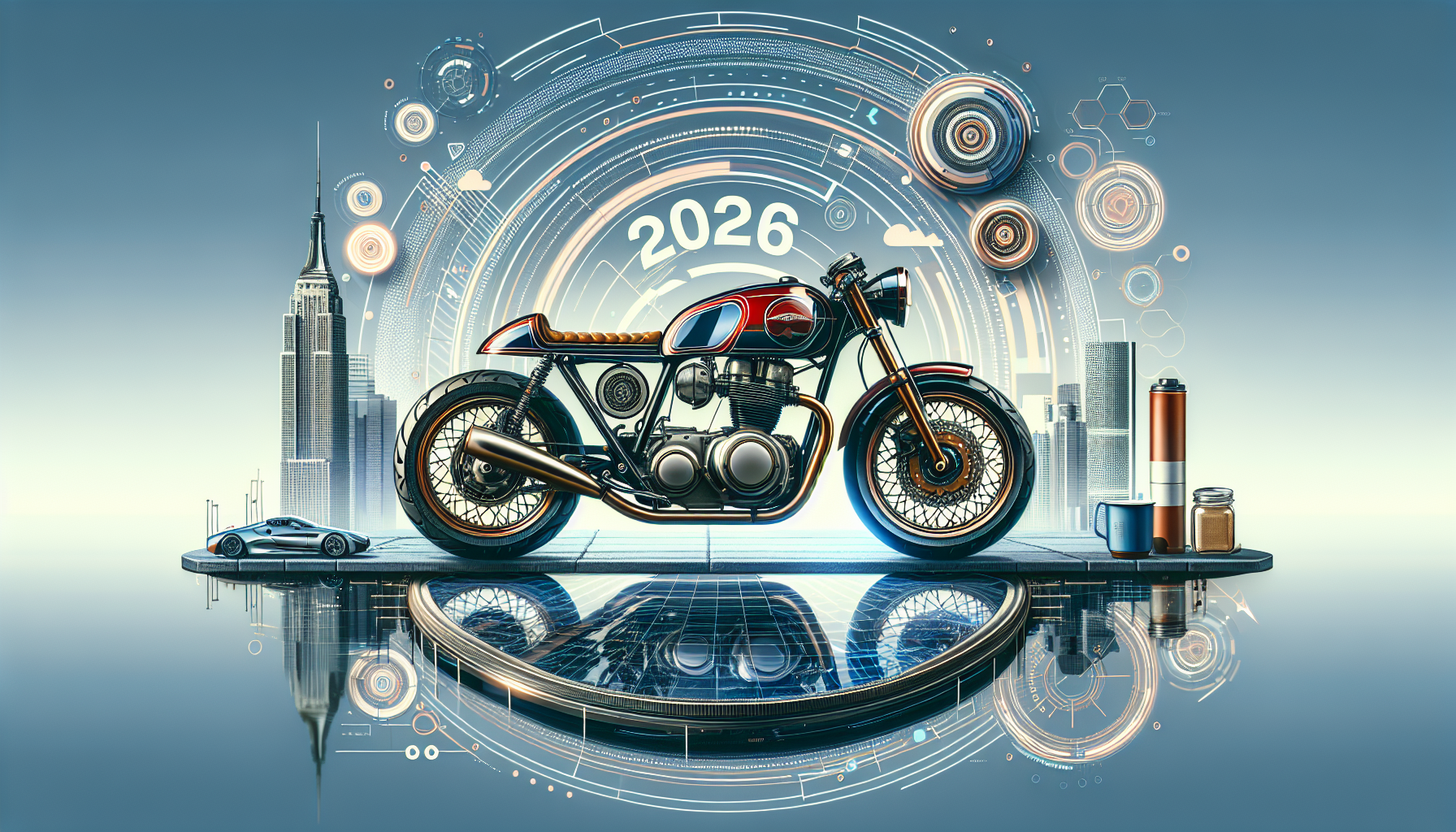
The rise of the retro-modern cafe racer is not a passing fashion story; it is the clearest sign that motorcycle culture in 2026 values character, usability, and customization in equal measure. A cafe racer traditionally refers to a lightweight, street-focused motorcycle styled for speed, stripped of excess bodywork, and shaped by the British ton-up scene of the 1950s and 1960s. Retro-modern describes the current evolution of that idea: classic lines, round headlights, sculpted tanks, and minimalist tails combined with fuel injection, ABS, ride modes, traction control, LED lighting, and reliable manufacturing tolerances. In practical terms, riders want a bike that looks hand-built and timeless but starts every morning, passes emissions rules, and can handle a daily commute.
I have watched this shift accelerate in workshops, dealer showrooms, and custom builds over the past several model cycles. Riders who once chose fully faired sport bikes or aggressively styled nakeds are now gravitating toward machines that invite ownership beyond transport. They want to swap bars, seats, mirrors, and exhausts without losing modern functionality. They want to park a bike outside a coffee shop, office, or weekend meet and have it say something personal without becoming unreliable. That balance explains why 2026 stands out. The category has matured from a niche custom aesthetic into a mainstream design language supported by manufacturers, aftermarket brands, and an audience that spans new riders, returning riders, and seasoned builders.
As a trends and styles hub under Custom Culture, this article maps the forces shaping the cafe racer revival and shows how the style now connects to broader movements in design, technology, sustainability, and identity. It also works as a practical guide: what defines the modern cafe racer, which brands are driving the shift, what customization paths matter, and where the style is heading next. If you are asking why cafe racers are popular again, what makes a bike retro-modern, whether they are good for everyday riding, or how the scene differs from pure vintage restoration, the answers are here. In 2026, the cafe racer matters because it sits at the intersection of heritage and function, and that is exactly where motorcycle culture is headed.
What Defines the Retro-Modern Cafe Racer in 2026
The 2026 cafe racer is defined less by strict historical purity and more by a recognizable design grammar. The essentials remain: low visual mass, a horizontal silhouette, a compact tail, a prominent fuel tank, and a rider triangle that suggests engagement rather than relaxed cruising. Yet the modern interpretation is broader than the old clip-ons-and-rearsets formula. Many current bikes use flatter handlebars for comfort, slightly roomier seat padding, and suspension calibrated for mixed urban use. In my experience, that is not dilution; it is why the style now works outside Sunday morning nostalgia. A bike can retain the cafe racer stance while becoming realistic for modern roads, traffic, and rider expectations.
Manufacturers have become highly skilled at combining vintage cues with contemporary engineering. Triumph’s Speed Twin and Thruxton lineage, BMW’s R nineT family, Kawasaki’s Z900RS Cafe, Yamaha’s XSR range, Royal Enfield’s Continental GT 650, and Moto Guzzi’s V7 derivatives all prove the point in different ways. Some lean heavily into polished metal, tuck-and-roll seating, and wire-spoke references. Others pair retro tanks and circular instruments with inverted forks, radial brakes, TFT displays, and sophisticated electronic packages. The result is a category that can serve as a showroom bike, a customization platform, or both. Riders no longer need to choose between a museum piece and a practical machine.
The strongest signal in 2026 is that retro-modern styling has moved from edge case to core product strategy. This is visible in platform sharing. Brands now design modular motorcycles that can become roadsters, scramblers, or cafe racers through changes to subframes, body panels, wheels, and ergonomics. That manufacturing logic lowers development cost while giving buyers distinct identities. It also benefits custom culture because the underlying platform is easier to modify and better supported with parts catalogs. A modern cafe racer is therefore not just a look; it is an ecosystem built around design adaptability, rider expression, and dependable engineering.
Why 2026 Became the Breakout Year
Several market forces converged to make 2026 the year of the cafe racer. First, rider demographics shifted. Many buyers in their thirties and forties grew up saturated with digital design and disposable products, and they now value objects that feel tactile and enduring. A retro-modern motorcycle delivers visible metal, mechanical form, and proportion in a way many contemporary vehicles do not. At the same time, younger riders entering the market often discover motorcycles through social platforms where visual identity matters immediately. A cafe racer photographs well, communicates taste quickly, and feels approachable because it references familiar shapes even to people who are new to bikes.
Second, manufacturers responded to economic realities. High-performance flagship motorcycles remain important halo products, but mid-capacity retro platforms sell to a broader audience. They are often less intimidating to insure, easier to finance, and more useful in urban and suburban environments. Models in the 650cc to 900cc range have become especially important because they deliver enough torque for satisfying road use without the operating cost or insurance profile of liter-class performance machines. Royal Enfield, Triumph, and Honda have all benefited from this middleweight sweet spot, while premium brands such as BMW and Ducati use heritage-driven models to bring style-conscious buyers into their ecosystems.
Third, custom culture itself became more mature and less extreme. Ten years ago, many builds prioritized silhouette over ride quality, leading to harsh suspension, compromised geometry, and questionable electrical work. Today, builders and owners are better informed. Access to ECU tuning, CAD-designed brackets, 3D-printed prototypes, plug-and-play lighting modules, and model-specific accessory kits has raised the average quality of customized motorcycles. Riders want tasteful modifications that preserve reliability and resale value. The modern cafe racer thrives in that environment because the style rewards restraint. Small, deliberate changes often produce the best result.
| Driver | Why It Matters in 2026 | Real-World Effect on Cafe Racers |
|---|---|---|
| Design fatigue with futuristic styling | Buyers want timeless shapes and visible craftsmanship | Round lights, sculpted tanks, and simple silhouettes gain appeal |
| Growth of middleweight platforms | More affordable ownership and broader usability | 650cc to 900cc retro models become top customization bases |
| Better aftermarket integration | Owners can personalize bikes without heavy fabrication | Seats, exhausts, bars, and lighting upgrades become mainstream |
| Urban and lifestyle riding habits | Many riders prioritize short trips and weekend social rides | Cafe racers fit commuting, meets, and casual performance use |
| Content-driven motorcycle culture | Visual identity shapes buying decisions faster than spec sheets alone | Retro-modern bikes outperform bland designs in attention and desirability |
Another reason 2026 matters is regulation. Emissions and safety requirements have made true vintage ownership more complicated in many regions, while modern bikes can deliver the same emotional language with far fewer compromises. Fuel injection solves cold-start frustration. Standard ABS reduces risk. Better metallurgy, manufacturing quality control, and service intervals make ownership calmer. For many riders, the retro-modern cafe racer is the sustainable answer to an old desire: the romance of classic motorcycling without the constant maintenance burden. That proposition is stronger now than at any point in the last decade.
Design Trends Shaping Cafe Racer Style Now
The most important style trend in 2026 is precision minimalism. Builders are moving away from exaggerated cuts, tiny impractical seats, and overly dark monochrome finishes. Instead, the best bikes emphasize proportion, fit, and material contrast. Brushed aluminum, satin paint, textured leather or synthetic seat covers, machined reservoir caps, and discreet LED indicators create a cleaner, more resolved look. The design language borrows from industrial design as much as from vintage racing. A successful cafe racer now appears edited, not merely stripped. Every component needs visual purpose.
Color is also changing. While black remains popular, richer palettes are gaining ground: deep racing green, burgundy, ivory, silver-blue, mustard, and heritage orange. Pinstripes, tank scallops, and subtle number-board graphics are returning, but with higher production quality and better restraint. In workshop projects I have seen, the most effective paint schemes are often based on one dominant color, one metallic or neutral support tone, and one highlight detail. That formula keeps the bike cohesive while preserving the classic references. It also photographs well, which matters for resale listings, social sharing, and brand collaborations.
Wheel and tire choices reveal another shift. Earlier cafe builds often used aggressively narrow tires for visual authenticity or oversized rubber for drama, both of which could upset handling. Contemporary builds tend to respect chassis balance. Owners choose premium road-biased tires from Pirelli, Metzeler, Michelin, or Bridgestone that preserve steering feel while complementing the style. Cast wheels remain common on production retros because they reduce maintenance and improve everyday practicality, but spoked wheels still carry strong emotional value. As a result, tubeless-compatible spoked systems have become a sweet spot for riders who want classic appearance without old-fashioned puncture headaches.
The Best Platforms and What They Offer
Not every motorcycle suits the cafe racer treatment equally well. The strongest factory platforms in 2026 share several traits: a clean frame line, manageable weight, a broad torque curve, accessible aftermarket support, and electronics that do not become obstacles during modification. The Royal Enfield Continental GT 650 remains one of the most convincing entry points because it arrives close to the brief already, with an air-oil-cooled parallel twin, classic proportions, and realistic pricing. Triumph’s Speed Twin 900 and 1200 provide stronger performance and premium finish with a wide accessory network. BMW’s R nineT continues to attract experienced builders thanks to its exposed boxer architecture and modular rear subframe options.
Japanese brands remain central because their engineering consistency supports dependable customization. Yamaha’s XSR700 and XSR900 are especially relevant because their CP2 and CP3 engines combine character with proven reliability. Kawasaki’s Z650RS and Z900RS Cafe offer polished factory styling and daily usability, making them ideal for riders who want light personalization rather than complete transformation. Honda’s CB650R and related Neo Sports Cafe models sit slightly outside traditional cafe racer visual language, but they are influential because they blend retro cues with contemporary sport roadster function. For many owners, that hybrid approach is exactly the point.
Platform choice should start with intended use. If you want a commuter that can handle luggage and frequent starts, prioritize comfort, fueling quality, and service access. If you want a weekend style project, aesthetics and parts availability may matter more. If you want track-day flavor, look at suspension, brake upgrades, and wheel options before buying. The best custom base is not the bike with the most heritage points; it is the one whose geometry, ergonomics, and support network fit the life you will actually live with it.
Customization Paths That Add Value Instead of Regret
The smartest cafe racer customization in 2026 improves one of four things: fit, control, sound, or finish. Start with ergonomics. Bars, rearsets, seat foam density, and lever position change the riding experience more than cosmetic parts ever will. I always advise riders to spend on contact points first because discomfort ruins the ownership experience faster than a mediocre mirror design. Second, address suspension and brakes. A quality rear shock from Ohlins, K-Tech, YSS, or Nitron, paired with fork cartridge upgrades or tuned springs, can transform a retro bike from style object into precise road machine. Braided lines and performance pads often deliver more usable improvement than chasing horsepower.
Exhaust changes remain popular, but they need judgment. A lighter stainless or titanium system can sharpen throttle response and reveal engine character, yet overly loud setups quickly become tiring and can create legal or inspection problems. Reputable manufacturers such as Akrapovic, SC-Project, Zard, TEC, and Arrow usually offer better fit and mapping support than unbranded systems. Lighting and electronics are another area where quality matters. Properly integrated LED indicators, a compact homologated tail light, and a clean cockpit can modernize the bike without making it look generic. Poor wiring, by contrast, is still the fastest route to an unreliable build.
Value-preserving customization is increasingly important because buyers now understand tasteful modification. Keep original parts when possible. Avoid cutting the frame unless the project truly demands it and local regulations allow it. Use model-specific brackets, documented wiring changes, and reversible upgrades. A well-executed cafe racer should feel intentional, serviceable, and easy for the next owner to understand. That standard separates mature custom culture from short-term styling impulses.
How the Cafe Racer Fits the Broader Custom Culture Hub
As a trends and styles hub, the cafe racer matters because it links almost every major conversation in Custom Culture. It intersects with heritage restoration through paint, metalwork, and period references. It overlaps with modern performance through suspension tuning, braking, lightweight components, and rider ergonomics. It speaks to lifestyle branding through apparel, photography, and event culture. It even connects to sustainability, since many retro-modern projects extend the life of existing platforms rather than treating motorcycles as disposable seasonal products. In content planning terms, the cafe racer is not an isolated niche. It is a gateway style that leads readers naturally into maintenance guides, build planning, parts reviews, workshop techniques, and rider identity.
The deeper reason for its relevance is emotional clarity. The cafe racer tells a story instantly: less clutter, more intent, more rider involvement. In 2026, that story resonates because riders are increasingly selective about what they buy and modify. They want motorcycles with personality that can still meet daily demands. That is why the retro-modern cafe racer has become the defining trend of the year. If you are building a Custom Culture reading list, start here, then explore platform guides, parts deep dives, paint and trim trends, and practical build advice to turn style into a bike you will actually ride.
Frequently Asked Questions
What is a retro-modern cafe racer, and how is it different from a traditional cafe racer?
A retro-modern cafe racer is a contemporary motorcycle that captures the visual DNA of the original cafe racers while integrating the engineering, safety, and reliability riders expect in 2026. Traditional cafe racers emerged from the British ton-up scene of the 1950s and 1960s, where riders modified standard motorcycles to be lighter, faster, and more purposeful for short, spirited road runs. That meant stripped-down bodywork, low handlebars, minimalist seats, sculpted fuel tanks, and a style centered on function as much as speed. The retro-modern version keeps those signature cues, such as round headlights, clean side profiles, exposed mechanical elements, and a lean street-focused stance, but updates nearly everything beneath the surface.
In practical terms, the biggest difference is usability. A classic cafe racer often demanded compromises in comfort, maintenance, and everyday rideability. A retro-modern cafe racer typically offers fuel injection, ABS, traction control, improved suspension, more predictable brakes, better lighting, cleaner emissions, and stronger long-term durability. Many also soften the harshest edges of old-school ergonomics, making them more approachable for commuting, weekend rides, and daily ownership. So while the traditional cafe racer was often a DIY expression of performance and rebellion, the retro-modern cafe racer is a more refined, versatile interpretation that delivers heritage styling without requiring riders to give up modern convenience.
Why is 2026 being called the year of the cafe racer?
2026 stands out because the cafe racer has moved beyond niche enthusiast appeal and become one of the clearest expressions of what today’s riders want from a motorcycle. Riders are no longer choosing only between pure sport performance and pure practicality. Increasingly, they want machines with personality, manageable real-world performance, and a platform they can make their own. The retro-modern cafe racer sits directly in that sweet spot. It offers classic design, everyday usability, and strong customization potential all at once, which aligns perfectly with current motorcycle culture.
There is also a broader market shift happening. Manufacturers have become much better at blending heritage aesthetics with modern engineering, so buyers no longer have to choose between style and substance. At the same time, customization culture has matured. Not every rider wants to build a motorcycle from scratch, but many do want something visually distinctive that reflects their taste. Retro-modern cafe racers make that easy because their clean, minimal design naturally invites upgrades such as seats, bars, exhausts, mirrors, paint, lighting, and small finishing details. In 2026, that combination of factory quality and personal expression feels especially relevant, which is why the cafe racer is being recognized not just as a trend, but as a defining motorcycle format of the moment.
Are retro-modern cafe racers practical for everyday riding, or are they mainly about style?
One of the main reasons the retro-modern cafe racer has gained so much momentum is that it is far more practical than many people assume. While the styling is a major part of the appeal, most modern examples are designed to function well in real-world conditions. They are often lighter and less intimidating than large touring bikes, more comfortable and accessible than aggressive supersports, and more emotionally engaging than purely utilitarian commuter machines. For city riding, back-road runs, and short to medium-distance travel, they strike an excellent balance between responsiveness, visibility, and rider enjoyment.
That said, practicality depends on the specific model and setup. Some lean harder into the classic cafe racer posture, with lower clip-ons and firmer seating that prioritize aesthetics and a sporty feel. Others adopt a more relaxed interpretation with slightly upright ergonomics, better seat padding, and more forgiving suspension, making them easier to live with every day. Modern electronics, dependable engines, and improved service intervals further strengthen their case as daily motorcycles. So no, they are not only about style. The best retro-modern cafe racers succeed precisely because they look timeless while still delivering a riding experience that fits modern life.
Why do riders find retro-modern cafe racers so appealing from a customization standpoint?
Retro-modern cafe racers are especially attractive to riders who value customization because their design starts from a clean, purposeful base. Minimal bodywork, exposed frame lines, classic tank shapes, and uncluttered silhouettes create a motorcycle that is visually complete in stock form but still highly adaptable. Even small changes can have a major impact on the overall character of the bike. Swapping handlebars, changing mirrors, upgrading the seat, fitting a different exhaust, or adjusting the lighting can dramatically alter the bike’s personality without requiring a full rebuild. That makes the format ideal for riders who want a personal machine without taking on an overwhelming project.
There is also a deeper cultural reason. The cafe racer has always been tied to individuality and self-expression. Historically, these bikes were rarely left untouched; they were shaped by the rider’s budget, taste, and performance goals. The retro-modern version preserves that spirit in a more accessible form. Riders today can personalize a bike with factory accessories, aftermarket components, or subtle cosmetic refinements while still benefiting from modern mechanical reliability. In other words, the retro-modern cafe racer feels authentic because customization is not being added onto the idea after the fact. Personalization is built into the identity of the category itself.
Who is the retro-modern cafe racer best suited for in 2026?
The retro-modern cafe racer appeals to a surprisingly wide range of riders in 2026. It is a strong fit for experienced motorcyclists who appreciate classic styling but do not want the maintenance demands or riding compromises of a true vintage machine. It also appeals to newer riders who want something visually distinctive and approachable rather than a motorcycle that feels generic or overly aggressive. Because many retro-modern models deliver manageable power, straightforward ergonomics, and intuitive road manners, they can serve as excellent entry points into enthusiast motorcycling, provided the rider chooses an engine size and setup suited to their skill level.
It is also ideal for riders who see motorcycling as both transportation and identity. If someone wants a bike that feels engaging on a commute, rewarding on a weekend ride, and expressive when parked, the cafe racer checks all three boxes. It may not be the perfect choice for long-distance two-up touring or heavy cargo use, but that is not really the point. Its strength lies in delivering character without becoming impractical. In 2026, that balance is exactly why the retro-modern cafe racer resonates so strongly: it serves riders who want more than simple mobility, but who still expect a motorcycle to work well in everyday life.