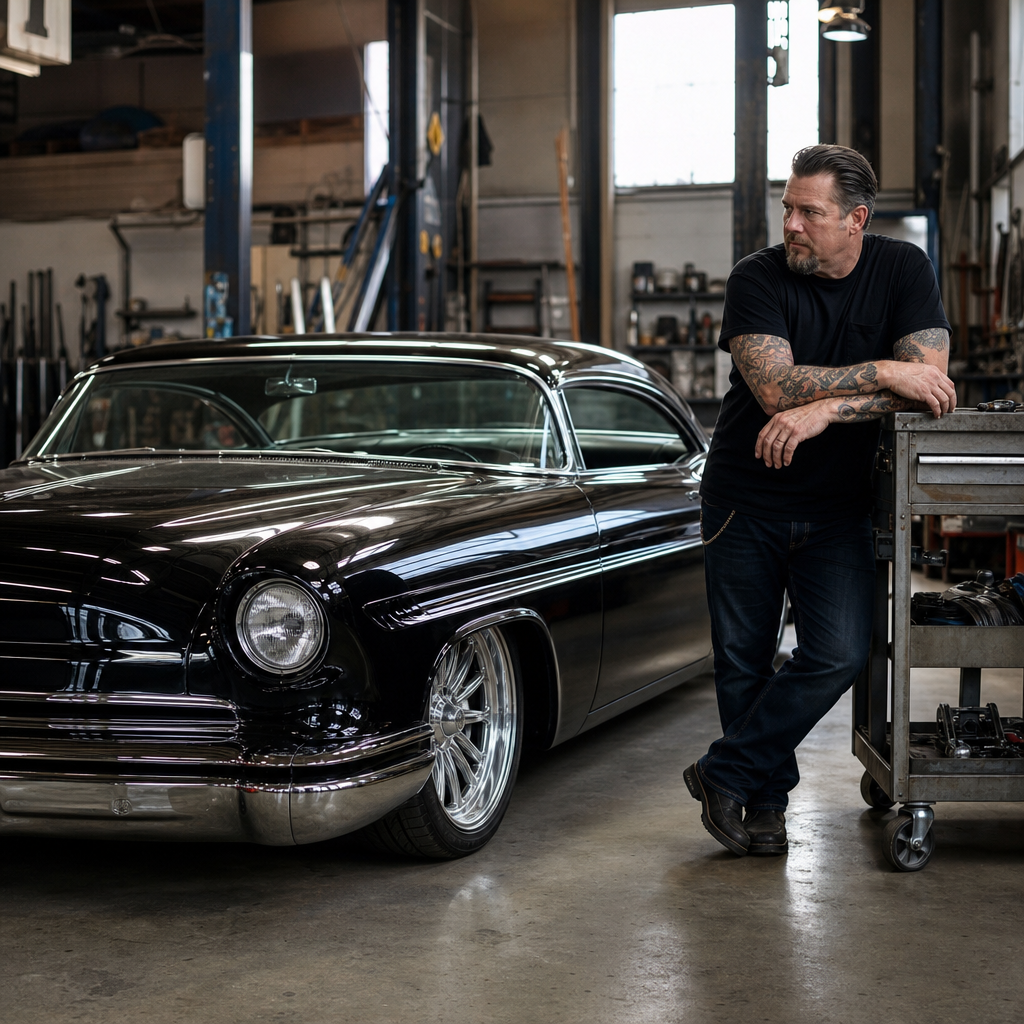
South Side Kustoms remains one of the clearest examples of how a legacy builder can shape the future of custom culture without losing the craft values that made the name matter in the first place. In 2026, the shop stands at the intersection of hand-built metalwork, digital design, modern fabrication, and a visual language that still feels rooted in classic custom car history. When people talk about the new guard of builders, they usually mean a generation blending CAD modeling, CNC machining, additive manufacturing, and social-first brand building with traditional shaping, welding, paint, and upholstery. Legendary builders, by contrast, are the shops and individuals whose earlier work established benchmarks for stance, proportion, panel fit, finish quality, and show presentation. South Side Kustoms matters because it connects both worlds. It shows how a recognizable style can evolve with new tools, new audiences, and new expectations without becoming generic. That makes this profile more than a shop spotlight. It functions as a hub for understanding the broader 2026 design charge across custom culture and builders, especially for readers tracking who is defining fabrication standards, aesthetic trends, and business models across the scene.
I have followed and worked around enough custom projects to know that the gap between hype and actual build quality is usually obvious the moment you look at body alignment, undercarriage finish, interior execution, and whether the design choices support the vehicle rather than overwhelm it. South Side Kustoms keeps showing up in serious conversations because its builds hold together at every level. The shop is not relevant only because of recognizable branding or social visibility. It is relevant because it demonstrates what modern custom leadership looks like: coherent design direction, technical competence, consistent finishing standards, and the ability to influence both customers and other builders. For a sub-pillar focused on profiles of 2026 new guard and legendary builders, South Side Kustoms is a useful central case. Its trajectory helps explain why certain shops break through, how fabrication technology is changing the workflow, which aesthetic cues are carrying into 2026, and where the boundaries still exist between trend-driven customization and enduring design.
Why South Side Kustoms Still Sets the Pace in 2026
South Side Kustoms still leads because it has maintained a rare balance between identity and adaptation. Many well-known custom shops struggle with one of two problems: they either preserve a signature look so rigidly that the work starts to feel repetitive, or they chase every trend until the brand loses its point of view. South Side Kustoms has avoided both traps. Its strongest projects still show disciplined proportions, intentional wheel and tire fitment, and body modifications that read as integrated rather than added on. That matters in 2026, when audiences are more visually literate and can quickly spot overbuilt or mismatched concepts.
The design charge in 2026 is not just about making a vehicle more dramatic. It is about refinement under scrutiny. High-resolution event coverage, walkaround videos, drone footage, and close-up social posts reveal every fabrication decision. Builders cannot hide uneven gaps, lazy trim solutions, or rushed interior transitions anymore. Shops that lead now do so by delivering complete builds. South Side Kustoms continues to stand out because the paint, metalwork, chassis details, cabin materials, and wheel treatment usually support one unified idea. That is the standard younger builders are trying to reach.
Another reason the shop remains influential is its role in translating established custom values for newer audiences. Younger enthusiasts often enter the scene through short-form video, digital renderings, and high-visibility event recaps rather than through print magazines or local cruise culture. South Side Kustoms bridges that shift. Its reputation was built in a more traditional era of custom credibility, but its relevance is sustained in a digital media environment where storytelling, reveal strategy, and documentation matter almost as much as the build itself. That combination makes the shop a benchmark for both craft and communication.
What Defines a 2026 New Guard Builder
A 2026 new guard builder is not simply a younger fabricator. The label describes a type of operation. These builders use hybrid workflows, often starting with digital references, scanned measurements, CAD-based parts planning, or render-led concept approvals before moving into fabrication. They may cut prototypes on CNC plasma tables, machine brackets on a 5-axis setup, print interior mockups, and then finish visible surfaces by hand. The important point is not the presence of technology alone. It is the ability to use technology to reduce waste, improve repeatability, and sharpen design intent.
The best new guard builders also understand branding as part of the build process. They document milestones, explain technical choices, and create audience trust by showing what happens between tear-down and final reveal. Shops using software such as Fusion 360, SolidWorks, KeyShot, and 3D scanning systems from FARO or Creaform can present concept accuracy before expensive labor begins. That changes customer expectations. In practical terms, clients now expect to see ride height simulations, wheel placement studies, color previews, and interior layout mockups long before the vehicle reaches paint.
Still, technology does not erase traditional skills. If anything, 2026 has made hand skill more valuable because the visual standard is higher. TIG welding, panel beating, lead work knowledge, English wheel shaping, shrinker-stretcher control, and advanced blocking are still the difference between a polished custom and a merely expensive one. South Side Kustoms fits this era because it reads the room correctly: digital tools improve precision, but human judgment decides proportion, restraint, and character.
How Legendary Builders Remain Relevant Beside New Fabrication Tech
Legendary builders remain central in 2026 because custom culture still runs on lineage. Design ideas do not appear from nowhere. Chop profiles, roof sectioning choices, frenched lighting, molded body lines, tucked bumpers, and wheel opening revisions all come from decades of accumulated experimentation. Shops that understand those references build with more confidence. They know when a modern billet detail clashes with a period-sensitive body shape, or when a contemporary suspension package improves stance without destroying the car’s visual soul.
South Side Kustoms operates in that lineage-driven space. Its relevance is partly technical, but it is also historical. The shop’s strongest work reflects an understanding that classic customs, pro-touring builds, and modern luxury-inspired trucks each require different design logic. A 1950s custom demands flow and restraint. A high-end truck build may demand flush interfaces, layered surface finishes, and integrated electronics. A modern muscle platform may need chassis capability and powertrain packaging equal to its visual ambition. Legendary status in 2026 comes from knowing these categories are not interchangeable.
This is why established names still influence the new guard. Younger builders borrow not only techniques but also judgment frameworks: preserve side profile integrity, maintain visual weight balance, keep modifications consistent with wheelbase and greenhouse shape, and never let hardware eclipse the full composition. Those lessons are visible across South Side Kustoms projects and across the broader class of respected builders still shaping what top-tier means.
The Fabrication Methods Driving the 2026 Design Charge
The current design charge is powered by fabrication methods that increase speed, accuracy, and complexity. Chassis integration is more advanced, with air suspension management, electronic ride control, and compact brake packages allowing cleaner underbody packaging. Metal fabrication has become more iterative because builders can template digitally, test in lightweight materials, and commit to final metal once fitment is proven. Interior fabrication has also changed. Builders now use printed bucks, laser-cut panels, and digitally patterned upholstery layouts to achieve repeatable fit while retaining hand-finished surface quality.
Paint preparation remains one of the biggest separators. Despite advances in primers, surfacers, and spray equipment from brands such as SATA, Iwata, and DeVilbiss, final quality still depends on blocking discipline, environmental control, and sequencing. The same is true for panel gaps. Measuring systems help, but consistency comes from setup time and patience. Shops leading in 2026 combine these methods rather than treating them as isolated specialties.
| Fabrication area | 2026 standard practice | Why it matters |
|---|---|---|
| Concept development | CAD modeling, render approval, scan-based measurement | Reduces design revisions after fabrication starts |
| Metal shaping | Hand-forming supported by digital templates and CNC-cut patterns | Improves accuracy while preserving custom character |
| Chassis setup | Integrated air management, brake clearance modeling, suspension simulation | Delivers stance without sacrificing drivability |
| Interior fabrication | Laser-cut structures, printed prototypes, digital upholstery patterning | Creates tighter fit and cleaner repeatability |
| Finishing | Controlled prep workflow, premium spray systems, measured gap alignment | Determines whether the build looks elite up close |
South Side Kustoms stays ahead because it applies these methods selectively rather than performatively. Not every project needs every new process. The best builders know when a digital step adds value and when it only adds cost. That judgment is one of the main markers separating top-level shops from trend followers.
Design Trends South Side Kustoms Helps Shape
In 2026, the strongest custom design trends are moving away from excess for its own sake. Cleaner integrations, better material transitions, muted but richer palettes, and more disciplined wheel choices are gaining favor over visual overload. South Side Kustoms has helped push that direction by proving that confidence often comes from editing. Flush hardware, restrained brightwork, concealed electronics, and carefully managed body modifications tend to age better than novelty-heavy builds.
Wheel fitment is a good example. A decade ago, many builds aimed for sheer diameter. In 2026, the better shops focus on diameter in proportion to body shape, brake package, tire sidewall, and fender opening geometry. Interior design has also matured. Instead of simply adding screens and stitched surfaces, leading shops integrate technology so it feels native to the cabin. Materials such as Alcantara, full-grain leather, brushed metal, hardwood accents, and precision-machined switchgear are being used with more architectural discipline.
Color strategy has evolved too. Paint is increasingly used to emphasize surface quality rather than distract from it. Deep solids, sophisticated metallics, warm neutrals, heritage-inspired hues, and low-key custom mixes are winning more respect than hyper-saturated one-off effects unless the build concept truly demands theatricality. South Side Kustoms remains relevant because it understands that trend leadership is not about louder gestures. It is about demonstrating what will still look correct five years from now.
Key Builders to Watch Across the New Guard and Legacy Spectrum
As a hub for profiles of 2026 new guard and legendary builders, this page should point readers toward the broader field South Side Kustoms helps define. The most important builders to watch generally fall into four groups. First are heritage customizers with decades of visual influence who continue producing reference-grade work. Second are fabrication-first shops known for chassis, metal shaping, and package engineering. Third are design-forward brands building high-visibility customs for events, media, and premium clients. Fourth are crossover builders blending restoration correctness, performance engineering, and custom detailing into one service line.
When evaluating any builder in this space, use practical criteria. Look at body line continuity, gap symmetry, underside finish, mounting logic, interior fit, electrical integration, and whether the concept reads clearly from twenty feet away. Check whether the builder can explain material choices, not just display them. See whether the suspension, wheel offset, and brake setup work together. The strongest shops are transparent about process and realistic about timelines, because advanced custom work is labor intensive and vulnerable to supply chain delays in paint materials, machined parts, trim reproduction, and electronics.
South Side Kustoms earns its place in this broader conversation because it consistently meets those criteria. It is not simply famous within custom culture. It is instructive. For readers exploring the full landscape of 2026 builders, that makes it an ideal starting point for deeper profiles and related articles within this subtopic.
What This Means for Enthusiasts, Clients, and the Future of Custom Culture
For enthusiasts, South Side Kustoms represents a reliable standard for reading the market. If you want to know where custom design is heading, study the shops that can merge fabrication discipline with a recognizable point of view. For clients, the lesson is even more practical. Choose a builder based on process, communication, and complete-vehicle quality, not only on reveal photos. Ask how concepts are approved, how metalwork is documented, how wiring is planned, what tolerances are targeted, and how subcontracted work is quality checked. Those questions lead to better projects.
For custom culture as a whole, the 2026 outlook is strong because the talent base is deeper and the tools are better than they were a decade ago. The challenge is preserving standards while access expands. More people can launch a visible brand now, but fewer can execute a truly coherent build from shell to final detail. That is why shops like South Side Kustoms still matter. They demonstrate that leadership comes from accumulated skill, careful design judgment, and consistent delivery, not from noise.
The main takeaway is simple: South Side Kustoms is still leading the 2026 design charge because it proves custom innovation works best when modern technology serves timeless craftsmanship. Use this hub as your starting point for exploring the new guard, revisiting legendary builders, and tracking the fabrication methods reshaping the scene. If you are researching builders, planning a project, or mapping the future of custom culture, keep following the shops that make every line, surface, and component earn its place.
Frequently Asked Questions
Why is South Side Kustoms still considered a leader in custom car design in 2026?
South Side Kustoms still leads in 2026 because the shop has done something many builders struggle to pull off: it has evolved without becoming generic. A lot of modern custom work can look technically impressive but emotionally flat, while some traditional shops stay so committed to the past that they stop pushing the craft forward. South Side Kustoms sits right in the productive middle. The shop continues to respect the fundamentals of proportion, stance, panel shaping, body flow, trim balance, and overall visual storytelling, but it applies those principles through today’s best tools and methods. That combination matters because great custom design is never just about what equipment is used; it is about whether the finished vehicle feels intentional, cohesive, and memorable.
What keeps the shop relevant is its ability to connect legacy craftsmanship with current expectations. In practical terms, that means hand-built metalwork is not treated as nostalgia, and digital design is not treated as a shortcut. Instead, both are used as complementary parts of the same process. South Side Kustoms understands that a well-designed custom has to work from every angle, hold up in close inspection, and communicate a strong identity without relying on trends alone. That design discipline is why enthusiasts, builders, and industry observers still point to the shop when discussing who is setting the tone for the 2026 custom scene.
How does South Side Kustoms combine traditional craftsmanship with modern technology?
South Side Kustoms combines traditional craftsmanship with modern technology by treating digital tools as precision enhancers rather than replacements for skill. The foundation is still rooted in the old-school values that define high-level custom work: clean fabrication, properly shaped metal, balanced lines, and finishes that reward close attention. But in 2026, achieving that standard consistently also means using advanced design and production methods where they genuinely improve fit, repeatability, and execution. CAD modeling can help refine proportions before a cut is made. CNC machining can produce complex components with tight tolerances. Modern fabrication equipment can reduce waste and solve engineering challenges that used to require much more trial and error.
The important distinction is that technology does not decide the aesthetic direction on its own. The shop still relies on an experienced builder’s eye to determine whether a body modification actually improves the vehicle’s visual language. Hand-formed metal, surface correction, custom finishing, and final assembly still demand the kind of judgment that software cannot replicate. South Side Kustoms excels because it knows where digital planning should lead and where human craftsmanship must take over. That balance allows the shop to build vehicles that feel both deeply crafted and unmistakably current.
What makes the South Side Kustoms design style stand out from other modern builders?
The South Side Kustoms style stands out because it is modern without looking disposable. In a crowded field, many builds are loud, over-layered, or too dependent on whatever visual trend is peaking at the moment. South Side Kustoms tends to create work with stronger long-term design integrity. The shop’s vehicles often feel resolved rather than merely modified, which is a major difference. Every major decision—body changes, wheel fitment, stance, surface treatment, trim handling, interior integration, and paint presentation—appears to serve a single visual idea instead of competing for attention.
Another reason the style resonates is its connection to classic custom history. South Side Kustoms understands the design language that made customs iconic in the first place: restraint, proportion, and flow. Even when the execution involves highly modern fabrication or contemporary detailing, the finished result still carries that sense of lineage. It does not feel disconnected from the traditions that shaped the culture. That gives the shop’s work credibility with longtime enthusiasts while still appealing to newer audiences who expect cleaner engineering, sharper finishing, and stronger conceptual unity. In 2026, that ability to speak to both heritage and innovation is a big part of what separates South Side Kustoms from the rest of the field.
Why does South Side Kustoms matter in the broader conversation about the future of custom culture?
South Side Kustoms matters because it represents a model for how custom culture can move forward without losing its identity. The future of the scene is not simply about newer materials, more advanced machinery, or more digital workflow. It is about whether those tools are being used in service of something meaningful. South Side Kustoms shows that the future of customizing can still be rooted in craft, design literacy, and respect for the car as an artistic object. That is a powerful example at a time when the industry is constantly debating authenticity, originality, and what should count as true custom work.
The shop also matters because influence in custom culture is not just about finished vehicles; it is about setting standards. South Side Kustoms helps define what high-level modern building looks like when quality, concept, and execution are all aligned. Builders coming up in the scene can look at that approach and see that innovation does not require abandoning handmade skill, and tradition does not require rejecting new methods. That makes the shop especially important in 2026, when the next generation of builders is actively reshaping the field. South Side Kustoms provides proof that a legacy name can still push the conversation forward rather than simply live off its past reputation.
What should enthusiasts pay attention to when looking at a South Side Kustoms build in 2026?
Enthusiasts should look beyond the obvious headline features and focus on how completely the build has been thought through. The first thing to notice is proportion. South Side Kustoms understands that the strongest customs are not defined by the number of modifications, but by whether the overall silhouette feels improved. Rooflines, body transitions, wheel placement, ride height, and the relationship between major forms all tell you whether the design has real discipline behind it. If the vehicle looks natural even after substantial changes, that is usually a sign of high-level work.
It is also worth studying the finer details, because that is where the shop’s craftsmanship becomes most visible. Panel alignment, metal finishing, fabrication consistency, component integration, and the way trim and surfaces interact all reveal the difference between a build that is merely expensive and one that is genuinely well executed. Finally, pay attention to the emotional quality of the vehicle. The best South Side Kustoms builds do not just show technical ability; they communicate a point of view. They feel rooted in custom history while still presenting something fresh. That tension between familiarity and forward motion is exactly why the shop continues to stand out in 2026.