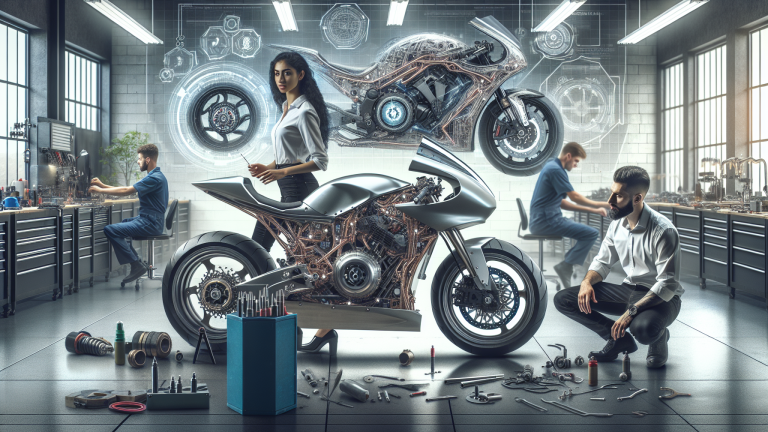
The Handbuilt Show in Austin has become one of the clearest signals that physical craftsmanship still matters in 2026, even as design software, CNC machining, and algorithm-driven marketing reshape custom culture. At its core, the event is a curated motorcycle and fabrication exhibition that brings together builders, machinists, welders, leather workers, painters, and riders who care about objects made by human hands. For readers tracking Custom Culture & Builders – The “New Guard” and Fabrication Tech, this Austin gathering is more than a weekend show. It is a hub where legacy methods meet modern production tools, where emerging builders gain visibility, and where established names prove that craftsmanship can evolve without losing its soul.
When I walk a show like Handbuilt, the difference is obvious within minutes. You can see the file marks left where a part was intentionally hand-finished after machining. You can spot TIG weld stacks that were not ground away because the builder wants the process to remain visible. You can talk to a fabricator about why a subframe was bent rather than cut and welded in sections, or why a tank seam was hammer-finished instead of hidden under thick filler. That physical evidence matters because it separates genuine build quality from surface styling. In 2026, when social platforms reward polished imagery and quick narratives, the Handbuilt Show keeps attention on the actual object.
This matters for buyers, builders, and the broader custom scene. Buyers need to understand what makes a custom motorcycle durable, safe, and worth the premium. Builders need platforms that reward substance, not just trends. The scene itself needs places where legendary names and the new guard appear in the same conversation, because that is how standards get transferred. Austin has become an effective setting for that exchange: it has a strong design audience, a live-events culture, and enough technical curiosity to support conversations about materials, geometry, fabrication methods, and finishing processes. The result is a show that operates as both cultural event and technical reference point for where handbuilt fabrication stands now.
Why the Handbuilt Show Matters in 2026
The Handbuilt Show matters because it answers a question many people now ask directly: does hand craftsmanship still have a place in an era of digital manufacturing? The answer is yes, but not as a rejection of technology. The strongest builders in Austin are using CAD for layout, 3D scanning for fitment, waterjet or CNC for repeatable brackets, and then applying hand skills where judgment matters most. Frame modifications, aluminum shaping, welding sequence, bodywork refinement, paint prep, and final assembly still depend on touch, experience, and problem-solving that software alone cannot replace.
In practical terms, the show highlights three things at once. First, it preserves fabrication literacy. Visitors can compare a handmade exhaust merge collector against a generic off-the-shelf system and immediately see the difference in fit, flow path, and visual proportion. Second, it elevates process transparency. Builders are expected to discuss not just what they made, but how they made it. Third, it creates a public archive of current standards. If you want to know what top-tier custom work looks like in 2026, the Handbuilt Show gives you a benchmark across chassis work, suspension integration, electrical packaging, surfacing, trim, and overall design coherence.
That benchmark has become more important as the custom market has widened. A decade ago, many audiences still separated cafe racers, scramblers, choppers, race-inspired customs, and modern performance builds into tighter tribes. In 2026, those lines are more fluid. Builders borrow from flat track ergonomics, endurance racing body shapes, vintage motocross stance, BMX bar positioning, and industrial design minimalism. The Handbuilt Show gives those influences a disciplined setting. It rewards motorcycles that resolve their ideas structurally, not just stylistically. That is why the event continues to matter to serious enthusiasts and first-time visitors alike.
The New Guard: What Defines the 2026 Builder
The phrase new guard gets used loosely, but at Handbuilt it has a specific meaning. It describes builders who respect foundational techniques while refusing nostalgia for its own sake. These shops often document CAD sketches and fixture setups alongside hand-forming and final welding. They may source engines from older platforms but pair them with modern electrics from Motogadget, suspension from Ohlins, braking components from Brembo, and custom loom design that meets contemporary reliability expectations. Their work is not retro cosplay. It is systems thinking applied to machines with emotional value.
The best new-guard builders also understand packaging at a professional level. They know that a clean build is not merely one with fewer visible parts. It is one where wiring service loops are intentional, heat management is considered, vibration isolation is engineered, and maintenance access remains possible after the photo shoot. I have seen too many motorcycles outside serious shows where beauty disappears the moment the seat comes off. At Handbuilt, the stronger entries usually hold up under close inspection. Hidden battery trays are mounted correctly. Electronics are shielded from spray. Fuel lines and vent routing make sense. Those details are where credibility lives.
Another defining trait is cross-disciplinary fluency. Many 2026 builders move comfortably between motorcycle culture, furniture design, apparel, industrial prototyping, and motorsport engineering. That broader design literacy improves the work. A builder who understands architectural proportion may shape a fairing with better visual balance. A fabricator with product-design experience may use rapid prototyping to refine switch housings before machining the final parts. A painter who studies automotive heritage may choose period-correct striping widths but apply modern catalyzed coatings for longevity. The new guard succeeds because it combines taste, technical method, and production discipline.
Legendary Builders and Why Their Presence Still Sets the Standard
One reason the Handbuilt Show remains essential is that legendary builders still matter, not as museum pieces but as active reference points. Their importance comes from accumulated judgment. Experienced builders know how metal moves under heat, how frames react when modified, and how small visual decisions affect the whole motorcycle. They have already made the expensive mistakes younger shops are trying to avoid. When their bikes appear beside work from newer names, visitors can see continuity rather than conflict. The line from traditional fabrication to advanced custom engineering becomes visible.
Legendary builders also tend to demonstrate restraint, which is harder than excess. A mature build often shows fewer gestures but more conviction. The stance is resolved. The tire choice fits the chassis intent. The seat line works with the tank rather than fighting it. The paint does not need to compensate for weak metalwork. Those qualities can be difficult for newer audiences to identify, but once you have spent time around top-level fabrication, you recognize them immediately. The Handbuilt Show rewards that literacy by putting highly finished machines in one place where comparison is possible.
In 2026, the most respected veterans are not frozen in one era. Many have adopted digital layout, improved metrology, and tighter electrical standards while keeping old-school shaping, welding, and finishing skills at the center. That balance is instructive. It shows newer builders that progress does not require abandoning tradition. It requires knowing which tasks benefit from precision automation and which still demand eye, hand, and experience. That lesson is one of the event’s greatest contributions to custom culture.
Profiles That Define the Subtopic Hub
As a hub for profiles of 2026 new-guard and legendary builders, the Handbuilt Show is useful because it reveals distinct builder archetypes. Some shops are pure fabricators, creating one-off chassis parts, tanks, tail sections, and exhaust systems with a heavy emphasis on metal shaping. Others are engineering-led integrators, taking existing platforms and radically improving geometry, electronics, or packaging while keeping visual intervention subtle. Some specialize in heritage restoration blended with selective modernization. Others push concept-driven customs that borrow from endurance racing, supermoto, desert sleds, or street trackers.
The profiles worth following usually share several traits: a recognizable design language, repeatable quality, evidence of mechanical competence, and enough humility to explain tradeoffs. A serious builder can tell you why they chose a specific donor platform, where the budget went, what compromises were necessary, and how the finished bike will behave on the road. That honesty is important. Not every custom motorcycle is comfortable, practical, or easy to service, and trustworthy builders say so plainly. In Austin, the best conversations often happen when a builder explains what they deliberately refused to do because it would have weakened the motorcycle.
| Builder profile type | Typical strengths | What to examine at Handbuilt |
|---|---|---|
| Legacy fabricator | Metal shaping, frame intuition, finish quality | Weld consistency, body line flow, mechanical access |
| New-guard integrator | CAD, wiring, component packaging, modern rideability | Electronics layout, bracket design, heat shielding |
| Performance custom specialist | Geometry, suspension, braking, weight control | Rider triangle, tire selection, functional modifications |
| Concept-driven designer | Visual identity, material contrast, narrative coherence | Whether styling decisions support real-world usability |
These categories help readers navigate related articles within the subtopic. They also clarify why one builder earns long-term respect while another fades after a strong social media cycle. Durable reputations are built on repeatability, ride quality, safety, and finish under scrutiny.
How Fabrication Tech Is Changing Handbuilt Craft
Fabrication technology is not displacing craftsmanship at the Handbuilt Show; it is filtering it. Builders now have access to compact CNC equipment, affordable 3D scanners, parametric modeling software, laser-cut templates, and better small-shop measurement tools than previous generations could justify. That changes workflow. A builder can scan an engine, model intake clearance, print a mockup, test fitment, revise quickly, and then hand-finish the final aluminum part. The result is not less craft. It is less wasted effort and fewer hidden compromises.
Electrical systems show the biggest leap. Reliable customs in 2026 often use modern control modules, compact lithium battery systems with proper management, high-quality connectors, and documented loom routing. Shops that once treated wiring as an afterthought now present it as part of the craft. The same is true for suspension setup and brake system matching. A beautiful motorcycle that rides poorly no longer impresses informed audiences for long. The Handbuilt Show increasingly reflects that maturity by rewarding complete motorcycles, not just photogenic ones.
There are limits, and serious builders acknowledge them. CNC cannot fix weak proportions. 3D printing cannot replace material understanding in load-bearing parts without proper engineering. Digital renderings can seduce a client into approving forms that become awkward in real space. Handbuilt’s value is that it keeps everyone honest. When a bike is physically present, dimensional mistakes, ergonomic problems, and finish shortcuts are much harder to hide.
What Attendees, Collectors, and Builders Should Look For
If you are attending the Handbuilt Show to learn, start with stance and proportion. Look at how the wheels, tank, seat, and bars relate from ten feet away. Then move closer. Inspect weld termination, fastener selection, bracket thickness, hose routing, paint edge quality, and the interface between handmade and purchased parts. Ask whether the bike appears serviceable. Ask what was changed in the geometry and why. Ask how the builder addressed vibration, heat, fuel capacity, and rider comfort. Good builders answer directly because they have thought through the consequences.
Collectors should pay attention to documentation and durability, not just novelty. A high-value custom should have a clear build record, named components, known fabrication methods, and evidence that the motorcycle can be maintained over time. Builders should use the event as both showcase and calibration tool. The smartest shops study neighboring bikes, compare solutions, and note where their own processes can improve. That is how the Handbuilt Show in Austin continues reviving physical craftsmanship in 2026: by making real work visible, measurable, and worth discussing.
The Handbuilt Show proves that craftsmanship remains a living discipline, not a nostalgic slogan. In Austin, the event brings together legendary builders whose judgment was forged over decades and a new guard fluent in both fabrication tech and old-world hand skills. That combination gives the custom scene something rare: continuity with innovation. Visitors can see how excellent motorcycles are actually made, from structural decisions and material choices to wiring, finishing, and ride-focused engineering. They can also see why the strongest builders earn trust slowly, through consistency, transparency, and motorcycles that stand up to close inspection.
As the hub for profiles of 2026 new-guard and legendary builders, this topic matters because it helps readers separate lasting craftsmanship from temporary style. The Handbuilt Show is the ideal lens for that work. It reveals who can shape metal, who can integrate modern systems without clutter, who understands proportion, and who builds machines that function as well as they look. For anyone following custom culture and fabrication technology, Austin is not just hosting a show. It is documenting the standards that will influence the next wave of builders. Explore the related builder profiles and use this hub as your starting point for the people defining the craft right now.
Frequently Asked Questions
What is The Handbuilt Show in Austin, and why does it matter in 2026?
The Handbuilt Show is a curated exhibition centered on motorcycles, fabrication, and the wider culture of making things by hand. Held in Austin, it has grown into far more than a display of custom bikes. It brings together fabricators, welders, machinists, painters, leather workers, designers, and riders who share a common belief that physical skill still matters. In 2026, that message carries extra weight because so much of custom culture now operates through digital tools, social media branding, parametric design, CNC production, and algorithm-driven visibility. The show stands out because it puts finished objects, visible workmanship, and material understanding back in the foreground.
What makes the event especially important is that it does not reject technology outright. Instead, it highlights the difference between using modern tools intelligently and allowing software, automation, or content trends to flatten the identity of craft. At The Handbuilt Show, attendees can see where human judgment appears in metal shaping, frame geometry, paint depth, leatherwork, surface finish, and the countless small decisions that make a machine feel personal rather than merely produced. For readers following the rise of the “new guard” in custom culture, the event serves as a real-world proof point that craftsmanship is not nostalgic window dressing. It remains a living standard by which originality, discipline, and authenticity are measured.
How does The Handbuilt Show reflect the “new guard” of builders and fabricators?
The “new guard” is often defined by a more fluid and cross-disciplinary approach to making. Many of today’s builders move comfortably between analog and digital workflows. They may sketch by hand, model a component in CAD, machine one part, hand-finish another, and then shape the final identity of the build through welding, assembly, upholstery, and paint. The Handbuilt Show reflects that shift because it attracts builders who are not trapped in one old-school formula, but who still place value on craft, process, and deep technical understanding. In other words, the event is not about cosplay traditionalism. It is about modern makers who understand both heritage and innovation.
The show also reflects the new guard by broadening who gets recognized as a builder. It is not limited to a single archetype of garage fabricator. It acknowledges the contributions of painters, pattern makers, leather workers, machinists, and artists whose work defines the final character of a motorcycle or fabricated object. That wider recognition matters in 2026 because custom culture is increasingly collaborative. The best builds are often the result of multiple specialized crafts working together. The Handbuilt Show gives those crafts visible status, which helps readers understand how the future of fabrication is evolving: not away from handwork, but toward a richer, more integrated version of it.
Why is physical craftsmanship still relevant when design software and CNC machining are so advanced?
Physical craftsmanship remains relevant because tools do not replace judgment. Design software can help solve geometry, packaging, tolerances, and repeatability. CNC machining can produce clean, precise parts faster than many manual methods. But neither one automatically creates taste, proportion, balance, emotional impact, or a coherent build identity. Those qualities still come from a maker’s eye, experience, restraint, and willingness to revise based on what materials actually do in the real world. The Handbuilt Show makes this distinction easy to see. A technically accurate object is not always a compelling one, and a digitally efficient process is not the same thing as a meaningful craft practice.
There is also the matter of material intelligence. Skilled builders understand how steel moves under heat, how welds affect structure and finish, how leather wears over time, how paint reacts to light, and how small fitment choices change the feel of a machine. That knowledge is built through touch, repetition, mistakes, and direct engagement with materials. In 2026, as more design and marketing systems become automated, that embodied knowledge becomes more valuable, not less. It is the difference between an object that merely looks custom online and one that holds up under close inspection in person. The Handbuilt Show reinforces that craftsmanship is not anti-technology; it is the human layer that gives technology purpose and character.
What can attendees and readers learn from The Handbuilt Show beyond just looking at custom motorcycles?
One of the biggest lessons is that craftsmanship is really a way of thinking. At The Handbuilt Show, motorcycles may be the centerpiece, but the deeper story is about standards: how makers solve problems, how they combine aesthetics with function, and how they maintain integrity in a culture that often rewards speed and attention more than substance. Visitors can learn how different disciplines intersect, from fabrication and machining to paint, upholstery, and finishing. They can also see how details that seem minor in photos become major indicators of quality in person, such as weld consistency, bracket design, cable routing, stance, material transitions, and overall coherence.
For readers, the show offers a framework for understanding why handcrafted work continues to matter across custom culture. It demonstrates that craft is not simply about doing everything the hardest way possible. It is about choosing the right process for the right outcome and refusing to let convenience dictate every decision. It also teaches a useful lesson about authenticity. In an era when many brands and builders are marketed through polished content pipelines, in-person events like this reveal who truly understands their medium. That makes The Handbuilt Show valuable not only for enthusiasts and riders, but for anyone tracking design, fabrication, independent making, and the cultural future of skilled labor.
How does The Handbuilt Show influence the future of custom culture and builder communities?
The show influences custom culture by setting a visible benchmark for what quality and originality look like in public. Because it is curated, inclusion carries meaning. Builders are not just uploading images into an endless feed; they are presenting work in a physical environment where proportion, finish, engineering, and craftsmanship can be evaluated directly. That changes the conversation. It encourages builders to think beyond viral presentation and toward objects that can withstand scrutiny from peers, collaborators, and knowledgeable audiences. In this way, The Handbuilt Show helps preserve standards at a time when digital exposure can sometimes reward novelty before substance.
It also strengthens community in practical ways. Events like this create connections between emerging builders and established fabricators, between independent shops and new audiences, and between adjacent crafts that might otherwise remain siloed. Those relationships can lead to collaborations, mentorship, business opportunities, and the transfer of hard-earned skills. In 2026, that network effect is crucial. The future of custom culture will not be shaped only by individual talent, but by ecosystems that support making, teaching, sourcing, and sustaining craft-based work. The Handbuilt Show matters because it gives that ecosystem a physical gathering point. It reminds the industry that even in a highly digitized era, real communities still form around real objects made by real hands.