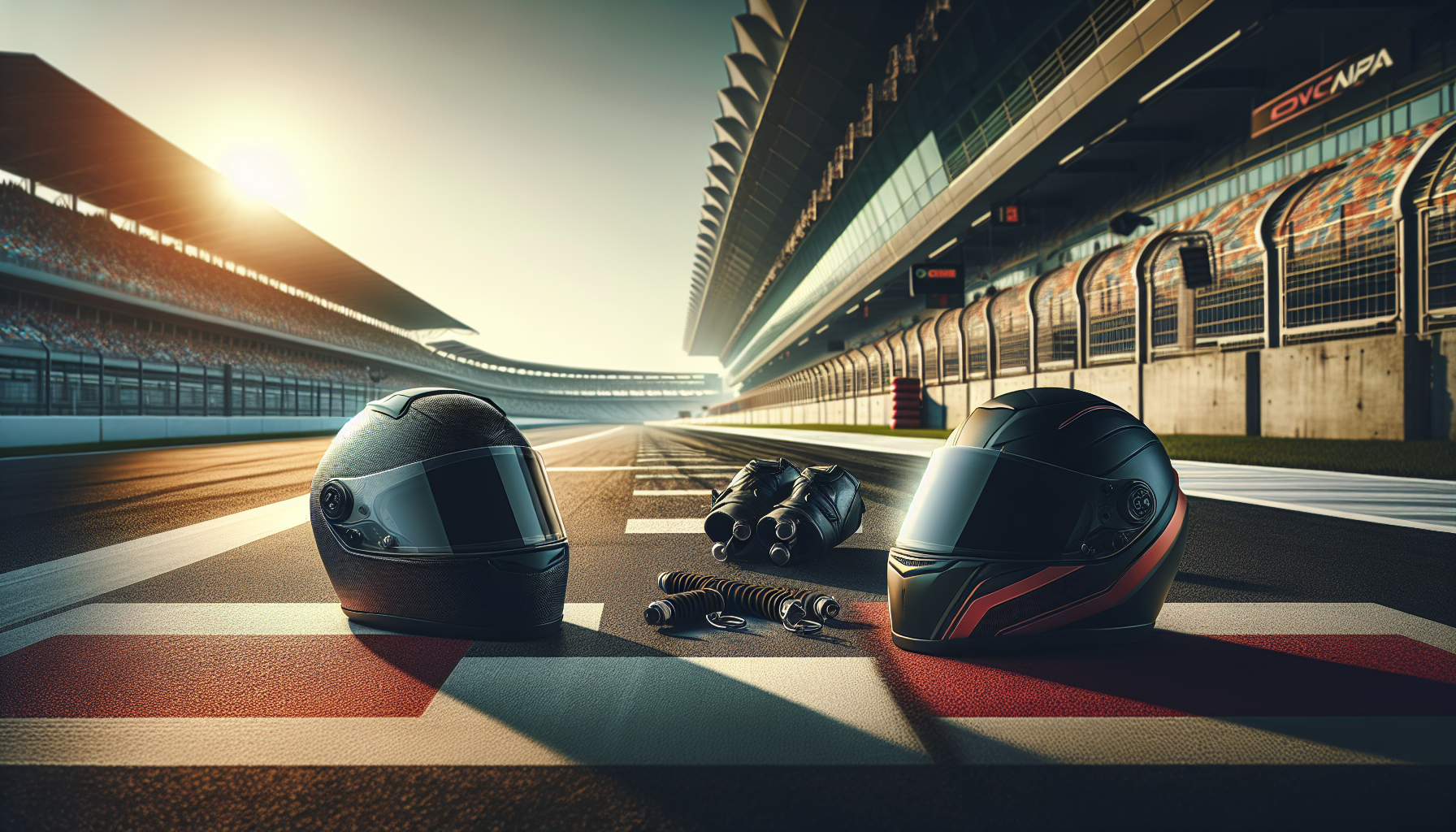
Choosing between the Shoei NXR2 and the Arai Corsair-X is one of the most common decisions serious riders face when building a track day helmet setup. Both are premium full-face helmets from Japanese manufacturers with decades of racing heritage, strong safety reputations, and loyal followings among riders who care about fit, stability, ventilation, and confidence at speed. In the 2026 market, this comparison matters even more because protective gear costs have risen, track organizations are enforcing clearer helmet standards, and many riders want one helmet that works for fast road riding and regular circuit use.
Protective gear is the foundation of any track day kit, but the helmet remains the single most important purchase because it manages impact energy, face protection, field of view, noise, fatigue, and airflow all at once. The Shoei NXR2, known in some markets as the RF-1400 platform’s sportier cousin, is designed as a lightweight sport road and occasional track helmet with a compact shell, refined aerodynamics, and strong all-around usability. The Arai Corsair-X sits closer to a race-first philosophy, using Arai’s rounder, smoother shell concept, advanced ventilation hardware, and a long-established reputation in paddocks around the world.
When riders ask which is better, the honest answer is that both are excellent, but they serve slightly different priorities. The right choice depends on head shape, riding posture, speed range, visor use, heat management, noise tolerance, and whether your track calendar is occasional or central to your season. I have fitted riders for both models, used both on fast road loops and technical circuits, and the same pattern keeps repeating: the Shoei often wins on daily comfort and reduced fatigue, while the Arai often wins when a rider wants maximum airflow, race-oriented features, and the specific feel of a helmet engineered around track use.
This guide compares the Shoei NXR2 vs. Arai Corsair-X as a true track day decision, not a spec-sheet exercise. It also functions as a hub for protective gear, because a helmet never works in isolation. If you are planning a complete kit, this page should lead naturally into glove fit, one-piece versus two-piece leathers, back protectors, boots, base layers, hearing protection, and visor care. Start with fit and safety certification, then work through comfort, visibility, ventilation, noise, and operating cost. By the end, you should know which helmet suits your riding and what gear decisions should come next.
Safety standards, shell design, and what track organizations actually check
For track day use, the first question is simple: will the helmet meet organizer requirements? In 2026, most reputable track day providers and racing schools accept ECE 22.06 or current Snell certification, though exact rules vary by region. The Shoei NXR2 is widely recognized for meeting the latest ECE 22.06 standard, while the Arai Corsair-X is commonly associated with Snell certification in the North American market. Neither label alone tells the full story, but both indicate that the helmets have passed demanding impact and retention testing. Riders should still check event rules before arriving at technical inspection, especially if traveling between countries or renting bikes abroad.
Shell philosophy is where these helmets begin to separate. Shoei focuses on a compact AIM shell construction intended to balance rigidity, controlled energy management, and reduced bulk. A smaller-feeling shell can lower neck strain over a full day, particularly for riders doing repeated twenty-minute sessions. Arai uses its PB-SNC2 shell and emphasizes a smooth, round exterior intended to glance off obstacles more effectively. That design approach is not marketing theater; it shapes the helmet’s profile, vent placement, and even how accessories are integrated. On track, both shells feel stable, but the Arai presents itself as a purpose-built race helmet first, while the Shoei feels like a highly refined sport helmet that happens to excel on track.
Track inspectors also look at condition, not only certification. A premium helmet with worn cheek pads, a scratched visor, missing vent hardware, or a compromised EPS liner can fail common-sense scrutiny even if the sticker is current. Riders building a complete protective gear system should treat helmet maintenance the same way they treat leather seam inspection or back protector fit. If this article is your starting point, the next priorities in the wider protective gear category should be back protector standards, airbag compatibility, boot bracing, and glove palm sliders, because each affects crash survivability in ways many new track riders underestimate.
Fit and head shape: the real deciding factor
If you remember only one buying rule, make it this: the better-fitting helmet is the safer and faster helmet for you. The Shoei NXR2 generally suits intermediate oval head shapes, while the Arai Corsair-X often works better for riders who match Arai’s long oval to intermediate-long internal contour, depending on size and pad configuration. Brand shape tendencies are real, but not universal, because shell size breaks and pad thickness change the feel significantly. A rider who develops a hotspot on the forehead in twenty minutes will lose concentration, tense the neck, and start making poor inputs. On track, that matters as much as peak airflow or spoiler design.
In practical fittings, the Shoei is often easier for a broader range of riders to wear comfortably out of the box. Its interior feels polished, consistent, and less fussy during initial try-on. The Arai can feel firmer and more exacting, but it rewards the right head shape with a locked-in sensation that many advanced riders love. Arai’s peel-away pad customization system is genuinely useful because it lets you fine-tune crown and cheek pressure without immediately buying new liner components. Shoei’s emergency quick-release cheek pad system is excellent for safety and serviceability, but in day-to-day fitting, Arai’s tunability gives skilled retailers more tools to dial in comfort.
Do not confuse a snug fit with pain. A proper track helmet should feel evenly firm around the crown and cheeks, with minimal rotation when you move the shell by hand. It should not create a focused pressure point on the forehead or temples. If you wear glasses, test insertion and seal quality before buying; both helmets can work with glasses, but temple arm thickness changes comfort more than most riders expect. This is also why a protective gear hub must connect helmet choice with base layers and earplugs. A thin moisture-wicking balaclava can improve fit consistency, and correctly inserted foam earplugs reduce noise fatigue enough to change your perception of helmet comfort over a full event.
Aerodynamics, stability, and fatigue at speed
Track day riders often notice aerodynamic behavior before they can articulate it. If a helmet lifts slightly on the straights, buffets when shoulder-checking, or tugs at the neck in braking zones, lap times and confidence suffer. The Shoei NXR2 is exceptionally composed for a road-biased sport helmet. Its shell cuts through clean air well, and in a tucked position behind a modern sportbike screen it feels neutral, predictable, and relatively low effort. That matters for riders doing six or seven sessions in a day, because cumulative neck fatigue often becomes the limiting factor long before outright bravery.
The Arai Corsair-X brings a more overtly race-oriented aerodynamic package. The rear diffuser, brow vents, and top vent architecture create a shell that feels designed around airflow at high speed, not simply adapted to it. On bikes with little wind protection, some riders report more noticeable airflow interaction around the vent structures, but when the pace rises the helmet settles impressively. In my experience, riders who spend more time above motorway speeds than below them often appreciate the Corsair-X once they are in a committed crouch. Riders who split time between road and circuit often prefer the quieter, more relaxed manners of the Shoei.
The tradeoff is straightforward. Shoei tends to reduce fatigue through smoothness and lower apparent effort. Arai tends to reward aggressive riding posture and track intensity with a secure, race-bred feel. Neither is unstable; both are premium helmets with serious wind-tunnel development behind them. The real question is where you spend your time. If your track days are occasional extensions of spirited road riding, the NXR2’s composure is compelling. If your season revolves around instruction, open pit lane events, and consistent high-speed sessions, the Corsair-X makes a strong case.
Ventilation, visor systems, and track usability
Heat management is a major performance factor, especially in summer events where ambient temperatures, tire warmers, and queueing in pit lane combine to raise core temperature. The Arai Corsair-X is one of the best-ventilated street-legal track helmets available. Its vent network moves a large volume of air when you are in motion, and riders in hot climates regularly choose it for exactly that reason. The Shoei NXR2 ventilates well, but it does so with more restraint. You get effective airflow without the same sensation of the helmet being designed around vent hardware first. For mixed road use, that can be an advantage because extreme ventilation often increases noise and weather sensitivity.
Visor operation matters more on track than many buyers think. You need a positive seal, simple mechanism, dependable anti-fog performance in cool mornings, and quick tear-off or insert compatibility depending on how you ride. Shoei’s CWR-F2 visor system is smooth, easy to remove, and confidence-inspiring in everyday use. Arai’s visor changes have improved significantly over earlier generations, but some riders still find Shoei more intuitive at the bench. Once fitted, both provide excellent optical quality and wide horizontal vision, though many racers and coaches praise the Arai for outstanding peripheral awareness when scanning corner exits and nearby traffic.
For practical buying, think beyond the shell. Do you need a Pinlock insert for shoulder-season events? Will you carry a clear and a dark visor? How easy is it to source replacements locally before a weekend? These questions tie helmet choice back to the broader protective gear ecosystem. The best gloves in the paddock will not help if your visor fogs on the out lap, and the best suit fit will not matter if heat stress degrades concentration by session three.
| Category | Shoei NXR2 | Arai Corsair-X |
|---|---|---|
| Best for | Mixed road and track riders | Track-focused riders in hot climates |
| Fit tendency | Intermediate oval | Long oval to intermediate-long |
| Noise control | Generally quieter | Generally louder due to ventilation |
| Ventilation | Strong but balanced | Excellent at speed |
| Track feel | Refined and low-fatigue | Race-oriented and locked-in |
Noise, comfort, and all-day ownership costs
No helmet is truly quiet at track speeds, but relative noise still matters because it drives fatigue, concentration loss, and post-session headaches. The Shoei NXR2 usually has the edge here. Its sealing, shell compactness, and overall refinement produce a calmer acoustic experience for many riders, especially on naked bikes or during road miles to and from the circuit. The Arai Corsair-X is not poor in this area; it simply prioritizes ventilation and race utility more aggressively, and that usually means more wind noise. The solution is simple and non-negotiable: wear quality earplugs every session. In any serious protective gear plan, hearing protection belongs beside helmets and back protectors, not in the optional extras category.
Interior comfort also changes over time. Shoei interiors typically feel plush and immediately accommodating. Arai interiors often feel denser and more structured, then become extremely satisfying once dialed in. Both brands offer replaceable liners and cheek pads, which matters because helmets degrade gradually through sweat, repeated compression, sunscreen residue, and normal use. A helmet that fit perfectly when new can become loose enough to move under braking after two seasons if you ignore pad wear. Riders often blame shell design when the real issue is a tired interior.
Ownership cost is broader than retail price. Include spare visors, Pinlock inserts, replacement vents, cheek pads, cleaning products, and the likelihood of finding parts quickly. Shoei parts availability is often excellent through large dealer networks. Arai support is also strong, particularly through specialist race and premium retailers, but pricing and availability can vary by region. If you run frequent track days, budget for periodic interior refreshes and visor replacement the way you budget for brake pads. Protective gear only performs when maintained, fitted, and replaced on time.
Which helmet should you buy, and what protective gear should come next?
The short answer is this: buy the Shoei NXR2 if you want the best all-rounder for fast road riding, regular track days, lower fatigue, and easier day-long livability. Buy the Arai Corsair-X if your riding is more track-centered, your climate is hot, your head shape matches Arai well, and you want a race-focused helmet with exceptional airflow and a distinctive locked-in feel. For many riders, fit will override every other factor, and that is exactly how it should be. A perfectly fitted Shoei beats a poorly fitted Arai, and the reverse is equally true.
As the hub for Protective Gear within Garage & Gear, this comparison should help you make the helmet decision first, then build outward logically. The next articles to consult should cover one-piece versus two-piece leathers for track use, CE Level 2 back protectors, chest protection, track gloves with palm sliders, race boots with bracing support, airbag systems, base layers for heat management, and earplug selection. Those pieces work together. A helmet stabilizes your head, but a well-fitted suit reduces distraction, a quality back protector manages spinal risk, and proper boots and gloves protect the contact points riders instinctively expose in a crash.
If you are choosing today, try both helmets back to back for at least fifteen minutes each, in your actual riding posture if possible. Check forehead pressure, cheek compression, visibility in a tuck, visor seal, and how the shell feels when you turn your head. Then price the complete ownership package, not only the helmet on the shelf. The best track day helmet is the one you trust completely when the braking marker arrives sooner than expected. Pick the helmet that fits your head, your riding, and your full protective gear plan, then finish the rest of your kit before your next event.
Frequently Asked Questions
Which helmet is better for track days: the Shoei NXR2 or the Arai Corsair-X?
There is no universal winner because these two helmets excel in slightly different ways, and the better choice usually comes down to head shape, riding posture, and what you value most on track. The Shoei NXR2 is often praised for its balanced all-round performance. Riders tend to like its refined aerodynamics, stable feel at speed, strong ventilation for a road-and-track helmet, and a liner system that feels immediately premium and well finished. It is the kind of helmet many track day riders choose when they want a lightweight, predictable, easy-to-live-with option that performs well across a wide range of riding environments.
The Arai Corsair-X, on the other hand, has a more race-focused identity and a long-standing reputation in serious performance riding circles. It is especially respected for its shell philosophy, emergency cheek pad design, advanced ventilation hardware, and the confidence it gives riders who prefer a very locked-in, purposeful track helmet feel. Many experienced riders appreciate the Corsair-X for high-speed stability, premium construction, and the way Arai approaches impact management and shell shape.
In practical terms, if you are comparing them for pure track day use, the deciding factor is often fit rather than a spec-sheet advantage. A helmet that matches your head shape correctly will be safer, quieter in clean air, more stable under braking, and less fatiguing over a full day of sessions. If the Shoei fits your head naturally, it may feel lighter and less distracting. If the Arai fits you better, it may deliver superior confidence and focus when the pace rises. For most riders, the smartest answer is simple: buy the one that fits your head best and meets your track organization’s current helmet standards.
How do the Shoei NXR2 and Arai Corsair-X compare in fit and comfort?
Fit is the single most important difference between premium helmets, and it matters even more on track than it does on the street. Both the Shoei NXR2 and the Arai Corsair-X are high-end helmets, but they do not fit every rider the same way. Shoei helmets are often described as accommodating an intermediate oval head shape, while Arai has traditionally offered a very distinctive interior feel that many riders either love immediately or need time to evaluate carefully. The Corsair-X often feels more tailored and race-snug out of the box, while the NXR2 frequently gives riders a slightly more neutral, universally approachable fit.
Comfort is not just about softness. A truly track-worthy fit should be snug around the crown and cheeks without creating pressure points on the forehead, temples, or back of the skull. During a 15- to 25-minute session, even a small hot spot can become a serious distraction. Under braking and when turning your head on straights, a properly fitted helmet should remain stable and should not shift independently from your head. If it moves too much, it is too loose. If it causes numbness or pain, it is not the right internal shape, regardless of price or brand prestige.
Both helmets offer premium interior materials, removable liners, and cheek pad systems that help fine-tune fit, but Arai is especially well known for nuanced fit customization options. Shoei also does an excellent job with liner quality and long-term wear comfort. If you are deciding between them, try both for as long as possible, ideally in a tucked riding position. Wear each helmet for at least 15 to 20 minutes, not just 30 seconds in a showroom. The helmet that disappears on your head while remaining firmly secure is almost always the right choice.
Is one helmet safer than the other for aggressive riding and track use?
Both the Shoei NXR2 and the Arai Corsair-X come from manufacturers with strong safety reputations, advanced shell construction expertise, and deep motorsport heritage, so this is not a case of a clearly “safe” helmet versus an unsafe one. Both are premium full-face helmets designed with high-level protective performance in mind. In real-world buying decisions, the more useful question is whether either helmet meets the certification requirements of your local track day organizer and whether it fits you correctly enough to do its job in an incident.
Arai has long emphasized its rounded, smooth shell concept and a philosophy centered on managing impacts in a way that promotes glancing off surfaces. Shoei, meanwhile, is widely respected for sophisticated shell engineering, consistent manufacturing quality, and a balanced approach to protection, comfort, and race-derived functionality. Riders can debate design philosophies, but both brands are operating at the top end of the market and both have earned trust over many years of use in demanding environments.
For track day riders in 2026, the practical safety checklist should include more than brand reputation. Confirm the helmet’s certification, check whether your track organization has age limits on helmets, inspect the shell and EPS carefully, and make sure the visor mechanism, chin strap, and liner are all in excellent condition. Also remember that a premium helmet that fits poorly can compromise both safety and concentration. Between these two models, fit, current compliance, and condition are more meaningful factors than trying to declare an absolute safety winner.
How do ventilation, aerodynamics, and stability differ between the NXR2 and the Corsair-X at speed?
This is one of the most important comparisons for riders who spend full days circulating in fast groups, especially in warmer conditions. The Shoei NXR2 is widely appreciated for feeling aerodynamically clean and well balanced. Many riders report that it cuts through airflow smoothly, resists buffeting well in a tuck, and feels less tiring over a long day. It tends to deliver a polished, highly refined experience that suits riders moving between street riding, canyon work, and regular track events.
The Arai Corsair-X is known for aggressive ventilation design and a race-first personality. It often appeals to riders who prioritize airflow management and a planted, competition-oriented feel. Arai’s vent layout and external hardware have long been associated with serious high-performance use, and many riders specifically choose the Corsair-X because it feels like a purpose-built track weapon. Depending on bike, windshield, and rider size, some riders may prefer the Arai’s airflow and stability characteristics once they are fully tucked in and riding at higher speeds.
That said, perceived ventilation and stability are highly dependent on your motorcycle, body position, and windscreen setup. A helmet that is quiet and stable on one superbike can behave differently on another machine with more turbulent air. If possible, look for detailed rider feedback from people using the same type of bike you ride. In general, both helmets are strong performers, but the Shoei often gets the nod for smooth, all-around refinement, while the Arai frequently stands out for riders who want a more overtly track-specialized sensation and robust airflow at pace.
Which helmet offers better value in 2026, especially with rising gear prices and stricter track requirements?
Value in the premium helmet category is about much more than purchase price. In 2026, riders are paying closer attention to total ownership value because gear costs have climbed and many track day organizations are enforcing helmet standards more carefully. When evaluating value, you should consider not only initial cost but also fit longevity, visor and tear-off availability, replacement part pricing, liner durability, warranty support, and whether the helmet will remain eligible under your preferred track organizer’s rules for the next several seasons.
The Shoei NXR2 often represents strong value for riders who want premium quality and excellent track capability without stepping fully into the most race-specialized end of the market. It can be an especially smart buy if it fits you well immediately and if replacement shields, pads, and consumables are easy to source in your region. The Arai Corsair-X usually commands premium-money expectations, but many riders justify that cost because of Arai’s brand trust, fit customization options, high-end finish, and the sense of confidence the helmet provides during fast riding.
The best value is the helmet you can wear comfortably for entire track days, pass tech inspection with confidence, and maintain properly over time. A helmet that costs a little more but fits perfectly may be a far better investment than a slightly cheaper option that creates pressure points or moves at speed. If you are deciding strictly on value, compare local pricing, shield costs, spare cheek pad options, and certification acceptance at your usual circuits. Then make the final call based on fit. At this level, comfort, compliance, and confidence are what turn a premium helmet into a worthwhile purchase.