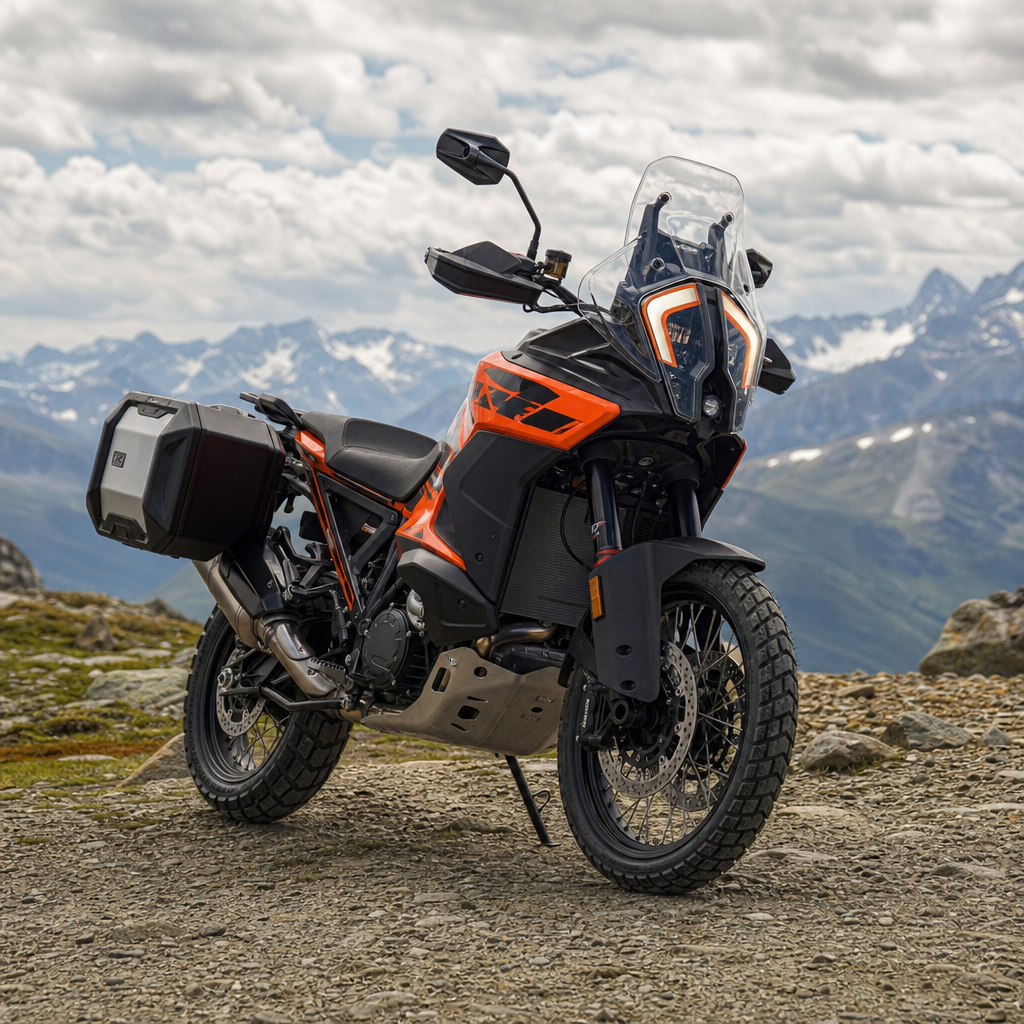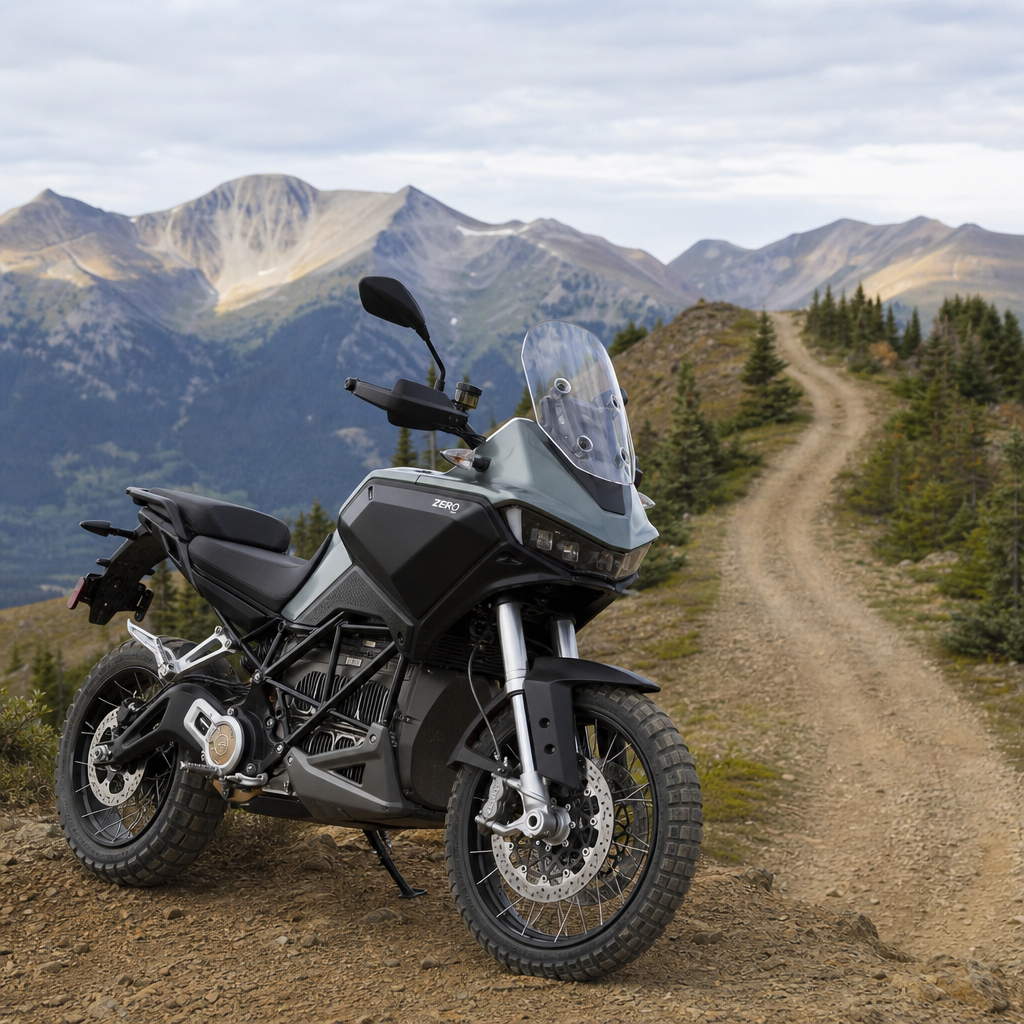
The 2026 Zero DSR/X sits at the center of a serious question for adventure riders: can an electric motorcycle truly handle the backcountry, not just a scenic fire road near town, but the long, rough, remote miles where range, repairability, and confidence matter. In this Electric Frontier hub, I am treating the DSR/X as both a specific machine and a lens for the broader shift now reshaping dual-sport and ADV riding. “Backcountry” here means terrain and travel conditions where support is limited, charging is uncertain, weather changes quickly, and a poor equipment decision can end a trip. “Electric motorcycle” means a battery-powered bike using an electric motor instead of an internal-combustion engine, with performance shaped by battery capacity, charging speed, thermal management, software controls, and power delivery rather than fuel mapping and gearbox ratios.
This matters because the old debate has moved beyond whether electric motorcycles are fast enough. They are. The hard questions now are about usable range on mixed terrain, charging logistics in rural areas, battery behavior under load, durability after repeated impacts and water crossings, and whether the ownership experience supports multi-day exploration. I have spent enough time around ADV test loops, charging stops, and route planning tools to know that spec-sheet range alone is almost meaningless once riders add luggage, climb sustained grades, run loose surfaces, and deal with cold mornings. The 2026 Zero DSR/X therefore deserves examination as a practical adventure platform, not a novelty.
As the hub for Electric Frontier within New Rides, this article covers the foundations every shopper and curious rider needs: what the Zero DSR/X is designed to do, where electric ADV bikes already perform exceptionally well, where they still face real limits, how charging infrastructure changes route strategy, and what kind of rider can use this platform today without frustration. The headline answer is nuanced. Yes, an electric motorcycle can handle backcountry travel in many scenarios, especially day loops, BDR-style segments near charging, and overland routes with planned overnight power. No, it still does not replace a gas adventure bike for every remote expedition. The interesting part is understanding exactly where that line now sits in 2026.
What the 2026 Zero DSR/X is built to do
The Zero DSR/X is the company’s adventure-focused platform, developed around the idea that electric torque, low-speed control, and reduced mechanical complexity can be advantages off pavement. In practical riding, that proposition is real. Electric torque arrives immediately, which helps on steep rocky climbs, deep gravel starts, and technical switchbacks where clutch work can unsettle a heavier bike. Riders coming from middleweight ADV machines often notice the same thing I did on electric dirt and dual-sport test rides: traction feels easier to meter because the powertrain delivers drive smoothly and predictably, without the abrupt hit or stall risk that can complicate low-speed technical riding.
For the backcountry mission, the critical design elements are not just horsepower and torque figures. More important are battery capacity, regenerative braking calibration, ride modes, ground clearance, suspension tuning, wheel and tire choices, weather sealing, and charging options. Zero’s Cypher ecosystem, Bosch Motorcycle Stability Control, selectable ride modes, and linked electronics matter because electric ADV riding is software-defined in ways gas bikes are not. Throttle mapping can change energy consumption and rear-tire behavior dramatically. Regenerative braking can extend range on descents and reduce brake wear, but if poorly tuned it can upset the chassis on loose surfaces. On a bike like the DSR/X, software is part of the suspension-and-power package.
That makes the DSR/X different from earlier electric motorcycles that were excellent commuters or canyon bikes but compromises once the pavement ended. The current adventure brief is broader. Riders want to leave the city, run 100 to 180 mixed miles, carry camping gear, ford shallow water, and recharge without spending the entire trip waiting. If the 2026 model advances meaningfully, it will be because Zero improved the total system: battery efficiency, thermal control, charging flexibility, and durability under repeated off-road impacts. That systems view is the right way to evaluate whether an electric adventure motorcycle can truly function in remote riding.
Where electric motorcycles already beat gas in the backcountry
Electric motorcycles already outperform internal-combustion models in several backcountry use cases. The first is precision at low speed. On rocky climbs, rutted two-track, and ledgy jeep trails, instant torque and the absence of clutch modulation simplify control. Newer riders fatigue less because there is no stalling, no heat from the engine between the knees, and less cognitive load in technical sections. The second advantage is noise. In forests, near trail-adjacent rural communities, and on dawn departures from campsites, low acoustic output is a meaningful benefit. It does not solve access issues, but it reduces one of the classic frictions between riders and non-riders using the same spaces.
The third advantage is maintenance simplicity during ownership. An electric ADV motorcycle eliminates oil changes, air filters, spark plugs, clutch wear, and many of the vibration-related fastener and fueling annoyances that show up on rough routes. For riders who use their adventure bike as a daily machine and weekend explorer, that matters more than brochures admit. A chain, brake pads, tires, suspension service, wheel bearings, and software updates still remain, but the number of routine powertrain tasks is reduced. In my experience, riders who actually log mixed-use mileage appreciate this more than spec-hunters do because less service time means more riding time.
Finally, an electric platform can feel remarkably planted in changing traction because motor response is so exact. On washboard roads, hardpack transitioning to marbles, or wet roots on a forest road, the bike can be calmer than expected if traction control and throttle mapping are sorted well. That is one reason the Zero DSR/X has credibility as a backcountry machine. Electric propulsion is not merely an eco angle. In specific terrain, it is a genuine performance tool.
The real constraint: range, charging, and route planning
The decisive limitation remains energy availability. Manufacturers publish city, highway, and combined estimates, but backcountry riding blends variables that punish batteries: elevation gain, loose surfaces, wind, low temperatures, luggage weight, and irregular speeds. A route that looks manageable on paper can consume energy far faster than expected. For adventure use, riders should think in terms of energy budget rather than miles. The practical question is not “What range does the DSR/X have?” but “How many kilowatt-hours will this route require, with my pace, terrain, weather, and load?”
That changes trip planning. Gas ADV riders can improvise because fuel is dense, widely available, and quickly replenished. Electric ADV riders must route around Level 2 AC charging, DC fast charging where available, lodging with dependable outlets, and contingency stops in nearby towns. In 2026, the charging map is better than it was three years ago, especially along major corridors and in tourism-heavy regions, but the gap remains in exactly the places many adventure riders want to go: mountain counties, desert trail networks, and dispersed camping areas far from reliable public charging. Apps such as PlugShare, A Better Routeplanner, and ChargePoint are not optional conveniences; they are navigation tools.
| Backcountry scenario | How the DSR/X fits | Main planning issue | Best solution |
|---|---|---|---|
| Day loop from a town base | Very strong use case | Mixed-terrain range variability | Start full, keep 20 to 30 percent reserve, recharge overnight |
| Two-day route with lodging | Good if charging is confirmed | Hotel outlets and charging speed | Call ahead, verify amperage, carry adapters if supported |
| Remote BDR section | Possible in selected segments | Sparse charging between trail towns | Shorten stages, use paved connectors strategically |
| Multi-day dispersed camping | Weakest current case | No dependable overnight power | Plan resupply towns or use a gas platform instead |
The most successful electric backcountry trips are therefore not spontaneous in the old-school sense. They are intentional. Riders who accept that reality can have excellent experiences. Riders expecting gasoline-style freedom will be frustrated. That is not a flaw unique to Zero; it is the present state of electric adventure riding.
Durability, weather, and repair realities off pavement
Backcountry readiness also depends on whether the bike can survive abuse and recover from problems far from a dealer. Electric motorcycles often perform better in water and weather than skeptics assume because major components are sealed and there is no air intake to drown in the traditional sense. Still, sealing standards, venting design, connector quality, skid protection, and impact resistance matter enormously. A bike intended for gravel and forest roads may not tolerate repeated rock strikes, tip-overs with luggage, or sustained corrugations as well as one built around harsher assumptions. On the DSR/X, buyers should look closely at underbody protection, radiator-equivalent thermal pathways, charge-port durability, and how bodywork survives repeated low-speed drops.
Repairability is more complicated. Electric motorcycles remove many common roadside problems, yet introduce failures most owners cannot solve trailside. You are unlikely to adjust valves on a route, but you also are not going to diagnose a high-voltage fault or failed contactor beside a creek crossing. That means dependability matters even more than on a gas bike because the range of field repairs is narrower. Software reliability, waterproof connectors, battery management robustness, and dealer support are not abstract concerns. They are expedition variables.
The tradeoff is straightforward. Electric bikes often need less routine maintenance, but when something significant does go wrong, the solution may require specialized tools, diagnostic access, and parts not found in rural garages. Riders considering the 2026 Zero DSR/X for true backcountry travel should evaluate local service support as seriously as they evaluate seat height or wheel travel. A brilliant motorcycle with weak support can become a liability once the route gets remote.
Who should buy an electric adventure bike in 2026
The best candidate for the 2026 Zero DSR/X is not necessarily the round-the-world rider. It is the rider whose real life includes commuting, day adventures, weekend escapes, and occasional overnight trips based around towns, cabins, or campgrounds with power. For that rider, the DSR/X can be a highly satisfying all-rounder: quick in traffic, effortless on dirt roads, capable on technical connectors, and dramatically cheaper to charge than a large gas ADV bike is to fuel. It also suits riders with home charging, predictable route habits, and a willingness to plan energy stops the way EV owners already do in cars.
The weaker fit is the rider whose ideal trip involves unstructured multi-day exploration with no guaranteed power for long stretches. If your style is riding until dusk, camping anywhere, and deciding the next morning whether to go another 200 miles into the unknown, today’s electric ADV format still imposes too much constraint. There is no shame in that conclusion. Technology succeeds by solving specific problems first. Right now, electric motorcycles solve many adventure problems brilliantly, but not all of them.
As the Electric Frontier hub under New Rides, this page should help readers sort hype from practical reality. The 2026 Zero DSR/X can truly handle the backcountry when the route matches the machine: mixed-terrain day rides, regional ADV loops, scenic overnights, and carefully plotted remote segments with dependable charging. It cannot yet replace a gas motorcycle for every unsupported expedition, and pretending otherwise helps no one. The payoff for riders who match expectations to capability is substantial: quiet travel, precise control, low running costs, and a fresh way to experience familiar terrain. If that sounds like your kind of riding, keep exploring Electric Frontier and map your first realistic electric adventure.
Frequently Asked Questions
Can the 2026 Zero DSR/X realistically handle true backcountry riding, or is it still better suited to shorter adventure routes?
The honest answer is that the 2026 Zero DSR/X can handle real backcountry riding, but with clear limits that matter more in remote travel than they do on a casual weekend loop. On the performance side, an electric adventure motorcycle like the DSR/X offers immediate torque, smooth low-speed control, quiet operation, and fewer mechanical systems to manage in rough terrain. Those qualities are not marketing fluff. They can be genuine advantages on steep climbs, technical sections, and uneven surfaces where throttle precision and traction control matter. In that sense, the DSR/X is absolutely capable of going well beyond paved roads and graded fire roads.
Where the question gets more serious is endurance. Backcountry riding is not simply about whether a bike can traverse dirt, rocks, sand, washouts, or jeep trails. It is about whether it can do so for long distances, with uncertain speeds, heavy loads, changing temperatures, and no guaranteed support. That is where electric ADV bikes still face their biggest challenge. Range in remote riding is heavily influenced by terrain, rider pace, payload, tire choice, elevation change, and how often the bike is forced into energy-draining technical work. A route that looks manageable on paper can become a problem if conditions turn slow, loose, muddy, or cold.
So yes, the DSR/X can be a legitimate backcountry machine, but it demands more planning discipline than a comparable gasoline ADV bike. Riders need to treat route selection, charging strategy, and reserve energy with the same seriousness that overlanders give to fuel range and water supply. For riders willing to plan around those realities, the DSR/X can be more than a novelty. For riders expecting the same flexibility as a gas-powered bike in very remote territory, the limitations are still real enough to shape what “adventure” means.
What is the biggest obstacle for an electric adventure motorcycle in the backcountry: range, charging, or repairability?
All three matter, but charging logistics are usually the biggest practical obstacle because they amplify the other two. Range by itself is only part of the story. If a rider knows exactly where they can recharge and how long it will take, then range becomes a planning exercise. In the backcountry, the problem is that charging infrastructure is often sparse, inconsistent, or located far from the kinds of routes adventure riders actually want to explore. A gasoline bike can usually be refueled quickly from pumps, small towns, emergency cans, or even carried fuel. An electric motorcycle depends on access to compatible power, enough dwell time to recharge, and confidence that the next energy source will actually be available.
Repairability is the next major concern, especially in remote travel where improvisation has always been part of the ADV experience. Traditional dual-sport and adventure bikes often allow field fixes for common issues like broken levers, clogged filters, loose hardware, minor fuel delivery problems, or damaged controls. Electric motorcycles remove some maintenance headaches, which is a real benefit, but they also concentrate risk into more specialized systems such as battery management, charging components, software interfaces, and high-voltage electronics. Those systems are often reliable, but if something critical does fail, trailside repair options can be limited compared with a mechanically simpler gas bike.
Range still matters deeply, of course, especially because off-road conditions can make actual consumption far less predictable than optimistic estimates suggest. Technical riding, soft surfaces, steep climbing, cold weather, and luggage all chip away at usable distance. But for most serious backcountry riders, the true concern is not simply “How far can it go?” It is “How far can it go, recover, and continue without turning the whole trip into a fragile chain of assumptions?” That broader question is why charging remains the defining challenge in remote electric motorcycle travel.
How does the Zero DSR/X compare with a gas-powered ADV bike when the terrain gets rough and support is limited?
In rough terrain, the Zero DSR/X can feel surprisingly well suited to adventure riding in ways that challenge old assumptions. Electric power delivery is one of the strongest examples. The absence of clutch work, the immediate torque response, and the smoothness at low speed can make technical riding less tiring and more controlled, particularly on rocky climbs, tight switchbacks, and uneven surfaces where traction comes and goes. The quieter ride also reduces fatigue for some riders and changes the feel of moving through remote landscapes in a way many find genuinely compelling.
That said, rough terrain in the backcountry is never just about how the motorcycle behaves over obstacles. It is about how the entire machine fits into a system of risk management. Gas-powered ADV bikes still hold major advantages when support is limited because refueling is faster, route flexibility is greater, and contingency planning is easier. If a rider needs to reroute around weather, closures, washouts, or navigation errors, a gas bike usually tolerates that uncertainty better. With the DSR/X, detours can carry more strategic weight because every unexpected mile can affect whether the rider reaches a workable charging point.
Then there is recovery and resilience. If a conventional ADV bike tips over in a remote area, the rider often thinks first about damage to controls, luggage, radiator protection, tires, or fuel system components. With an electric ADV bike, those same concerns exist, but the rider may also be more aware of protecting charging hardware and electronic systems that are not as easily improvised around in the field. So the DSR/X compares well in terms of ride characteristics and off-road controllability, but gas-powered bikes still maintain an edge in expedition-style self-sufficiency. That does not disqualify the Zero. It simply means it shines best with smart route design, conservative planning, and riders who understand that electric capability and electric flexibility are not the same thing.
What kind of rider and trip planning approach makes the 2026 Zero DSR/X a better fit for backcountry travel?
The DSR/X makes the most sense for riders who are disciplined planners rather than spontaneous range gamblers. The ideal owner is not necessarily someone who rides timidly, but someone who understands that electric adventure travel rewards structure. That means studying terrain profiles, accounting for weather, identifying charging opportunities before departure, building in reserve margins, and being realistic about how speed, load, and technical sections affect battery use. Riders who already approach backcountry travel with an overlanding mindset will adapt more naturally to an electric platform than riders who prefer to wing it deep into remote areas.
Trip style matters too. The DSR/X is likely to be a stronger fit for regional backcountry loops, BDR-style segments with known access to towns or charging points, and adventure travel that mixes pavement, dirt, and moderate technical sections without requiring extreme distance between services. It can also work well for riders who return to a home base, cabin, or camp with dependable power rather than committing to ultra-remote multi-day traverses where charging options are uncertain. In other words, it excels when the route is adventurous but not logistically blind.
The best approach is to think in terms of margin. Plan shorter than the maximum claimed range. Assume real-world conditions will be worse than ideal. Know where backup charging might be possible. Carry the equipment you need for tires, controls, navigation, and communication, while also understanding the limits of what can be fixed in the field. Riders who embrace that mindset will see the DSR/X less as an imitation of a gas ADV bike and more as a different tool with distinct strengths. That perspective is essential, because success in the backcountry with an electric motorcycle depends as much on judgment as it does on hardware.
Is the 2026 Zero DSR/X a sign that electric motorcycles are ready to reshape dual-sport and ADV riding, or is the technology still in a transitional phase?
The Zero DSR/X is both a meaningful step forward and a clear reminder that the category is still evolving. It shows that electric motorcycles are no longer confined to urban commuting or short recreational use. The fact that riders can seriously discuss electric machines in the context of adventure travel, rough terrain, and remote routes is itself a sign of progress. Performance, rideability, and overall capability have reached a point where electric motorcycles deserve a legitimate place in the ADV conversation rather than a novelty side note.
At the same time, “ready to reshape” and “ready to replace” are not the same thing. The DSR/X points toward a broader shift in how some riders will define adventure riding, especially those who prioritize torque delivery, reduced routine maintenance, quiet operation, and a different relationship with the terrain. But the infrastructure, charging speed, remote support ecosystem, and field-service expectations that underpin long-range backcountry confidence are still catching up. That means the technology feels most mature in use cases where routes are semi-structured and energy access can be planned with confidence.
So the right way to view the 2026 Zero DSR/X is not as proof that electric motorcycles have solved every backcountry problem, but as evidence that they are now credible participants in the future of dual-sport and ADV riding. They are advanced enough to matter, capable enough to challenge old assumptions, and limited enough that serious riders still need to think carefully about where and how they use them. That tension is exactly why the DSR/X is such an important machine. It sits at