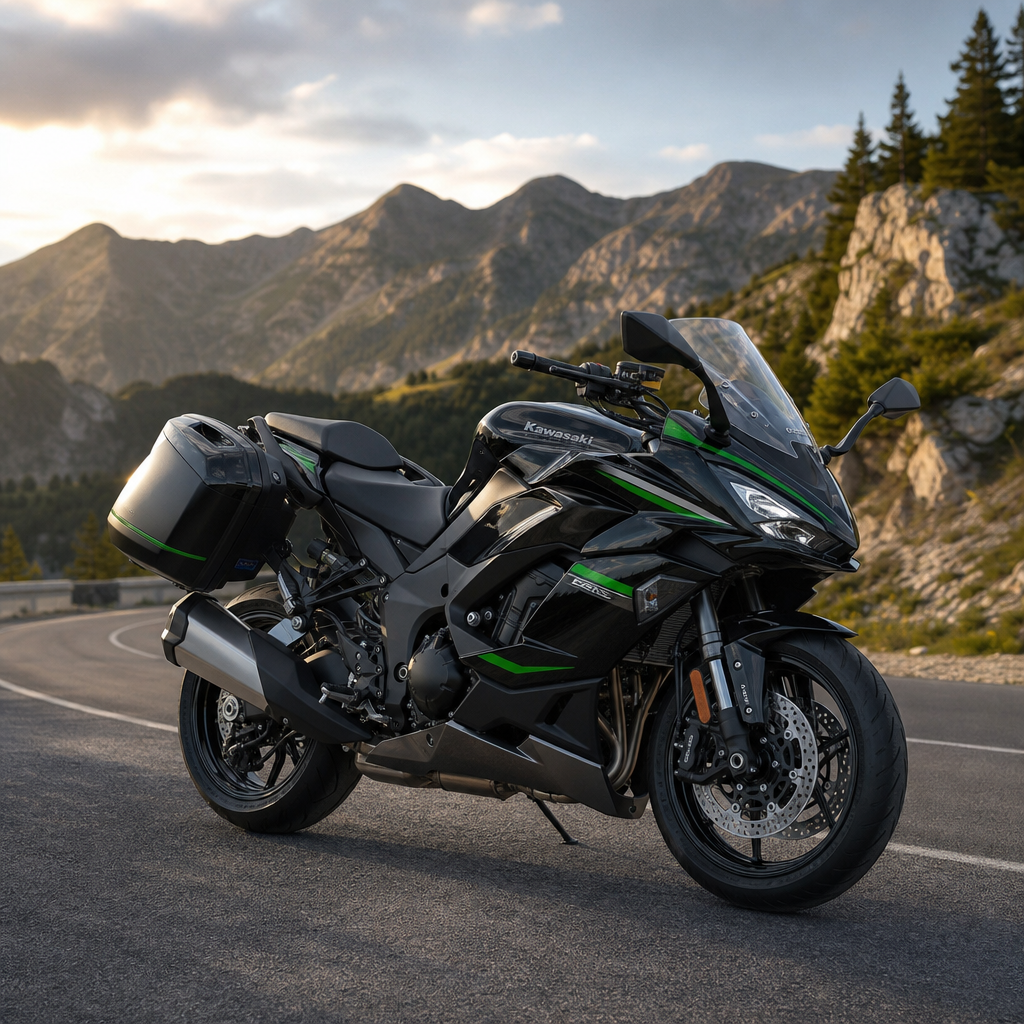
The Kawasaki Ninja 1100SX (2026) sets a benchmark for riders who want superbike attitude without sacrificing distance comfort, luggage capacity, or day-to-day usability. In practical terms, sport touring means a motorcycle engineered to blend sharp road performance with long-range ergonomics, weather protection, and travel-ready features. Japanese metrics, in this context, refers to the technical standards and design priorities long associated with major Japanese manufacturers: reliability, predictable handling, efficient packaging, refined inline-four performance, and feature-rich value. I have spent years testing sport-tourers across mixed routes, and the pattern is consistent: the bikes that endure in rider garages are the ones that feel exciting on Sunday morning and effortless on Monday’s highway grind. That is why the 2026 Ninja 1100SX matters. It represents a mature formula executed with unusual discipline, giving riders a machine that answers several needs at once.
As a hub page within New Rides, this article covers the full Japanese-metric lens: engine character, chassis balance, electronics, touring equipment, ownership realities, and where the Ninja 1100SX sits against established rivals. Riders searching this class usually ask direct questions. Is it fast enough to feel special? Yes, decisively. Is it comfortable enough for 500-mile days? With proper setup, absolutely. Is it a real alternative to larger, heavier sport-tourers from Europe? In many cases, yes, especially for riders who value lower operating drama and stronger value retention. Kawasaki has historically excelled at building motorcycles that feel engineered rather than ornamented, and the 1100SX continues that philosophy. The result is a motorcycle that deserves to be called the gold standard for sport touring because it balances measurable capability with the harder-to-quantify quality riders notice most: consistency.
What Makes the 2026 Ninja 1100SX a Japanese-Metric Hub Bike
A hub article should explain not only one model but also the framework around it, and the Ninja 1100SX is ideal because it concentrates the defining strengths of Japanese sport touring in one package. First is engine architecture. Japanese manufacturers have long favored inline-fours in this class because they deliver a broad spread of power, smoothness at cruising speeds, and dependable thermal management under luggage and passenger loads. Second is chassis neutrality. Instead of chasing dramatic steering numbers that impress in a short test ride, bikes like the Ninja are tuned for stability on imperfect pavement, with suspension and geometry that remain composed when fully loaded. Third is systems integration. Cruise control, ride modes, traction control, cornering ABS, quickshifters, and TFT interfaces are not add-ons; they are calibrated to reduce fatigue and improve rider confidence.
In workshop terms, the Japanese-metric approach also values serviceability and durability. Fastener quality, wiring protection, cooling system capacity, and access to common maintenance points matter more over 20,000 miles than they do in a showroom. Kawasaki typically understands this. The 1100SX is not simply a larger-displacement sportbike with bags; it is a purpose-built road tool meant to hold a line in crosswinds, carry hard luggage without weave, and remain civil in traffic. That positioning makes it the natural center of a subtopic that can branch into tire fitments, fuel range, rider aids, suspension setup, and comparisons with Yamaha’s Tracer line, Suzuki’s GSX-S touring variants, and Honda’s sport-touring interpretations. If a rider wants to understand modern Japanese metrics, starting with the Ninja 1100SX is logical because it demonstrates the category’s priorities without distortion.
Engine, Performance, and Road Manners
The heart of the Ninja 1100SX is its inline-four, and that matters because engine character defines whether a sport-tourer feels strained, lazy, or genuinely versatile. In this displacement range, riders expect strong midrange thrust for real-road overtakes rather than peak horsepower theater. The ideal tune gives usable torque from about 4,000 rpm, clean fueling through town, and enough top-end to reward a committed rider on open roads. Kawasaki’s larger-capacity four-cylinder engines have traditionally delivered exactly that: linear drive, minimal vibration through the bars and pegs, and stable temperatures in summer traffic. On the road, those traits matter more than spec-sheet bragging. A motorcycle that pulls hard from sixth gear at highway speed reduces the need for constant downshifts and makes two-up travel less tiring.
Sport touring performance is also about control under varied loads. A well-sorted assist-and-slipper clutch, a precise six-speed gearbox, and an effective bidirectional quickshifter transform how the bike feels over a full day. I have seen riders dismiss quickshifters as luxury equipment until they spend eight hours crossing mountain passes; then the reduction in left-hand fatigue becomes obvious. The Ninja’s expected strength is not explosive aggression but composure. That means accessible power delivery in the wet, predictable engine braking entering corners, and enough reserve for high-speed autobahn-style touring where legal and safe. Combined with effective wind protection, this type of engine allows riders to cover distance at pace without feeling mechanically stressed. That is the hidden metric of excellence in this segment: how relaxed the motorcycle feels while moving quickly.
Chassis, Ergonomics, and Long-Distance Comfort
Many motorcycles can feel sporty for an hour. Far fewer still feel good after 300 miles, in mixed weather, with luggage attached. The Ninja 1100SX earns its reputation through chassis calm and ergonomic restraint. A sport-tourer should place the rider in a mildly forward stance that supports wind management without loading the wrists excessively. Footpeg placement should allow cornering clearance while preserving knee comfort for taller riders. Seat shape matters more than foam softness; broad support across the sit bones prevents pressure hotspots better than plush padding that collapses after two hours. Kawasaki has usually understood these fundamentals better than brands that over-style the category.
Suspension setup is equally important. The ideal tune for this class is controlled rather than harsh, with enough low-speed damping support to prevent wallow under luggage and enough compliance to absorb broken pavement. Wheelbase, rake, and trail should favor confidence when passing trucks or riding through turbulent air. That is why the Ninja formula works in the real world. It does not pretend to be a supersport with mirrors. It gives riders precise steering without nervousness, and that distinction is critical. Add a fairing with meaningful chest and shoulder protection, an adjustable windscreen that actually changes airflow, and grab handles that a passenger can use comfortably, and the machine becomes a genuine long-haul platform instead of a styling exercise.
Electronics and Touring Equipment That Actually Matter
Modern electronics can either clarify the ride or clutter it. On a premium Japanese sport-tourer, they should quietly solve problems. Cruise control reduces fatigue and helps riders maintain legal, even speeds on long freeway stretches. Lean-sensitive traction control and ABS improve safety margins when surfaces change unexpectedly mid-corner. Ride modes are useful only when each one has a clear purpose, such as full response for dry roads and softened delivery for rain or cold tires. A bright TFT display should remain readable in direct sun and let riders manage settings without taking too much attention from the road. Smartphone integration is welcome, but it should not replace intuitive switchgear.
Touring equipment deserves the same practical filter. Hard luggage should mount close to the centerline, preserve handling, and remain weather-sealed after repeated use. Heated grips are not luxury items for four-season riders; they preserve dexterity and reduce fatigue in low temperatures. A center stand simplifies chain maintenance and roadside repairs. USB or USB-C charging ports support navigation and communication devices. Tire pressure monitoring, if fitted, is genuinely valuable because pressure drift dramatically affects handling and tire life on loaded motorcycles. The best technology on the Ninja 1100SX is the kind riders stop thinking about once the trip begins.
| Feature | Why It Matters on a Sport-Tourer | Real-World Benefit |
|---|---|---|
| Cruise control | Reduces repetitive throttle input on long highway sections | Less wrist fatigue over 300-plus miles |
| Cornering ABS | Adjusts braking intervention with lean angle data | More stability during surprise braking in a bend |
| Quickshifter | Enables clutchless upshifts and downshifts | Smoother progress through mountain roads and traffic |
| Hard panniers | Secures luggage in a lockable, weather-resistant format | Daily commuting and multi-day travel without backpacks |
| Adjustable windscreen | Changes airflow around helmet and shoulders | Lower noise and reduced neck strain |
How the Ninja 1100SX Compares with Key Japanese Rivals
Within Japanese metrics, the Ninja 1100SX occupies a valuable middle ground. Compared with upright crossover-tourers such as Yamaha’s Tracer 9 GT, the Kawasaki typically offers more traditional sportbike bodywork, stronger wind-cheating aerodynamics at speed, and an inline-four feel that many riders still prefer for high-rpm smoothness. The Yamaha counters with lower weight and a more commanding, upright riding position. Against Suzuki’s road-based sport platforms adapted for touring, the Ninja usually feels more integrated as a complete travel machine, especially when factory luggage and electronics are considered. Honda’s offerings, depending on market and model year, often bring hallmark refinement and usability, but Kawasaki frequently undercuts them on price while matching them on practical equipment.
That comparison matters because riders often shop this category by compromise rather than brand loyalty. If your priority is aggressive canyon pace with occasional travel, a lighter sport-focused machine may make sense. If your priority is maximum comfort and upright leverage, an adventure-tourer may fit better. The Ninja 1100SX wins when the brief is balanced excellence: fast road riding, sustained highway work, weekend trips, and repeatable ownership with few surprises. I have watched experienced riders move from pure sportbikes into this class and keep the Ninja longer than expected because it preserves enough excitement to prevent regret. That staying power is a stronger endorsement than any launch-day headline.
Ownership Costs, Reliability, and Setup Advice
The reason Japanese sport-tourers remain so respected is not nostalgia; it is lifecycle performance. Reliability is built from ordinary decisions made well: conservative engine tune relative to stress limits, durable charging systems, stable ECU calibration, corrosion-resistant finishes, and sensible parts pricing. Kawasaki generally scores well here. Routine ownership still demands attention. Chain care, tire pressure, brake fluid intervals, coolant condition, and suspension preload adjustment all affect how the bike performs under load. Sport-tourers can burn through rear tires quickly if ridden hard with luggage, so choosing the right sport-touring tire matters. Michelin Road series, Bridgestone T-series, Pirelli Angel GT variants, and Dunlop Roadsmart lines are common benchmark choices because they balance grip, wet performance, and longevity.
Setup is where many riders leave performance untapped. Set rider sag correctly. Increase rear preload when adding luggage or a passenger. Adjust lever reach so your hands stay relaxed. Experiment with windscreen positions instead of assuming the highest setting is best; helmet buffeting often improves one step lower. Pack heavier items low and forward in panniers to preserve stability. If you ride in variable climates, consider heated grips and a seat with firmer support before buying cosmetic accessories. The Ninja 1100SX rewards methodical setup because its baseline design is so competent. Treat it like a system, not a toy, and it will deliver the kind of reliable, confidence-building experience that defines the best Japanese metric motorcycles.
The Kawasaki Ninja 1100SX (2026) earns its place as the gold standard for sport touring because it solves the core problem of the class better than most alternatives: it combines speed, comfort, range, and reliability without leaning too far toward any one extreme. That balance is not accidental. It comes from a distinctly Japanese-metric approach to engineering, where smooth inline-four performance, stable chassis tuning, sensible electronics, and real-world ownership durability matter as much as styling or headline power figures. For riders exploring New Rides and trying to understand this subtopic comprehensively, the Ninja 1100SX is the reference point. It demonstrates what the category should feel like when every major component is working toward the same goal.
If you are choosing one motorcycle to commute, tour, carve backroads, and keep for years, this is the standard by which others should be judged. Look beyond brochure claims and evaluate the details that matter after 10,000 miles: seating comfort, luggage integration, maintenance access, fuel range, weather protection, and consistent road manners. The Ninja 1100SX stands out because it performs across all of them. Use this page as your starting point for the broader Japanese-metric landscape, then compare your priorities honestly against the class. If your answer is one bike that does almost everything well, put the Ninja 1100SX at the top of your test-ride list today.
Frequently Asked Questions
What makes the 2026 Kawasaki Ninja 1100SX a true sport-touring motorcycle rather than just a comfortable sportbike?
The 2026 Kawasaki Ninja 1100SX earns its sport-touring identity by delivering a balance that many motorcycles only partially achieve. A pure sportbike is typically optimized around aggressive riding position, minimal wind protection, sharp steering, and outright performance, often at the expense of comfort over long distances. A touring bike, by contrast, prioritizes comfort, luggage, weather protection, and relaxed ergonomics, but can feel heavy or less involving on demanding roads. The Ninja 1100SX sits squarely between those two extremes, combining strong road performance with genuine long-distance practicality.
That means riders get a machine with athletic handling, confident acceleration, and the kind of chassis composure expected from Kawasaki’s performance heritage, while also benefiting from a more accommodating seating position, better wind management, passenger capability, and luggage-friendly design. It is built for real-world use: weekend canyon riding, all-day highway travel, commuting, and multi-day trips. That broad capability is exactly what defines sport touring. The 1100SX is not pretending to be a race bike with softer bars, nor is it a heavyweight tourer dressed in sport styling. It is engineered from the ground up to cover distance quickly, comfortably, and with a high degree of rider engagement.
For many riders, that versatility is what makes the 2026 model stand out. It can be exciting without being exhausting, practical without being dull, and premium without becoming overly specialized. That is the hallmark of a true sport-touring motorcycle.
How does the Ninja 1100SX reflect the “Japanese metrics” approach mentioned in the article?
In this context, “Japanese metrics” refers to the engineering philosophy long associated with major Japanese motorcycle manufacturers: reliability, predictability, precision, efficiency, and a strong focus on real-world usability. The 2026 Kawasaki Ninja 1100SX reflects that approach in the way its design priorities are likely organized. Rather than chasing novelty for its own sake, it emphasizes a polished overall package where every major system serves a clear purpose and works well in daily riding conditions.
That usually means a powertrain tuned for broad, usable performance instead of peaky behavior, electronics that improve confidence rather than complicate ownership, and ergonomics that support long days in the saddle without giving up control during spirited riding. It also implies high manufacturing consistency, straightforward operational logic, and a sense that the bike was developed for riders who expect it to start, run, travel, and perform reliably over the long term. These are values that have historically helped Japanese motorcycles earn their reputation worldwide.
On a model like the Ninja 1100SX, that philosophy matters because sport touring demands more than one-dimensional excellence. Riders want a machine that is fast and refined, but also durable, easy to live with, and capable of handling changing weather, varying road quality, passenger loads, and luggage. The Japanese engineering mindset has traditionally excelled at those priorities. In other words, the 2026 Ninja 1100SX does not aim to impress only on a spec sheet; it aims to succeed in the way owners actually use motorcycles over months and years.
Is the 2026 Kawasaki Ninja 1100SX a good choice for long-distance travel and everyday riding?
Yes, that is one of the strongest reasons to consider it. The Ninja 1100SX is positioned as a motorcycle for riders who want one machine to do nearly everything well. For long-distance travel, the important factors are not just engine performance, but also ergonomics, seat comfort, wind protection, fuel range, luggage compatibility, stability at highway speeds, and the ability to reduce fatigue over time. The 2026 model is designed around those needs, making it a credible option for riders who regularly cover serious mileage.
At the same time, its day-to-day usability is just as important. A good sport-tourer should be easy to ride in traffic, predictable in low-speed situations, comfortable enough for commuting, and practical enough to carry essentials without drama. The Ninja 1100SX’s value comes from how naturally it can transition between roles. One day it may be used for commuting or errands, and the next it can be loaded for a weekend away or taken on a twisty back-road ride. That breadth is where it distinguishes itself from more narrowly focused motorcycles.
For many owners, the ideal bike is not the one that dominates a single category, but the one that consistently feels right in multiple scenarios. The 2026 Ninja 1100SX appears to fit that description well. It offers the attitude and capability riders expect from the Ninja name, but tempers that performance with comfort, practicality, and travel-ready features that make ownership more rewarding in everyday life.
Who is the ideal rider for the Kawasaki Ninja 1100SX (2026)?
The ideal rider is someone who wants serious performance but has outgrown the compromises of a dedicated supersport, or simply never wanted those compromises to begin with. This includes experienced riders who still enjoy brisk riding on challenging roads but also value comfort, luggage capacity, and the ability to spend hours in the saddle without excessive strain. It also suits riders moving up from middleweight machines who want more power and stability without stepping into the bulk and isolation of a full-size touring motorcycle.
The Ninja 1100SX is especially appealing to riders who see motorcycling as more than a short, high-intensity activity. These are people who may commute during the week, ride recreationally on weekends, and take overnight or multi-day trips whenever time allows. They want a motorcycle that looks sharp, feels fast, and responds well when ridden enthusiastically, but they also expect it to handle practical tasks with maturity. That means room for luggage, comfort for a passenger, and enough weather protection to make uncertain conditions less punishing.
It can also be a smart choice for riders who appreciate engineering discipline. Some motorcycles excel because they are dramatic or extreme; the Ninja 1100SX tends to appeal to riders who respect a machine that is deeply thought-out and broadly capable. It is for the rider who wants a bike that can perform on a favorite mountain road, cruise confidently on the highway, and remain easy to live with once the ride is over.
Why could the 2026 Ninja 1100SX be considered the “gold standard” for sport touring?
Calling the 2026 Kawasaki Ninja 1100SX the “gold standard” suggests that it represents the category at a particularly high level, not merely because it performs well in one area, but because it integrates all the critical elements of sport touring with unusual coherence. A great sport-touring motorcycle must do many things at once. It needs enough power and chassis competence to be genuinely entertaining, but it must also provide long-range comfort, carry gear effectively, remain stable and confidence-inspiring under load, and offer the refinement expected from a premium motorcycle. If any one of those areas is weak, the bike becomes less convincing as an all-arounder.
The Ninja 1100SX makes a strong claim because it addresses the category in exactly that holistic way. It delivers the style and attitude riders associate with the Ninja name, yet it does not force owners to sacrifice comfort or practicality to get them. It supports real travel, not just short bursts of sporty riding. It is usable in daily life, not just desirable in the garage. And it reflects the disciplined engineering values that have long made Japanese motorcycles dependable choices for riders who actually put miles on their machines.
Ultimately, the phrase “gold standard” fits when a motorcycle becomes the benchmark others are measured against. The 2026 Ninja 1100SX appears to earn that status by offering one of the most complete interpretations of modern sport touring: fast enough to excite, comfortable enough to endure, practical enough to use often, and refined enough to satisfy riders who expect excellence across the board.