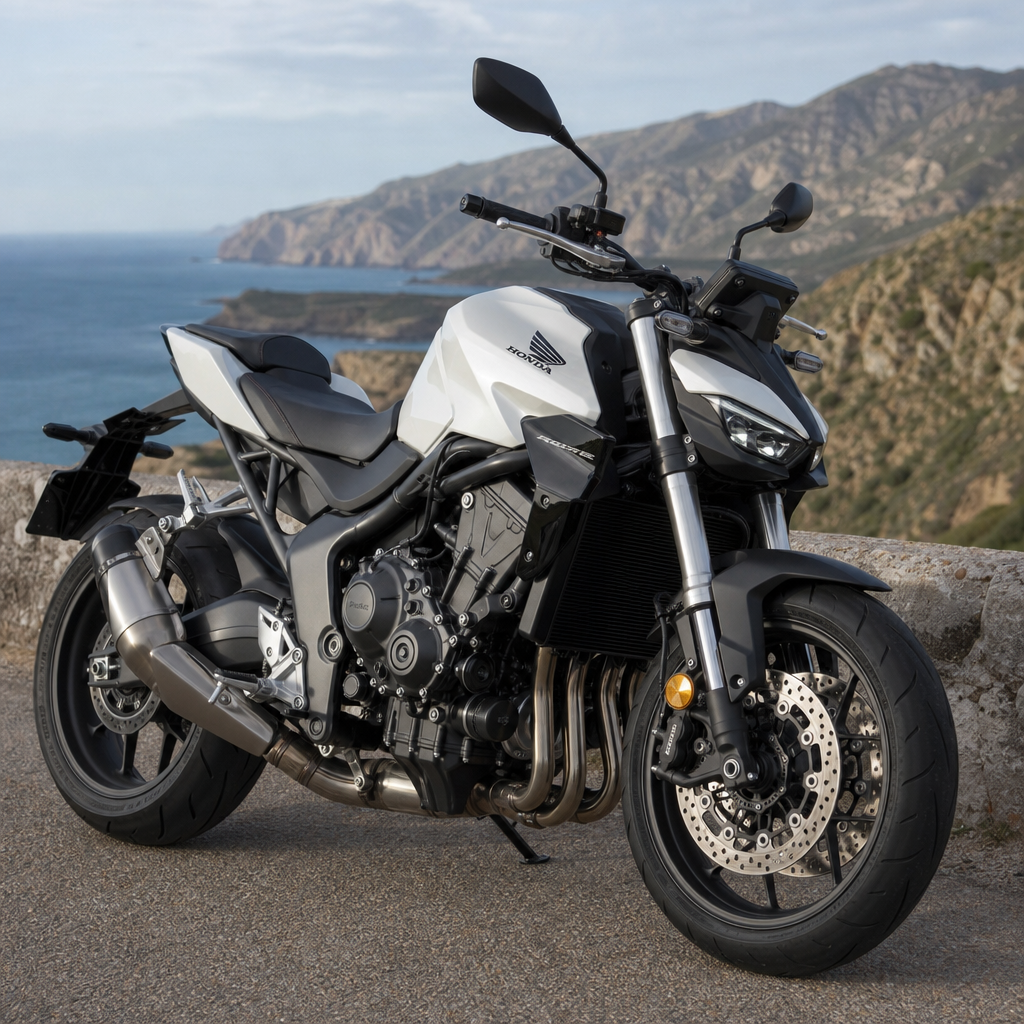
The 2026 Honda CB1000F Hornet brings a familiar Honda formula back into sharp focus: a large-displacement naked bike built around an inline-four engine, upright ergonomics, and everyday usability, but updated for a market that now expects premium electronics, aggressive styling, and real value. In Japanese motorcycle circles, “Japanese metrics” refers to metric-class bikes from the major Japanese manufacturers, especially machines in the 900cc to 1100cc range that balance speed, reliability, and broad capability. This category matters because it remains the sweet spot for riders who want liter-bike performance without the cramped ergonomics, insurance costs, or single-purpose nature of full fairing superbikes.
I have spent years riding and evaluating Japanese naked bikes on city streets, mountain roads, and long weekend loops, and this class has always stood out for one reason: it works in the real world. The CB1000F Hornet sits directly in that tradition. It targets riders cross-shopping the Yamaha XSR900, Kawasaki Z900, Suzuki GSX-S1000, and Honda’s own CB1000R legacy, while also appealing to former sportbike owners who now want comfort without surrendering acceleration. Honda’s challenge is not simply building a fast motorcycle; it is delivering a machine that feels complete, competitively priced, and distinct in a crowded segment.
As a hub article for Japanese metrics within the New Rides topic, this guide covers the essentials riders actually search for: engine specs, chassis details, electronics, expected price, market positioning, and first ride impressions grounded in how these bikes are used. The 2026 Honda CB1000F Hornet matters because it signals where Honda believes the standard-bike market is headed. Riders want character, but they also want proven components, manageable power delivery, and low ownership drama. If Honda gets the mix right, the CB1000F Hornet could become one of the most important metric standards of the year.
2026 Honda CB1000F Hornet overview and key specs
The 2026 Honda CB1000F Hornet is expected to use a 999cc liquid-cooled inline-four derived from Honda’s CBR1000RR family, retuned for midrange torque and street response rather than peak-track output. That approach is standard practice in the Japanese metric class. Instead of chasing headline horsepower alone, manufacturers soften cam timing, revise intake and exhaust tuning, and map throttle response for stronger drive between roughly 4,000 and 9,000 rpm. On the road, that matters more than a dyno sheet because it reduces the need for constant downshifts and makes overtakes immediate.
Based on current platform logic and Honda’s recent naked-bike strategy, output should land around the mid-140-horsepower range with torque near 75 lb-ft, placing it directly against the Suzuki GSX-S1000 and above the Yamaha XSR900 in outright engine size. A six-speed gearbox, assist-and-slipper clutch, ride-by-wire throttle, selectable riding modes, traction control, engine braking adjustment, and standard ABS are all expected. Honda has been methodical about rolling these systems across its upper-range bikes, and there is no competitive reason to omit them here.
Chassis architecture will likely center on a steel backbone or twin-spar style frame paired with fully adjustable suspension and radial-mount front brakes. In this segment, the details determine whether a bike feels merely powerful or genuinely sorted. A stable wheelbase, moderate steering geometry, and a wide handlebar typically create the confidence riders associate with the best Japanese standards. Wet weight will probably sit in the 460-to-470-pound neighborhood, which is normal for a liter-class four-cylinder naked. That does not make it light, but with proper mass centralization and fueling, it can feel significantly slimmer at speed than the spec sheet suggests.
Engine character, performance, and street manners
The biggest question with any Honda CB1000F Hornet is not whether it will be fast. A modern 1000cc Honda inline-four is fast by default. The real question is how the engine delivers that speed. On a first ride, what stands out on bikes like this is usually the spread of power. A good Japanese metric machine should pull cleanly from low rpm in town, build urgency in the middle, and still provide the unmistakable top-end rush that makes an inline-four special. If Honda has tuned the Hornet correctly, it will feel flexible rather than peaky.
That distinction matters in everyday use. Many riders spend far more time between 35 and 85 mph than they do clipping apexes at track pace. A broad torque curve means smoother exits from tight corners, less clutch work in traffic, and better passenger manners. Honda engines also tend to be exceptionally polished in fueling calibration. When they are right, roll-on response is crisp without abruptness, and low-speed throttle transitions remain predictable. That makes a difference on wet roads, in parking lots, and on unfamiliar backroads where rider confidence depends on consistency.
Sound and vibration also shape first impressions. Inline-fours remain attractive because they combine mechanical smoothness with a layered intake and exhaust note that rises from a subdued hum to a hard metallic howl. Compared with twins, triples, or V4s, they can feel less theatrical at low rpm, but they reward riders who enjoy revving an engine out. On a naked bike, that character is amplified because there is no bodywork muting the sensation. The expected result is a motorcycle that feels refined during commuting and exciting when ridden aggressively, which is exactly what this category is supposed to deliver.
Chassis, ergonomics, and technology package
For the CB1000F Hornet to succeed, Honda needs more than engine credibility. The riding position has to strike the standard-bike ideal: neutral footpeg placement, a slightly forward torso angle, and a wide one-piece bar that gives leverage without forcing too much wind onto the rider’s chest. This is where Japanese metrics often outperform adventure bikes and supersports for mixed use. You can commute, carve, and handle two-hour rides without feeling folded up or disconnected from the front tire. Seat height will likely remain approachable for average riders, probably in the low- to mid-32-inch range.
Suspension quality is another separating factor. In this class, fully adjustable forks and a quality rear shock are not luxuries; they are baseline expectations. Riders need the ability to tune preload and damping for body weight, passenger loads, and road conditions. Brakes should include radial calipers and strong master-cylinder feel, because a liter-class naked gains speed quickly and demands equally confident stopping power. Honda typically prioritizes stability over nervous quickness, and that usually translates into steering that feels planted on rough pavement rather than hyperactive on perfect roads.
Technology should center on useful rider aids rather than gimmicks. A TFT dash with smartphone connectivity, turn-by-turn support, multiple power modes, traction control, wheelie mitigation, and adjustable engine braking are realistic expectations. Cruise control is increasingly relevant in this segment, especially as riders use naked bikes for weekend travel. Quickshifter availability, whether standard or optional, will influence buying decisions because many competitors already offer it. The best electronics packages work quietly in the background. Riders should notice smoother control and added confidence, not intrusive intervention that interrupts the motorcycle’s natural rhythm.
| Model | Engine | Estimated/Claimed Power | Key Strength | Likely Buyer Type |
|---|---|---|---|---|
| 2026 Honda CB1000F Hornet | 999cc inline-four | Mid-140 hp range | Balanced street performance | Rider wanting liter-bike speed with Honda polish |
| Suzuki GSX-S1000 | 999cc inline-four | About 150 hp | Strong value and punchy engine | Performance-focused budget shopper |
| Kawasaki Z900 | 948cc inline-four | About 123 hp | Accessible power and lower price | Rider stepping into the class |
| Yamaha XSR900 | 890cc triple | About 117 hp | Characterful engine and lighter feel | Style-conscious all-rounder buyer |
Price, rivals, and where it fits in Japanese metrics
Price will determine whether the 2026 Honda CB1000F Hornet becomes a niche choice or a volume player. The most realistic target is a U.S. MSRP somewhere in the low-$12,000 to mid-$13,000 range, depending on electronics spec, suspension quality, and whether premium features such as a quickshifter or cruise control are standard. If Honda pushes much beyond that, buyers will compare it not only with other Japanese metrics but also with discounted European nakeds. If it lands closer to the Suzuki GSX-S1000 than the premium end of the category, it becomes immediately more compelling.
Within Japanese metrics, each rival has a clear identity. The Kawasaki Z900 wins on accessibility and price. The Yamaha XSR900 blends retro style, a lively triple, and modern electronics in a lightweight package. The Suzuki GSX-S1000 remains one of the strongest values for riders who want liter-bike thrust without premium-brand cost. Honda needs the CB1000F Hornet to thread the gap between those models by offering more refinement than the Suzuki, more displacement and big-bike presence than the Yamaha, and a more premium feel than the Kawasaki.
This is why the Hornet can serve as a hub model in the Japanese metric conversation. It touches nearly every buying criterion in the class: performance, comfort, technology, insurance reality, and long-term ownership confidence. Riders researching this bike are often also researching broader questions such as whether a 900cc class machine is enough, whether a liter naked is too much for daily use, and which Japanese brand delivers the best balance of maintenance simplicity and excitement. The CB1000F Hornet sits at the center of those questions, making it a useful reference point for the entire subcategory.
First ride impressions and ownership outlook
On a first ride, the 2026 Honda CB1000F Hornet is likely to impress not with drama alone, but with cohesion. That is often Honda’s signature advantage. The clutch take-up should feel light, the fueling clean off idle, and the gearbox precise in a way that encourages confident urban riding. As speeds rise, the bike should reveal the second half of its personality: strong roll-on acceleration, reassuring front-end feedback, and enough chassis composure to let riders exploit the engine without feeling like they are hanging onto a superbike with upright bars. That balance is what many experienced riders now prefer.
Wind management will be a predictable compromise. Naked bikes expose the rider, and no electronic aid changes physics. At highway speed, sustained blast across the chest and helmet is part of the deal. The tradeoff is cleaner airflow around town, lighter visual mass, easier maintenance access, and a more direct riding experience. If Honda offers a small accessory screen, heated grips, luggage, and comfort seat options, the Hornet’s appeal will widen substantially. Those practical upgrades matter because many owners keep Japanese standards for years and use them for far more than short weekend blasts.
Ownership outlook should be one of the Hornet’s strongest selling points. Honda’s parts support, dealer network, and reputation for durability remain major advantages in this segment. Routine service on an inline-four naked is typically straightforward, and resale tends to benefit from Honda’s conservative engineering reputation. The larger question is emotional rather than mechanical: does the bike feel special enough to stand out in a class full of excellent machines? If the styling, intake sound, and engine tuning deliver a memorable ride while preserving Honda’s trademark usability, the answer will be yes.
The 2026 Honda CB1000F Hornet looks poised to be one of the most important Japanese metric motorcycles of the year because it addresses what riders actually need from a modern large-displacement standard. They need a powerful but manageable engine, upright comfort, trustworthy electronics, and a price that does not drift into premium-brand territory. Honda appears ready to answer that brief with a liter-class naked that emphasizes usable performance over spec-sheet theatrics. For riders moving out of supersports, returning to motorcycling, or simply wanting one machine that can handle commuting and spirited backroad riding, that formula remains highly relevant.
The key takeaway is simple: the CB1000F Hornet should not be judged only by horsepower or styling in isolation. Its value will come from how completely it integrates engine character, chassis stability, rider aids, and long-term livability. In the Japanese metrics category, that complete package is what separates bikes people test ride from bikes people actually buy and keep. Honda has a long history of building motorcycles that reveal their strengths over time, and this model has the potential to continue that pattern with a sharper, more contemporary edge.
If you are researching new rides in the Japanese metric class, put the 2026 Honda CB1000F Hornet high on your list, then compare it directly with the Z900, XSR900, and GSX-S1000 based on how and where you ride. Focus on torque delivery, ergonomics, equipment, and real price, not marketing language. That is the quickest way to find the right bike for your roads, your budget, and your riding goals. Check the latest dealer announcements, watch for finalized Honda specs, and use this hub as your starting point for the rest of the New Rides coverage.
Frequently Asked Questions
What is the 2026 Honda CB1000F Hornet, and where does it fit in the modern naked-bike market?
The 2026 Honda CB1000F Hornet is Honda’s latest take on the liter-class naked bike, blending classic strengths like an inline-four engine, neutral ergonomics, and everyday practicality with the sharper styling, rider aids, and value-focused equipment that buyers now expect. In simple terms, it is aimed squarely at riders who want big-bike performance without the committed riding position or bodywork of a supersport. That makes it especially relevant in the “Japanese metric” category, a term often used to describe 900cc to 1100cc motorcycles from the major Japanese brands that deliver a strong balance of speed, reliability, and usability.
What makes the CB1000F Hornet especially interesting is that it revives a formula Honda has long excelled at: fast, approachable motorcycles that feel just as comfortable on a back-road ride as they do commuting or covering weekend miles. Rather than chasing extremism, the bike appears positioned to offer broad appeal. Riders can expect upright bars, a manageable seat-to-peg relationship, street-focused suspension tuning, and a powerband that is exciting without becoming intimidating. In a segment crowded with aggressively tuned European nakeds and highly specialized sport standards, the CB1000F Hornet’s identity is likely to center on being fast, polished, reliable, and easier to live with than some rivals. For many riders, that combination is exactly the point.
What specs are most important on the 2026 Honda CB1000F Hornet?
The most important specs on a bike like the 2026 Honda CB1000F Hornet are not just peak horsepower and displacement, but the full package: engine character, chassis geometry, weight, electronics, braking hardware, and rider ergonomics. The headline feature is its inline-four engine, which is central to the bike’s personality. An inline-four in this class typically delivers smooth power, strong top-end performance, and a refined feel that differs from the punchier, more abrupt nature of some twin-cylinder competitors. That matters because riders shopping in the liter-class naked segment often want acceleration that feels exciting but also predictable and polished.
Beyond the engine, the chassis setup will be just as important. Buyers should pay attention to suspension adjustability, frame design, wheelbase, and overall curb weight, because those numbers help explain how the bike will feel in the real world. A good naked bike needs to be stable at speed but still light enough to turn easily in everyday riding. Brake specifications are another key area, especially if Honda equips the CB1000F Hornet with premium calipers, large front rotors, and a well-calibrated ABS system. Modern electronics also matter more than ever in this class, so features such as ride modes, traction control, wheelie control, engine braking adjustment, a quickshifter, and a TFT display can significantly shape the ownership experience. Taken together, the most meaningful specs are the ones that show whether the CB1000F Hornet is merely powerful on paper or genuinely well-rounded on the road.
How much is the 2026 Honda CB1000F Hornet expected to cost?
Official pricing will ultimately depend on market, trim level, and final equipment, but the 2026 Honda CB1000F Hornet is widely expected to compete on value, which has historically been one of Honda’s biggest strengths in the large-displacement naked category. That usually means pricing that undercuts or at least closely challenges premium European alternatives while still offering a high level of finish, strong reliability, and a robust feature set. If Honda positions the bike smartly, it could appeal to riders who want liter-bike performance and modern electronics without stepping into the higher ownership costs often associated with more exotic brands.
When evaluating the price, it helps to think beyond the MSRP alone. A bike like the CB1000F Hornet may offer stronger long-term value if it includes standard rider aids, quality suspension, and good fit and finish right out of the crate. Honda also tends to perform well when it comes to dealer network support, parts availability, and resale confidence, all of which matter after the initial purchase. In that sense, even if the sticker price lands in the middle of the class rather than at the bottom, the total ownership proposition could still be very compelling. For riders cross-shopping Japanese metric nakeds, the CB1000F Hornet’s price will likely be judged not just by what it costs, but by how complete the package feels for the money.
What are the first ride impressions of the 2026 Honda CB1000F Hornet likely to be?
First ride impressions of the 2026 Honda CB1000F Hornet are likely to focus on how effectively it balances performance with approachability. Assuming Honda stays true to its usual strengths, riders will probably notice a smooth but energetic inline-four engine, responsive throttle tuning, and an upright riding position that feels natural almost immediately. That combination tends to create a very positive first impression because the bike feels fast without demanding a steep adjustment period. On a short ride, that sense of instant familiarity can be one of the strongest selling points.
Another area where the bike is likely to stand out is road manners. A good first ride on a naked bike should reveal confident front-end feel, neutral steering, stable braking, and enough suspension compliance to handle imperfect pavement without feeling vague. If the CB1000F Hornet delivers in those areas, early testers will probably describe it as composed, confidence-inspiring, and genuinely usable outside of ideal canyon-road conditions. Wind protection will naturally be limited, as with most naked bikes, but if the ergonomics are sorted well, the overall ride experience can still feel surprisingly comfortable at highway speeds. In short, the expected first ride impression is that this bike is less about drama for its own sake and more about polished, repeatable performance that works in the real world.
Who should buy the 2026 Honda CB1000F Hornet instead of a supersport or another liter-class naked?
The 2026 Honda CB1000F Hornet makes the most sense for riders who want liter-class performance but do not want the physical demands, insurance profile, or single-purpose focus of a fully faired supersport. It should appeal to experienced riders moving up from middleweight nakeds, returning riders who want something powerful yet manageable, and even seasoned enthusiasts who simply prefer real-world usability over track-first intensity. The upright ergonomics alone can be a major advantage, especially for riders who spend more time on public roads than race circuits.
It may also be the right choice for buyers comparing multiple liter-class nakeds and looking for a machine that emphasizes refinement and value rather than headline-grabbing extremism. Some competitors lean harder into raw performance, exotic branding, or highly aggressive styling, but the CB1000F Hornet is likely to attract riders who appreciate Honda’s reputation for durable engineering, consistency, and broad usability. If you want a motorcycle that can commute during the week, handle spirited weekend rides with ease, and still feel special every time you start it up, this bike could hit a very desirable sweet spot. That is ultimately the appeal of a well-executed Japanese metric naked: enough power to be thrilling, enough comfort to be practical, and enough balance to keep the experience enjoyable over the long term.