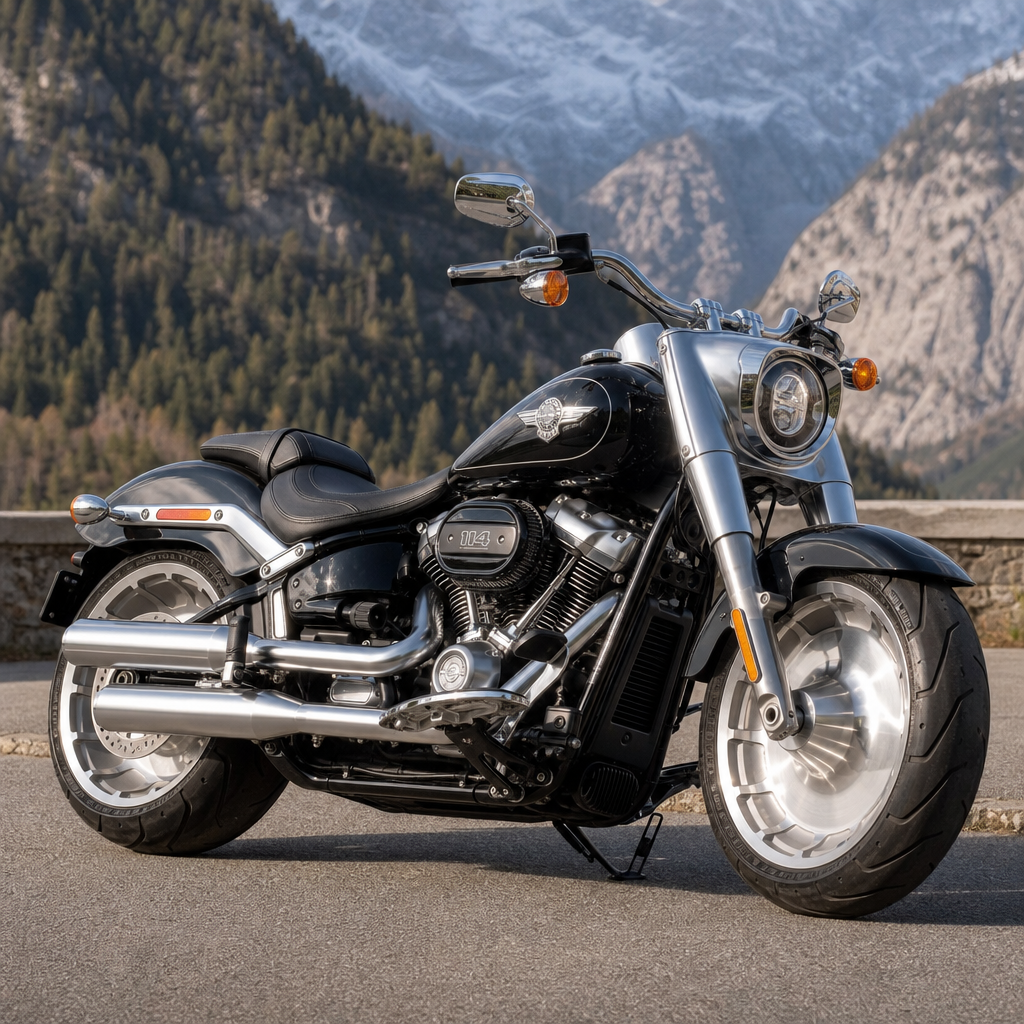
The Harley-Davidson Fat Boy 114 (2026) sits at the center of the American cruisers conversation because it blends unmistakable styling, heavyweight V-twin character, and modern long-distance usability in one motorcycle. For riders shopping the new model year, this machine is more than a nostalgic badge. It is a benchmark for how a factory cruiser should deliver torque, road presence, and day-to-day ride quality without losing the visual drama that made the name famous. As a sub-pillar hub within New Rides, this guide also frames the Fat Boy 114 against the wider American cruisers category, giving buyers a practical reference point before they dive into more specialized comparisons, trim discussions, and ownership guides.
American cruisers are street motorcycles built around relaxed ergonomics, strong low-end torque, and styling that emphasizes long wheelbases, broad tanks, exposed metal, and commanding stance. Within that category, Harley-Davidson remains the defining manufacturer, and the Fat Boy occupies a specific niche: it is not the lightest cruiser, the cheapest entry, or the sharpest canyon bike. Instead, it is the iconic power cruiser for riders who want visual weight, strong roll-on acceleration, and a premium feel. After years of working with cruiser buyers, demo rides, and trade-in evaluations, I have seen the Fat Boy consistently appeal to experienced riders moving up from midsize cruisers as well as returning owners who want one bike that feels special every time the garage door opens.
The 2026 Harley-Davidson Fat Boy 114 matters because cruiser buyers are now balancing emotion with hard numbers. They want to know engine output, wet weight, seat height, technology package, and real owner impressions before visiting a dealer. They also want clarity on a basic question: is the Fat Boy 114 still relevant in an era of performance baggers, powerful standards, and feature-rich imports? The short answer is yes. Its Milwaukee-Eight 114 engine, Softail chassis, signature Lakester-style wheels, and low, planted riding position create a distinctive ownership experience that many alternatives imitate but do not duplicate. Understanding that value means looking beyond catalog specs and into how the bike actually performs in traffic, on open highways, and across years of ownership.
Key terms help frame that evaluation. Engine displacement refers to the total volume swept by the pistons; on the Fat Boy 114, “114” identifies roughly 114 cubic inches, or about 1,868 cc. Torque is the twisting force the engine produces, and on cruisers it matters more than peak horsepower because it determines how strongly the bike pulls from low rpm. Wet weight means the motorcycle is ready to ride with fluids included, giving a realistic sense of mass. Rake, trail, wheelbase, and seat height influence handling and confidence at stops. Owner reviews add another layer by translating specifications into lived experience, including heat management, comfort over several hours, dealer support, and aftermarket compatibility. Those practical details are where buying decisions are usually made.
2026 Harley-Davidson Fat Boy 114 performance specs at a glance
The 2026 Harley-Davidson Fat Boy 114 uses the air/oil-cooled Milwaukee-Eight 114 V-twin, a 45-degree engine with two valves per cylinder, dual counterbalancers, electronic sequential port fuel injection, and the kind of immediate low-rpm response cruiser riders expect. In current factory form, this platform is widely known for delivering around 119 lb-ft of torque, with peak output arriving low enough in the rev range to make city riding effortless and two-lane passing easy. Harley-Davidson traditionally emphasizes torque over headline horsepower, but independent dyno runs on comparable Milwaukee-Eight 114 models commonly show horsepower in the mid-90s at the crank translated to lower rear-wheel figures depending on exhaust and tuning. What matters on the road is the engine’s broad, usable pull rather than a narrow peak.
The Fat Boy 114 rides on Harley-Davidson’s Softail chassis, which hides a rear monoshock beneath a classic hardtail-inspired silhouette. That design is important because it preserves old-school cruiser proportions while delivering better rear suspension control than many buyers expect from the look alone. The motorcycle typically carries a seat height around the mid-26-inch range when laden, making it approachable for many average-height riders despite its substantial mass. Wet weight is generally just over 690 pounds, and that figure shapes every part of the riding experience. At parking-lot speed, the bike feels heavy. Once moving, the low center of gravity, wide tires, and stable geometry help it settle into a composed, planted rhythm that suits highway cruising and broad sweepers.
Braking and rider-assist equipment matter more than they did a decade ago because heavyweight cruisers now compete in a market where buyers expect safety technology. Harley-Davidson has increasingly expanded electronic rider aids across major models, and buyers should confirm the exact 2026 package, but modern expectations in this class include ABS, traction management, engine drag torque control, and tire-pressure monitoring. Even where equipment lists vary by market, the Fat Boy’s value depends partly on how well these systems operate in the background without diluting the mechanical feel. In practice, riders want unobtrusive intervention, predictable lever feel, and confidence on imperfect pavement, not sportbike-style complexity. The Fat Boy has historically succeeded when its technology supports the ride rather than dominating it.
| Specification | Harley-Davidson Fat Boy 114 (2026) | Why it matters |
|---|---|---|
| Engine | Milwaukee-Eight 114, 1,868 cc V-twin | Delivers strong low-end torque and classic cruiser pulse |
| Torque | About 119 lb-ft | Determines roll-on acceleration and relaxed passing power |
| Transmission | 6-speed | Keeps highway revs lower and improves touring comfort |
| Seat height | Roughly 26.6 inches laden | Helps shorter riders manage stops despite heavy weight |
| Wet weight | Just over 690 pounds | Affects low-speed handling, braking, and garage maneuvering |
| Fuel capacity | About 5 gallons | Supports practical cruising range between fuel stops |
How the Fat Boy 114 compares within American cruisers
Within American cruisers, the Fat Boy 114 competes less on outright specification leadership and more on total identity. Indian’s Chief lineup, Challenger-derived performance machines, and several metric cruisers can match or exceed aspects of its performance envelope. Yet the Fat Boy remains distinct because its combination of solid-disc visual mass, broad front end, steamroller rear tire, and polished metal cues creates immediate recognition. Buyers cross-shopping this motorcycle often also look at the Indian Sport Chief, Chief Bobber Dark Horse, Harley-Davidson Breakout, Low Rider ST, and touring-oriented Road King. Those models answer different needs. The Fat Boy is the one riders choose when they want a muscular cruiser with legendary styling that still feels civilized in modern traffic.
Compared with a more aggressive cruiser like the Harley-Davidson Breakout, the Fat Boy usually offers a slightly more balanced everyday package. The Breakout leans harder into stretched styling and rear-tire drama, while the Fat Boy feels more grounded and easier to live with for mixed use. Against the Low Rider ST, the Fat Boy gives up outright cornering enthusiasm and sportier ergonomics but wins for pure visual presence and lower-slung confidence. Against Indian’s Chief variants, the Harley often feels larger in personality, even when dimensions are close on paper. That matters because cruiser buying is emotional. Owners are not purchasing quarter-mile slips alone. They are choosing design language, dealership culture, sound signature, customization paths, and the feeling the bike projects at idle.
The Fat Boy also serves as a hub model for understanding American cruisers because it reveals the category’s core tradeoffs. Heavier cruisers generally feel more stable on the interstate, especially in crosswinds, but require more attention during U-turns and driveway transitions. Wide tires improve stance and visual impact, yet they can slow steering response. Large-displacement V-twins produce satisfying torque pulses, but they can generate noticeable heat in summer traffic. Lower seats increase confidence at stops, though they can reduce cornering clearance. A buyer who understands those fundamentals will shop the whole cruiser field more effectively. In that sense, evaluating the Fat Boy 114 is not just about one motorcycle. It is a direct education in what American cruisers do best and where they demand compromise.
Real-world riding: acceleration, comfort, and handling
On the road, the Harley-Davidson Fat Boy 114 performs exactly as a premium heavyweight cruiser should. Throttle response is strongest in the first part of the rev range, where the Milwaukee-Eight engine delivers immediate shove without needing aggressive downshifts. Launches from stoplights feel authoritative rather than frantic, and highway merges are easy because the engine makes useful torque in top gear. Riders moving from middleweight cruisers often comment that the Fat Boy feels less stressed at 70 mph than smaller bikes, and that impression is accurate. The 6-speed gearbox allows relaxed cruising, with enough reserve torque for passing slower traffic. This is not a motorcycle that asks to be revved hard. It rewards smooth, deliberate inputs and settles into an effortless rhythm on open roads.
Comfort is one of the Fat Boy’s stronger traits, though it depends on rider size and intended use. The stock riding position places the rider low in the bike, with floorboards and a wide handlebar that support a relaxed posture. For one- to three-hour rides, many owners find the setup comfortable straight from the showroom. Beyond that, common upgrades include a touring seat, detachable windshield, and backrest. I have seen this pattern repeatedly in dealership service lanes and owner groups: the base motorcycle is satisfying for local rides, but riders who start taking weekend trips nearly always add wind protection. Without a screen, sustained highway riding can become tiring because the bike’s weight does not remove chest pressure from windblast at interstate speeds.
Handling is better than new riders expect but not as agile as the Softail platform’s sportier siblings. The broad tires and long, low stance give the Fat Boy stable turn-in rather than quick steering. It tracks confidently through wide curves and feels secure on steady throttle, especially on clean pavement. On tighter roads, floorboard clearance and overall weight remind the rider that this is a cruiser first. Low-speed control improves significantly with practice, clutch finesse, and rear-brake modulation. Experienced owners often say the bike “shrinks” after several weeks, and that is true in motion, though not when pushing it backward up a slope. That distinction matters. Prospective buyers should always test parking-lot maneuvers, because the Fat Boy’s road manners are friendlier than its garage manners.
Owner reviews: what riders praise and what they criticize
Owner reviews of the Harley-Davidson Fat Boy 114 are remarkably consistent across model years built around the Milwaukee-Eight and Softail chassis. The most common praise centers on style, torque, and presence. Riders love the way the bike looks under natural light, particularly the contrast between solid-looking wheels, broad bodywork, and polished finishes. Many say strangers recognize the Fat Boy instantly, which is unusual even in a segment filled with attention-grabbing motorcycles. They also praise the engine’s feel: strong launch, satisfying exhaust cadence, and enough passing power for two-lane roads without constant shifting. Another recurring positive is fit and finish. Paint quality, switchgear feel, and the overall sense of mechanical substance generally meet expectations for a premium American cruiser.
Criticism follows familiar lines as well. Heat management appears often in owner discussions, especially for riders in southern states or dense urban traffic. While the Milwaukee-Eight platform is improved over older Harley engines in several respects, a large-displacement air/oil-cooled V-twin still produces noticeable heat when ambient temperatures rise. Another frequent complaint involves stock seat comfort after several hours. The bike feels supportive for short rides, but long-distance owners often replace the seat early. Weight is the other major factor. Riders rarely object once moving, yet many mention caution when parking, backing up, or maneuvering on gravel. Fuel economy is usually acceptable rather than exceptional, commonly landing in the upper-30s to low-40s mpg depending on speed, load, and tuning.
Reliability feedback is generally solid when maintenance is performed on schedule and the motorcycle remains sensibly modified. Owners who keep up with fluid changes, drive-belt inspections, battery health, and tire replacement usually report dependable service. Problems more often arise from aggressive aftermarket tuning, poor accessory installation, or neglect during winter storage. Harley-Davidson’s dealer network remains a practical advantage in North America, especially for touring riders who value parts access and service familiarity while traveling. That said, dealer experience varies. Some owners report excellent communication and quick turnaround; others mention premium labor rates and scheduling delays in peak season. The best owner outcomes usually come from buyers who choose a reputable dealer, budget for comfort upgrades early, and treat the Fat Boy as a long-term machine rather than an impulse lifestyle purchase.
Buying advice, customization, and hub links for cruiser shoppers
If you are considering the 2026 Harley-Davidson Fat Boy 114, start by being honest about how you ride. If your priority is iconic style, torque-rich cruising, and confident highway manners, this motorcycle deserves serious attention. If you want the sharpest handling Harley cruiser or plan to ride aggressively on technical roads, a Low Rider variant may suit you better. Fit is crucial. Check reach to the bars, floorboard position, and your comfort holding the bike upright at a stop. Then evaluate practical ownership costs: insurance, premium fuel, scheduled service, tires for a heavyweight cruiser, and likely accessories. Most Fat Boy buyers eventually add at least one of these: windshield, seat, backrest, luggage, engine guard, or exhaust. Budgeting for those items up front creates a more accurate picture of total ownership.
Customization is one of the Fat Boy’s strongest advantages as a hub model within American cruisers. Harley-Davidson’s parts catalog is extensive, and the aftermarket is even broader, covering suspension upgrades, intake and exhaust packages, seats from Saddlemen and Mustang, luggage systems, bars, pegs, floorboards, and touring accessories. In practical terms, this means the motorcycle can evolve with the owner. A rider can begin with a style-first setup, then add comfort parts for weekend trips, and later refine performance with quality tuning from established brands. The key is restraint and planning. Poorly matched modifications can hurt drivability, increase heat, or compromise reliability. The best builds start with a clear goal: better comfort, better sound, better lighting, or improved control, not random parts accumulation.
As a sub-pillar hub under New Rides, this article should guide your next steps across the American cruisers category. From here, the most useful follow-up topics are Fat Boy 114 vs Breakout, Fat Boy 114 vs Indian Chief, best accessories for long-distance cruising, Softail maintenance schedules, and real-world fuel economy across heavyweight V-twins. The central takeaway is straightforward. The Harley-Davidson Fat Boy 114 (2026) remains one of the clearest expressions of the American cruiser idea: a low-slung, high-torque motorcycle that prioritizes presence, comfort, and emotional satisfaction over lap times or spec-sheet theatrics. If that matches your riding priorities, schedule a test ride, compare dealer support, and build your shortlist around the bikes that feel right at walking speed and at 70 mph alike.
Frequently Asked Questions
What are the key performance specs of the 2026 Harley-Davidson Fat Boy 114?
The 2026 Harley-Davidson Fat Boy 114 is built around the Milwaukee-Eight 114 V-twin, an engine configuration that remains central to the bike’s identity and its real-world appeal. Riders typically focus first on displacement, torque delivery, and the overall feel of the powerband, and that is exactly where the Fat Boy 114 continues to stand out. Its large-displacement V-twin is tuned to produce strong low-end and midrange pull, which means the motorcycle delivers its best character where cruiser riders actually use it most: pulling away from stops, rolling through city traffic, and accelerating confidently on open highways without constant downshifting. Rather than chasing high-rev sport-bike numbers, the Fat Boy 114 emphasizes immediate response, broad torque, and the unmistakable pulse that buyers expect from a heavyweight Harley-Davidson cruiser.
In practical terms, that translates into a motorcycle that feels substantial but never weak. The engine’s torque-rich nature helps the Fat Boy 114 move its weight with authority, especially in straight-line acceleration and passing situations. Its transmission and final-drive setup are designed for relaxed cruising, letting the bike settle into a composed rhythm at highway speeds while still offering enough punch for brisk roll-on acceleration. The softail-based chassis also plays a major role in performance, because it gives the Fat Boy 114 a more refined ride quality than older rigid-looking cruisers might suggest. Riders can expect a low seat height, a planted stance, wide tires, and a stable wheelbase that collectively support confidence on smooth pavement, sweeping roads, and long-distance routes. Overall, the 2026 model’s performance profile is less about peak horsepower bragging rights and more about muscular, usable output, stability, and a premium cruising experience.
How does the 2026 Fat Boy 114 ride on highways, city streets, and longer road trips?
The 2026 Fat Boy 114 is one of those motorcycles that tends to make sense the longer you ride it. Around town, its low center of gravity and low seat height help it feel more manageable than its size might suggest, especially for riders who are already comfortable with heavyweight cruisers. The engine’s abundant torque reduces the need for constant gear changes in stop-and-go traffic, and the bike’s commanding ergonomics give a strong sense of presence in urban environments. That said, it is still a large, substantial machine with wide visual proportions, so riders should expect to feel its mass at parking-lot speeds, during tight U-turns, and when backing it into a space. It is not a light middleweight cruiser pretending to be a big bike; it is a real heavyweight, and that is part of both its appeal and its learning curve.
On the highway, the Fat Boy 114 is much more in its natural environment. This is where the combination of torque, wheelbase, and relaxed gearing gives the motorcycle a calm, planted personality. It tracks confidently, feels settled at speed, and delivers the kind of effortless thrust that cruiser buyers want for passing slower traffic or climbing grades without drama. For longer trips, owners often praise the bike’s road presence, smooth power delivery, and general feeling of solidity. Comfort over distance will depend somewhat on rider size and preferences, especially because solo-cruiser ergonomics are deeply personal, but the platform itself is well suited to day-long rides. Many riders enhance touring comfort with accessories such as a windshield, passenger backrest, luggage options, upgraded seat, or foot-control adjustments. In stock form, the 2026 Fat Boy 114 already offers a usable long-distance foundation, but with a few personalized additions, it can become an even stronger light-touring cruiser.
What do owner reviews usually say about the Fat Boy 114’s strengths and weaknesses?
Owner reviews of the Fat Boy 114 are usually very consistent in tone: people buy it because it looks iconic, and they keep liking it because it rides better than its styling alone might lead some shoppers to expect. One of the most frequently praised strengths is its combination of visual drama and everyday usability. Owners often mention the solid front-end appearance, the broad stance, the unmistakable Harley silhouette, and the premium finish details as major reasons they chose the bike. Once they have spent time with it, many also highlight the engine’s satisfying torque, the smoothness and refinement of the modern Milwaukee-Eight platform, and the sense of confidence the chassis gives on open roads. In simple terms, the Fat Boy 114 tends to deliver on the emotional promise of owning a heavyweight American cruiser.
At the same time, owner feedback is not without caveats. The most common criticism is weight, especially for newer riders or anyone transitioning from smaller cruisers. While the low seat helps at stops, the bike still demands respect when maneuvering at low speed. Some owners also point out that the stock setup may not be ideal for every body type, particularly on longer rides, which is why seat, bar, and control-position modifications are so common in the Harley world. Depending on rider expectations, a few may wish for more wind protection or a more touring-focused stock configuration. Others note that premium-brand ownership can come with premium pricing for accessories, maintenance, and personalization. Even so, the overall sentiment from most reviews remains strongly positive: the Fat Boy 114 is widely seen as a bike that delivers style, torque, comfort, and presence in a package that feels authentic rather than gimmicky.
Is the 2026 Harley-Davidson Fat Boy 114 a good choice for new or returning cruiser riders?
The answer depends less on skill level alone and more on physical confidence, riding background, and expectations. For a brand-new rider with no meaningful motorcycle experience, the Fat Boy 114 is usually not the easiest starting point simply because of its size, weight, and value. Even though the low seat height can feel welcoming and the power delivery is broad rather than frantic, it is still a heavyweight cruiser with serious road presence and enough torque to demand smooth throttle control. New riders can absolutely admire it, aspire to it, and eventually grow into it, but many will build skills more comfortably on a lighter platform first. Picking up low-speed habits, parking-lot technique, braking confidence, and traffic awareness is generally easier on a less intimidating motorcycle.
For returning riders, however, the Fat Boy 114 can be a very appealing option. Someone coming back to motorcycling after time away often wants a bike that feels stable, mature, and rewarding without requiring a high-rev riding style. The Fat Boy 114 answers that need well. It offers predictable cruiser ergonomics, strong torque right where you want it, and a planted highway feel that can restore confidence quickly for experienced riders re-entering the segment. The key is to be honest about comfort with weight and low-speed handling. A test ride is especially valuable here, because the Fat Boy often surprises people: it looks massive, and it is undeniably substantial, but many riders find it more approachable once moving than they initially expected. In that sense, it is better viewed as an intermediate-to-experienced cruiser choice rather than a universal beginner motorcycle.
How does the 2026 Fat Boy 114 compare with other American cruisers in terms of value, character, and everyday ownership?
The 2026 Fat Boy 114 occupies a very specific place in the American cruiser market because it offers more than raw specifications alone. There are other cruisers that may compete on paper with similar displacement, comparable torque-oriented tuning, or feature lists aimed at comfort and styling. What makes the Fat Boy 114 different is the blend of heritage, brand identity, and instantly recognizable design combined with a modern chassis and driveline that make it usable in everyday conditions. Buyers are often not just comparing numbers; they are comparing the ownership experience. On that front, the Fat Boy 114 scores strongly because it delivers a sense of occasion every time it leaves the garage. It feels substantial, iconic, and unmistakably tied to a long tradition of American V-twin motorcycling.
From a value perspective, the Fat Boy 114 tends to make the most sense for riders who place high importance on design, aftermarket support, resale strength, and the Harley-Davidson ownership ecosystem. The bike benefits from broad dealer familiarity, an enormous customization culture, and a well-established community of owners. That adds practical value beyond the initial purchase, especially for riders who know they will want to personalize the bike over time. In everyday ownership, the Fat Boy 114 is often appreciated for being emotionally satisfying without being impractical for regular use. It can commute, cruise, tour lightly, and serve as a weekend centerpiece all at once. Compared with rivals, it may not be the cheapest path into a big cruiser, but for many buyers, the combination of character, brand confidence, visual impact, and real-world ride quality justifies the investment. That balance is exactly why the Fat Boy 114 remains a benchmark in the conversation around premium American cruisers.