Group riding etiquette in 2026 is no longer a soft skill reserved for touring clubs and weekend charity rides; it is a core safety discipline that determines whether a group stays predictable, visible, and upright on modern roads. In practical terms, group riding etiquette means the shared rules riders use to manage spacing, communication, speed, lane position, passing, stops, and emergencies when two or more motorcycles travel together. I have led commuter groups, charity rides, advanced training days, and long-distance touring teams, and the pattern is always the same: disciplined groups feel calm, while disorganized groups create risk long before anything dramatic happens.
This matters more now because traffic density, distracted driving, and mixed motorcycle technology have changed the riding environment. In the same pack you may have a rider on a small-displacement standard with no cruise control, another on a heavyweight touring bike with radar-based rider aids, and a third on an electric motorcycle with strong regenerative deceleration. Add Bluetooth communicators, navigation apps, and action cameras, and it becomes easy to mistake connectivity for coordination. It is not. Safe group riding still depends on fundamentals: clear expectations, conservative decisions, and enough structure that every rider knows what to do without guessing.
For riders searching under The Open Road, Safety & Skills is the foundation topic because every other riding goal depends on it. Better route planning, better touring, better commuting, and even better maintenance habits all connect back to how safely you operate around others. This hub article explains the core rules that leaders and followers should apply in 2026, from pre-ride briefings to staggered formation, cornering discipline, hand signals, fuel and rest stops, and incident response. Used correctly, these practices reduce accordion effects, prevent unsafe overtakes, and make the entire group easier for other road users to read.
A good group ride is not fast and it is not rigid. It is predictable. Predictability is the key term because motorcycles are narrow, accelerate quickly, and become vulnerable whenever a rider brakes, swerves, or loses sight of the plan. The objective is to keep every action legible to the rest of the group and to surrounding traffic. If you remember one principle, let it be this: the lead rider manages the plan, each rider manages their own safety margin, and no one sacrifices control to stay attached to the pack.
What good group riding looks like in practice
Good group riding starts before the engines fire. The ride leader sets the pace, route, fuel range assumptions, rest intervals, regroup points, and hand signals. The sweep rider, sometimes called the tail rider, stays at the back, carries basic tools and first-aid capability where possible, and communicates issues forward. Everyone else needs a simple understanding of formation, passing rules, and what happens if the group gets split by traffic lights or congestion. In my experience, most ride problems begin with an incomplete briefing, not a riding mistake.
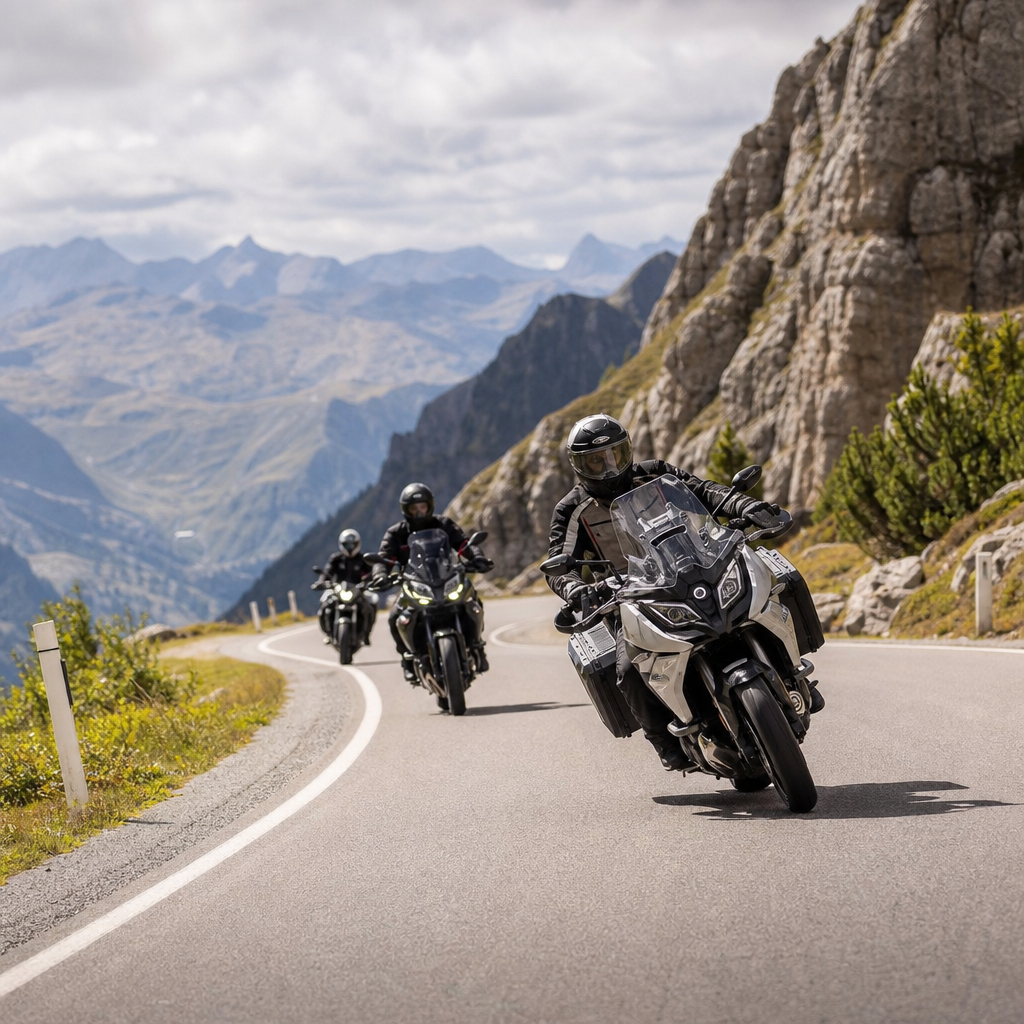
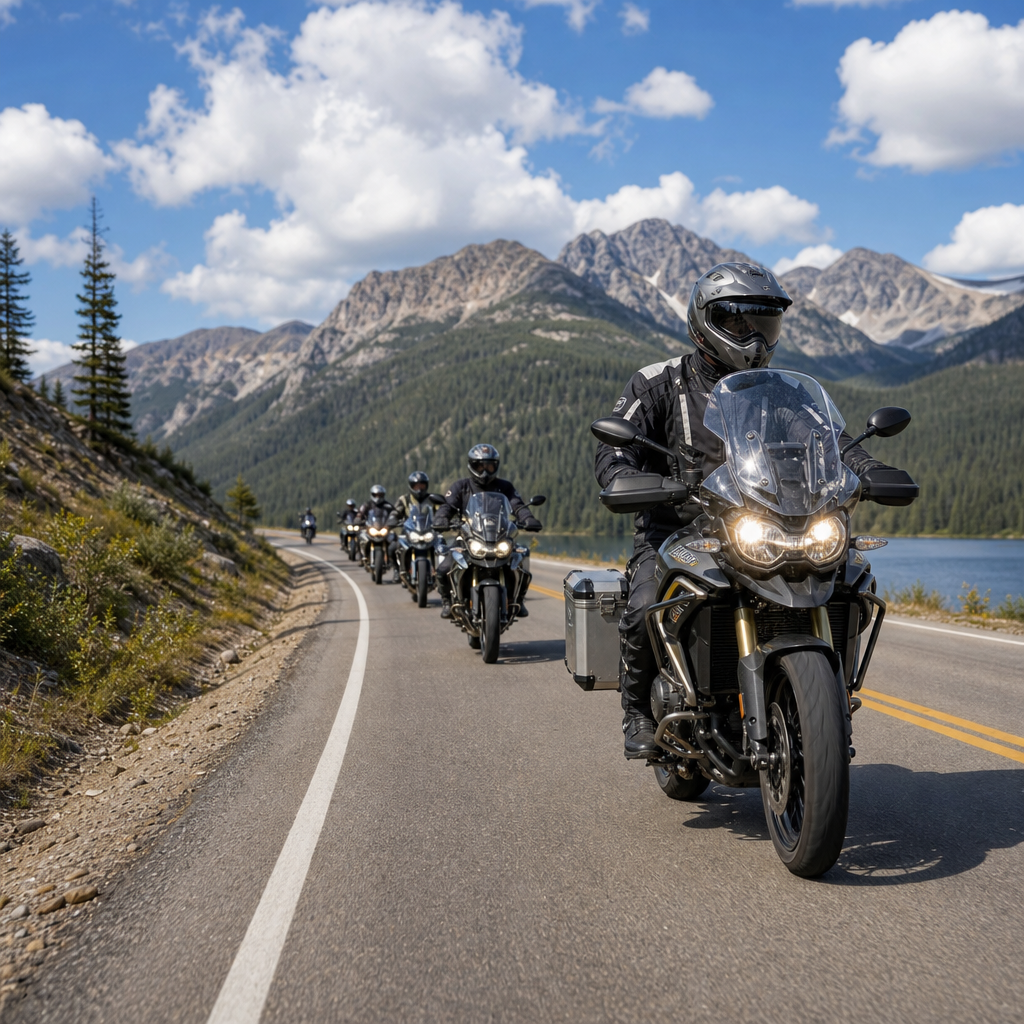
The standard road formation for experienced riders on straight, open sections is staggered. That means the lead rider takes one side of the lane, the second rider stays roughly one second behind on the opposite side, and the third rider follows the lead position at about two seconds. This creates space cushions without stretching the group so far that cars constantly fill the gaps. On poor surfaces, in rain, at night, in construction zones, or anytime visibility tightens, the group should transition to single file. In curves, single file is the safer default because each rider needs full lane freedom to choose a proper line and maintain traction.
Leaders should ride smoothly, not heroically. A leader who brakes late, accelerates hard, or changes lane position without warning forces everyone behind to react in sequence, amplifying small disturbances into larger ones. Followers should avoid target fixation on the rider ahead and instead scan through the group toward the road environment. If you can only ride safely by copying the exact line and speed of the rider in front, you are too close. Each rider must preserve independent vision, braking space, and escape options.
The social side matters too. Group etiquette means no showing off, no pressure on newer riders, and no surprise route changes. If a rider misses a turn, the plan should account for it with predetermined regroup points rather than dangerous U-turns or frantic catch-up attempts. Strong groups normalize patience. That culture is what keeps mistakes small.
Leader responsibilities: planning, pace, and communication
The ride leader’s job is to reduce uncertainty. In 2026 that includes selecting a route that matches the least experienced rider, checking weather and construction data, and confirming realistic fuel stops using current mapping tools such as REVER, Calimoto, Google Maps, or in-bike navigation. If the shortest fuel range in the group is 120 miles, the stop plan should reflect that with margin, not the brochure range of the largest tank. Leaders should also consider charging access when electric motorcycles are in the group, because charging time can alter rest scheduling and rider fatigue.
A useful pre-ride briefing answers six direct questions: Where are we going, what formation will we use, what is the pace, where do we stop, how do we handle separation, and who is sweep? Keep it short, specific, and audible. I prefer naming the first two turns, the first fuel stop, and the exact procedure if the group is split: continue safely to the next planned point; do not race to reconnect. This prevents one of the most common crashes in group riding, where a delayed rider speeds aggressively to close a gap that does not need closing.
Communication should be redundant. Hand signals remain essential because not every rider uses the same headset ecosystem and batteries fail. Common signals include single file, staggered formation, hazard in roadway, slowing, fuel, comfort stop, and pull off. Bluetooth communicators are helpful for leader-to-sweep updates, but they should not become a stream of chatter. Excessive talk distracts riders and masks important warnings. When I lead, I treat comms like cockpit discipline during high-workload phases: only information that changes a decision gets airtime.
Pacing deserves special attention. A safe leader sets a speed that allows the entire group to stay composed through entries and exits, not just on straights. The leader should accelerate gently from stops, leaving enough time for riders farther back to clear intersections without panic. On multilane roads, lane changes should happen one deliberate step at a time, with clear mirrors, signals, and enough space for the whole group to move without trapping individual riders beside vehicles. The best leaders look boring from a distance, and that is a compliment.
Follower responsibilities: spacing, self-management, and judgment
Followers often think etiquette means staying in line and keeping up. The real responsibility is more demanding: maintain your own margin without destabilizing the group. That begins with proper spacing. In staggered formation, hold your offset and your interval; do not drift into the same track as the rider directly ahead unless road conditions require single file. In rain or low light, increase following distance because spray, glare, and longer stopping distances erase the buffer that feels adequate in dry daylight.
Do not fixate on your place in the order. If your comfort level changes because of fatigue, weather, or road complexity, tell the leader at the next stop and reposition. Newer riders usually do better near the front, where pace changes are smoother and there are fewer accordion effects. Highly experienced riders often sit behind less experienced riders to create a protective buffer and model calm technique. What matters is not ego or hierarchy but stability.
Followers also need passing discipline. Never overtake the leader unless the leader waves you through or there is an emergency. Within the group, avoid leapfrogging for fun. Every internal pass creates confusion about order and spacing. When the group passes slower traffic, each rider is responsible for making an individual, legal pass with full sight distance. Do not assume that because one rider went, you can go. This is a critical rule on two-lane roads, where rushed follow-on passes regularly create head-on collision risk.
The final follower skill is the confidence to drop out safely. If the pace exceeds your limits, if your bike develops a problem, or if concentration fades, you are not failing the group by separating. You are applying the most important etiquette rule of all: ride your own ride. A competent group expects this and plans for it.
Formation, hazards, and stop procedures
Most questions riders ask about group riding come down to three operational areas: what formation to use, how to handle hazards, and how to stop without disorder. The table below summarizes the standard decisions a well-run group should make.
| Situation | Best practice | Why it works |
|---|---|---|
| Straight, open road | Staggered formation with steady intervals | Improves visibility and preserves braking space |
| Curves, narrow lanes, gravel, rain, night | Single file with expanded following distance | Gives each rider full lane use and more reaction time |
| Traffic light splits group | Continue to next regroup point; no aggressive catch-up | Prevents speeding and risky overtakes |
| Road hazard spotted | Signal hazard, adjust line smoothly, avoid abrupt braking | Keeps warning chain intact and reduces pile-up risk |
| Fuel or comfort stop | Signal early, exit smoothly, park with clear departure path | Reduces confusion and congestion at the stop |
| Rider problem or breakdown | Sweep assists, leader pulls group to safe area ahead | Keeps roadway clear and preserves group control |
Hazard management separates disciplined groups from casual clusters of riders. If you see debris, potholes, standing water, or an animal near the roadway, point or signal in time for the rider behind you to react smoothly. Avoid dramatic swerves unless impact is imminent. Abrupt maneuvers ripple backward, especially among less experienced riders. Construction zones deserve extra caution because lane markings may be confusing, surfaces can change without warning, and metal plates or sealant can reduce grip.
Stops require etiquette too. The leader should choose locations with adequate entry and exit room, stable footing, and enough space to park without forcing riders to paddle backward on a slope. Gas stations with tight forecourts are common trouble spots because riders arrive bunched, distracted, and low on fuel. Enter slowly, leave room at pumps, and park so the first bikes out are not blocked by the last bikes in. Before departing, confirm helmets, gloves, stands up, luggage secure, and the route to the next stop. Tiny checks prevent preventable delays.
Common mistakes and the 2026 safety standard
The most common group riding mistakes are remarkably consistent: unclear briefings, excessive pace, riding beyond sight lines, staggered formation in corners, blind trust in comms, and social pressure that keeps riders silent when they are uncomfortable. Another frequent error is assuming advanced electronics will compensate for poor etiquette. Cornering ABS, traction control, adaptive cruise features, tire pressure monitoring, and blind-spot systems can help, but they do not solve following too closely or entering a bend too fast. Technology supports judgment; it does not replace it.
The 2026 safety standard for group rides should be simple. Build the plan around the least experienced rider. Use staggered formation only where it genuinely fits the road. Go single file early, not late. Keep communications short, signals visible, and regroup points predetermined. Pass one at a time. Never let convenience outrank lane discipline. If there is a crash or breakdown, protect the scene, call emergency services when needed, and avoid creating a second incident with poorly positioned stopped bikes or pedestrians in the roadway.
This Safety & Skills hub exists because strong habits scale across every ride you take under The Open Road. The same briefing discipline improves weekend tours. The same spacing rules improve commuter safety. The same stop procedures reduce fatigue on long-distance days. If you lead, your responsibility is to make the ride easy to understand. If you follow, your responsibility is to stay predictable and honest about your limits. Review these principles before your next group ride, share them with your riding partners, and make calm, consistent etiquette your default standard.
Frequently Asked Questions
What is the safest formation for group riding in 2026, and when should riders change it?
The safest formation for most street riding situations is still the staggered formation, because it balances visibility, following distance, and escape space better than riding side by side or clustering too tightly. In a proper staggered setup, the lead rider takes one side of the lane, the second rider stays on the opposite side at a minimum of a one-second gap behind the lead, and the third rider rides behind the lead at roughly a two-second gap. This pattern continues through the group, giving each rider a clear view ahead and room to brake or maneuver if traffic changes suddenly. What matters most in 2026 is not just the formation itself, but whether the group can hold it consistently without drifting, compressing, or accelerating unpredictably.
Riders should change from staggered to single-file anytime road conditions reduce available space or traction. That includes curves, narrow lanes, construction zones, poor pavement, rain, darkness, bridge gratings, heavy crosswinds, and any area where riders need full use of their lane for hazard avoidance. Single-file is also the better choice when entering freeway ramps, navigating urban congestion, or riding through areas with aggressive or distracted drivers. A disciplined group does not treat formation changes as optional or stylistic. It treats them as active risk management. The lead should signal the change early, but every rider shares responsibility for recognizing when conditions demand more space.
The least safe habit is trying to maintain a textbook formation when the road clearly no longer supports it. Good group riding etiquette means riders adapt smoothly, leave generous buffers, and never force a tight pattern for the sake of appearances. Predictability is the real goal. If each rider can see, react, and maintain a safe cushion without surprise inputs, the formation is working. If not, it is time to open up, simplify, and ride single-file until conditions improve.
What are the responsibilities of the lead rider in a motorcycle group?
The lead rider is not there to prove pace, skill, or local knowledge. The lead rider’s primary job is to manage the group’s safety by setting a smooth, legal, and sustainable ride that the least experienced competent rider can realistically follow. That starts before the wheels move, with a pre-ride briefing that covers the route, fuel stops, hand signals, communication methods, lane strategy, regroup points, and what riders should do if they become separated. In 2026, that briefing often also includes basic expectations for Bluetooth communicators, GPS route sharing, and emergency contact procedures, but technology should support discipline rather than replace it.
On the road, the lead rider sets the tone. That means gradual acceleration, early braking, clean lane positioning, and clear decisions around passing, merging, and stopping. A good lead never creates pressure by sprinting away from lights, diving into corners, or making last-second lane changes that ripple confusion through the pack. The lead should scan farther ahead than anyone else, identify hazards early, and communicate changes with enough time for the entire group to react in sequence. If the route includes complex intersections, unfamiliar roads, or heavy traffic, the lead should slow the pace rather than assume everyone behind will sort it out.
The lead also has to manage group size and realism. If the group is too large, too mixed in skill level, or too inconsistent in riding style, the safest decision may be to divide into smaller groups with separate leads and sweep riders. That is not a failure of leadership. It is often the mark of good leadership. The best lead riders are calm, boring in the best sense, and highly predictable. They make the ride feel organized, not exciting for the wrong reasons. In group riding, smooth leadership prevents panic, and prevention is always better than recovery.
What does the sweep rider do, and why is that role so important?
The sweep rider, sometimes called the tail rider, is the group’s rear guard and one of the most important safety roles in any organized ride. While the lead manages direction and pace from the front, the sweep monitors the group from behind, watches for riders who fall back, and helps shield the group during lane changes, merges, and roadside stops. In many ways, the sweep is the lead rider’s second set of eyes. This role works best when assigned to an experienced, confident rider who is comfortable in traffic, understands the route, and stays composed under pressure.
A strong sweep rider tracks the group’s spacing and notices problems before they become emergencies. If a rider develops a mechanical issue, misses a turn, signals distress, or stops unexpectedly, the sweep is usually the first person in position to respond. On larger rides, the sweep may also relay information forward through communicators or prearranged signals. If the group uses a corner-marking or drop-off system, the sweep confirms when markers can rejoin safely. If the group becomes stretched out, the sweep can help the lead understand whether the pace needs to come down or whether traffic has split the riders naturally and a regroup point is needed.
The sweep role matters because group safety depends on the whole group, not just the riders near the front. Riders at the back are often more vulnerable to being forgotten, especially in traffic or poor weather. A good sweep prevents that. Just as important, the sweep should not become a reckless catcher trying to “fix” poor planning with speed. The goal is not to chase chaos down. The goal is to preserve order, support riders who need help, and ensure no one disappears from the group unnoticed. When the lead and sweep work together, the ride becomes far more controlled from end to end.
How should riders communicate hazards, stops, and lane changes in a group ride?
Clear communication in a motorcycle group should be simple, early, and repeatable. The best groups use a layered approach: visual signals, bike movement, brake light behavior, and, when available, helmet communicators. Hand and foot signals still matter in 2026 because they work across different bikes, experience levels, and technology setups. Common hazard signals include pointing to debris or potholes, indicating road hazards on the left or right, tapping the helmet for police presence where legal and appropriate, and using a downward palm motion to signal slowing. Riders should pass signals back through the group rather than assuming everyone saw the first one.
Lane changes and turns should never begin as a surprise. The lead should signal early, establish safe spacing, and move with enough delay that each rider can mirror the action smoothly. Good etiquette means each rider checks independently rather than blindly following the bike ahead. That is one of the most important rules in group riding: follow the plan, but make your own safety decisions. If a gap closes or a car occupies the target space, the rider should wait rather than forcing the maneuver just to stay attached to the formation. A well-run group accepts temporary separation over unsafe commitment every time.
Stops and slowdowns also need discipline. Sudden braking at the front can create a dangerous accordion effect through the group, especially if riders are tired, distracted, or riding with inconsistent spacing. The lead should roll off early when possible and brake progressively. Riders behind should avoid fixation on the bike directly ahead and instead look through the group for context. If the group must pull over, the stopping point should offer enough shoulder width, visibility, and re-entry space for all riders. Communication is not about noise or nonstop talking. It is about making the group’s intentions visible and predictable enough that nobody has to guess.
What are the most common group riding mistakes, and how can they be prevented?
The most common group riding mistakes are almost always failures of discipline rather than failures of motorcycle control. Riders follow too closely, stare at the motorcycle in front of them instead of scanning ahead, treat the ride like a performance, or assume that keeping up matters more than riding within their limits. Another frequent mistake is mixing riders with very different abilities and expectations without setting clear rules. One rider wants a relaxed scenic pace, another wants aggressive corner speed, and a third is new to group riding altogether. Without structure, that mismatch turns into pressure, bad decisions, and broken formation.
Another major problem is poor planning. Groups skip the briefing, fail to define who leads and who sweeps, do not discuss fuel range, and assume navigation apps will solve everything on the fly. Then one unexpected detour, missed light, or phone connection issue scatters the ride. Riders also make preventable mistakes at intersections by rushing yellow lights, blocking escape space, or charging through turns because they do not want to be separated. The smarter approach is to expect the group to stretch and compress naturally in traffic and to use planned regroup points instead of risky catch-up behavior.
Prevention comes down to a few non-negotiables: brief the ride, keep the group manageable, match pace to the least experienced rider, maintain real following distance, and normalize the idea that any rider can drop back, opt out, or ride their own pace without judgment. If conditions worsen, simplify the ride. Go single-file, increase spacing, shorten the route, or split the group. If someone misses a turn, do not create a chain reaction trying to fix it instantly. Let the route plan and regroup system work. The best group rides are not the ones that look the tightest. They are the ones where every rider gets home without being rushed, crowded, or surprised.