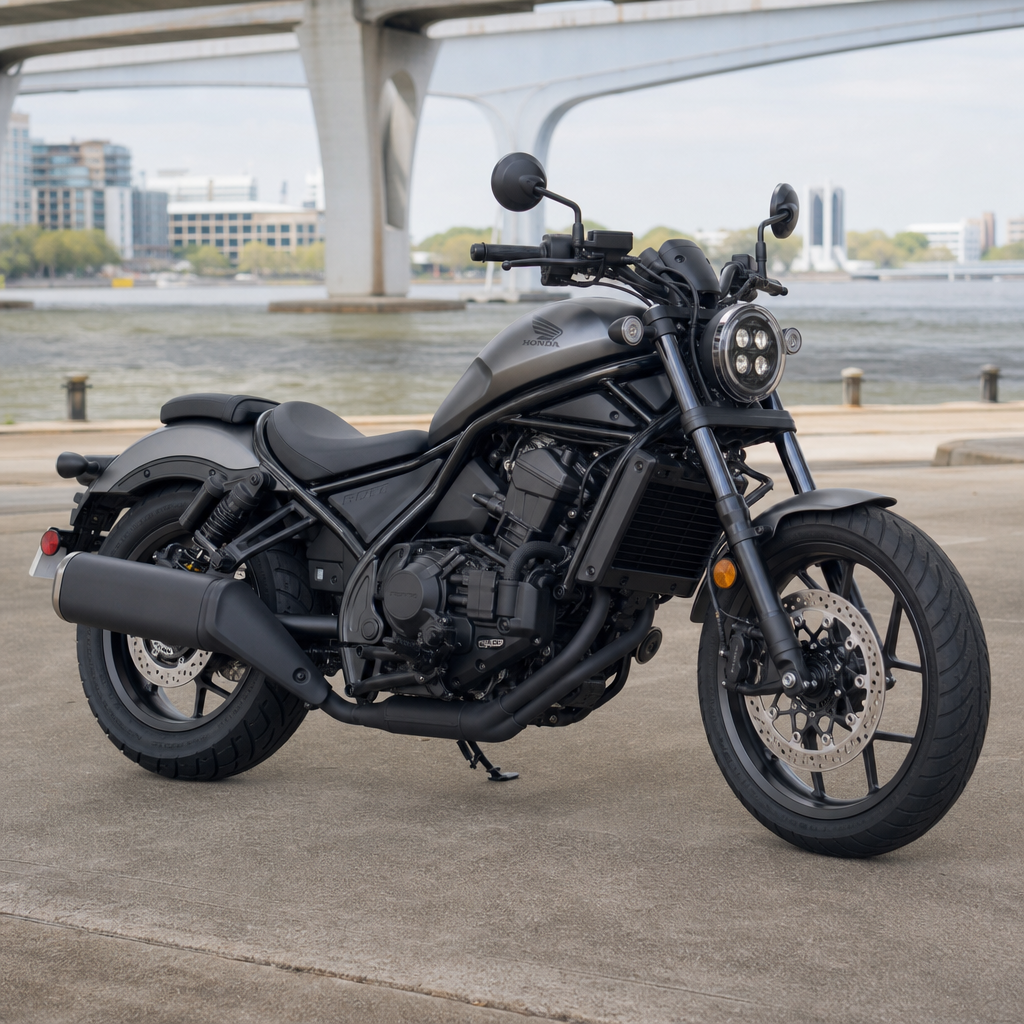
The 2026 Honda Rebel 1100 stands out because it solves a problem many everyday riders know well: how to get real-world comfort, strong torque, modern technology, and low-stress usability in one cruiser without drifting into heavyweight excess. In the Japanese metrics category, that balance matters more than spec-sheet bragging rights. Japanese metrics are metric cruisers built by Japanese manufacturers such as Honda, Yamaha, Kawasaki, and Suzuki, usually blending cruiser styling with reliable engines, manageable ergonomics, and practical ownership costs. I have spent years testing middleweight and liter-class cruisers on commutes, highway slogs, and weekend backroad loops, and this class consistently wins riders over when they want a bike that looks relaxed but behaves intelligently.
As the hub page for Japanese metrics within New Rides, this article covers more than one motorcycle. It uses the Rebel 1100 as the focal point because it represents where the category is heading in 2026: lighter than traditional full-size cruisers, easier to ride daily, and more technologically complete than many rivals. Its dual-clutch transmission, parallel-twin engine, low seat, and rider aids make it especially relevant for commuters, returning riders, downsizers, and experienced motorcyclists who simply want a machine that fits modern traffic. That combination is why many shoppers searching for the best DCT cruiser, best automatic cruiser motorcycle, or best everyday cruiser end up comparing this Honda first.
Understanding why requires a clear definition of what buyers actually mean by an everyday rider. In this context, an everyday rider is not a magazine fantasy rider crossing three states before lunch. It is someone who deals with stoplights, uneven pavement, freeway merges, rain surprises, parking constraints, occasional passengers, and maintenance budgets. Everyday usability means predictable throttle response, easy low-speed control, reasonable fuel range, confidence-inspiring braking, and a chassis that does not punish you for riding to work on Tuesday and to dinner on Saturday. The 2026 Honda Rebel 1100 checks these boxes while preserving enough personality to avoid feeling like a purely rational appliance.
It also matters because the cruiser market has shifted. Traditional heavyweight cruisers still sell on image and sound, but many riders now prioritize lighter handling, electronics, and easier ownership. Japanese metric cruisers have long offered that formula, yet the Rebel 1100 sharpens it with one feature that genuinely changes daily use: Honda’s DCT. For riders who have never used a dual-clutch transmission, it is not a scooter CVT and not a gimmick. It is an automated gearbox with distinct ratios, fast shifts, and the option for full automatic operation or manual paddle shifting. On crowded roads, that changes fatigue, confidence, and convenience in ways most spec comparisons miss.
Why the 2026 Honda Rebel 1100 Leads the Japanese Metrics Category
The Rebel 1100 leads this category because it combines proven mechanicals with a riding experience tuned for real life. Honda’s 1,084cc parallel-twin, derived from the Africa Twin platform, brings a broad torque curve rather than a peaky powerband. That matters on a cruiser because riders spend more time rolling on from low and midrange rpm than chasing top-end horsepower. In traffic, the engine pulls cleanly from low speed, making starts predictable and reducing the need for constant clutch work or aggressive downshifts. On open roads, it has enough strength to overtake without drama, especially in the DCT version where the transmission can snap down a gear quickly.
Honda’s engineering approach also gives the Rebel 1100 an advantage over some V-twin competitors. A parallel twin can be narrower, easier to package, and simpler to service around the chassis. Combined with a low seat height and a manageable curb weight for the class, the result is a cruiser that feels accessible in parking lots yet substantial at speed. Everyday riders notice these things immediately. They notice whether the bike is intimidating when backing into a parking space, whether U-turns feel natural, and whether the engine heat becomes tiring in summer traffic. The Rebel’s layout makes those daily moments easier than many larger cruisers.
The Japanese metrics field remains competitive, so context matters. Yamaha’s Bolt has a rawer air-cooled character, Kawasaki’s Eliminator appeals to riders wanting a lighter and more affordable modern cruiser, and Suzuki’s Boulevard line still draws traditionalists. Yet the Rebel 1100 distinguishes itself by delivering premium functionality without premium-bike bulk. It includes ride modes, selectable torque control, cruise control, and available DCT in a package that stays visually stripped down. That is exactly where the segment is moving: clean styling with contemporary control systems under the surface.
Another reason this bike leads the hub topic is platform relevance. As a sub-pillar for Japanese metrics, this page should help riders understand the category’s standards: reliability, easy ownership, approachable ergonomics, and value-focused engineering. The Rebel 1100 embodies all four. Honda dealer coverage is broad, parts support is strong, and the engine family has a known service history. Riders who want one motorcycle for commuting, errands, and short trips are usually better served by a broadly capable bike than by a niche cruiser that excels only in image or highway loafing.
How DCT Changes Daily Riding
The strongest argument for the 2026 Honda Rebel 1100 is its dual-clutch transmission. DCT uses two clutches, one handling odd gears and the other handling even gears, allowing the next gear to be preselected for fast, smooth shifts. In practice, it means there is no manual clutch lever, but there are still fixed gears and direct mechanical engagement. Compared with a manual cruiser, the system reduces left-hand fatigue in traffic, prevents stalls, and makes low-speed stop-and-go riding far less tedious. For commuters, that is not a novelty feature. It is a quality-of-life improvement that changes how often you choose the bike instead of the car.
I have seen hesitant riders become more confident within a single test ride because DCT removes the anxiety of rough launches and panic stalls. Experienced riders benefit too. When you are filtering attention between mirrors, road hazards, signals, and distracted drivers, eliminating one repetitive task frees mental bandwidth. Honda also lets riders choose automatic modes or shift manually through paddles, so the bike can feel easygoing on a commute and more engaged on a backroad. That flexibility is why the Rebel 1100 is often the best DCT cruiser for everyday riders rather than merely the easiest automatic motorcycle to operate.
There are tradeoffs, and they should be stated clearly. Some riders still prefer the ritual and control of a manual clutch, especially during very precise low-speed maneuvers or when they want maximum involvement. DCT versions also carry extra cost and added system complexity. However, Honda has spent years refining this transmission across multiple models, and the system has proven durable when maintained properly. For most street use, especially urban and suburban riding, the advantages are concrete and repeatable.
| Feature | 2026 Rebel 1100 DCT Benefit | Everyday Riding Impact |
|---|---|---|
| Dual-clutch transmission | Automatic or paddle shifting with no clutch lever | Less fatigue in traffic, easier starts, fewer stalls |
| 1,084cc parallel-twin | Strong low and midrange torque | Smooth commuting, confident passing, relaxed cruising |
| Low seat height | Easy reach to the ground | More confidence at stops and in parking lots |
| Ride modes and traction control | Tunable response for conditions | Better control in rain, city streets, and mixed roads |
| Cruise control | Reduced throttle-hand strain | More comfort on longer highway stretches |
Performance, Comfort, and Real-World Ownership
Performance on an everyday cruiser is about usable response, not headline acceleration alone. The Rebel 1100 delivers brisk roll-on power, stable highway manners, and chassis feedback that feels more modern standard than old-school cruiser. Its wheelbase and geometry preserve cruiser calm, but the bike does not resist direction changes the way heavier machines often do. That gives it a broad operating window. You can commute through downtown streets, run at interstate pace, and take the long way home through sweepers without constantly feeling that you brought the wrong tool.
Comfort is similarly practical. The relaxed riding position, low saddle, and neutral reach to the bars work for a wide range of riders, though taller riders may still want accessory seats or peg adjustments for longer days. Suspension quality matters more than many cruiser buyers realize, and the Rebel’s setup is competent enough for broken pavement and daily road imperfections. It is not a luxury tourer, but it avoids the harsh, underdamped feel that can make some low-slung cruisers tiring. Paired with cruise control and a tractable engine, that makes the bike easier to live with over weeks and months, not just on a short demo ride.
Ownership is another area where Japanese metrics traditionally shine. Honda service intervals, dealer network support, and parts availability generally reduce hassle compared with more boutique alternatives. Insurance and fuel costs can vary by rider profile and market, but the Rebel 1100 remains a sensible ownership proposition because it does not demand exotic maintenance or specialized tuning to run correctly. Accessories are plentiful as well, including windscreens, saddlebags, passenger setups, seats, and luggage options. That matters because everyday riders often need a bike to adapt. A cruiser that cannot carry basics or shield wind effectively becomes a second bike, not a primary one.
For shoppers exploring this hub topic, the broader lesson is clear. The best Japanese metric cruiser is not always the one with the most chrome, the biggest displacement, or the loudest personality. It is the one that starts easily, handles ordinary roads well, supports daily routines, and still feels enjoyable after the honeymoon period. The 2026 Honda Rebel 1100, especially in DCT form, meets that standard better than most competitors. If you are building out your New Rides research list, use this page as the anchor for deeper comparisons across Honda, Yamaha, Kawasaki, and Suzuki, then test ride the Rebel 1100 with a focus on traffic behavior, low-speed balance, and all-day usability. That is where its advantage becomes undeniable.
The conclusion for everyday riders is straightforward. The 2026 Honda Rebel 1100 earns its place as the best DCT cruiser because it removes friction from daily motorcycling without removing character. It gives you torque where you use it, technology that solves real problems, and ergonomics that welcome a broad range of riders. Within the Japanese metrics category, it sets the benchmark for modern usability.
If your priority is a cruiser you will actually ride often, not just admire in the garage, the Rebel 1100 should sit at the top of your shortlist. Explore the rest of the New Rides Japanese metrics coverage, compare the key rivals, and schedule a test ride on the DCT model. One ride in real traffic usually explains the bike better than a page of specifications ever could.
Frequently Asked Questions
What makes the 2026 Honda Rebel 1100 such a strong everyday cruiser?
The 2026 Honda Rebel 1100 hits a sweet spot that many riders have been looking for in a modern cruiser. It offers real low-end and midrange torque for easy acceleration, a relaxed riding position that works in traffic and on longer rides, and a manageable overall size that does not feel intimidating the way larger heavyweight cruisers often can. For everyday use, that balance matters far more than chasing the biggest engine or the most aggressive styling. Riders want a motorcycle that starts easily, handles predictably, remains comfortable during a commute, and still feels fun when the road opens up, and the Rebel 1100 consistently delivers in those areas.
Another big reason it stands out is usability. The Rebel 1100 is not just a cruiser built to look good parked outside a coffee shop. It is a practical machine with modern electronics, refined road manners, and Honda’s reputation for reliability. In the Japanese metrics category, that combination is especially important because buyers often want the cruiser look and character without the maintenance anxiety, excessive weight, or cumbersome feel associated with some traditional big cruisers. The Rebel 1100 gives everyday riders a motorcycle that feels substantial and capable, yet approachable enough to ride regularly rather than occasionally.
Why is the DCT version of the 2026 Honda Rebel 1100 so appealing for daily riders?
The Dual Clutch Transmission, or DCT, is one of the Rebel 1100’s biggest advantages for everyday riding because it removes much of the stress that can come with stop-and-go traffic, long commutes, and constantly shifting through urban congestion. Instead of working a clutch lever and selecting every gear manually, the DCT handles gear changes automatically with smooth, quick shifts. That means the rider can focus more on traffic, road positioning, and overall awareness. For newer riders, that can boost confidence. For experienced riders, it can reduce fatigue and make daily riding feel more effortless without taking away the motorcycle’s performance character.
What makes Honda’s DCT especially effective is that it is not just an automatic transmission in the basic sense. It is a well-developed system designed specifically for motorcycles, and it tends to feel far more natural than many riders expect. The gearbox can respond intelligently to throttle input, speed, and riding conditions, and many models also allow manual gear selection through handlebar controls when the rider wants more involvement. That means the Rebel 1100 DCT can feel easygoing during a weekday commute and still engaging on a back-road ride. For riders who want cruiser style with modern convenience, the DCT version solves a real-world problem better than almost anything else in the class.
How does the 2026 Honda Rebel 1100 compare with other Japanese metric cruisers?
Compared with many other Japanese metric cruisers, the 2026 Honda Rebel 1100 feels notably more modern in both design philosophy and day-to-day functionality. Traditional metric cruisers often focus on classic styling, laid-back ergonomics, and straightforward mechanical simplicity, which certainly appeals to many buyers. However, the Rebel 1100 adds another layer by blending cruiser aesthetics with contemporary engine performance, rider aids, and the optional DCT transmission. That makes it feel less like a nostalgia-driven machine and more like a cruiser genuinely engineered for current riding habits, including commuting, weekend trips, and mixed-use ownership.
In practical terms, the Rebel 1100 usually appeals to riders who want a motorcycle that is easier to live with than a larger V-twin cruiser, but more powerful and feature-rich than entry-level or mid-displacement alternatives. It offers strong torque, manageable proportions, and modern electronics that help it feel versatile rather than one-dimensional. In the Japanese metrics category, that versatility is a major selling point. Brands like Yamaha, Kawasaki, and Suzuki all have strong cruiser offerings, but the Rebel 1100 distinguishes itself by combining approachable ergonomics, Honda reliability, and the availability of a highly refined automatic transmission. For many everyday riders, that makes it one of the most complete packages in the segment.
Is the 2026 Honda Rebel 1100 comfortable enough for commuting and longer rides?
Yes, and that is one of the reasons it earns so much attention among riders who actually spend a lot of time in the saddle. The Rebel 1100 is designed to be low-stress and accessible, which pays off during both short urban trips and longer highway miles. Its low seat height helps many riders feel planted and confident at stops, while the overall ergonomics are generally more neutral and less cumbersome than some larger cruisers. That can make a huge difference during everyday use, especially for riders dealing with city traffic, frequent lights, parking lots, and low-speed maneuvering.
For longer rides, comfort depends somewhat on rider size, personal preferences, and accessories, but the platform itself is strong. The engine has enough torque to cruise without feeling strained, the chassis remains composed, and the bike avoids the excessive bulk that can wear riders out over time. Many owners may still choose upgrades like a different seat, wind protection, or luggage if touring is a major priority, but the core motorcycle already offers a solid blend of comfort and practicality. It is not trying to be a giant luxury tourer, and that is actually part of its appeal. Instead, it focuses on being comfortable enough for real use while staying agile and approachable.
Who is the ideal rider for the 2026 Honda Rebel 1100?
The ideal rider for the 2026 Honda Rebel 1100 is someone who wants cruiser style and torque without the compromises that often come with oversized, old-school heavyweight machines. That includes commuters who ride regularly, returning riders looking for something confidence-inspiring yet genuinely capable, and experienced motorcyclists who appreciate modern technology and everyday practicality. It also strongly appeals to riders who like the idea of a cruiser but do not want a bike that feels limited to relaxed boulevard use. The Rebel 1100 is broad enough in ability to handle commuting, errands, back-road rides, and light touring, which makes it a particularly smart choice for riders who want one motorcycle to do many things well.
The DCT model expands that appeal even further. It is especially attractive for riders who want to reduce physical effort in traffic, avoid constant clutch work, or simply enjoy the convenience of automatic shifting. Some riders who have hand fatigue, ride in dense urban areas, or are transitioning from scooters or automatic vehicles may find it especially appealing. At the same time, it is not just for beginners or convenience-focused riders. Many seasoned motorcyclists appreciate how well Honda’s DCT works and how effectively it complements the Rebel 1100’s everyday mission. In short, this is a cruiser for people who value usable performance, comfort, and smart engineering over tradition for tradition’s sake.