CNC-machined footpegs have become a defining upgrade in modern motorcycle fabrication, and by 2026 high-strength aluminum stands as the clear standard because it balances grip, strength, corrosion resistance, weight, and manufacturability better than the alternatives. In builder shops, race paddocks, and custom garages, footpegs are no longer treated as minor accessories. They are structural rider contact points that influence control input, standing comfort, crash survivability, and the visual language of a build. When riders talk about confidence on loose terrain, leverage in supermoto transitions, or all-day comfort on a scrambler conversion, the discussion often comes back to peg geometry, tooth profile, and material choice.
Understanding the topic starts with definitions. CNC machining refers to computer numerical control manufacturing, where mills or lathes remove material from billet stock using programmed toolpaths. High-strength aluminum in this context usually means aerospace-grade alloys such as 6061-T6 for balanced corrosion resistance and machinability or 7075-T6 where higher tensile strength is required. Footpegs are the serrated or textured platforms mounted to a motorcycle’s frame that support the rider’s boots. The reason this matters in 2026 is simple: builders now expect OEM-level precision from custom parts, and riders expect performance parts that integrate with broader fabrication technologies including 3D printed prototyping, carbon fiber bodywork, and compact digital wiring systems.
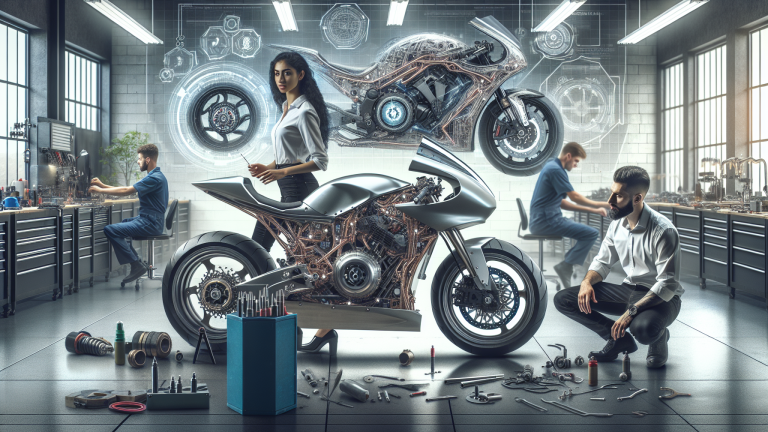
I have watched this shift happen in fabrication shops over the last several model cycles. Ten years ago, many custom pegs were either cast, roughly welded, or chosen mostly for styling. Today, even small-batch builders use CAD, finite element checks, fixture-controlled machining, laser scanning, and rapid iteration to produce footpegs that fit exact rider needs. That same digital workflow now shapes entire custom programs. A shop may 3D print an ergonomic prototype, machine the final peg from billet aluminum, pair it with carbon heel guards or side panels, and integrate the whole build with a CAN-aware wiring system using Motogadget, MotoGadget mo.unit, or modern PDM modules. As a result, CNC-machined footpegs are not an isolated product category. They sit at the center of fabrication tech, linking mechanical design, materials science, rider ergonomics, and electrical packaging into one coherent discipline.
Why CNC-machined aluminum footpegs became the benchmark
The reason CNC-machined aluminum footpegs became the benchmark is repeatability. Billet machining allows manufacturers to control platform width, offset, rake angle, edge chamfer, and tooth spacing with very tight tolerances. That precision directly affects feel. A peg that is 5 millimeters wider can noticeably improve support during standing off-road, while a slightly rearward offset can change hip angle and leverage on a café racer or stunt bike. CNC also enables consistency across production runs, which matters for replacement parts, homologation-minded builds, and customer trust.
High-strength aluminum became the default material because it solves more problems than steel, titanium, or polymer composites in this specific application. Compared with mild steel, aluminum cuts significant unsprung and carried weight while resisting corrosion without heavy coatings. Compared with titanium, it is far less expensive to machine, easier to source globally, and less punishing on cutters. Compared with polymer or hybrid pegs, it maintains tooth sharpness, stiffness, and dimensional stability under high heat, repeated impact, and muddy abrasion. In practical use, 7075-T6 can deliver tensile strength in the range of many steels while remaining substantially lighter, which is why it appears so often in motorsport hardware.
Another advantage is design freedom. With CNC, brands can machine aggressive mud-shedding channels, replaceable stainless traction pins, radiused stress transitions, and fold mechanisms directly into the part. I have seen two pegs look similar at a glance but perform very differently because one included proper fillets around the mount boss and sufficient material around the spring pocket while the other chased a skeletonized look and cracked around a thin section. In 2026, the standard is not just aluminum; it is intelligently machined aluminum with known load paths, validated geometry, and hardware chosen for serviceability.
Material selection: 6061, 7075, steel, titanium, and composites
When builders ask which alloy to choose, the short answer is this: 6061-T6 is the versatile baseline, 7075-T6 is the premium performance option, and both are usually better choices than exotic alternatives for most custom motorcycle footpeg applications. 6061 machines cleanly, anodizes well, resists corrosion, and offers enough strength for many street and light off-road builds. 7075-T6 is harder, stronger, and better suited to heavily loaded pegs, race use, and designs with thinner sections, though it can be less forgiving in corrosive environments if finishing and maintenance are neglected.
| Material | Main advantage | Main limitation | Best use case |
|---|---|---|---|
| 6061-T6 aluminum | Excellent machinability and corrosion resistance | Lower strength than 7075 | Street, scrambler, adventure customs |
| 7075-T6 aluminum | Very high strength-to-weight ratio | Higher cost and more demanding finishing | Race, aggressive off-road, premium billet pegs |
| Steel | Impact toughness and lower raw material cost | Weight and corrosion risk | Budget or heavy-duty utility builds |
| Titanium | Low weight with strong corrosion resistance | Very high machining cost | Halo projects and niche motorsport parts |
| Composite or polymer hybrids | Low mass and vibration damping potential | Wear, heat, and impact limitations | Experimental or low-load applications |
Steel still has a place, especially on dual-sport pegs where deformation rather than fracture may be preferred in a hard rock strike. But steel’s weight penalty is real, and painted or plated finishes eventually suffer. Titanium sounds attractive, yet in actual quoting it often fails the value test. Tool wear rises, machining time increases, and the performance gain over optimized 7075 is smaller than many buyers expect. Carbon fiber is even less appropriate as a primary footpeg structure because concentrated loads and edge impacts work against composite strengths. Carbon excels in panels, guards, ducts, and cosmetic parts, not in serrated rider contact points that strike rocks and support body weight repeatedly.
How footpegs connect to 3D printing, carbon fiber, and modern wiring
This hub matters because fabrication technology works as a system. Footpegs are a useful anchor point for understanding how digital and advanced-material methods now shape custom building. In most serious shops, the development path starts with 3D printing. A builder scans the stock mount area or models it in CAD, then prints prototype pegs in nylon, tough PLA, or reinforced filament to validate boot position, lean clearance, and brake or shifter interaction. The printed part is not the final structural component; it is the fastest way to answer fitment questions before expensive machining begins. That reduces scrap, shortens lead times, and helps the rider evaluate ergonomics on the actual bike.
Carbon fiber enters the same workflow where low weight and formed surfaces matter. Once peg position changes, heel guards, side covers, belly pans, and undertray panels often need redesign. Carbon makes sense there because it can deliver stiffness with very low mass and can be shaped around exhaust routing or rearset hardware. I have seen builders pair billet pegs with carbon heel plates that protect boots and wiring from chain spray while preserving a clean visual line. The important distinction is that carbon is usually supporting the package, not replacing the peg body.
Wiring technology is the third leg of the stool. Custom motorcycles in the New Guard scene increasingly hide components, relocate batteries, and use compact control modules. A revised peg or rearset location can affect rear brake switch mounting, quickshifter cable routing, ride-by-wire clearance, and harness protection. That is why the best fabrication teams model mechanical and electrical packaging together. Modern wiring means proper strain relief, heat shielding near exhausts, weather-sealed connectors such as Deutsch DT or Superseal, and centralized power management modules rather than improvised loom splices. The takeaway is straightforward: a premium footpeg upgrade is strongest when designed within the full fabrication ecosystem of prototyping, composites, and electrical integration.
Design features that separate excellent footpegs from decorative ones
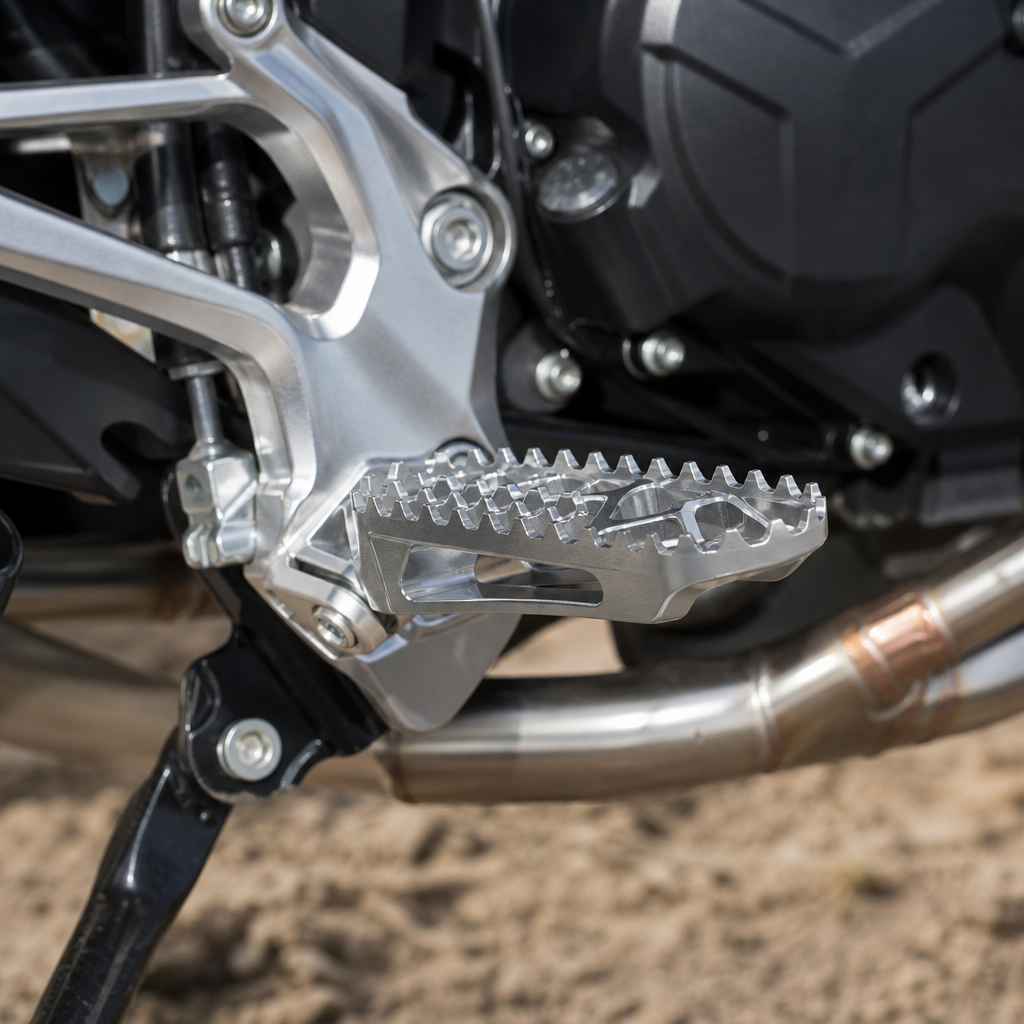
The best CNC-machined footpegs are defined by functional details, not by how aggressively they are pocketed for social media photos. Platform width is usually the first differentiator. Narrow pegs can feel precise on sport builds but create pressure points on longer rides. Wider pegs distribute load across the boot sole and improve control while standing. Tooth profile matters just as much. Deep, sharp teeth increase grip in wet or muddy conditions, but if they are too tall or too brittle they wear quickly or damage softer boot soles. Replaceable stainless pins are a useful compromise when a rider wants serviceable traction without replacing the entire aluminum body.
Mount architecture is another separator. A well-designed peg has enough material around the pivot bore, spring seat, and stop surfaces to resist fatigue. Good designs avoid abrupt thickness changes that concentrate stress. Fillets, chamfers, and directional grain orientation from billet stock all matter in practice. So does the folding mechanism. On a street tracker, a positive folding action can help absorb minor impacts. On an enduro-influenced custom, secure return spring placement and mud clearance become critical. Builders should also examine the hardware stack: shoulder bolts, bushings, circlips, and thread engagement quality often reveal whether a part was engineered or merely styled.
Surface treatment deserves more attention than it gets. Type II anodizing offers common cosmetic protection, but harder anodic coatings can improve wear resistance in high-contact areas. However, anodizing does not fix poor design. If the peg has thin teeth, weak pin threads, or undersized spring pockets, the finish will not save it. In my experience, the most durable parts come from brands that test for impact, repeated loading, and real contamination from water, sand, and chain lubricant rather than relying on renderings and marketing claims.
Manufacturing standards, testing, and what builders should verify
By 2026, serious buyers should expect documented manufacturing controls. That starts with alloy traceability, correct heat-treatment designation, and tolerance control on pivot interfaces. If a manufacturer cannot specify whether the part is 6061-T6 or 7075-T6, that is an immediate warning sign. The same applies to fastener grade and pin material. Reputable shops reference ISO-calibrated inspection tools, maintain consistent fixturing, and deburr all rider-contact edges. For production parts, coordinate measuring machine checks or at least disciplined go/no-go gauge verification are signs of maturity.
Testing should include more than static load numbers. Footpegs experience cyclic loading from rider weight shifts, vertical shock from potholes and landings, and side impacts in low-speed slides. A peg that survives one heavy press test can still fail early in fatigue if the geometry is poor. Finite element analysis helps identify stress risers, but simulation must be paired with bench and field validation. In race and premium aftermarket settings, it is common to prototype, instrument, ride, revise, and only then release the final version. That process costs more, yet it is why premium billet parts command trust.
Builders should verify fitment against the whole control package. Check brake pedal and shift lever relationship, master cylinder alignment, boot clearance to exhausts, and whether the peg position changes rider weight bias. Also verify service access. If removing the peg requires disconnecting half the rear brake assembly or exposing wiring joins, the design is incomplete. Good fabrication accounts for future maintenance, not just first installation.
Choosing the right footpeg setup for a custom build in 2026
The right setup depends on riding style, not trend pressure. For a street-focused custom, 6061-T6 pegs with moderate serration, a medium-width platform, and quality anodizing are usually the best value. For aggressive canyon riding or track use, 7075-T6 with tighter tolerance mounts, replaceable traction pins, and optimized rearset geometry is worth the premium. For scramblers and adventure-inspired customs, prioritize wider platforms, mud relief, and hardware that can be cleaned and serviced easily after rough use.
If you are developing a full fabrication program, use 3D printing first, machine the final structural parts from high-strength aluminum, deploy carbon where shaped lightweight panels offer real benefits, and design wiring as a protected system rather than an afterthought. That sequence consistently produces better motorcycles. CNC-machined footpegs prove the point because they sit exactly where rider input meets fabrication quality. Choose them carefully, review the surrounding systems, and build with the same precision you expect on the road or trail. Explore the related guides in this fabrication tech hub to go deeper on prototyping, carbon construction, and modern custom wiring.
Frequently Asked Questions
Why has high-strength aluminum become the standard material for CNC-machined footpegs by 2026?
High-strength aluminum has become the 2026 benchmark because it delivers the best overall balance of the properties riders, builders, and manufacturers actually need in a modern footpeg. A footpeg is not just a place to rest your boots. It is a primary rider contact point that transfers body weight, steering input, braking force, and standing leverage into the chassis. That means the material has to be strong enough to handle repeated impacts and concentrated loads, light enough to avoid unnecessary mass, corrosion-resistant enough to survive rain, mud, road salt, and washdowns, and machinable enough to produce complex traction patterns and precise mounting features. High-strength aluminum checks all of those boxes better than most alternatives.
Compared with mild steel, aluminum offers a major weight advantage without forcing a compromise in real-world durability when the correct alloy and design are used. Compared with lower-grade cast materials, CNC-machined high-strength aluminum offers much tighter tolerances, greater consistency, and better structural integrity. It also resists corrosion naturally, which is critical for a component that sits low on the bike and is constantly exposed to water, grit, chain lube, and debris. By 2026, as fabrication standards, rider expectations, and CNC capabilities have all advanced, the industry has settled on high-strength aluminum because it supports aggressive peg geometry, sharp but controlled grip features, clean aesthetics, and dependable performance across street, race, adventure, and custom applications.
How do CNC-machined aluminum footpegs improve rider control and comfort?
CNC-machined aluminum footpegs improve control by giving builders far more precision over the peg’s shape, width, tooth profile, platform area, edge radius, and mounting tolerances. Those details directly affect how securely a rider’s boots interface with the motorcycle. A well-machined peg provides predictable grip whether the rider is seated, transitioning in a corner, standing over rough terrain, or loading the outside peg during aggressive riding. The result is better feedback, more stable lower-body positioning, and more confidence when control inputs need to be quick and accurate.
Comfort improves because CNC machining allows the peg to be designed around real rider ergonomics rather than around the limitations of cheaper manufacturing methods. The platform can be optimized to distribute pressure more evenly across the boot sole, reducing hot spots and fatigue on longer rides. Builders can also fine-tune the peg width, setback, and contour to suit the intended use of the motorcycle, whether that means maximum support for adventure riding, compact clearance for track use, or a custom profile that fits the visual language of a one-off build. In practical terms, that means riders get a footpeg that feels planted and supportive instead of harsh, slippery, or awkward. High-strength aluminum makes that precision possible while keeping the final part light and durable enough for serious use.
Are high-strength aluminum footpegs durable enough for racing, off-road riding, and crashes?
Yes, when they are properly engineered, high-strength aluminum footpegs are absolutely durable enough for demanding environments, and that is one of the main reasons they have become the standard. Durability in a footpeg is not just about raw material hardness. It is about the combination of alloy selection, grain structure, machining quality, platform design, stress distribution, and mounting interface integrity. A CNC-machined peg made from a proven high-strength aluminum alloy can handle repeated loading, sudden impacts, and harsh vibration extremely well, especially when the design avoids weak cross-sections and includes reinforcement where stress naturally concentrates.
In racing, riders need a peg that stays dimensionally stable, holds traction features consistently, and resists deformation under hard body input. In off-road conditions, the peg has to survive strikes from rocks, mud packing, repeated standing loads, and environmental exposure. In a crash, no footpeg material is indestructible, but high-strength aluminum offers an excellent mix of strength and controlled sacrificial behavior. In many cases, it can absorb and distribute impact energy better than brittle low-quality cast parts, while remaining lighter and more corrosion-resistant than steel alternatives. The key is quality. Well-designed CNC-machined pegs from reputable builders or manufacturers are engineered for these demands, whereas poorly designed generic parts may fail regardless of material. By 2026, the market has largely recognized that premium aluminum footpegs are not a cosmetic upgrade alone; they are legitimate performance components.
How does high-strength aluminum compare with steel, titanium, and cast alloys for footpegs?
Each material has strengths, but high-strength aluminum has emerged as the most balanced and practical choice for most applications. Steel is tough and familiar, but it is significantly heavier, more prone to corrosion if finishes are compromised, and less attractive when weight savings and refined machining are priorities. For some heavy-duty or budget-oriented builds, steel still has a place, but it no longer represents the ideal all-around solution for premium footpegs.
Titanium is often seen as an exotic upgrade, and it does offer excellent strength-to-weight characteristics along with strong corrosion resistance. However, it is far more expensive, more difficult to machine, and often unnecessary for the performance demands of a footpeg. In other words, titanium can be impressive, but it is not always the smartest value or the easiest material to manufacture at scale with precise, repeatable traction features. Cast alloys, especially lower-grade cast parts, tend to be where compromises become more obvious. Casting can introduce inconsistencies, porosity concerns, and design limitations that are less desirable in a component expected to handle repeated loading and impact. CNC-machined high-strength aluminum sits in the sweet spot: lighter than steel, more affordable and manufacturable than titanium, and more precise and structurally trustworthy than many cast alternatives. That combination is exactly why it has become the 2026 standard.
What should riders and builders look for when choosing CNC-machined aluminum footpegs?
The first thing to look for is material credibility. Not all aluminum is the same, and reputable manufacturers will typically specify the alloy or at least clearly position the peg as being made from high-strength billet stock intended for structural use. Beyond the material itself, examine the machining quality. Crisp but consistent traction teeth, smooth transitions in non-grip areas, accurate mounting surfaces, and a clean finish all indicate attention to detail. The peg should feel purpose-built, not merely decorative. It should also match the motorcycle’s intended use. A race bike may benefit from a more compact, high-clearance peg, while an adventure or dual-sport machine may need a wider platform for standing support and mud-shedding performance.
Buyers should also consider peg geometry, serviceability, and hardware quality. Replaceable traction pins, robust spring and clevis compatibility, quality anodizing or protective finishing, and a mounting design that preserves proper alignment all matter in long-term ownership. It is also smart to evaluate how the peg behaves in wet conditions, how aggressively it grips different boot soles, and whether the platform shape supports comfort over time rather than only looking sharp in photos. Finally, builders should think about aesthetics and integration. Because footpegs are highly visible parts on a custom or performance motorcycle, they need to complement the bike’s overall fabrication standard. The best CNC-machined aluminum footpegs in 2026 succeed because they combine engineering, rider feel, durability, and visual finish into one component that performs as seriously as it looks.