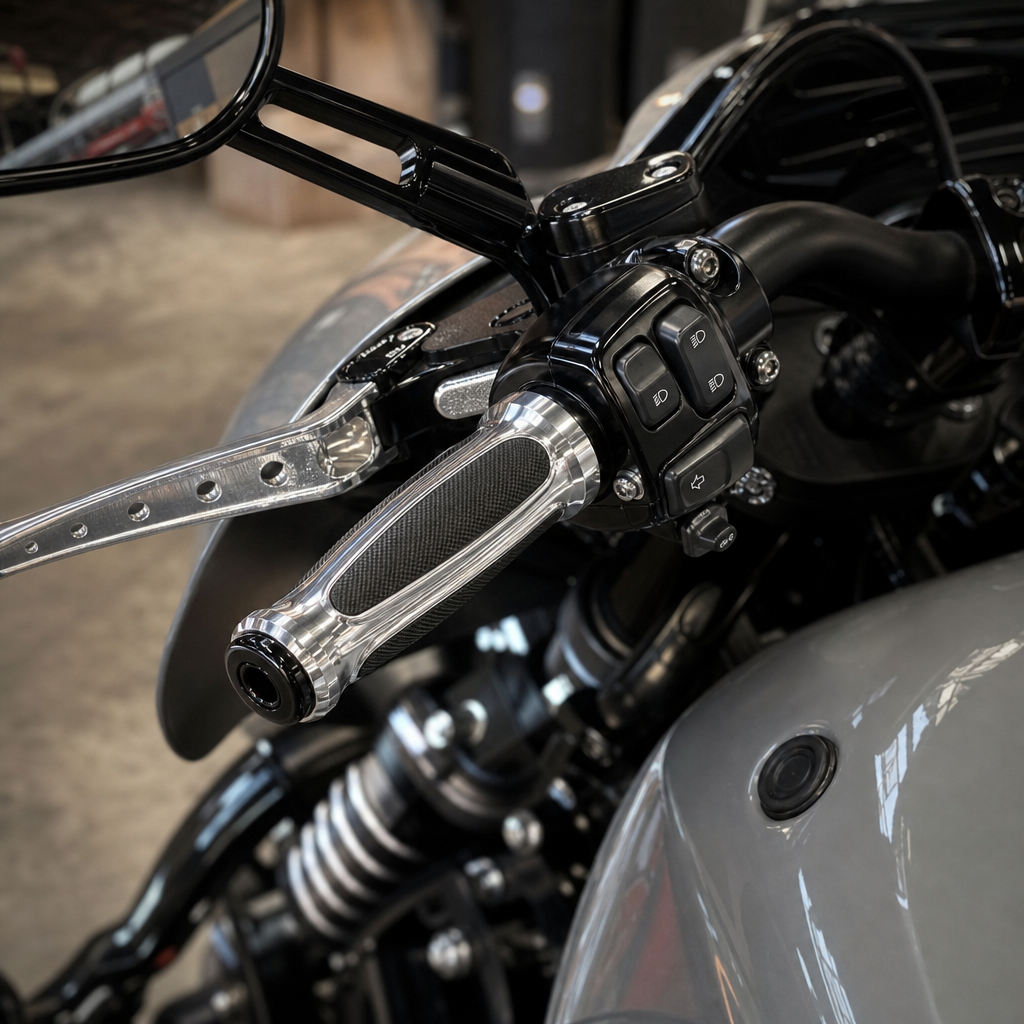
Billet Aluminum Contour Grips for the 2026 M8 sit at the intersection of rider ergonomics, custom styling, and the broader fabrication technology reshaping modern bike builds. On one level, this is a practical installation guide for riders upgrading the throttle and clutch touchpoints on Harley-Davidson’s latest Milwaukee-Eight platform. On another, it is a hub for the fabrication tech behind today’s custom scene: 3D printing for prototyping and fitment, carbon fiber for lightweight trim and housings, and advanced wiring practices for integrating ride-by-wire controls, heated accessories, and clean bar setups. I have installed aftermarket grips, switch housings, and internal wiring kits on recent M8 touring and softail models, and the pattern is consistent: the grips are the visible part, but the success of the job depends on planning tolerances, materials, and cable routing before the first fastener comes out.
Billet aluminum contour grips are machined from a solid block or bar of aluminum, usually 6061-T6 or 7075, then shaped with grooves, knurling, or rubber inlays to improve hold and reduce fatigue. Contour refers to the palm-supporting shape that changes pressure distribution across the hand, especially useful on long highway rides or in stop-and-go traffic where wrist angle matters. The 2026 M8 matters here because current models combine electronic throttle control, tighter packaging in the bars and nacelle, and increasingly integrated switchgear. That means installation is no longer just a cosmetic bolt-on job. Fitment can be affected by throttle tube diameter, bar end clearance, switch housing alignment pins, adhesive compatibility, and the extra real estate required when builders also add internal wiring, LED controls, printed mockup parts, or carbon-fiber cockpit trim. If you want grips that look premium, feel right, and work reliably, you need to treat them as part of a larger fabrication system.
What to check before installing billet aluminum contour grips on a 2026 M8
Start with confirmation of the exact model and control configuration. The 2026 M8 family includes touring and softail variants with different bar diameters, switch housings, and throttle-side interfaces. Most aftermarket grip makers list compatibility by platform, but in the shop I still measure the clutch side bar outer diameter with calipers and compare the throttle side to the supplied sleeve or the reused electronic throttle tube. Billet grips can have very tight machining tolerances, which is good for reduced play, but it also means powder coat buildup, burrs, or an aftermarket bar with a slightly inconsistent wall can create binding. Before installation, inspect the throttle tube cam, switch housing seam, and bar end. If the grip body contacts the switch housing or bar-end mirror mount, the throttle may not snap back cleanly. That is a safety issue, not a minor annoyance.
You also need the correct tools and consumables. A torque wrench in inch-pounds, JIS or Torx drivers depending on hardware, blue threadlocker where specified by the manufacturer, non-marring picks, compressed air for test fitting some non-adhesive designs, and isopropyl alcohol for cleaning are standard. If the left grip uses adhesive, use the brand recommended by the grip manufacturer rather than a generic glue. Some rubber-bonding compounds cure too slowly, while some aggressive solvents can haze finishes or compromise insert materials. For heated grip systems or integrated LED end caps, add a multimeter, heat-shrink, fabric harness tape, and proper crimp tools. On the current M8 platform, electrical faults often come from rushed wiring work, not from the accessory itself.
Step-by-step installation tips that prevent throttle bind and fitment errors
Begin by protecting the tank, fairing, and nacelle with clean covers because billet parts scratch painted surfaces quickly if dropped. Remove the existing grips carefully. On the clutch side, factory rubber grips may need to be cut off if they are bonded to the bar. On the throttle side, separate the switch housing halves and slide the grip and throttle tube assembly out without stressing the electronic throttle sensor interface. Clean the bare bar thoroughly and deburr any raised spots around drilled wiring holes. I always dry-fit the new left grip before touching adhesive. If it stops early, do not force it with a mallet. Identify the interference point, because pressing an aluminum grip over contamination or a burr can score the bore and lock the part in place.
On the throttle side, the key rule is clearance. Install the billet grip or grip-and-sleeve assembly, snug the switch housing, then check for free rotation before final torque. You want a small axial gap between the grip flange and the switch housing, and also enough space at the bar end if a cap, mirror, or hand control accessory is fitted. Cycle the bars lock to lock and let the throttle snap shut repeatedly. If return action changes as the bars move, the issue may be harness tension inside the bar rather than the grip itself. Riders often blame the grip when internal wiring is actually pulling on the throttle sleeve. Final tightening should follow the accessory manufacturer’s sequence because uneven clamping can distort some two-piece designs.
| Installation checkpoint | What to verify | Common mistake | Best practice |
|---|---|---|---|
| Bar surface prep | Clean, smooth, no adhesive residue or burrs | Installing over powder coat buildup | Measure and lightly dress high spots before test fit |
| Throttle clearance | Grip rotates freely and snaps back | Zero side gap at housing or bar end | Set a visible clearance gap before final torque |
| Fastener retention | Correct torque and threadlocker where specified | Overtightening small clamp screws | Use inch-pound torque values from the maker |
| Wiring movement | No harness drag through full steering range | Packing bars too tightly during internal wiring | Leave controlled slack near throttle housing |
| Adhesive cure | Left grip fully bonded before riding | Riding before cure time completes | Follow stated cure window and temperature limits |
How 3D printing improves custom grip fitment, prototyping, and cockpit design
3D printing has become one of the most useful support technologies in motorcycle fabrication, especially for one-off cockpit parts and pre-install validation. On M8 projects, I use printed test collars, switch housing spacers, and bar-end mockups to confirm grip spacing before committing to expensive billet or carbon components. This is where fabrication tech saves real money. A printed PLA or PETG prototype can reveal whether a contour grip interferes with a handguard mount, fairing inner, or custom switch pod long before machining starts. For builders offering client bikes, that means fewer surprises and faster approvals. For home installers, local maker spaces or print services can produce simple gauge parts from a CAD sketch for a fraction of the cost of a re-machined aluminum piece.
Material choice matters. PLA is fine for quick checks on bench fit, but it can deform in a hot garage or direct sun, so it is not suitable for functional motorcycle components. PETG offers better heat resistance, while nylon, polycarbonate blends, and carbon-filled filaments are stronger for temporary test parts. Even then, printed parts around controls should be treated as prototypes unless they are specifically engineered for final use and tested for vibration, temperature, and load. The practical takeaway for billet aluminum contour grips is simple: use 3D printing to validate dimensions, wire pass-through sizes, switch housing offsets, and aesthetic proportions. It is a prototyping tool that reduces mistakes, not a universal replacement for machined safety-critical hardware.
Where carbon fiber fits in a 2026 M8 handlebar and control upgrade
Carbon fiber enters this conversation because grip upgrades rarely happen in isolation. Riders changing grips often also install a carbon dash panel, fork shrouds, intake trim, bar-top cover, or lightweight accessory brackets to modernize the bike’s cockpit. Carbon offers excellent stiffness-to-weight performance, but on a street-driven M8 its main benefit is not huge weight loss at the grips themselves. It is precise shaping, premium surface finish, and the ability to produce complex covers that complement machined aluminum parts. A forged carbon bar-top insert paired with satin or black-anodized billet contour grips can create a cohesive look that feels current rather than catalog-random.
There are limits. Carbon fiber is anisotropic, which means strength changes by fiber orientation, and that matters for drilled mounting tabs or thin cosmetic panels near vibrating controls. Poorly made carbon parts can crack around fasteners, delaminate from heat, or expose sharp edges if trimmed badly. Conductivity is another concern; carbon can create electrical problems if it contacts exposed wiring or terminals. When installing billet grips alongside carbon accessories, use proper isolators, grommets, edge trim, and non-conductive barriers where needed. In custom work, the best results come from respecting what each material does well: aluminum for durable contact components and precise threads, carbon for lightweight covers and visual structure, and elastomer inserts where vibration damping is needed.
Wiring best practices for clean bars, heated grips, and accessory integration
Wiring is where many otherwise strong custom builds lose reliability. The 2026 M8’s control area is crowded with ride-by-wire hardware, switch leads, and in many cases added accessories such as heated grips, GPS mounts, USB power, or integrated turn signal controls. If you are installing billet aluminum contour grips at the same time as internal bar wiring, plan the harness path before pulling anything through. Measure bar internal diameter, entry and exit hole size, and bend radius. Sharp-edged holes should be chamfered and protected with grommets because insulation failures inside handlebars are difficult to diagnose later. Use staggered splices when extensions are unavoidable, and choose adhesive-lined heat-shrink over tape-only joints.
For diagnostics and longevity, maintain serviceability. I leave enough harness slack at the switch housings to open them without straining connectors, and I label accessory circuits during assembly. A digital multimeter should confirm voltage drop, ground integrity, and continuity before the final reassembly of nacelles or fairings. If heated grip controllers are added, verify current draw against fuse capacity and the bike’s accessory power strategy. The standard is not simply making the lights come on in the garage. The standard is surviving vibration, rain, washing, summer heat, and repeated full-lock steering cycles without intermittent faults. Clean hidden wiring is attractive, but clean wiring that remains electrically sound is the real goal.
Choosing the right billet grip design, finish, and supporting components
Not every billet aluminum contour grip is right for every rider or build style. Deeply sculpted palm swells can reduce fatigue for highway riders but feel restrictive to riders who move their hand position aggressively in urban riding. Aggressive knurling improves wet-glove traction yet transmits more vibration if there is no compliant insert. In practice, the best-performing grips for touring-oriented M8 builds often combine machined aluminum shells with rubber or EPDM traction bands, because they preserve the custom-machined look without becoming harsh after several hours. Finish selection matters too. Hard anodizing generally wears better than decorative coatings, and black finishes hide glove marks and cable grime more effectively than bright-cut surfaces.
Think about the whole cockpit as a system. Bar diameter, riser height, lever angle, mirror placement, and seat position all influence how the grip feels once installed. A rider blaming a contour grip for wrist discomfort may actually need a lever reposition, a bar with less sweep, or a different riser pullback. This is why careful builders document the original ergonomics before changing parts. If your project also includes printed switch pods, carbon trim, or rewired bars, create a fitment checklist and test ride in stages. Install grips and controls first, validate operation, then add appearance pieces. That sequence reduces troubleshooting time and keeps the bike safely rideable throughout the build process.
Billet Aluminum Contour Grips for the 2026 M8 are a worthwhile upgrade when they are installed with the same discipline used in professional fabrication work. The core lessons are straightforward: verify exact fitment, prepare the bar surfaces carefully, protect throttle return clearance, torque hardware correctly, and never treat wiring as an afterthought. Once those basics are covered, the bigger opportunity becomes clear. A grip install can anchor a smarter cockpit build that uses 3D printing to prototype parts and avoid machining mistakes, carbon fiber to add lightweight visual structure, and modern wiring methods to support hidden cables, heated accessories, and integrated controls without sacrificing reliability.
For riders and builders working within custom culture’s new guard, this is the practical path forward. Fabrication technology is not replacing craftsmanship; it is making craftsmanship more precise. Use printed mockups before cutting metal, use carbon where its properties make sense, and wire the bike to service standards rather than show-bike shortcuts. Done properly, billet contour grips improve comfort, control, and the overall finish of the 2026 M8 while serving as the logical starting point for deeper upgrades in fabrication tech. Review your current control setup, map the related bar, trim, and wiring changes, and build the cockpit as one coordinated system.
Frequently Asked Questions
1. What tools and prep work do I need before installing billet aluminum contour grips on a 2026 M8?
Before you start, make sure you have the correct service information for your specific 2026 Milwaukee-Eight model, because bar controls, throttle tube configuration, and electronic throttle-by-wire components can vary slightly by trim and handlebar setup. In most cases, you will want a clean work area, a torque wrench, the appropriate Torx and hex drivers, a small flat trim tool or pick, isopropyl alcohol for cleaning the bar surface, a lint-free cloth, medium-strength threadlocker if specified by the grip manufacturer, and any supplied spacers, throttle sleeves, or glue recommended in the kit. If your motorcycle uses heated grips or integrated wiring at the controls, plan extra time and be especially careful around connectors, internal harness routing, and switch housings.
Preparation matters just as much as the actual installation. Start by stabilizing the bike on a secure stand and disconnecting the battery if your service manual recommends it, especially when working near switchgear or heated grip wiring. Inspect the handlebar ends, throttle tube, and clutch-side bar surface for old adhesive, corrosion, burrs, or residue that could prevent the grips from seating correctly. Dry-fit both grips before final assembly so you can confirm orientation, clearance, and clamp alignment. This is also a good time to verify that your grips are truly designed for the 2026 M8 platform and not just a general Harley fitment, since modern accessory manufacturing increasingly relies on 3D scanning and prototype validation to account for small but important dimensional differences between generations.
2. How do I remove the stock grips without damaging the throttle tube or handlebar controls?
Removal should always be controlled and deliberate, particularly on the throttle side. On the clutch side, factory grips are often bonded with adhesive, so the safest approach is usually to carefully peel, split, or work the old grip loose rather than forcing it off aggressively. A non-marring tool and a small amount of alcohol or approved grip-release solvent can help break the bond. Avoid gouging the handlebar surface, because scratches, leftover adhesive ridges, or uneven material can affect how the new billet grip seats and stays secure.
On the throttle side, the priority is protecting the throttle tube and preserving smooth throttle action. Depending on the 2026 M8 control setup, you may need to open the switch housing and free the throttle tube according to factory procedure. Do not pry against delicate electronic components or allow debris to enter the housing. Once removed, inspect the throttle tube for cracks, wear, flashing, or damage near the cable track or electronic interface points. If the grip kit includes a replacement throttle sleeve, compare it carefully to the original before proceeding. Precision-machined billet grips often fit to tighter tolerances than rubber stock components, so any hidden damage or leftover contamination can show up later as drag, misalignment, or poor return action.
3. What are the most important installation tips to ensure proper fit, alignment, and smooth throttle operation?
The most important rule is to test fit everything before final tightening. On the clutch side, make sure the grip is fully seated and aligned with any contouring, logos, or palm support features positioned exactly where they feel natural when your wrist is in a neutral riding posture. On the throttle side, verify that the grip does not bind against the switch housing, bar end, mirror hardware, hand guards, or throttle housing cap. Billet aluminum contour grips can offer excellent tactile control and a premium feel, but because they are rigid and precisely machined, they leave less room for installation error than soft rubber grips do.
Maintain a small, correct clearance between the throttle grip and adjacent housing so the throttle snaps back freely through its full range. After assembling the controls but before riding, twist the throttle open and let it return multiple times at center steering and at full left and right lock. If there is any hesitation, rubbing, or stickiness, stop and correct it immediately. Also tighten fasteners in the sequence and torque values specified by the motorcycle and grip manufacturer. Over-tightening can distort clamp sections or interfere with moving parts, while under-tightening can let the grip shift in use. Many premium aftermarket grip makers now develop parts using CAD modeling and 3D-printed prototypes before final billet production, which means the parts are usually highly accurate, but they still depend on a clean bar, proper spacer selection, and exact assembly to perform as intended.
4. Are billet aluminum contour grips comfortable for long rides, and how do they compare with rubber or hybrid grips?
Billet aluminum contour grips can be very comfortable when chosen and installed correctly, but comfort depends on design, riding posture, glove choice, and how much vibration isolation you want. A well-designed contour grip supports the hand more naturally than a plain cylindrical grip by spreading pressure across the palm and encouraging a more relaxed hold. For riders who spend hours on the highway or want a more planted feel during aggressive riding, that ergonomic shaping can reduce fatigue caused by over-gripping. On a 2026 M8, where engine refinement and touring capability are both part of the ownership experience, grip shape can make a noticeable difference in control confidence and long-distance comfort.
That said, billet aluminum feels different from rubber. It offers a firmer, more direct connection to the bars, which many riders prefer for styling and precision, but it may transmit more road and engine feedback unless the design incorporates rubber inserts, knurling patterns, or vibration-conscious geometry. Hybrid grips combine machined aluminum with rubber traction zones to balance comfort and custom appearance. This is where modern fabrication technology has significantly raised the bar: manufacturers can prototype palm contours with 3D printing, refine texture placement, and pair billet construction with carbon fiber trim or other lightweight custom components for a coordinated build aesthetic. The result is that today’s billet grips are not just decorative accessories; they are often engineered touchpoints that blend form, ergonomics, and the broader customization language of a modern M8 build.
5. What common mistakes should I avoid after installation, and how do I maintain billet aluminum contour grips over time?
One of the biggest mistakes is assuming that if the grips feel secure in the garage, the job is done. After installation, recheck all relevant fasteners, throttle response, and grip position after the first short ride. Heat cycles, vibration, and settling can reveal issues that were not obvious during static inspection. Another common error is using the wrong adhesive, applying too much threadlocker, or skipping manufacturer instructions about sleeves, shims, or orientation marks. Riders also sometimes overlook cable routing, steering-lock clearance, or compatibility with bar-end mirrors, heated components, and throttle locks. Any of those oversights can compromise safety or wear out the parts prematurely.
For maintenance, clean billet aluminum grips regularly with a mild bike-safe cleaner and a soft cloth to remove sweat, road grime, and residue from gloves. Avoid harsh chemicals that can stain finishes, dull anodizing, or affect any rubber insert sections. Periodically inspect for loosening, corrosion at mating surfaces, or wear around the throttle-side interface. If your bike sees frequent wet-weather riding or long storage periods, that inspection becomes even more important. Billet parts are durable, but they perform best when kept clean, dry, and correctly torqued. In a custom build context, especially one that also incorporates advanced fabrication materials like carbon fiber accents or prototype-derived fitment parts, routine inspection helps preserve both the visual finish and the precise mechanical feel that made the upgrade worthwhile in the first place.