The 2026 Zero Motorcycles lineup marks a pivotal moment for riders who want practical electric performance without guessing about range, charging, or real ownership costs. Zero Motorcycles remains the most established pure-electric motorcycle brand in the mainstream market, and its 2026 range matters because it spans lightweight urban bikes, dual-sport machines, faired streetfighters, and premium adventure-ready models built around improved battery management, faster charging options, and increasingly refined software. For shoppers comparing new rides in the Electric Frontier, this guide serves as the central starting point: it defines the key models, explains what the published numbers mean, and helps riders match battery size, charging setup, and price to actual use.
When buyers ask about electric motorcycles, three questions always come first. How far will it go on a charge? How long does it take to recharge? How much does it cost to buy and live with? I have spent enough time evaluating EVs and power-sports products to know that brochure figures only tell part of the story. City range differs from highway range because wind resistance rises sharply at speed. Charge time depends on battery size, state of charge, temperature, and whether the bike uses a wall outlet, accessory rapid charger, or higher-power integrated charging system. Price also goes beyond MSRP into destination fees, incentives, insurance, tire wear, and expected energy costs per mile. Any serious 2026 Zero Motorcycles lineup guide has to separate headline claims from rider-relevant reality.
Zero’s current family is organized around distinct platforms. The smaller X-line and FX-derived bikes focus on low mass and urban or mixed-surface agility. The S/DS/SR family emphasizes everyday street use. The fully faired SR/S and adventure-oriented DSR/X represent the brand’s premium direction, pairing larger battery capacity with stronger charging support and more advanced rider-assistance software. Across the board, terms such as usable battery capacity, peak power, Level 1 charging, Level 2 charging, regenerative braking, and Cypher-based feature integration matter because they directly affect ownership satisfaction. If you understand those terms, you can compare an electric motorcycle with a gas bike more fairly and avoid paying for capability you will not actually use.
This hub article covers the 2026 Zero Motorcycles lineup comprehensively, with a specific focus on range, charge times, and price positioning. It also frames how these motorcycles fit within the broader Electric Frontier, where buyers are evaluating not just Zero, but the entire direction of battery-powered two-wheel mobility. If you are deciding between a commuter, a weekend canyon bike, or an electric adventure machine, the sections below give you the clearest overview before you move deeper into individual model reviews, charging explainers, and ownership guides across the New Rides section.
2026 Zero Motorcycles lineup overview: what models matter most
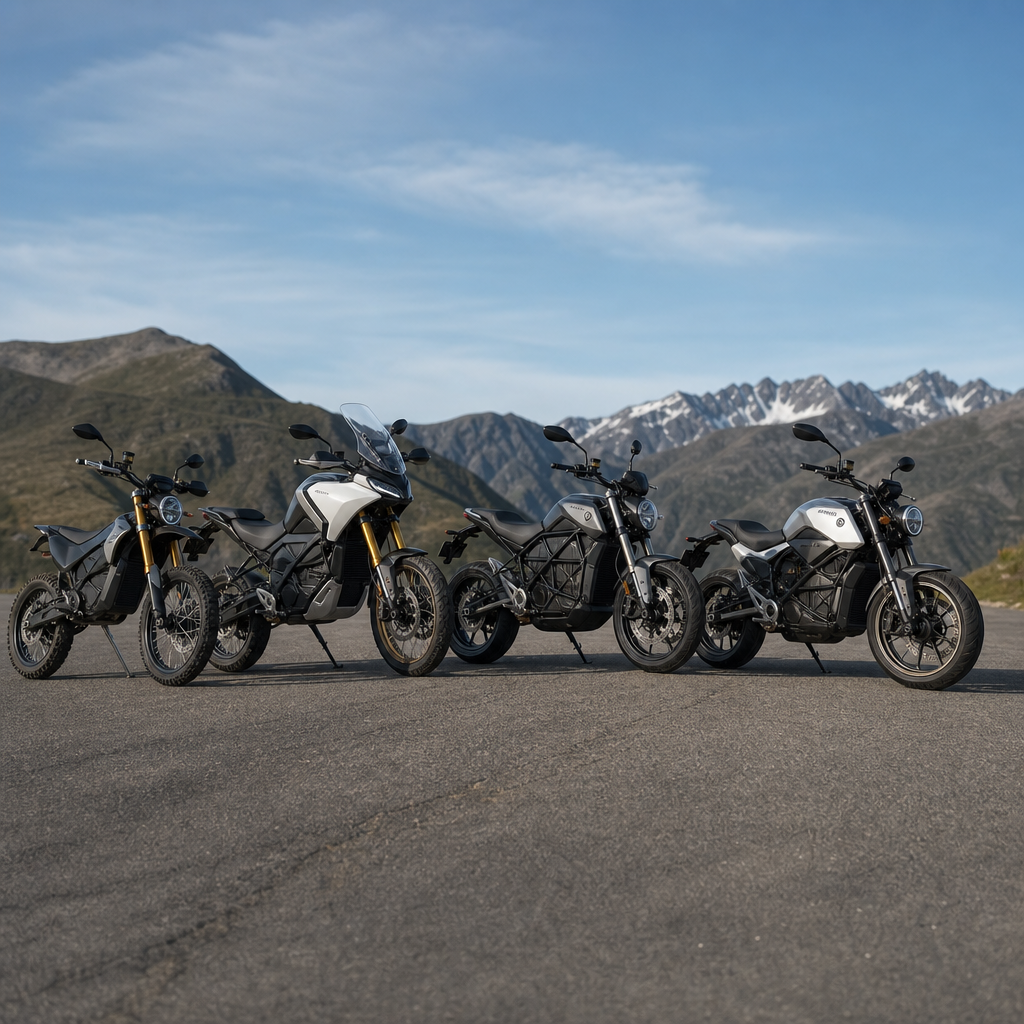
The 2026 Zero Motorcycles lineup is expected to continue around the brand’s two core architectures: lighter off-road or urban-focused machines and larger street-platform motorcycles with more battery and charging capability. In practical shopping terms, that means prospective buyers are usually cross-shopping five buckets. First are compact urban models such as the XB and XE concepts or production-adjacent lightweight offerings aimed at city riders. Second are the FX and FXS style bikes, known for supermoto energy and low curb weight. Third are the S and DS class motorcycles, which balance commuter ergonomics with enough battery for daily mixed use. Fourth are premium road models such as the SR and SR/S, where higher sustained speed and charging convenience become central. Fifth is the DSR/X, Zero’s flagship adventure machine and the model that most clearly shows how far electric motorcycles have moved beyond niche commuting.
What separates these families is not just styling. Battery capacity, thermal strategy, frame design, and intended duty cycle all differ. Smaller bikes tend to feel livelier at urban speeds because they carry less mass and can use compact powertrains effectively. Larger models trade some nimbleness for better sustained speed, more highway stability, and the option to add meaningful charging hardware. In dealer conversations, I always encourage riders to define their use before looking at specs. A 40-mile urban round trip with occasional backroad fun points toward a very different Zero than 80-mile freeway commuting or weekend touring with baggage.
Zero also differentiates models through software and trim strategy. Some features may be built into premium versions while others rely on configuration packages. That can affect heated grips, navigation integration, parking mode, or charging upgrades, and those details matter because two bikes with similar listed battery size may feel far apart in convenience. The key takeaway is simple: the 2026 Zero Motorcycles lineup is broad enough that no single range claim or pricing headline tells the whole story.
Range explained: city, mixed, and highway numbers for real riders
Range is the first electric motorcycle number shoppers latch onto, and it is the number most likely to be misunderstood. Zero typically publishes city and highway estimates separately because aerodynamic drag dominates energy use at speed. In stop-and-go environments, regenerative braking can recapture some energy and average speeds remain low, so electric motorcycles often post surprisingly strong city range. On the highway, the same bike can lose range quickly once speeds climb above about 65 mph. That is not a flaw unique to Zero; it is basic physics affecting every two-wheeled EV.
For the 2026 Zero Motorcycles lineup, riders should expect compact urban models to deliver the best efficiency per kilowatt-hour in lower-speed use, while premium larger-capacity bikes should offer the broadest real-world envelope. A lightweight city-focused Zero may comfortably handle daily commuting, errands, and crosstown riding without charging anxiety, but it may not be the best choice for sustained interstate travel. By contrast, an SR/S or DSR/X class model can make regional riding more practical because its larger battery preserves useful margin after weather, hills, passenger load, and speed reduce the ideal figure.
Real-world planning works better when you translate published numbers into scenarios. If a bike is rated for strong urban mileage, assume roughly 60 to 75 percent of that in brisk mixed riding, then less again for cold weather or aggressive freeway use. Headwinds matter dramatically on motorcycles because frontal area and rider posture amplify drag. Tire choice matters too; dual-sport tires on a DS or DSR/X can trim efficiency compared with more street-oriented rubber. The safest buying rule is to choose a Zero with at least 30 percent more range than your routine longest ride, especially if charging access at your destination is uncertain.
| Use case | Best-fit Zero category | Typical real-world range expectation | Main range risk |
|---|---|---|---|
| Urban commuting under 40 miles daily | Lightweight city or FX-class model | Comfortable with reserve in city traffic | Cold weather reducing available battery |
| Mixed suburban and backroad riding | S or DS class | Strong day-to-day usability with planning | Fast arterial speeds draining battery faster than expected |
| Highway commuting 60 to 90 miles | SR, SR/S, or larger-battery trim | Possible if charging exists at one end | Sustained 75 mph speeds and headwinds |
| Adventure touring with luggage | DSR/X | Manageable route-to-route with charging strategy | Elevation, off-road surfaces, and accessory load |
Charge times: home outlets, Level 2, and fast-turnaround strategy
Charge time is where electric motorcycle ownership becomes either easy or frustrating. The 2026 Zero Motorcycles lineup should be judged not by the shortest ideal charging claim, but by how each model fits your daily rhythm. Home charging remains the foundation. On a standard household outlet, many riders can recover enough energy overnight for ordinary commuting, especially on smaller-capacity bikes. The limitation appears when battery size grows or when consecutive long rides require quicker turnaround. That is why premium Zero models with stronger onboard charging or accessory charging support are so important.
Zero’s charging story has historically involved a mix of onboard chargers and optional add-on solutions, and shoppers need to read spec sheets carefully. A larger battery without adequate charging power can create long waits that undermine touring usefulness. By contrast, a bike with meaningful Level 2 support can be far more flexible, even if its battery is not the biggest in the class. In plain terms, a commuter who plugs in every night may never care about shaving hours off a full recharge, while a weekend rider doing back-to-back 100-mile loops absolutely will.
Charging speed is also nonlinear. The time from 0 to 80 percent can look efficient, while the last 20 percent takes disproportionately longer because battery management protects longevity and heat control. In real use, most owners should think in partial charges. Stop for food, recover enough energy for the next leg, and move on. For city and suburban riders, this makes the 2026 Zero Motorcycles lineup easier to live with than skeptics assume. For touring riders, route planning still matters, and charging infrastructure quality varies widely by region. Plug standards, station reliability, and charger occupancy remain practical considerations no spec sheet can solve on its own.
Price guide: MSRP tiers, ownership costs, and value by model class
Price is where enthusiasm meets arithmetic. The 2026 Zero Motorcycles lineup will likely span from comparatively accessible lightweight entries to premium models priced against well-equipped middleweight and liter-class gas motorcycles. That spread is important because Zero is not selling a single idea of electric mobility. It is selling several. Entry-level or smaller bikes appeal to riders who prioritize low maintenance, easy charging, and city practicality. Midrange S and DS class models target commuters and returning riders who want familiar ergonomics. The SR/S and DSR/X ask buyers to pay more for battery capacity, comfort, technology, and improved trip flexibility.
MSRP alone, however, can distort value. Dealers may add freight, setup, documentation, and accessory packages. Insurance can vary sharply by performance level and repair cost assumptions. Tires often wear faster on high-torque EVs if the rider enjoys instant acceleration. On the other hand, routine maintenance is simpler than on internal-combustion bikes because there is no oil, no valve service, no clutch wear, and far fewer heat-related consumables. Electricity costs also remain modest in most markets. Even where power rates are high, energy cost per mile usually undercuts gasoline significantly.
I advise buyers to calculate five-year cost, not purchase price alone. A seemingly expensive Zero can make more sense if it replaces a second car, slashes commuting fuel spend, and avoids periodic engine service. The reverse is also true. If you ride only occasional weekend miles and already own a paid-off gas bike, the financial case becomes weaker and the purchase is more about the riding experience. That is an honest tradeoff, not a flaw. The right conclusion depends on use pattern, local incentives, charging access, and whether the quiet, immediate character of electric drive solves a daily transportation problem.
Which 2026 Zero is right for you: commuter, sport, dual-sport, or touring
The best way to choose within the 2026 Zero Motorcycles lineup is to start with your longest normal ride, then work backward through charging access, speed profile, and cargo needs. If most of your miles happen in town, a lighter Zero delivers the purest benefits of electric power: immediate throttle response, low running costs, easy maneuverability, and little maintenance. These bikes feel especially convincing in dense traffic where stop-and-go operation favors EV efficiency and silent acceleration makes every gap easier to manage.
If you commute across suburbs or combine city roads with occasional highway stretches, the S or DS category generally offers the strongest balance. You get more battery, more comfort, and more versatility without moving all the way into premium-bike pricing. Riders who want sport-touring capability should focus on the SR and SR/S, especially if they have dependable Level 2 access at home or work. The fairing on the SR/S helps with comfort and can improve practical efficiency at speed compared with a naked bike carrying the rider upright in turbulent air.
The DSR/X stands apart. It is the model for riders who want upright ergonomics, luggage potential, and multi-surface ambition. But it only makes sense if your routes align with charging reality. Adventure styling alone is not a reason to buy a big electric ADV. The right reason is that your mix of paved travel, scenic day rides, and occasional unpaved detours fits the battery and charger network available to you. In my experience, buyers are happiest when they choose the Zero that comfortably handles 80 percent of their riding without compromise, not the one that looks most impressive on paper.
How Zero fits the wider Electric Frontier in 2026
Zero remains central to the Electric Frontier because it bridges early-adopter innovation and practical mainstream use better than most electric motorcycle brands. Startups may promise dramatic specs, and legacy manufacturers may bring stronger dealer networks, but Zero has years of real customer data, iterative battery development, and a model range broad enough to reveal where electric motorcycles already work well. The answer is clear: urban mobility, premium commuting, and regional recreational riding are now mature use cases. Long-distance touring is possible, but it still demands planning and charger confidence.
That broader context matters for shoppers browsing New Rides. A hub article should not treat Zero in isolation. It should help you understand where the brand sits against the market. Today, Zero’s strengths are drivetrain refinement, established model families, and a relatively deep understanding of how software, battery packaging, and rider expectations intersect. Its challenges are also familiar: premium pricing, charging complexity across trims, and the immutable reality that motorcycles are more sensitive to speed and weather than electric cars. Those facts can both be true at once.
The practical message is encouraging. If your riding profile matches the technology, the 2026 Zero Motorcycles lineup offers some of the most compelling electric ownership available on two wheels. Start with your daily distance, map your charging options, compare actual trip patterns with claimed range, and shop by mission rather than marketing. From there, move into detailed model pages, charging guides, and ownership comparisons across the Electric Frontier. That is the smartest next step, and it will keep you from buying too little bike, too much battery, or the wrong kind of electric freedom.
Frequently Asked Questions
What is new in the 2026 Zero Motorcycles lineup compared with earlier model years?
The 2026 Zero Motorcycles lineup is significant because it continues Zero’s push from niche electric motorcycle maker to a more complete, practical brand for everyday riders and long-distance enthusiasts. For buyers, the biggest developments are not just about adding peak power or changing styling, but improving the parts of ownership that matter most in the real world: battery management, charging flexibility, range predictability, and model variety. Zero’s lineup now covers a broader spread of use cases, from lightweight city-focused machines and approachable commuter bikes to more serious dual-sport and premium street-oriented models that can serve as genuine alternatives to internal-combustion motorcycles in many riding scenarios.
Another important change is how much more mature the platform feels. Earlier electric motorcycles often required riders to accept tradeoffs without much clarity around them. In the 2026 lineup, the conversation is less about novelty and more about fit. Buyers can now compare models based on battery size, charging options, highway capability, seating position, and software features in a way that feels much closer to shopping for conventional motorcycles. That matters because Zero is no longer selling only the idea of electric riding; it is selling a lineup with enough depth that riders can choose a bike based on actual needs, whether that means urban commuting, weekend canyon riding, light adventure touring, or mixed-surface exploration.
The 2026 models also matter because the brand appears increasingly focused on reducing uncertainty. Improved battery controls and charging strategies are especially important for rider confidence. Electric motorcycles have always delivered immediate torque and low-maintenance appeal, but many shoppers hesitate because they are unsure what range numbers really mean, how long charging actually takes in practice, and whether the purchase price translates into better long-term value. The 2026 lineup addresses those concerns by making those questions central to the ownership experience. In short, the newest Zero range is less about proving electric motorcycles can work and more about showing where they work best, how far they can go, and what they realistically cost to own.
How much range can riders realistically expect from 2026 Zero Motorcycles?
Real-world range depends heavily on model, battery capacity, rider behavior, terrain, weather, and speed, so the most honest answer is that range varies far more on an electric motorcycle than many spec sheets suggest. In general, riders should expect the highest range figures in stop-and-go urban use, where regenerative braking and lower average speeds help preserve battery charge. In that environment, some 2026 Zero models can feel impressively efficient and more than adequate for daily commuting, errands, and short recreational rides. City-focused use is where electric motorcycles tend to perform closest to their advertised best-case numbers.
Highway riding changes the equation quickly. Sustained higher speeds increase aerodynamic drag dramatically, and that is one of the biggest factors that reduces electric motorcycle range. A Zero that feels extremely capable in urban riding may deliver much shorter distances on a freeway run, especially if the rider is maintaining aggressive speeds, carrying luggage, or dealing with headwinds and elevation changes. That does not make the bike impractical, but it means shoppers should judge range based on their own usage profile rather than a single headline number. If most riding is suburban or urban, the bike may exceed expectations. If it is mostly freeway commuting or touring, the practical range window becomes narrower and planning matters more.
Temperature is another key factor. Cold weather can reduce battery efficiency and increase energy demand, while very hot conditions may influence thermal management behavior. Rider size, tire pressure, road surface, and accessories also play a role. Because of that, a practical shopping approach is to think in terms of conservative real-world range, not maximum possible range. For example, buyers comparing 2026 Zero models should focus on whether a bike can comfortably cover their daily round trip with a healthy reserve, not whether it can reach a marketing target under ideal test conditions. For commuting, that reserve is important because it gives flexibility for detours, faster traffic, and battery aging over time.
The best way to evaluate range is by matching the model to the mission. Smaller or lighter Zero motorcycles may be perfect for urban riders who charge often and value lower cost and easier handling. Larger premium models with more battery capacity are more appropriate for riders who want stronger highway performance and longer gaps between charging stops. If you are buying a 2026 Zero primarily for weekday transportation, realistic range may end up being more than enough. If you are buying for touring or back-to-back long recreational rides, choose the model with the largest practical battery and the fastest supported charging setup, then assume real highway range will be meaningfully lower than city estimates.
How long does it take to charge a 2026 Zero Motorcycle, and what charging options are available?
Charging time depends on three main things: the specific model, the battery size, and the charger being used. That is why there is no single answer that applies to the entire 2026 Zero Motorcycles lineup. Smaller-battery models generally recharge faster, while larger-capacity models take longer unless they support higher-rate charging. Riders also need to separate home charging from public charging. Charging from a standard household outlet is usually the slowest and is best thought of as overnight replenishment. It can work very well for commuters who ride moderate distances each day and plug in at home consistently, but it is not the ideal solution for riders who need rapid turnaround between longer trips.
Level 2 charging is where many electric motorcycle owners find the best balance of convenience and practicality. If a 2026 Zero model supports faster AC charging through onboard hardware or optional charging equipment, charge times can drop substantially compared with a basic household connection. That can make a major difference for urban riders, apartment dwellers with public charging access, or anyone trying to fit a meaningful recharge into a lunch stop, workday, or afternoon break. For many buyers, the availability of faster charging is just as important as raw battery size because it changes how the motorcycle fits into day-to-day life.
Premium models in the lineup are especially important to watch here because they are more likely to be positioned for riders who want stronger long-distance capability and quicker charging sessions. However, even with improved charging speeds, riders should understand that electric motorcycle charging still requires more planning than filling a gas tank. The experience is improving, but route planning, charger availability, and dwell time remain part of the ownership equation. That said, for riders whose habits are predictable, charging is often easier than expected. Plugging in at home eliminates gas station stops entirely, and many owners find that the convenience of starting each day with a full or nearly full battery outweighs the slower refill time.
When comparing 2026 Zero motorcycles, it is smart to look beyond the claimed charge-time headline and ask a few practical questions: What is the time from low charge to 80 percent, not just 100 percent? Does the bike support the charging network you are most likely to use? Is faster charging standard or optional? Can your home electrical setup support the charger you want to install? Those details often matter more than a broad manufacturer estimate. In real ownership terms, the best charging setup is the one that matches your schedule. For some riders, overnight home charging is all they need. For others, faster public or workplace charging is what makes a Zero a realistic primary motorcycle rather than a second bike.
How much do 2026 Zero Motorcycles cost, and are they worth the price?
Pricing across the 2026 Zero Motorcycles lineup will likely vary widely depending on battery size, performance level, electronics, charging capability, and category. Entry-oriented or lighter urban models should remain the most accessible, while larger, higher-performance, and more feature-rich bikes will command premium pricing. That puts Zero in a position where shoppers need to think carefully about value, not just sticker price. Electric motorcycles often appear expensive at first glance compared with some gasoline competitors, but the ownership math is broader than the purchase cost alone.
The first part of that value equation is operating cost. Electricity is generally cheaper than gasoline on a per-mile basis, especially for riders who charge mostly at home. Maintenance is also typically lower because there is no oil to change, fewer consumable drivetrain components in some setups, and less routine engine-related service. Over time, those savings can be meaningful for daily riders and commuters who rack up consistent mileage. If a buyer uses a 2026 Zero frequently, the economic case becomes stronger than it does for someone who only rides occasionally on weekends.
The second part is how the motorcycle fits your intended use. A premium electric bike only feels worth the money if its strengths align with your routine. If you want immediate torque, silent operation, low maintenance, and home charging convenience, a Zero can offer a very compelling ownership experience. If your riding is dominated by long high-speed interstate trips in areas with limited charging infrastructure, the value proposition becomes harder to justify relative to a traditional motorcycle. In other words, price alone does not determine whether it is worth it; the right use case does.
Shoppers should also factor in charging equipment, insurance, possible software or accessory packages, and any local incentives or tax benefits that may reduce the effective purchase price. Depending on region, rebates or incentives can materially improve the financial picture. Resale value is another area worth watching. As electric motorcycle technology matures, buyers are becoming more attentive to battery health, software support, and charging standards, all of which