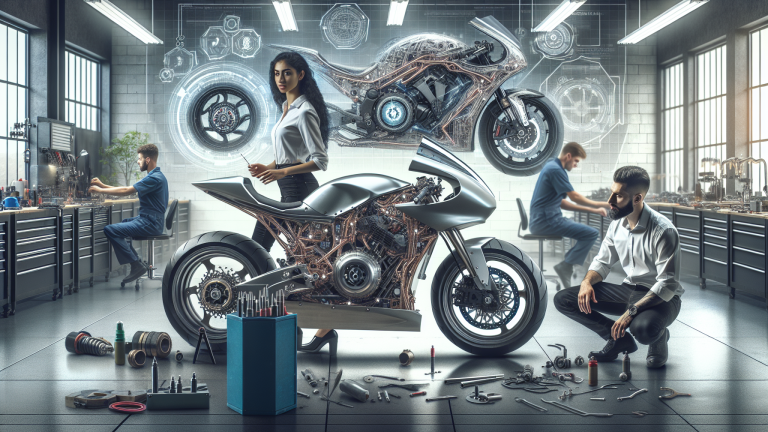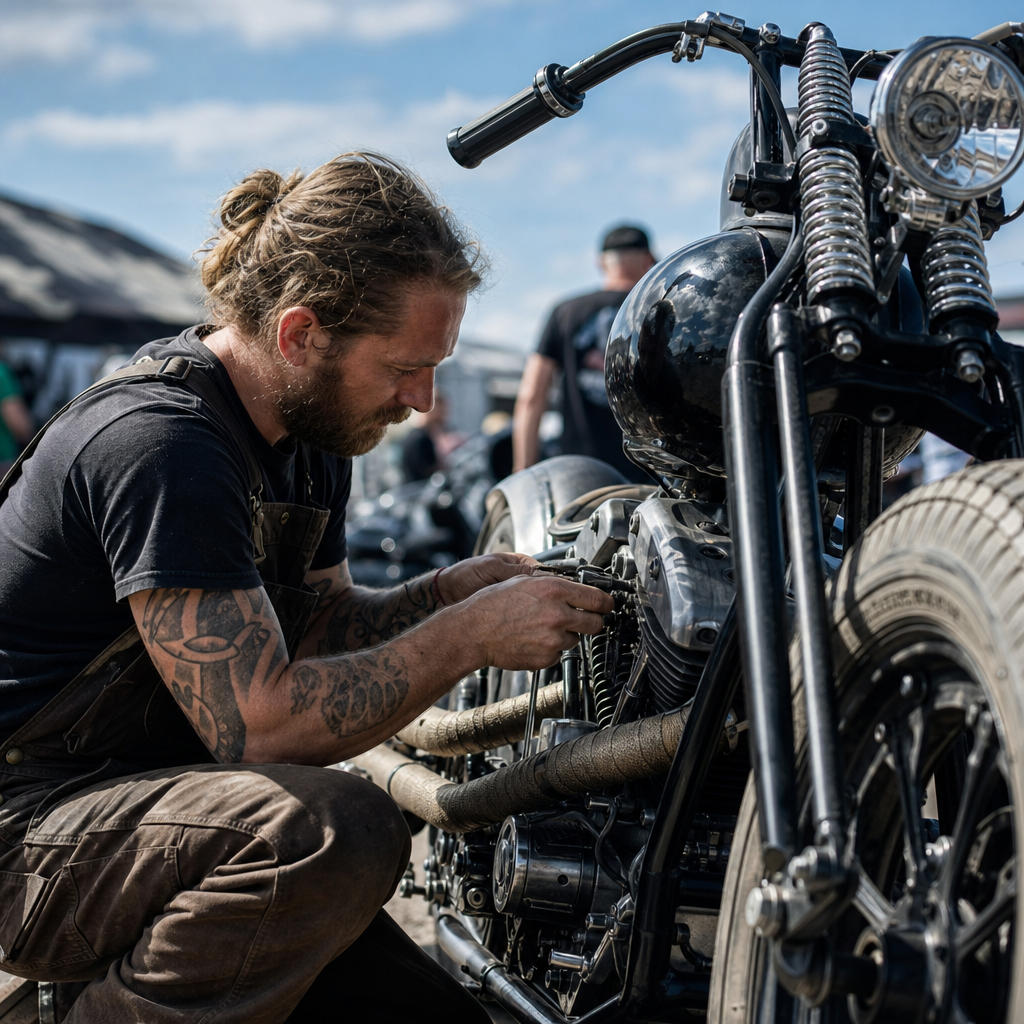
The Spirit of the Chip: Honoring Builders at the Buffalo Chip 2026 captures a turning point in custom motorcycle culture, where veteran craftsmanship and emerging fabrication technology meet in full public view. At the Buffalo Chip in 2026, builders are not simply displaying finished bikes; they are presenting design philosophies, machining choices, paint strategies, and brand identities shaped by decades of evolution in American V-twin culture and the wider custom scene. In this context, “New Guard” refers to the rising generation of fabricators, tuners, digital designers, and shop owners who blend traditional hand skills with CAD modeling, CNC machining, 3D scanning, TIG welding, additive prototyping, and audience-building through media. “Legendary builders” refers to the established names whose influence defined stance, silhouette, frame geometry, metal finishing, and the storytelling power of a custom motorcycle long before digital workflows became common. This matters because Buffalo Chip remains one of the rare venues where history, commerce, fabrication, and fandom converge at scale. I have covered builder showcases and shop-floor trends for years, and the same lesson keeps repeating: the strongest custom cultures survive when they respect lineage while making room for new methods. A hub article on Profiles of 2026 New Guard and Legendary Builders must therefore do more than list names. It should explain who these builders are, what they build, why their techniques matter, how attendees can evaluate their work, and where the scene is heading next.
Why Buffalo Chip Matters to Builders in 2026
The Buffalo Chip has long functioned as more than a rally backdrop. For builders, it is a live proving ground where a motorcycle is judged from ten feet away and ten inches away. Spectators respond first to posture, paint, and presence, but experienced fabricators quickly inspect weld consistency, wire management, fastener selection, bracket logic, finish quality, and whether the bike’s performance claims make sense. In 2026, that scrutiny is sharper because today’s audience is more educated. Social platforms, long-form shop videos, and detailed event coverage have taught enthusiasts to ask better questions about rake, trail, suspension travel, fuel mapping, billet versus cast parts, and whether a one-off bike is actually rideable.
That makes the Buffalo Chip especially important for both established and emerging names. Legendary builders arrive with reputations built over years of show wins, magazine features, and customer bikes that became reference points for entire styles. New Guard builders arrive with fresh techniques and often leaner operations, sometimes producing astonishingly refined work from compact shops using digital tools that would have been inaccessible twenty years ago. The event places them side by side, which creates an unusually clear snapshot of where custom motorcycle culture stands now. For readers using this hub to explore related profiles, the key idea is simple: Buffalo Chip 2026 is a lens through which the entire builder ecosystem can be understood.
Defining the New Guard: Craft Meets Digital Fabrication
The New Guard is not defined by age alone. It is defined by workflow. Many of the standout builders in 2026 begin with sketches, then move into Fusion 360, SolidWorks, or Rhino to model controls, brackets, tank mounts, intake components, and frame modifications before cutting metal. They may reverse-engineer an engine case or backbone with a Faro arm, handheld scanner, or structured-light scanning system, then use that geometry to create parts with tighter tolerances and cleaner fitment. In the best shops, digital methods do not replace craft; they reduce wasted iterations and allow more attention to proportion, surface finish, and rider ergonomics.
A practical example is the way New Guard builders approach one-off cockpit design. Instead of adapting generic risers and controls until the rider position feels close enough, a builder can model reach, wrist angle, cable routing, gauge placement, and steering clearance in advance. That saves time and usually produces a cleaner bike. The same is true for exhaust routing, oil tank placement, and hidden electrical trays. At Buffalo Chip 2026, expect profile-worthy builders in this category to show motorcycles that look hand-built yet display the precision associated with aerospace-grade fixturing and repeatable machining. The hallmark is integration. Nothing appears added as an afterthought.
What Makes a Builder Legendary
Legendary builders become legendary because they change the visual language of motorcycles and prove that a custom bike can express a complete worldview. Their influence is visible in frame lines, stretched tanks, signature paint, engraved details, springer interpretations, wheel choices, and the confidence to make radical ideas rideable. They also understand that a memorable motorcycle is never just a collection of expensive components. It is a disciplined exercise in editing. The best veteran builders know where to stop, which is why their motorcycles often feel coherent even when they are elaborate.
In my experience, the strongest legendary shops also excel at three less glamorous disciplines: project management, vendor relationships, and mechanical integrity. A bike that debuts at Buffalo Chip and then fails basic road manners will not protect a reputation for long. The builders who endure are the ones who pair aesthetics with dependable fundamentals: correct belt or chain alignment, realistic cooling strategy, serviceable wiring access, adequate ground clearance, and tuning that suits the intended use. This is what newer builders study when they study the masters. Style matters, but execution is what creates legacy.
Profiles to Watch: Categories That Shape Coverage
As the hub for Profiles of 2026 New Guard and Legendary Builders, this page organizes the field into practical categories readers can follow across linked articles and event recaps. Some builders are best understood through radical chopper design, where neck geometry, long-fork stability, and visual drama are the story. Others belong to performance V-twin culture, where suspension setup, braking packages, dyno numbers, and race-inspired ergonomics define the build. Another group centers on pro-touring customs that combine high-end finish with real mileage capability. There are also metal-shaping specialists known for tanks, tail sections, and fenders that reveal deep mastery of hammer-forming, English wheel work, and TIG-finished seams.
2026 also demands attention to crossover builders. These are shops that blend American V-twin tradition with influences from flat track, superbike electronics, adventure ergonomics, or industrial design minimalism. A Buffalo Chip audience increasingly rewards that kind of hybrid thinking when it is technically convincing. Coverage in this hub should therefore follow the builder’s actual contribution, not just the label attached to the bike. If a young shop is redefining harness packaging, modular subframe design, or digital gauge integration, that deserves profile treatment alongside more visually dramatic work.
How Attendees and Readers Should Evaluate Builder Profiles
The most useful way to read a builder profile is to look beyond the glamour shot and ask five direct questions: What problem was the builder solving, what methods did they use, what compromises did they accept, how rideable is the result, and what influence might this bike have on future builds? Those questions reveal far more than price or horsepower alone. For example, a high-horsepower V-twin with cramped rider triangle and marginal cornering clearance may be less significant than a moderately powered machine with excellent weight distribution, original fabrication, and a clean service strategy.
When I evaluate a bike on-site, I start with silhouette, then move to stance, then inspect transitions. The hard part in custom building is managing transitions: tank to seat, seat to rear fender, frame to drivetrain, and front-end mass to rear visual weight. Great builders make those relationships look inevitable. Weak builds expose tension between off-the-shelf parts and the bike’s intended identity. Readers following this sub-pillar topic will get more from each profile if they treat every feature as a case study in decisions, not as a beauty contest.
Key Signals of Standout Work at Buffalo Chip 2026
Whether a builder is a New Guard innovator or a recognized legend, several technical and artistic signals consistently separate standout work from competent work. These are the details that event judges, experienced riders, and serious enthusiasts notice quickly.
| Signal | What to Look For | Why It Matters |
|---|---|---|
| Frame geometry | Balanced rake, usable trail, correct ride height | Determines stability, steering feel, and visual coherence |
| Metal finishing | Straight body lines, even gaps, clean weld dressing | Reveals fabrication discipline and time investment |
| Parts integration | Hidden wiring, purposeful brackets, uncluttered controls | Shows design maturity rather than parts accumulation |
| Mechanical honesty | Accessible service points, realistic cooling and tuning | Separates rideable customs from static showpieces |
| Originality | Distinct stance, fresh component solutions, signature details | Builds influence and establishes the builder’s identity |
| Finish strategy | Paint, raw metal, coatings, and hardware that work together | Creates a complete visual language, not isolated highlights |
A bike does not need to dominate every category to deserve attention. Some of the most important builds at Buffalo Chip 2026 will be influential because they solve packaging or usability problems elegantly. Others will stand out because they revive classic shapes without copying them. The point of this hub is to help readers identify why a motorcycle matters in the broader builder conversation.
The Technologies Changing Builder Profiles in 2026
Several fabrication and tuning technologies now shape how builder profiles should be written. Five-axis CNC work has become more visible in triple trees, rearsets, caliper mounts, and custom covers, but the better shops use it sparingly and with intent. 3D printing, especially in polymer prototyping, lets builders test fitment for dash housings, intake forms, and under-seat electronics trays before committing to aluminum or steel. CAN bus integration, compact lithium battery systems, and refined ECU tuning platforms have also changed packaging possibilities, particularly on performance-oriented customs.
Paint and surface technology deserve equal attention. Modern ceramic coatings, advanced powder formulations, and durable clear systems have expanded finish options for motorcycles expected to be ridden hard. In addition, laser-cut fixtures and modular welding tables have improved repeatability for small shops, allowing younger builders to produce cleaner low-volume work without large factory infrastructure. These tools do not guarantee quality. In fact, they can expose weak design thinking faster. But in the hands of disciplined builders, they raise the floor for precision and open creative paths that did not exist in the old cut-and-try era.
Why Legacy Still Leads the Scene
Even with all the new technology, legacy still leads the scene because foundational principles have not changed. Proportion still decides whether a bike photographs well and feels right in person. Structural integrity still matters more than visual tricks. Real road testing still exposes flaws that render software-perfect parts irrelevant. Legendary builders remain essential to Buffalo Chip culture because they carry practical knowledge that cannot be downloaded: how certain frame changes alter feel at speed, how heat affects rider comfort in traffic, why a beautiful bracket may crack if load paths are wrong, and how clients behave once a dream build becomes a maintenance reality.
This is why the best 2026 coverage should not frame New Guard and legendary builders as opposing camps. The more accurate picture is mentorship, adaptation, and selective resistance. Veteran builders increasingly adopt digital planning where it saves time, while younger builders study old-school fabrication because software cannot teach visual instinct. When these streams meet at Buffalo Chip, attendees see the custom world at its healthiest. Readers exploring this hub should expect profiles that highlight continuity as much as disruption.
Using This Hub to Follow the Builder Landscape
This page serves as the central guide for deeper coverage of 2026 New Guard and Legendary Builders across the Buffalo Chip ecosystem. From here, readers should move into focused profiles on individual shops, technical breakdowns of fabrication methods, event recaps from builder showcases, and style-specific features on choppers, performance baggers, pro-street customs, and endurance-ready tour builds. The value of a hub format is context. A single profile can show why one builder matters; a connected group of profiles shows where the culture is moving.
The main takeaway is clear: the spirit of the Chip lives in builders who respect motorcycle history while advancing the craft with precision, originality, and honest engineering. Legendary names still set standards for coherence and courage. The New Guard is proving that advanced tools can deepen, not dilute, authenticity. Together they define the most important builder story of 2026. Use this hub as your starting point, then keep exploring the individual profiles and technical features that reveal how today’s most influential bikes are actually conceived, fabricated, finished, and ridden.
Frequently Asked Questions
What does “The Spirit of the Chip” mean in the context of Buffalo Chip 2026?
In this context, “The Spirit of the Chip” refers to more than a motorcycle event or a showcase of finished custom bikes. It points to a culture of respect for the people who build, shape, and advance the custom V-twin world through skill, originality, and perseverance. At Buffalo Chip 2026, that spirit is visible in the way builders present not just polished machines, but the thinking behind them: frame geometry decisions, machining approaches, surface treatments, paint concepts, component selection, and the identity each bike is meant to carry. The focus is on the builder as much as the build.
This matters because custom motorcycle culture has always been driven by individuals who combine mechanical knowledge with personal vision. The event honors veteran builders whose methods were forged through years of fabrication, road testing, and problem-solving, while also making space for a new generation using digital design tools, precision manufacturing, and evolving branding strategies. Rather than treating tradition and innovation as opposites, Buffalo Chip 2026 presents them side by side. That balance is what gives the phrase its meaning: honoring the legacy of the craft while recognizing that the culture stays alive only when builders continue pushing it forward.
Why are builders such a central focus at Buffalo Chip 2026?
Builders are central because they are the creative and technical force behind custom motorcycle culture. A finished motorcycle may draw the crowd first, but what gives it real significance is the craftsmanship, engineering judgment, and design philosophy behind every visible and hidden detail. Buffalo Chip 2026 puts builders front and center by highlighting the process as much as the outcome. That means attendees are encouraged to look beyond chrome, paint, and stance and understand how a machine was conceived, fabricated, tuned, and refined.
This emphasis reflects a larger shift in how custom motorcycles are appreciated. Modern audiences want to know why a builder chose a certain rake, why a specific machining technique was used, how a paint scheme supports the identity of the bike, and what the build says about the builder’s place in the culture. By honoring builders directly, the event reinforces the idea that custom motorcycles are works of authorship, not just products. It also recognizes that experienced fabricators, painters, tuners, machinists, and designers preserve hard-earned knowledge that can easily be overlooked in a fast-moving visual culture. At Buffalo Chip 2026, the builder is not in the background; the builder is the story.
How does Buffalo Chip 2026 show the meeting point between traditional craftsmanship and new fabrication technology?
Buffalo Chip 2026 represents a visible crossroads where old-school craftsmanship and emerging fabrication technology operate together rather than in conflict. Traditional skills still matter enormously: hand-shaped metal, deep knowledge of chassis behavior, practical engine understanding, finish work, wiring discipline, and the intuition that comes only from years in the shop. Those qualities remain the backbone of respected custom building. At the same time, many builders now incorporate advanced tools such as digital mockups, CNC machining, precision measurement systems, modern coating processes, and updated manufacturing workflows that allow tighter tolerances and more repeatable execution.
What makes this moment important is that the technology does not replace craftsmanship; it changes how craftsmanship is expressed. A veteran builder may use modern machining to create cleaner, more exact components while still relying on seasoned judgment for proportion, ride quality, and style. A newer builder may enter the scene through software-based design or digitally assisted prototyping, then learn the finishing and fabrication skills needed to turn precision into personality. Buffalo Chip 2026 highlights this blend in public view. Instead of hiding the process, builders are effectively showing how the custom motorcycle world evolves: through a conversation between handwork, experience, engineering, and new tools. That public visibility gives attendees a clearer understanding of where the scene has been and where it is going.
What can attendees learn from the way builders present their bikes at the event?
Attendees can learn that a custom motorcycle is rarely just a styling exercise. The strongest builds reveal a complete line of thinking, and Buffalo Chip 2026 creates an environment where that thinking is part of the presentation. When builders discuss their work, they often reveal the logic behind major decisions: why one frame layout better supports the desired riding position, why a certain wheel-and-tire combination changes the bike’s visual balance, why one machining method was chosen over another, or how paint, finishes, and graphics reinforce the story the motorcycle is meant to tell. These details help viewers understand that every serious custom build is a series of choices, trade-offs, and priorities.
There is also a deeper lesson about identity and evolution in the custom scene. Builders are not only showing technical ability; they are presenting a point of view. Some may lean heavily into traditional American V-twin language, preserving familiar lines and mechanical character. Others may reinterpret that legacy through more radical fabrication, new materials, or a more modern visual brand. For attendees, that makes the event educational on multiple levels. It teaches craft, design, engineering, and cultural context at the same time. Whether someone is a longtime rider, a shop owner, an aspiring fabricator, or simply a fan of custom motorcycles, seeing how builders explain their work can sharpen the way they evaluate quality, authenticity, and originality.
Why is this moment significant for the future of American V-twin and custom motorcycle culture?
This moment is significant because it captures a period when the culture is actively redefining how legacy, innovation, and public recognition work together. American V-twin culture has long been rooted in hands-on mechanical experience, regional styles, independent shops, and a strong sense of personal expression. But by 2026, the custom scene is also shaped by broader influences: new fabrication technologies, changing audience expectations, more sophisticated visual branding, and a stronger interest in the stories behind the machines. Buffalo Chip 2026 becomes important because it reflects these changes in a highly visible setting where established names and emerging builders can be evaluated on the same cultural stage.
That visibility helps determine what the next chapter may look like. If builders are honored not only for spectacle but for thoughtful engineering, strong craftsmanship, and authentic design language, the culture rewards substance as well as style. If veteran expertise is valued while new builders are encouraged to experiment responsibly with process and presentation, the scene remains both grounded and progressive. In that sense, “The Spirit of the Chip: Honoring Builders at the Buffalo Chip 2026” marks more than an event theme. It signals a future in which custom motorcycles continue to matter because the people making them are recognized as innovators, historians, artists, and problem-solvers all at once.