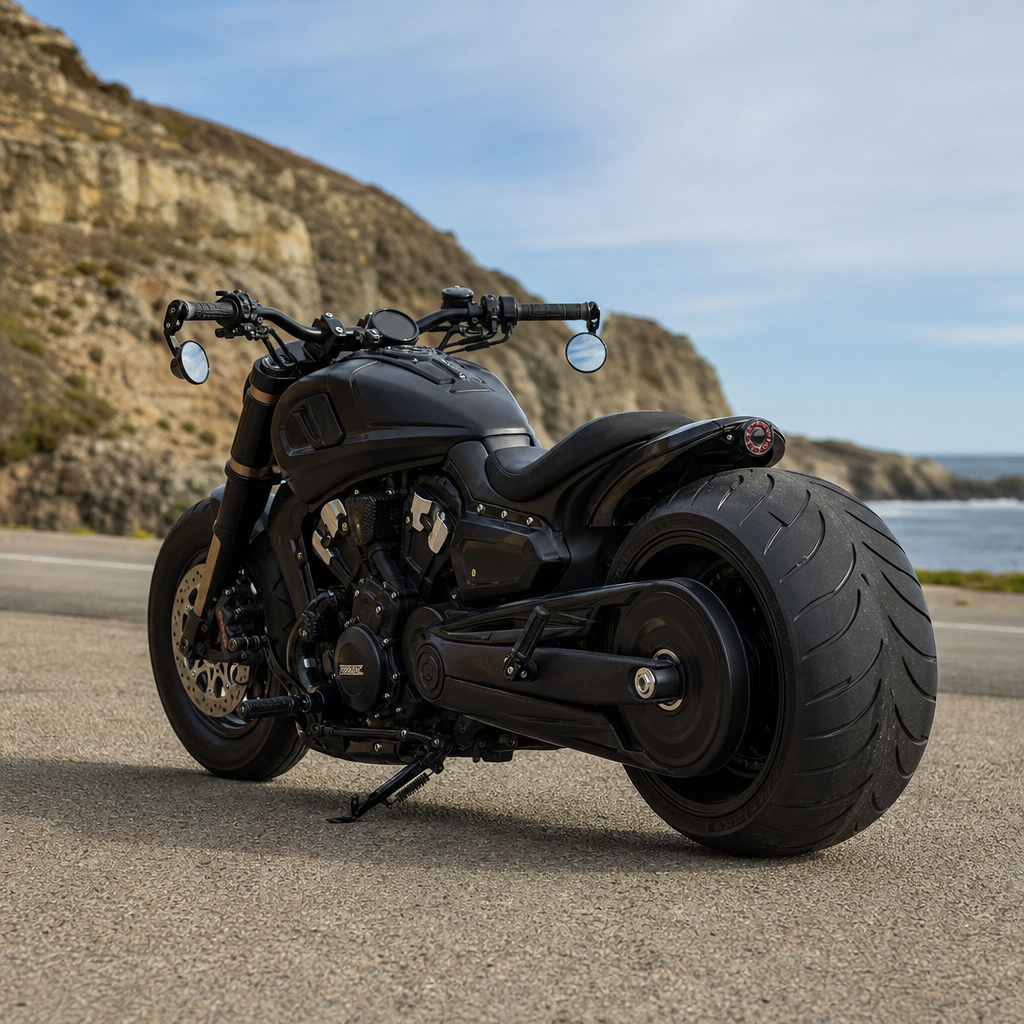
The Benda LFC700 stands out because it takes a familiar custom motorcycle goal—long, low, and visually dominant—and pushes it into mass production with proportions that once belonged mainly to one-off show builds. In practical terms, this muscle cruiser pairs a stretched wheelbase, a low seat, and an oversized 310mm rear tire with modern manufacturing, creating a bike that invites a broader discussion about design theory across custom culture. That discussion matters because motorcycles are never shaped by engineering alone. They are shaped by regional style, rider identity, fabrication limits, and the constant tradeoff between aesthetics and function.
When I evaluate machines like the LFC700, I do not treat them as isolated products. I read them as design statements. A custom style is more than paint, bars, or wheel size; it is a system of choices about stance, ergonomics, silhouette, and intended use. Chicano style emphasizes elegant lines, cultural expression, and a controlled, almost lowrider-like visual flow. Performance bagger design blends touring architecture with suspension, braking, and engine upgrades built for speed and cornering. Frisco style strips the motorcycle back, raises the tank and bars, and favors direct mechanical honesty over visual excess. “Beyond” includes modern muscle cruisers, pro-street influences, club-style hybrids, and digitally designed customs that borrow from multiple traditions at once.
The Benda LFC700 is an ideal hub for this subtopic because its exaggerated geometry opens the door to core questions every builder faces. What makes a motorcycle look planted instead of clumsy? When does a wide rear tire improve drama but hurt agility? How do wheel diameter, rake, trail, and seat height alter not only handling, but also the emotional read of the machine? These are not academic questions. They affect fabrication planning, customer expectations, part selection, and whether a finished build feels coherent from ten feet away and from the saddle. In workshops, these decisions are often settled before the first cut is made.
As a production motorcycle, the LFC700 also reflects the “new guard” of custom culture: brands and builders using CAD modeling, CNC machining, improved metallurgy, and supply-chain scale to make radical forms repeatable. Earlier eras depended more heavily on hand-made frames, modified fenders, and owner ingenuity. Today, design language once reserved for custom shows can appear in factory bikes, while independent builders use 3D scanning, finite element analysis, and rapid prototyping to make cleaner, safer, more precise parts. That shift does not erase traditional craft. It changes where creativity lives, moving some of it from the grinder and torch to the screen, fixture table, and simulation file.
What the Benda LFC700 Reveals About Long-and-Low Design
The Benda LFC700’s most talked-about feature is the 310mm rear tire, but the tire alone does not create the effect. The full visual package matters: elongated bodywork, low-slung mass, a stretched side profile, and a front-to-rear line that keeps the bike looking horizontal rather than nose-high. Designers chasing a long-and-low stance use proportion as deliberately as chassis engineers use geometry. A low seat suggests accessibility and authority. A long wheelbase increases visual calm. A large rear contact patch communicates power, even before the engine specification enters the conversation.
From experience, wide-tire motorcycles succeed only when the surrounding components are disciplined. If the swingarm, fender, and wheel design do not balance the tire, the bike looks gimmicky. If the front end is too light visually, the rear overwhelms the whole composition. This is why successful muscle cruisers often use substantial forks, larger-diameter front wheels, or carefully shaped tanks and radiator covers to distribute visual weight. The LFC700 understands that principle. It is not subtle, but it is intentionally proportioned, which is a different thing altogether.
There are engineering consequences. A 310mm rear tire can reduce steering responsiveness and introduce slower turn-in compared with narrower setups common on standard cruisers or club-style builds. Tire profile becomes critical. So do rim width, unsprung weight, belt or chain alignment, and rear suspension packaging. Builders know that once rear width grows, every downstream decision gets harder: offsets, clearances, fender mounts, passenger accommodation, and even side-stand angle may need revision. The result can be worth it if the design brief prioritizes stance and spectacle, but it is never a free upgrade.
Chicano Design Theory: Flow, Elegance, and Cultural Signature
Chicano motorcycle design is often misunderstood by outsiders as merely “a low bike with tall bars,” but that misses the discipline behind it. At its best, Chicano styling draws from lowrider aesthetics, West Coast cruising culture, and a deep preference for visual flow. The line of the motorcycle matters more than any single part. Fenders are often extended and smoothed. Paint can range from monochrome gloss to layered metalflake, candy, pinstriping, murals, and religious or family iconography. Ape hangers or graceful bars create a tall visual frame above a low chassis, giving the bike a regal silhouette rather than a squat one.
Harley-Davidson Touring models have become central to this language because their full-size proportions support stretched saddlebags, long fenders, and a composed highway stance. Builders such as Firme Style and countless regional shops helped formalize this look, though the culture has always been broader than any one brand or business. The key principle is cohesion. A Chicano build is not random ornament. It is a controlled composition where chrome, paint, wheel choice, lighting, and ride height all support a smooth, dignified presence.
The LFC700 is not a Chicano bike in the traditional sense, yet it overlaps with the style in one important way: it understands silhouette. Where it diverges is intent. Chicano builds usually prioritize flowing elegance over brute rear-tire drama. They are often built to cruise, to be seen in motion, and to carry personal storytelling in their finishes. A giant 310mm tire can work within a custom influenced by Chicano themes, but only if the rest of the bike softens and integrates that mass. Otherwise, the tire becomes the story, and Chicano design rarely wants one component to shout louder than the whole machine.
Performance Bagger Theory: Speed Wrapped in Touring Form
Performance bagger design starts with a heavyweight touring platform and asks a different question from classic dresser culture: how fast, how stable, and how confidence-inspiring can this architecture become? The answer usually involves suspension from Öhlins, Fox, or Legend Suspensions; upgraded brakes from Brembo or Performance Machine; freer-flowing exhaust; ECU tuning; reinforced motor mounts; lighter wheels; and tires chosen for grip rather than pure mileage. In racing series such as MotoAmerica’s King of the Baggers, the public has seen how far this concept can go without abandoning the recognizable bagger silhouette.
Design theory here is not decorative. It is performance-led form. Fairings, hard bags, and floorboard zones are retained or revised, but they must coexist with lean angle, chassis control, and rider movement. The visual language favors aggressive stance, short-travel precision, and a sense that the bike can cover distance fast. On the street, many builds blend this with club-style cues such as taller rear shocks, performance seats, and moto-inspired bars. The result is a motorcycle that still references American touring culture while rejecting the idea that comfort requires softness or visual bulk.
Compared with a performance bagger, the LFC700 sits at the opposite end of the handling-priority spectrum. Its 310mm rear tire and long, low composition signal presence before pace. That difference is useful for builders. It shows that “custom” is not one lane. One project may chase apex stability and brake feel; another may chase silhouette and crowd impact. Good design theory begins by naming that priority honestly. Many failed builds happen because owners ask for a race-ready feel and a show-bike stance at the same time, then discover the geometry will not cooperate.
Frisco Style: Minimalism, Mechanical Honesty, and Urban Practicality
Frisco style emerged from practical urban riding and stripped-down custom thinking, especially associated with older Harley-Davidson Sportsters and Big Twins. Hallmarks include a small peanut tank mounted high on the backbone, narrow and often tall bars, solo seating, minimal bodywork, and a lean, upright posture. Mid controls and lane-friendly width suit city use. Unlike a fully dressed cruiser, a Frisco bike often looks as though every nonessential part has been questioned and many have been removed.
What makes Frisco design theory important in a hub about modern fabrication is its resistance to excess. It reminds builders that style can come from subtraction. Raise the tank, tighten the rear, simplify the wiring, expose the engine, and the motorcycle starts to communicate immediacy. The rider appears part of the machine rather than seated deep inside a styled shell. In fabrication terms, that can mean cleaner hardtail-inspired lines, visible mounts, and fewer surfaces competing for attention.
The LFC700 again serves as a useful contrast case. It is sculptural where Frisco is skeletal. It is broad where Frisco is narrow. It externalizes mass, while Frisco often celebrates compactness and directness. Yet the comparison is productive because both styles depend on proportion. A good Frisco build can be as visually disciplined as a wide-tire muscle cruiser. In each case, one wrong choice—tank height, wheel diameter, seat angle, bar rise—can disrupt the entire read.
Beyond the Big Three: Pro-Street, Club Style, and Digital-Era Hybrids
Many current customs live between established labels. Pro-street influence explains part of the LFC700’s appeal: huge rear rubber, stretched stance, and a drag-bike sensibility adapted for road use. Club style contributes another modern thread, especially on Dynas and Sportsters: quarter fairings, T-bars, performance suspension, and practical aggression shaped by long urban rides and freeway speed. Builders now also blend café cues, motocross ergonomics, and bagger bodywork in ways that would have seemed contradictory twenty years ago.
The reason hybrids are growing is simple: fabrication technology has lowered the penalty for experimentation.
| Style | Core visual cues | Typical priorities | Main compromise |
|---|---|---|---|
| Chicano | Long flowing lines, rich paint, tall bars, extended fenders | Cruising presence, cultural expression, silhouette | Weight and reduced sporting agility |
| Performance bagger | Touring form with aggressive stance, upgraded suspension and brakes | Speed, stability, long-distance control | Higher cost and more complex setup |
| Frisco | High tank, minimal bodywork, narrow profile, exposed mechanics | Simplicity, urban function, direct feel | Less comfort and weather protection |
| Pro-street muscle cruiser | Wide rear tire, stretched wheelbase, low seat | Drama, straight-line presence, visual impact | Slower steering and packaging difficulty |
CAD software such as SolidWorks and Autodesk Fusion, affordable CNC services, and better aftermarket supply have made it easier to test fitment before metal is cut. Builders can model fender radius against tire growth, check belt alignment, and simulate bracket loads. Even small shops now use 3D-printed mockups for lighting mounts or intake covers. The new guard is defined less by abandoning tradition than by combining old visual languages with modern process control. That is how radical ideas become repeatable, legal, and rideable.
How Builders Choose the Right Design Language
The smartest custom projects begin with use case, not parts shopping. I ask four questions first: Where will the bike be ridden? What emotional reaction should it create? What compromises will the rider accept? What base platform best supports that direction? If the customer wants city maneuverability and minimal maintenance, a Frisco-influenced build may outperform a long-and-low concept. If the goal is visual authority at shows and boulevard cruising, the LFC700’s muscle-cruiser logic becomes more persuasive. If the rider covers serious miles and values corner speed, performance bagger theory usually wins.
Platform choice matters because geometry, engine layout, and aftermarket depth impose real limits. Harley Touring models support Chicano and performance bagger work because the ecosystem is enormous. Sportsters and Dynas have long favored Frisco and club-style adaptations because of their packaging and cultural history. Newer platforms from brands outside the traditional American core can still work, but builders must evaluate parts availability, ECU access, wheel options, and local inspection rules before committing.
The lasting lesson of the Benda LFC700 is that custom culture keeps evolving, but design principles remain constant. Proportion, purpose, and coherence decide whether a bike feels timeless or confused. A 310mm rear tire is memorable, yet it only succeeds when the entire machine supports that choice. The same is true of Chicano paint, performance bagger suspension, or Frisco minimalism. Every style is a theory about what a motorcycle should communicate and how it should behave.
For builders, riders, and enthusiasts exploring design theory, this hub should be the starting point: study the silhouette, identify the priority, and judge every part against the whole. That approach leads to better motorcycles, cleaner fabrication decisions, and builds with real identity. Use the LFC700 as a prompt, not a template, and follow these style families deeper before planning your next project.
Frequently Asked Questions
What makes the Benda LFC700 stand out in the muscle cruiser category?
The Benda LFC700 stands out because it takes the classic “long and low” custom-cruiser formula and applies it at a production-bike level with unusually extreme proportions. In the custom world, stretched silhouettes, very low seat heights, and oversized rear tires have traditionally been associated with one-off builds, expensive fabrication, and show-oriented machines. The LFC700 is notable because it brings that visual language into mass production, making a design once reserved for custom shops far more accessible to everyday riders and enthusiasts.
A major part of its identity is the combination of a stretched wheelbase and a massive 310mm rear tire. That rear tire alone changes the bike’s visual center of gravity, giving it a planted, muscular, almost automotive presence. The result is not subtle. It is designed to look dominant, dramatic, and intentionally exaggerated, which is exactly why it gets attention. The LFC700 does not merely resemble a conventional cruiser with a few custom cues; it leans heavily into the visual philosophy of muscle-cruiser culture, where proportion, stance, and silhouette matter as much as raw specification.
It also matters that the LFC700 arrives during a period when motorcycle design is increasingly discussed as both engineering and visual storytelling. Bikes are never just transportation. They communicate taste, identity, and intent. The Benda LFC700 makes that point very clearly by prioritizing a look that references show-bike culture while still being built for series production. That makes it significant beyond its spec sheet, because it represents a wider trend: the blending of custom aesthetics with factory manufacturing in a way that broadens the audience for radical design.
Why is the 310mm rear tire such a big deal on the Benda LFC700?
The 310mm rear tire is central to the LFC700’s identity because it is both a visual statement and a design challenge. From an aesthetic standpoint, a tire that wide immediately signals custom influence. It gives the bike a broad, heavy rear profile that amplifies the “muscle cruiser” image. In custom culture, oversized rear tires have long been used to create a dramatic stance and to emphasize power, even when the visual effect is just as important as any performance implication. On the LFC700, that same effect is brought into a production setting, which is what makes it so unusual.
From a design and engineering perspective, fitting a 310mm rear tire is not simply a matter of choosing a wider piece of rubber. It influences frame packaging, swingarm design, drivetrain layout, fender proportions, and overall geometry. Designers have to ensure the bike remains coherent rather than looking like a standard cruiser with an oversized tire awkwardly attached. On a successful design, the tire, wheel, tail section, and stance all work together. That is part of why the LFC700 draws so much discussion: the tire is not an isolated gimmick, but a major element around which the motorcycle’s visual identity is built.
There are also practical considerations. A tire this wide can affect low-speed maneuverability, steering feel, and how a motorcycle transitions through turns. Wider rear tires can introduce trade-offs in agility compared with narrower, more performance-oriented setups. That does not mean the concept is flawed; it means the bike is expressing a specific design priority. The LFC700 is telling you exactly what it wants to be: a machine where presence, stance, and custom-inspired drama are at the forefront. For many riders, that is not a downside at all. It is the entire appeal.
Is the Benda LFC700 mainly a style-focused motorcycle, or does it have real everyday relevance?
The honest answer is that it is both, but style is clearly a major part of its reason for existing. The Benda LFC700 is built around an idea that many riders understand immediately: a motorcycle can be desirable because of how it makes you feel before you even start the engine. That emotional reaction is deeply important in the cruiser segment, where ownership is often tied to image, posture, sound, and road presence as much as pure performance numbers. In that sense, the LFC700 has very real everyday relevance because it addresses what many riders actually value in a cruiser.
At the same time, its design is not purely decorative. Features like a low seat and long wheelbase contribute to the riding experience associated with cruisers: a laid-back posture, a grounded feel, and a sense of visual stability. The bike is likely to appeal most strongly to riders who prioritize boulevard presence, urban cruising, weekend rides, and the social side of motorcycling rather than aggressive canyon riding or track-style handling. That is not a limitation unique to the LFC700; it is simply the context in which a machine like this makes the most sense.
Where the bike becomes especially relevant is in the conversation it opens up about democratized custom design. Not every rider wants to commission a bespoke build, deal with fabrication costs, or sacrifice reliability for uniqueness. A production motorcycle like the LFC700 offers a way into that visual world with the benefits of factory manufacturing, standardized parts, and a more approachable ownership experience. So while the bike is undoubtedly style-led, it also reflects a practical market reality: many people want striking custom-inspired motorcycles they can actually buy, ride, and maintain without entering the full custom-build process.
How does the Benda LFC700 reflect broader trends in custom motorcycle culture?
The LFC700 reflects a major shift in how custom aesthetics influence mainstream production design. For decades, custom motorcycle culture functioned as a kind of experimental design laboratory. Builders pushed proportions, tire sizes, frame geometry, and bodywork beyond what mainstream manufacturers typically attempted. Those customs often remained niche because they were expensive, difficult to reproduce, or compromised in ways that made them less suitable for broad consumer use. What the Benda LFC700 shows is that manufacturers are increasingly willing to borrow from that visual experimentation and translate it into products intended for wider audiences.
The “long and low” concept is especially important here. It is one of the most enduring themes in custom cruiser design because it communicates attitude so efficiently. A low roofline in car design suggests speed and aggression; similarly, a low-slung motorcycle with a stretched profile suggests confidence, power, and presence. By combining that silhouette with a huge 310mm rear tire, the LFC700 taps directly into the visual codes that custom enthusiasts have celebrated for years. It is not imitating custom culture in a superficial way; it is drawing on some of its most recognizable design principles.
More broadly, the bike illustrates how motorcycle culture continues to blur the line between factory and custom. Riders increasingly expect production motorcycles to come with stronger personalities, more distinctive silhouettes, and more lifestyle-driven design. The LFC700 fits into that environment by offering something that feels theatrical and bespoke, even though it is factory-built. That makes it culturally interesting. It suggests that custom influence is no longer limited to aftermarket modifications after purchase; it is now built directly into the conception of some production bikes from the start.
Who is the ideal rider for the Benda LFC700, and what should they expect from ownership?
The ideal rider for the Benda LFC700 is someone who places a high value on design, visual impact, and the emotional side of motorcycling. This is the kind of motorcycle that appeals to riders who want people to notice it, ask questions about it, and remember it. It is likely to resonate with cruiser fans, custom-bike admirers, and style-conscious riders who love the aesthetics of stretched, low-slung machines but prefer the convenience of buying a complete production motorcycle rather than building one from scratch.
That rider should also understand what the bike is promising. The LFC700 is not presenting itself as a lightweight all-rounder or a pure performance machine aimed at technical cornering. Instead, it offers a specific experience centered on presence, stance, and the satisfaction of owning something visually unusual. Ownership is likely to be rewarding for riders who enjoy relaxed cruising, social rides, city visibility, and the ritual of motorcycle ownership itself. For them, the bike’s unusual proportions are not a compromise to excuse; they are the core feature to celebrate.
Prospective owners should expect attention, strong opinions, and a riding experience shaped by the bike’s design priorities. A machine with a stretched layout and a 310mm rear tire will naturally invite discussion about handling, practicality, and purpose. That comes with the territory. But for the right rider, that is exactly the point. The Benda LFC700 is best understood as a production muscle cruiser that turns custom-bike ideas into an accessible package. If that blend of factory convenience and show-bike attitude is what a rider wants, the ownership experience is likely to feel distinct, expressive, and highly satisfying.