Born Free 2026 marks a turning point for Silverado’s “Old Iron” culture, where hand-built trucks, inherited fabrication skills, and new digital tools now coexist in the same garages, show fields, and late-night shop conversations. In this context, “Old Iron” means more than aging sheet metal or carbureted V8s. It describes a values system built around repair over replacement, mechanical honesty, regional style, and the belief that a truck earns respect through use, ingenuity, and craftsmanship. In Silverado, that culture has never been static. What changes in 2026 is the speed of cross-pollination between legendary builders who shaped the scene decades ago and a new guard using CAD mockups, CNC plasma tables, scan-based chassis measurements, and social media documentation to move ideas faster than any previous generation.
I have spent enough time around restoration bays, alignment racks, and custom truck events to know the shift is real. The same builder who once eyeballed a chop with masking tape may now review suspension geometry in Fusion 360 before cutting. A younger fabricator who learned TIG technique from YouTube still turns to an older metal shaper when a fender crown needs the right hammer-and-dolly sequence. That relationship is why this subject matters. Silverado’s custom culture is not a simple old-versus-new debate. It is an active transfer of standards, style cues, fabrication methods, and business models that will define what gets built, preserved, and celebrated over the next decade.
As a hub for profiles of 2026 new guard and legendary builders, this article maps the people, methods, and themes driving the scene. It explains who the recognized veterans are in practical terms, what distinguishes the rising generation, why certain shops are becoming reference points, and how technology is changing expectations without erasing tradition. It also helps readers navigate deeper coverage across the broader custom culture and builders topic, from fabrication tech to shop economics, event culture, and design language. If you want to understand where Silverado’s “Old Iron” culture came from and where it is going, the builder profiles are the clearest place to start.
What “Old Iron” Means in Silverado in 2026
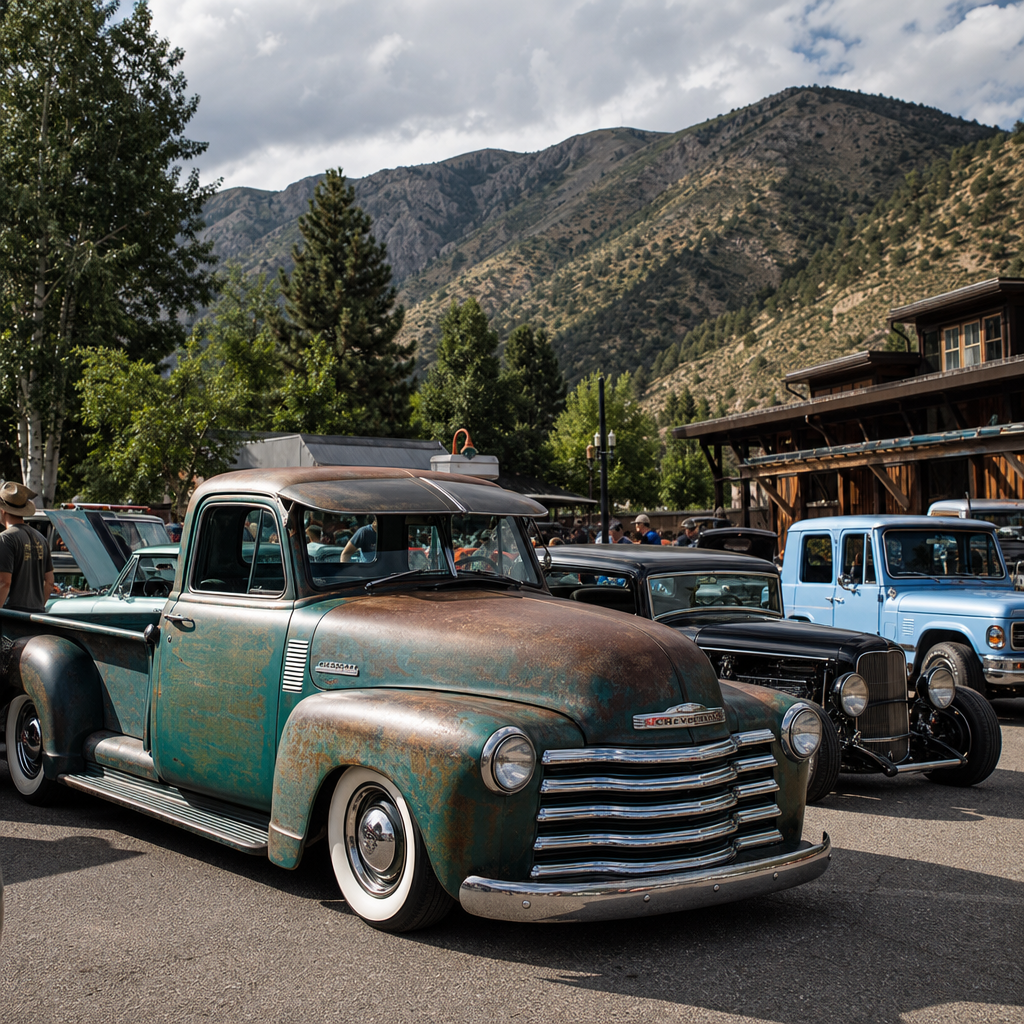
In Silverado, “Old Iron” usually refers to pre-1990 trucks and workhorses that retain visible mechanical character: stamped steel dashboards, serviceable drivetrains, body-on-frame architecture, and parts that can still be modified with welders, presses, and patience. The term also includes the social world around those vehicles. Weekend swap meets, small-town cruise routes, machine shops, upholstery rooms, salvage yard sourcing, and family-owned fab businesses all belong to the culture. That is why a square-body Chevy with a modern air suspension setup can still qualify as “Old Iron” if the build respects the truck’s identity and the craftsmanship behind it.
The Silverado scene has a strong preference for trucks that tell the truth about how they were made. Builders value visible bead work under the bed floor, clean but not over-smoothed engine bays, and interior upgrades that fit the era rather than erase it. This differs from the fully sterilized show-truck trend that dominated some markets in the 2000s. In 2026, the center of gravity has moved toward usable customs: trucks that can win attention at Born Free, then run highway miles home without drama. That preference has elevated builders who understand ride quality, brake bias, wiring reliability, and corrosion prevention as much as stance and paint.
Another defining trait is regional interpretation. Silverado builders often mix desert durability, industrial materials, and West Coast truck heritage. You see patina preserved under matte ceramic coatings, machined billet used sparingly, and chassis upgrades hidden beneath stock-looking bedsides. The result is a style language that rewards close inspection. Legendary builders established that standard years ago by proving restraint can be harder than excess. The new guard is succeeding because it has recognized the same rule: good taste is not accidental, and the cleanest trucks usually hide the most difficult work.
Why Born Free 2026 Is a Watershed Event
Born Free began as a gathering associated with authenticity, owner-built credibility, and a preference for machines with stories. By 2026, its influence on truck culture in Silverado is measurable. More builders now treat the event as a proving ground for complete concepts rather than isolated modifications. A truck shown there needs a coherent stance, thoughtful material choices, dependable execution, and a point of view. That has forced shops to raise their standards. Details once considered secondary, such as bed wood fitment, steering column angle, underdash finish quality, and harness routing, now shape reputations.
The event also changes who gets visibility. In the past, recognition often depended on magazine access or established shop networks. Today, a younger builder can document frame boxing, sheet metal reconstruction, and first drive shakedowns online, arrive at Born Free with a finished truck, and leave with national attention. Yet the field still rewards substance. Silverado audiences are quick to separate polished content from genuinely sorted vehicles. A truck that drips fuel, rubs tires on turns, or shows poor weld penetration will not fool experienced observers for long. That pressure is healthy because it keeps the culture grounded in real workmanship.
Most important, Born Free 2026 brings generations into direct comparison without turning that comparison into conflict. Veteran builders can see their influence in chop proportions, wheel choices, and metal finishing methods. Younger builders can benchmark themselves against people who solved the same problems with fewer tools and less information. The best conversations happen around those differences. When a legendary builder explains why a crown line must flow into the door skin, and a new guard fabricator answers with a digital scan that helped preserve that line across both sides of the truck, the culture moves forward without losing memory.
Legendary Builders: The Standards They Set
Legendary builders in Silverado are not defined only by trophy counts. They are recognized because other fabricators borrow their solutions, quote their opinions, and still study their old trucks for proportion and finish quality. These builders learned in an era when poor fit had to be fixed by hand, not hidden with filler or reprinted from a file. Their shops established baseline expectations for chop symmetry, panel gap consistency, drivetrain mounting, and paint preparation. Many also built business reputations on finishing trucks that started as impossible projects: collision-damaged farm rigs, rusted cab shells, or incomplete family hand-me-downs with missing paperwork and mixed parts.
Their lasting contribution is method. Ask any respected veteran how a good build succeeds and the answers are familiar: mock everything twice, measure diagonally before tack welding, align bodywork with suspension at ride height, and never send a truck to paint until every latch, seal, and trim piece has been trial fitted. Those rules sound basic, but they separate enduring customs from expensive disappointments. In my experience, the most seasoned builders are relentless about sequence. They know a polished firewall means little if pedal geometry is wrong or if service access is impossible once final assembly begins.
Many legendary Silverado builders also defended period literacy. They understood which grille treatments belong to which years, how factory spot-weld patterns should look when recreating floor sections, and where modern upgrades can be integrated without destroying character. That knowledge matters in 2026 because buyers and audiences are more informed. A truck that claims heritage while mixing the wrong trim, hardware, and body cues loses credibility. The veterans taught the scene that creative freedom works best when it is anchored in accurate references and disciplined execution.
The 2026 New Guard: Skills, Tools, and Mindset
The new guard entering Silverado’s spotlight in 2026 is not replacing traditional craftsmanship. It is reorganizing how that craftsmanship is learned, tested, and presented. Many of these builders start with stronger information access than previous generations ever had. They can compare factory assembly diagrams, watch teardown footage, order 3D-scanned patch panels, and discuss suspension packaging with peers across the country in real time. That reduces guesswork, but it does not eliminate the need for touch. A scan can reveal asymmetry; only a skilled fabricator can decide how to correct it without killing the truck’s lines.
What distinguishes the strongest younger builders is systems thinking. They treat a custom truck as an integrated machine, not a collection of trends. They understand that air suspension geometry affects driveshaft angle, brake line routing, wheel backspacing, and bedside clearance. They know modern engine swaps require communication between fuel delivery, cooling, charging, and diagnostics. They document every stage because repeatability matters, especially if the project becomes a customer build or a low-volume parts program. This mindset makes them credible to owners who want style without sacrificing drivability.
They are also more open about process. Older shops often protected techniques as trade secrets. The new guard tends to share jigs, failed test pieces, alignment data, and product comparisons. That transparency raises the general standard. When a builder explains why they switched from flux-core to pulse MIG on thin sheet steel, or why they chose epoxy primer over self-etch on bare blasted panels, others benefit. Openness does not weaken authority; in Silverado’s current climate, it often proves it.
How Builder Profiles Should Be Read
A useful builder profile goes beyond origin story and glamour photos. It should tell readers how a shop thinks, what problems it solves best, and where its standards come from. The most revealing details are often operational. Does the builder insist on full chassis setup before bodywork? Do they machine their own brackets or source them? Are they known for metal shaping, wiring integration, suspension tuning, paint correction, or historically accurate restorations with subtle custom cues? Profiles matter because they help owners match project goals to actual competencies instead of assuming every custom shop does everything equally well.
When we profile legendary builders, we are documenting institutional memory. When we profile the new guard, we are measuring adaptation. Both are necessary. A veteran may be the benchmark for hand-formed bedsides and period-correct restraint. A younger builder may be the best source for integrating Holley EFI, RideTech suspension, and CAN-based diagnostics into an old truck without making it feel generic. The smartest owners often use both: heritage-driven design guidance from one side, implementation speed and digital precision from the other.
| Builder type | Typical strengths | Common tools and methods | Best fit for owners |
|---|---|---|---|
| Legendary traditionalist | Proportion, metal shaping, period accuracy, finish discipline | English wheel, shrinker-stretcher, lead work knowledge, manual fixture setup | Heritage builds, faithful customs, difficult body reconstruction |
| Hybrid veteran | Classic style with modern reliability, project management | Analog fabrication plus CAD planning, EFI integration, chassis measurement systems | Drivers that must look timeless and perform consistently |
| 2026 new guard fabricator | Systems integration, repeatability, content documentation, modular parts development | 3D scanning, CNC plasma, TIG, pulse MIG, digital alignment and tuning tools | Restomods, engineered customs, owner-clients who value transparency |
Read profiles with an eye for evidence. Finished mileage, panel fit in natural light, undercarriage packaging, and customer trucks still running years later tell you more than a dramatic launch post. The Silverado scene respects builders whose work survives weather, road trips, and close inspection.
Fabrication Technology Without Cultural Amnesia
Technology is changing Silverado builds, but the best shops use it to support judgment, not replace it. CNC-cut brackets save time and improve consistency, especially in small production runs. Digital angle finders and laser alignment tools reduce cumulative error during chassis setup. 3D scanners help map twisted cabs and asymmetrical beds before surgery begins. These tools matter because old trucks were not perfect when new, and decades of repairs, rust, and use make them less predictable now. Precision speeds diagnosis.
Still, no machine can decide what should remain imperfect. That decision is cultural, not technical. A veteran may leave subtle evidence of factory stamping variation because erasing it would make the truck look false. A younger builder with advanced tooling can honor that choice while still correcting structural issues underneath. This is the balance defining Born Free 2026. Preservation no longer means refusing technology. It means using technology in service of authenticity, durability, and better craftsmanship.
Named tools and standards increasingly guide that work. Shops rely on TIG for visible stainless and aluminum details, pulse MIG for thinner steel where heat control matters, and epoxy primer systems because they provide superior corrosion resistance over properly prepared bare metal. Chassis geometry is checked with digital inclinometers. Wiring quality improves when builders follow labeled harness strategies and sealed connector standards used by companies such as Deutsch and Painless. None of that makes a truck less soulful. It makes it more likely to survive real use.
Where the Silverado Scene Is Heading Next
The next phase of Silverado’s “Old Iron” culture will favor builders who can preserve identity while delivering reliability, documentation, and thoughtful engineering. More owners are entering the market with high expectations and limited time. They want trucks that start in heat, idle in traffic, stop straight, and remain repairable after long trips. That demand benefits builders who respect serviceability. Hidden fuse panels, accessible brake fittings, documented torque specs, and parts lists are becoming marks of professionalism, not afterthoughts.
Expect profiles in this hub to follow several themes. First, lineage will matter: who apprenticed under whom, and which techniques are being passed down intact. Second, tool literacy will matter: not just owning advanced equipment, but knowing when old methods produce better results. Third, finished use will matter: event trucks that also accumulate miles will carry more authority than trailer-only builds. Finally, collaboration will matter. The strongest 2026 projects often involve specialist ecosystems, with one shop handling chassis, another handling trim, and a third dialing calibration or upholstery.
For readers exploring the broader custom culture and builders topic, this hub should function as a map. Start with the profiles to understand the personalities and standards shaping Silverado right now. Then follow connected coverage on fabrication technology, shop workflow, event culture, and design trends to see how those standards get applied in real projects. Born Free 2026 proves “Old Iron” is not fading into nostalgia. It is being rebuilt, argued over, refined, and driven by people who care enough to do hard work well. Keep reading the builder profiles, compare methods, and use them to choose the voices worth following as this culture evolves.
Frequently Asked Questions
What does “Old Iron” mean in Silverado culture at Born Free 2026?
At Born Free 2026, “Old Iron” in Silverado culture refers to far more than vintage pickups, worn paint, or traditional small-block V8 power. It describes a broader philosophy centered on durability, repairability, and earned character. In this scene, a truck is respected not because it is untouched or expensive, but because it reflects years of use, careful choices, and the mechanical understanding of the people who keep it alive. “Old Iron” values vehicles that can be worked on by hand, improved over time, and passed from one generation to the next with stories, techniques, and hard-won knowledge attached.
That is why the term carries cultural weight. It includes inherited fabrication skills, local styling traditions, practical modifications, and a strong belief in mechanical honesty. Builders in Silverado are not trying to erase a truck’s history. They are often preserving it, interpreting it, and extending it. At Born Free 2026, that mindset is especially visible because the event brings together restorers, fabricators, daily drivers, and younger builders who may use CAD sketches, CNC-cut brackets, or digital tuning tools while still honoring old-school craftsmanship. The result is an “Old Iron” identity that remains rooted in substance over appearance, even as methods continue to evolve.
Why is Born Free 2026 considered a turning point for Silverado’s “Old Iron” community?
Born Free 2026 stands out as a turning point because it captures a moment when longtime traditions and newer methods are no longer competing for legitimacy; they are increasingly working side by side. For years, there has often been a false divide between builders who champion inherited shop skills and those who embrace modern technology. In Silverado’s “Old Iron” community, that gap is narrowing. Builders are proving that a truck can retain period character, mechanical integrity, and regional identity while also benefiting from precision machining, digital design, improved metallurgy, and modern diagnostics.
This shift matters because it changes how the culture defines authenticity. Historically, authenticity was sometimes measured by how closely a build adhered to older methods or original configurations. At Born Free 2026, authenticity is more often measured by intention, craftsmanship, and honesty. A hand-formed patch panel, a thoughtfully integrated EFI conversion, a custom crossmember designed on a computer and finished by hand, or a drivetrain update that makes a truck more drivable and usable can all fit within the same conversation. That broader definition keeps the culture alive rather than frozen.
It is also a turning point socially. The event highlights garages and show fields where veteran builders, family members, apprentices, and first-time owners are all contributing to the future of the scene. Knowledge that once moved only through local circles or in-person mentorship now also travels through shared files, archived photos, tuning data, and online communities. Born Free 2026 reflects the moment when Silverado’s “Old Iron” culture becomes more interconnected without losing its regional personality or hands-on credibility.
How are digital tools changing the way Silverado “Old Iron” trucks are built and preserved?
Digital tools are changing the process, but they are not replacing the core values of the “Old Iron” world. In Silverado’s truck culture, newer technology is increasingly used as a support system for better craftsmanship, greater accuracy, and smarter preservation. Builders now use 3D scanning to capture rare components, CAD software to plan brackets and suspension geometry, CNC equipment to cut repeatable parts, and digital engine management to improve reliability and drivability. These tools help solve problems that once required excessive trial and error or depended on hard-to-find original parts.
For preservation, the impact is especially important. Older Silverado trucks often suffer from parts scarcity, uneven previous repairs, and years of use that make exact fitment difficult. Digital measurement and design allow builders to recreate obsolete pieces more precisely or strengthen known weak points without visually compromising the truck’s identity. This keeps more vehicles on the road and in working condition, which aligns directly with the “repair over replacement” mindset at the heart of “Old Iron” culture.
Just as important, digital tools can help document knowledge before it disappears. Fabrication patterns, tuning setups, frame dimensions, and even shop procedures can now be stored, shared, and refined across generations. That does not reduce the value of hands-on experience; it makes that experience easier to preserve. The strongest builders at Born Free 2026 are not treating technology as a shortcut to credibility. They are using it to support craftsmanship, reduce waste, improve safety, and build trucks that still feel honest, purposeful, and unmistakably rooted in Silverado tradition.
What makes a Silverado “Old Iron” truck respected in this culture?
Respect in Silverado’s “Old Iron” culture is earned through use, ingenuity, restraint, and workmanship. A respected truck is not necessarily the most expensive, rarest, or most heavily modified. Instead, it usually tells a coherent story. That story may involve decades of work duty, a family hand-me-down revived in a home garage, a carefully thought-out chassis update, or a survivor truck maintained with deep mechanical sympathy. The strongest builds show that the owner understands the truck, has made intentional choices, and values function as much as appearance.
Mechanical honesty is a big part of that respect. In practical terms, this means a truck should not pretend to be something it is not. Patina should reflect actual history rather than manufactured image. Modifications should serve a purpose, whether that purpose is reliability, towing, handling, comfort, or longevity. Welds, bodywork, drivetrain choices, and fabrication details all matter because they reveal how the truck was built and why. In this community, superficial trends are easy to spot, and they rarely carry the same weight as real craftsmanship.
Regional style also matters. Silverado trucks often reflect local roads, local work needs, and local aesthetic traditions. Stance, wheel choice, bed setup, engine selection, and finish details can all express where a truck comes from and what it was built to do. At Born Free 2026, the most admired examples are often the ones that balance identity and utility: trucks that look right, drive right, and embody the values of durability, skill, and practical creativity that define the “Old Iron” mindset.
How is inherited fabrication knowledge being passed on in the evolving “Old Iron” scene?
Inherited fabrication knowledge remains one of the most important foundations of Silverado’s “Old Iron” culture, but the way it is passed on is expanding. Traditionally, these skills moved from parent to child, from older fabricator to apprentice, or from trusted local shop to dedicated young builder. Much of that learning happened informally: late nights in the garage, conversations over worn-out parts, repeated trial and error, and observation of how experienced hands approached metal shaping, drivetrain swaps, suspension setup, and repair strategy. That direct, hands-on mentorship is still essential because many fabrication skills cannot be fully learned from theory alone.
What is changing at Born Free 2026 is the number of channels through which that knowledge now travels. Younger builders are still learning in person, but they are also supplementing traditional experience with archived manuals, digital blueprints, video documentation, online forums, and shared design files. This combination helps preserve techniques that might otherwise fade as older generations retire or pass on. It also allows newer builders to ask better questions and arrive in the shop with stronger fundamentals, making in-person mentorship even more productive.
The healthiest version of this evolution is collaborative rather than competitive. Veterans bring judgment, feel, and process discipline that only comes from years of work. Newer builders often bring fluency with scanning, design software, modern materials, and updated drivetrain technologies. In Silverado’s “Old Iron” culture, the future depends on those groups respecting each other’s strengths. Born Free 2026 showcases exactly that exchange: old methods being taught, new methods being tested, and a shared commitment to keeping trucks repairable, useful, and deeply personal for the next generation.