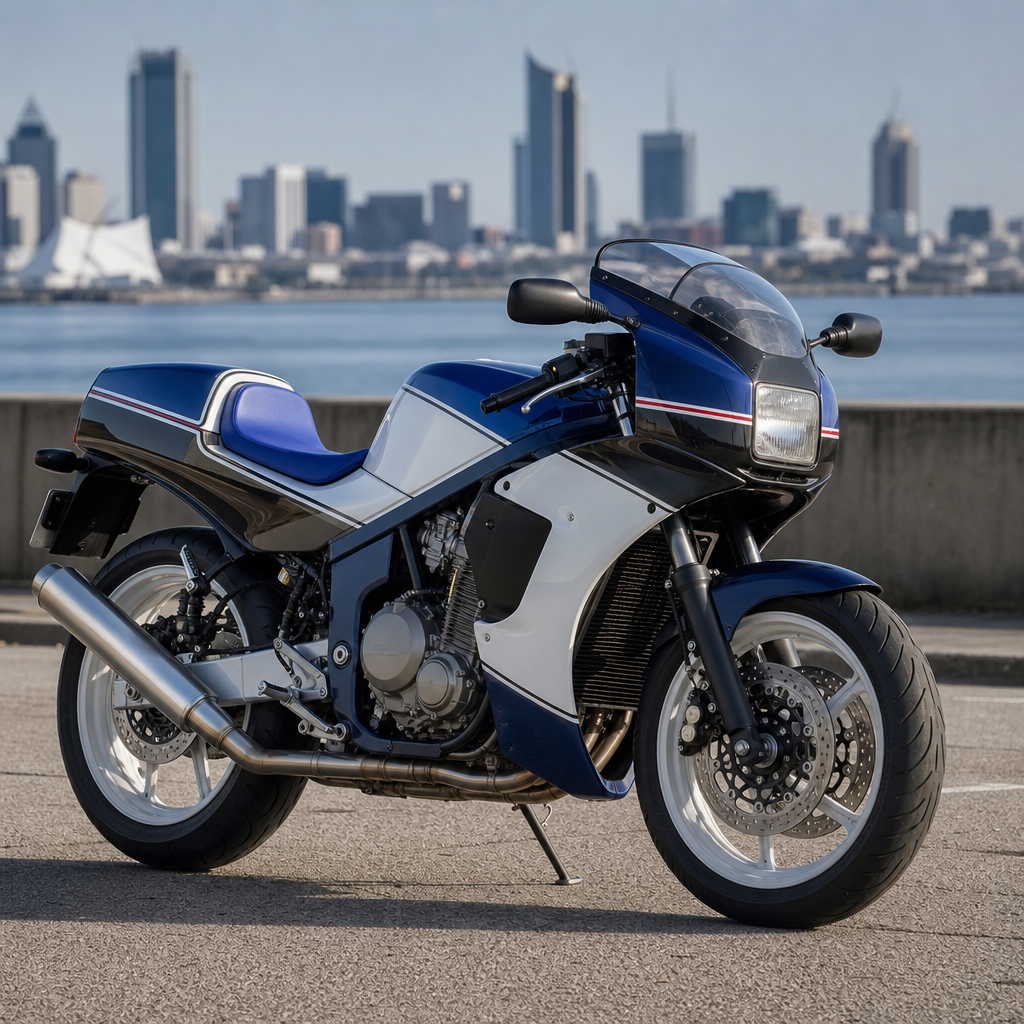
Retro-modernism in motorcycle design is the deliberate fusion of historic visual language with current engineering, and few combinations are more compelling than 1980s GSX-R style applied to 2026 parallel-twins. In custom shops, design studios, and independent garages, I keep seeing builders reach for slab-sided fairings, bold graphics, solo tails, and endurance-racer proportions, then wrap those cues around compact liquid-cooled twins from Yamaha, Kawasaki, Honda, CFMOTO, and Suzuki. The result is not nostalgia for nostalgia’s sake. It is a practical design strategy that delivers recognizable identity, manageable cost, and modern rideability while opening a wider conversation about design theory across today’s custom culture.
This matters because retro builds now compete in a crowded visual marketplace. A custom motorcycle needs more than clean welding and premium suspension to stand out online, on a show stand, or at a neighborhood meet. It needs a coherent design language. In this sub-pillar hub, that language includes Chicano lowrider influence, performance bagger aggression, Frisco stance, Japanese sportbike heritage, and the digital fabrication methods that allow builders to combine them without producing a confused motorcycle. When these ideas are understood as systems rather than trends, builders make sharper choices about silhouette, proportion, surface treatment, color, and rider ergonomics.
The 1980s GSX-R is a useful anchor because it represents a clear historical moment when race-replica aesthetics became instantly legible to the public. Introduced in 1984 with the GSX-R750, Suzuki established a template: boxy but aerodynamic bodywork, a pronounced tank-to-tail line, a visible mechanical core, and graphics that treated the motorcycle like a moving billboard for performance. In 2026, parallel-twin platforms offer the opposite advantage: compact dimensions, centralized mass, cleaner emissions packaging, lower purchase price, and strong aftermarket support. Blending them successfully requires more than bolting on a square headlight cowl. It requires design discipline and a grasp of where adjacent custom styles overlap or conflict.
Design theory, in plain terms, is the logic behind why a bike looks right. It covers stance, line flow, visual weight, wheel-to-body ratio, seat height relative to tank mass, color hierarchy, and how accessories either support or dilute the concept. I have learned that the best retro-modern customs begin with a single thesis sentence. For example: “Build a lightweight middleweight that reads like a 1986 homologation special, carries Chicano mural-level paint depth, and keeps the crisp usability of a 2026 commuter-sport twin.” Once that sentence is clear, every decision becomes easier, from clip-on height to whether polished aluminum belongs on the swingarm.
Why 1980s GSX-R style still works on modern parallel-twins
The enduring power of GSX-R styling comes from geometry and clarity. The fairings were broad, the windscreens low, and the tails abruptly cut, giving even a stationary bike a sense of forward motion. Modern parallel-twins, especially platforms like the Yamaha R7, Kawasaki Ninja 500, Honda CBR500R-derived customs, or Suzuki GSX-8R-based builds, have narrow engines and relatively short wheelbases, which makes them ideal for this visual treatment. The compact engine leaves room to emphasize body planes without creating ungainly width, while current frames and cooling systems support daily reliability that period machines rarely matched.
There is also a cultural reason this pairing works. Younger builders often admire 1980s sportbike graphics and racing silhouettes but do not want the fragility, carburetor tuning demands, flex-prone chassis behavior, or parts scarcity that can come with vintage ownership. A 2026 twin solves those issues. Ride modes, ABS, compliant emissions equipment, LED lighting, and CAD-assisted aftermarket body kits let builders create the look of an old school endurance machine with present-day starting behavior and service intervals. That balance is central to the new guard of fabricators, who value visual storytelling but build for use, not only for static display.
From a design perspective, the key is editing. Original GSX-Rs carried large fairings because they enclosed air-oil cooled engines, radiators, and race-influenced hardware in a way that looked purposeful. On a parallel-twin donor, oversized bodywork can easily become costume if it ignores the smaller mechanical package. The correct move is usually compression, not duplication: retain the slab-sided side profile, horizontal tank emphasis, and high tail line, but tighten dimensions so the bike still reads as modern and athletic. Builders who understand that distinction avoid the common pitfall of making a slim contemporary chassis look visually underfilled.
Design theory across Chicano, performance bagger, Frisco, and beyond
To build a strong hub for this topic, it helps to define the major styles clearly. Chicano motorcycle design borrows from lowrider culture and emphasizes deep paint, layered pinstriping, symbolic imagery, chrome or polished accents, elongated visual flow, and a prideful sense of presentation. Performance bagger design starts with American touring platforms but transforms them through inverted forks, radial brakes, tall rear shocks, aggressive wheel fitment, and aerodynamic bodywork that makes large motorcycles look fast before they move. Frisco style, rooted in stripped custom tradition, typically features narrow tanks, tall bars, minimal bodywork, exposed structure, and a purposeful, urban stance. “Beyond” includes club-style Dyna derivatives, super-hooligan crossovers, neo-café racers, and contemporary race replica customs.
These styles seem unrelated until you evaluate them using shared design principles. Each relies on silhouette first. A Chicano bike stretches and lowers the eye line. A performance bagger lengthens the body but raises the chassis dynamically. Frisco style simplifies the body to emphasize frame and rider posture. A GSX-R-inspired twin compresses the visual center and projects speed through fairing planes. In every case, the builder is managing visual mass. The tank, seat, fairing, wheels, and exhaust must feel intentional in relation to one another. That is why design theory matters more than genre labels. Without proportion control, a bike can borrow fashionable parts from several schools and still fail visually.
Color and surface strategy are equally important. Chicano influence teaches the value of paint as narrative, not decoration. Performance bagger culture shows how contrasting finishes, machined wheels, and carbon-fiber details can direct attention and imply capability. Frisco reminds builders that rawness can itself be a finish if the structure is honest and the hardware choices are clean. When blending 1980s GSX-R cues with 2026 mechanicals, the smartest builds borrow selectively from these lessons. A period-correct blue-and-white livery can gain depth from lowrider-style candy layering. A simple solo tail can be offset by performance bagger-level brake and suspension hardware. A minimalist subframe can preserve Frisco directness beneath race-rep bodywork.
| Style language | Core visual traits | Best use on a retro-modern twin | Main risk if overdone |
|---|---|---|---|
| 1980s GSX-R | Slab fairings, bold graphics, square tail, race stance | Primary silhouette, livery, cockpit shape | Costume-like bodywork that overwhelms the chassis |
| Chicano | Candy paint, pinstriping, mural depth, polished detail | Paint finish, gold leaf accents, layered color | Visual heaviness that fights sport intent |
| Performance bagger | Big-presence aggression, premium suspension, machined wheels | Brake upgrades, stance discipline, premium fit and finish | Bulky wheel or body choices that blunt agility |
| Frisco | Minimalism, exposed structure, direct rider triangle | Subframe clarity, bar choice, mechanical honesty | Too much sparseness for a fully faired concept |
Fabrication strategy: making old-school shapes fit 2026 engineering
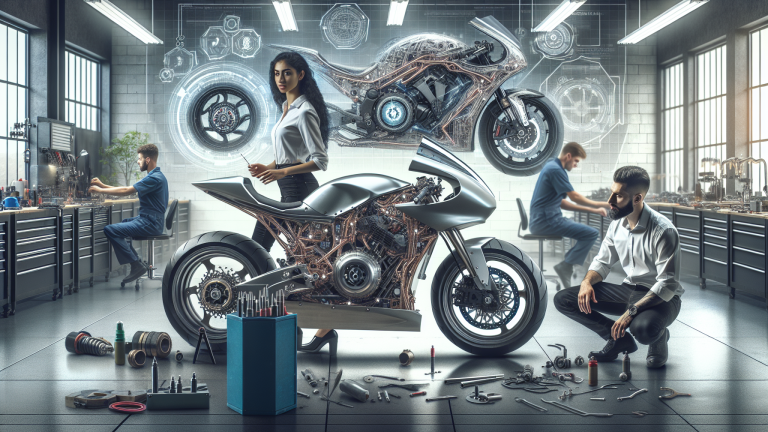
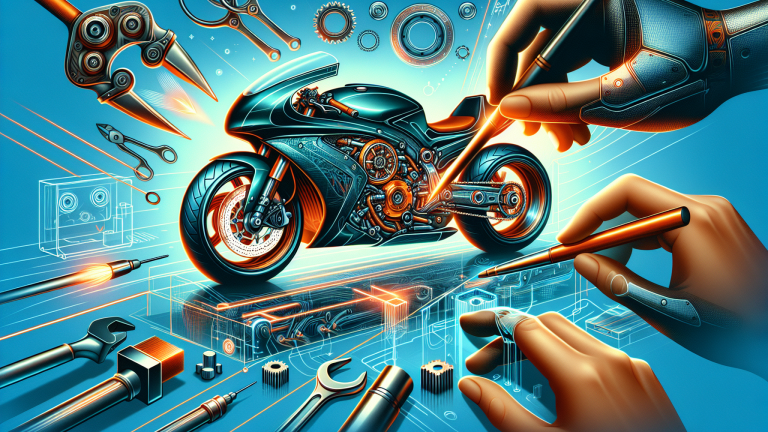
Modern fabrication technology is the real enabler behind this movement. Twenty years ago, adapting a full retro race fairing to a contemporary twin often meant extensive hand-shaping, poor mounting solutions, and compromised service access. Today, builders use 3D scanning, Fusion 360 or SolidWorks modeling, CNC-cut brackets, SLA-printed test parts, and vacuum-infused composite panels to refine bodywork before paint. That workflow matters because modern motorcycles have tightly packaged radiators, catalyst-equipped exhaust systems, ride-by-wire hardware, and wiring looms that punish guesswork. A successful retro-modern build must be beautiful with the bodywork on and rational to maintain with the bodywork off.
In practical terms, the process usually begins with hard points. I map steering lock, radiator clearance, fork compression, exhaust routing, and rider knee position before drawing a single fairing line. From there, the body surfaces can be generated to echo period GSX-R planes while respecting airflow and serviceability. Parallel-twins help because they are shorter front to back than inline-fours, but they introduce their own challenge: the engine may not visually fill the lower fairing in a satisfying way. Builders solve this with disciplined vent placement, belly-pan shaping, or carefully proportioned graphics rather than unnecessary fake bulk.
Mounting and material choice are where many ambitious builds separate into amateur and professional outcomes. ABS plastic is inexpensive and forgiving for prototypes, fiberglass is accessible for one-off molds, and carbon fiber offers stiffness and prestige, but none of those materials compensate for weak bracket design. Rubber isolation, proper fastener spacing, dzus-style quick releases where appropriate, and heat shielding near catalytic converters are essential. On 2026 platforms, electronics integration matters just as much. TFT displays, CAN bus lighting, and modern switchgear can either clash with the retro theme or be integrated elegantly with custom bezels, smoked screens, and carefully selected controls.
Stance, ergonomics, and performance: the motorcycle must ride as well as it looks
Great custom design is not separate from dynamics. If a retro-modern twin looks right but asks the rider to endure cramped knees, unusable steering lock, or unstable high-speed behavior, the design has failed. This is where lessons from performance bagger and race-replica culture become valuable. Stance should come from geometry and suspension tuning, not from visual tricks alone. Slightly increased rear ride height, a seat profile that supports movement under braking, clip-ons or low bars matched to torso length, and rearsets positioned for both cornering clearance and street comfort create a bike that feels modern even while referencing an earlier era.
Suspension and brakes are especially important on parallel-twin customs because the base platform can vary widely. Some donors arrive with budget damping, conservative spring rates, and basic calipers designed for commuters. Upgrading to cartridge internals, a quality shock from Öhlins, K-Tech, Nitron, or YSS, braided lines, and high-friction pads often transforms the machine more than horsepower modifications do. This mirrors the logic behind performance baggers, where chassis control turns visual aggression into real pace. Even if the final aesthetic references a 1980s GSX-R, the underlying standard should be contemporary: neutral steering, predictable trail behavior, and repeatable braking under load.
Engine tuning should respect the purpose of the parallel-twin. These motors win through usable torque, manageable heat, and low operating cost, not top-end theatrics. Intake, exhaust, and ECU calibration can sharpen throttle response, but chasing peak output at the expense of fueling quality usually hurts the project. For most street-focused customs, a broader midrange and reduced weight from wheels or exhaust deliver a bigger real-world gain than headline dyno numbers. That is another core design lesson across Chicano, Frisco, and performance bagger scenes alike: authentic builds align mechanical choices with the story the bike is telling.
Building a hub within custom culture: how this style connects to the broader new guard
As a sub-pillar hub under custom culture and fabrication tech, this topic sits at the intersection of style history and process. Builders today are more cross-referential than any previous generation. A single project may combine archival motorsport graphics, lowrider paint methods, American V-twin stance logic, Japanese donor reliability, and digital prototyping. Social platforms accelerate that exchange, but the strongest builders are not merely sampling aesthetics. They are studying source material, identifying the design rules within each tradition, and then deciding what to preserve, reinterpret, or reject. That approach separates informed synthesis from trend-chasing.
This hub also points outward to more specific subjects that deserve deeper coverage. One article should unpack Chicano influence on motorcycles through paint chemistry, iconography, lace layouts, and plating choices. Another should explain performance bagger design through wheelbase, fork offset, brake package sizing, and fairing aerodynamics. Frisco needs its own analysis of tank placement, bar height, frame visibility, and the difference between functional simplicity and unfinished work. A dedicated retro sportbike piece can then go deeper on fairing development, period graphics, homologation history, and adapting race ergonomics for road use. Together, those articles create a usable map for readers moving from inspiration to execution.
The main benefit of thinking in hub form is clarity. Instead of treating custom styles as isolated tribes, you can see the transferable principles: proportion, finish hierarchy, hardware honesty, and rider-centered function. Retro-modernism is powerful because it gives builders a way to honor the visual certainty of the 1980s GSX-R while leveraging the accessibility of 2026 parallel-twins and the broader lessons of Chicano, performance bagger, Frisco, and related schools. If you are planning a build, start with a thesis, study the source styles closely, and let every fabrication decision support one coherent silhouette. That discipline is what turns a collection of parts into a motorcycle people remember.
Frequently Asked Questions
What does “retro-modernism” mean in the context of 1980s GSX-R styling and 2026 parallel-twin motorcycles?
In motorcycle design, retro-modernism is the practice of combining recognizable styling cues from an earlier era with the performance, reliability, safety, and packaging advantages of current machines. In this case, it means borrowing the visual language that made 1980s GSX-R models iconic—slab-sided fairings, flat planes, bold race-inspired graphics, squared-off tail sections, visible mechanical honesty, and endurance-racer proportions—then integrating those cues onto a 2026 platform built around a modern parallel-twin engine. The goal is not to produce a museum replica. It is to create a motorcycle that feels rooted in a specific design heritage while benefiting from contemporary engineering such as liquid cooling, fuel injection, ABS, traction control, improved metallurgy, LED lighting, and compact chassis architecture.
What makes this pairing especially compelling is the contrast between the visual mass of the old-school bodywork and the efficiency of modern twin-cylinder packaging. Eighties GSX-Rs were visually dramatic because their forms were shaped by race-bike influence, yet they were still constrained by the dimensions and component layouts of the time. A 2026 parallel-twin, by comparison, is narrow, compact, and easy to package, which gives builders more freedom to recreate long fairing lines, high tails, and clean side profiles without fighting the bulk of an older engine. The result can look authentically period-inspired without carrying over the compromises that came with 1980s technology. That is the essence of retro-modernism: preserving emotional impact while updating the mechanical reality underneath.
Why are modern parallel-twin engines such a good match for an 1980s GSX-R-inspired custom build?
Modern parallel-twins are a strong foundation for retro-styled projects because they combine compact dimensions, broad usability, and relatively straightforward integration into custom bodywork. Compared with larger inline-fours, a parallel-twin typically occupies less lateral space, which makes it easier to achieve the crisp slab-sided look associated with classic race-replica bodywork. That narrower engine format also helps with fairing design, radiator placement, and maintaining a clean silhouette from tank to tail. Builders can create the illusion of an older superbike shape while using a platform that is physically more accommodating and often lighter overall.
There is also a practical reason these engines keep showing up from brands like Yamaha, Kawasaki, Honda, CFMOTO, and Suzuki: they are versatile, affordable, and mechanically mature. Today’s parallel-twins deliver usable midrange power, good fuel economy, and day-to-day reliability, which means the finished bike is often easier to ride and own than a true vintage machine. For a retro-modern project, that matters. The owner gets the visual drama of an 1980s-inspired sport bike without the constant tuning, heat issues, fragile charging systems, or parts scarcity that can accompany older platforms. In other words, parallel-twins make the retro dream livable. They let the builder focus on design, ergonomics, and execution instead of constantly solving legacy mechanical problems.
Which 1980s GSX-R design elements translate best onto 2026 parallel-twin platforms?
The most successful elements are the ones that define the era instantly without forcing the builder into a literal one-to-one copy. Slab-sided fairings are at the top of the list because they create the unmistakable visual signature of 1980s sport bikes. Flat side panels, a purposeful front cowl, and a strong horizontal line from nose to tail immediately communicate the period. Solo tails or race-style seat units also translate extremely well, especially when paired with a slightly kicked-up rear profile and compact modern subframe. Bold graphics are another powerful tool. Large block lettering, contrasting stripes, heritage-inspired color combinations, and sponsor-style visual rhythm can evoke the era even if the underlying chassis is entirely contemporary.
Proportion is just as important as individual parts. The best builds capture the endurance-racer stance: a long, planted fairing line up front, a tucked screen, a visually compact midsection, and a tail that looks purposeful rather than decorative. Wheel design, mirror shape, indicator integration, and even how the radiator is hidden or framed can influence whether the bike feels cohesive. What usually works less well is overcommitting to nostalgia in a way that ignores the realities of modern geometry, cooling needs, and rider ergonomics. A convincing retro-modern motorcycle uses period-correct visual cues selectively and intelligently. It should remind you of a GSX-R at a glance, but still look believable as a machine designed around a 2026 engine, chassis, and riding environment.
Are these retro-modern parallel-twin builds just about appearance, or do they offer real performance and usability benefits?
They absolutely offer more than appearance when the build is done thoughtfully. One of the biggest advantages is that modern donor bikes bring contemporary suspension, braking, tire sizes, electronics, and engine management to a package that visually references a much older performance era. That means a retro-modern machine can deliver stable handling, dependable cold starts, cleaner fueling, and braking confidence that far exceed what riders typically associate with original 1980s sport bikes. Even if the ultimate horsepower figure is lower than a superbike, the riding experience can be more rewarding in real-world conditions because a modern parallel-twin often provides accessible torque, manageable weight, and less intimidating performance on normal roads.
Usability is a major part of the appeal. Many riders love the look of vintage race-replica motorcycles but do not want to live with vintage ownership demands. A current twin-based build can often be serviced with readily available parts, diagnosed with modern tools, and ridden in traffic or on weekend trips without anxiety. In some cases, the ergonomics can also be tuned to be friendlier than the originals while preserving the right visual stance. Builders may retain a sporty bar position and rearset layout but soften the extremes enough for everyday enjoyment. So while the styling draws people in, the real success of these builds is that they combine emotional design with a practical, rideable, maintainable motorcycle underneath.
What should builders pay attention to if they want an authentic retro-modern result rather than a costume-like conversion?
The key is discipline in proportion, detail, and integration. Authentic-looking retro-modern builds are rarely the result of simply attaching vintage-inspired panels to a modern bike. They come from understanding why the original machines looked the way they did and then translating those principles onto a contemporary platform. Builders need to consider tank shape, fairing depth, screen angle, seat height, tail length, wheelbase impression, and the visual relationship between the bodywork and engine mass. If any one of those elements is out of balance, the bike can quickly look like a collection of references rather than a coherent design. The most convincing projects are the ones where the graphics, stance, and panel shapes all support the same design story.
Execution quality matters just as much as concept. Modern cooling systems, wiring, sensors, and exhaust routing have to be accommodated cleanly. Radiators must look intentional rather than exposed as an afterthought. Lighting should be integrated in a way that respects current regulations without disrupting the vintage visual language. Paint and decals need to be sharp and proportionate, not overly busy. Even hardware choices—fasteners, brackets, rearsets, and mirrors—can either reinforce authenticity or undermine it. Builders who succeed tend to respect both eras equally: they do not romanticize the past at the expense of functionality, and they do not let modern components erase the character of the design. When those priorities are balanced well, the bike feels less like cosplay and more like an alternate-history sport machine that could have evolved naturally into 2026.