Chicano paint trends blend mural storytelling, disciplined line work, and handcrafted upholstery into a motorcycle language that feels both deeply rooted and unmistakably modern. In this design world, gold leaf striping is not a decorative afterthought; it is a precision technique that adds depth, movement, and status to a paint package. Quilted leather seats serve a similar role on the tactile side, translating visual rhythm into comfort, craftsmanship, and identity. As a hub for design theory across Chicano, performance bagger, Frisco, and adjacent custom styles, this guide explains how these aesthetics work, where they come from, and why builders are mixing them in new ways.
When I evaluate a custom motorcycle, I look at three layers before anything else: silhouette, surface treatment, and touch points. Silhouette includes tank shape, fairing profile, bag lines, bar height, and wheel proportion. Surface treatment covers paint layout, metallics, candies, fades, lace, engraving, pinstriping, and gold leaf. Touch points include the seat, grips, floorboards, controls, and rider ergonomics. Chicano design excels because it handles all three layers coherently. The bike does not just wear a graphic package; it communicates a mood from across the parking lot and then rewards close inspection with details that hold up under direct light.
That matters because custom culture has entered a phase where fabrication technology is advancing rapidly while visual literacy is becoming more demanding. Five-axis machining, 3D scanning, digital mockups, and high-end coatings have raised the baseline for fit and finish. At the same time, social media and event coverage mean every build is judged in photos, video, and person. A successful design must read instantly on a screen and still impress at ten inches away. Gold leaf striping and quilted leather seats endure because they satisfy both conditions. They are photogenic from a distance, but their real value appears in the hand-laid edges, stitch spacing, material selection, and alignment with the bike’s overall stance.
Design theory is useful here because style categories often get flattened into clichés. Chicano is not simply “lots of candy and murals.” Performance bagger is not just “a bagger with carbon parts.” Frisco is not merely “a narrow tank and tall bars.” Each style carries historical references, regional habits, mechanical assumptions, and rider priorities. The strongest contemporary builders understand those references, then decide what to preserve and what to reinterpret. This article maps those decisions so readers can better plan a build, critique one intelligently, and connect to the broader custom culture and builders conversation around the new guard and fabrication tech.
What Defines Chicano Motorcycle Design
Chicano motorcycle design draws heavily from lowrider visual culture, West Coast custom paint traditions, and a strong emphasis on elegance over aggression. The core idea is refinement through layering. Instead of relying on one loud graphic, the painter builds visual depth through candies, pearls, paneling, scripted line work, filigree, lace textures, and often iconography or portraiture. Long visual sweeps are common because they flatter touring bikes, softails, and large fender surfaces. Even when the motorcycle is stationary, the paint should suggest glide and procession.
Historically, lowriders set the template. Gold leaf lettering, fine striping, metalflake, panel paint, and upholstery with pleats or quilting moved naturally from cars to motorcycles as builders adapted techniques to smaller, more irregular surfaces. You can see this especially on stretched saddlebags, extended side covers, and tanks with enough uninterrupted area to support layered graphics. The best Chicano builds maintain symmetry where the eye expects it, then introduce controlled asymmetry through murals, medallions, or directional striping. That balance is why the style can be dramatic without looking chaotic.
Color theory is central. Deep burgundy, royal blue, emerald, black cherry, charcoal, ivory, and warm neutrals remain staples because candies and gold leaf perform well over those bases. Gold accents create contrast while keeping the build luxurious rather than harsh. White often appears as a separator line because it sharpens darker tones and improves readability. Black can either frame the design or disappear beneath transparent candy layers. In practice, painters often test panels under direct sunlight before committing, because some combinations look rich indoors but flatten badly outside.
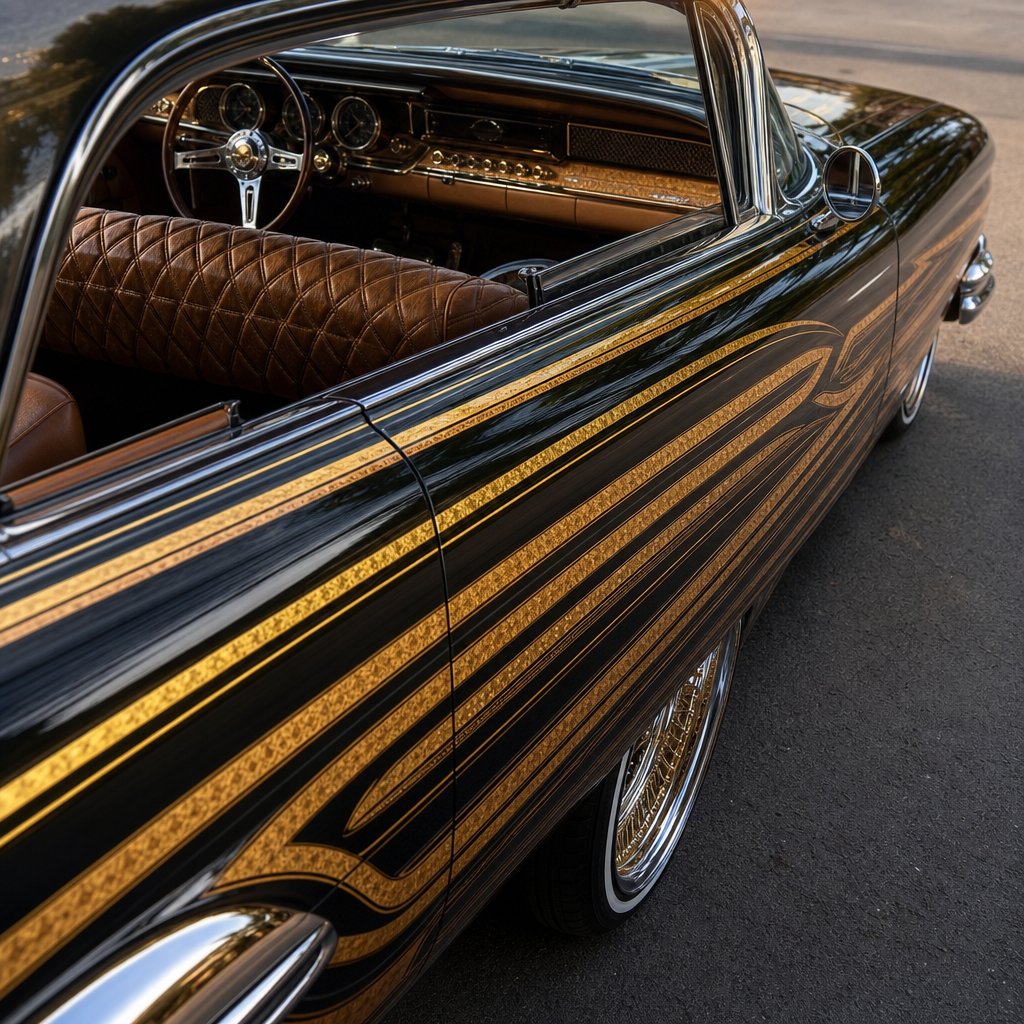
Seat design follows the same logic. Quilted leather, diamond stitching, tuck-and-roll, and embossed inserts are not random luxury cues. They echo the geometry in the paint, reinforce period references, and create a rhythm that ties the rider’s position into the bodywork. On a well-resolved build, the stitch direction complements the bike’s visual flow. If the graphics pull rearward, the seat may use elongated diamonds or pleats that continue that movement. If the bike uses medallion-heavy side coverage, tighter quilting can calm the composition and keep the seat from competing with the paint.
Why Gold Leaf Striping Still Matters
Gold leaf striping remains one of the most respected custom paint techniques because it does something metallic paint cannot: it reflects with a living, uneven richness that changes as the viewer moves. Genuine leaf, usually 23-karat or similar composition for durability and color stability, is applied over size adhesive, then sealed carefully beneath clear. Unlike sprayed metallic, leaf has a distinct edge quality. That edge becomes a design tool. A skilled painter can outline panels, accent body lines, frame murals, or create letterforms that appear suspended inside the finish.
Execution matters. Surface prep must be flawless because leaf highlights imperfections. Adhesive timing is equally critical; too wet and the leaf shifts, too dry and it will not bond cleanly. I have seen otherwise expensive paint jobs lose credibility because the leaf line wandered at corners or trapped contamination under the clear. Good gold leaf striping reads crisp under shop LEDs and under midday sun. It also respects scale. On a large bagger, a too-thin line disappears. On a narrow Frisco tank, a heavy leaf border can overwhelm the silhouette.
Gold leaf works especially well in Chicano design because it bridges graphic and ceremonial functions. It can be subtle, tracing a panel edge half a shade brighter than expected, or overt, creating border architecture around murals and script. It also connects motorcycles to hand-painted signage, traditional pinstriping, and lowrider heritage. That lineage matters. A bike with leaf striping feels made, not merely produced. In a market crowded with printed wraps and repeatable digital templates, hand-laid leaf signals labor, patience, and an experienced eye.
There are tradeoffs. Real leaf is expensive, vulnerable during the application phase, and unforgiving of rework. It adds labor hours in layout, masking, application, clearing, and polishing. Repairs after damage can be difficult if the original line weight and patterning were highly individualized. Yet for owners building a true show-level surface, those tradeoffs are justified. Few techniques create the same premium effect while reinforcing historical custom language so directly.
Quilted Leather Seats as Functional Design
Quilted leather seats are often discussed as style pieces, but their importance is broader. A seat is the primary contact point between rider and machine, and upholstery decisions affect posture, vibration transfer, heat retention, durability, and long-distance comfort. In custom work, quilting introduces both structure and visual order. Proper foam density beneath the cover, stitch spacing, panel tension, and leather grade determine whether the seat will age beautifully or sag, wrinkle, and fail at stress points.
Material choice matters more than many first-time builders expect. Full-grain leather develops character and can be repaired, but it requires care and reacts to weather. Marine-grade vinyl offers better water resistance and UV stability, making it practical for bikes ridden hard or parked outdoors. Alcantara-style synthetics provide grip and a modern feel, though they shift the aesthetic away from traditional Chicano luxury. The strongest upholstery shops match the material to the intended use, then adjust quilting depth and thread weight so the seat complements the rest of the build rather than simply following a catalog pattern.
Diamond quilting is the most common because it references automotive customs and lowrider interiors while working well on motorcycle seat shapes. However, scale must fit the bike. Large diamonds suit broad touring saddles; smaller patterns feel tighter and more technical. Contrast stitching can echo pinstripe colors, while hidden seams preserve a cleaner profile. On performance-oriented baggers, I often recommend limiting chrome-like visual noise in the seat and instead using subtle quilting with premium texture. On classic Chicano builds, richer leather tones and more pronounced stitching can support the ornate paint without feeling excessive.
Good upholstery also improves proportion. A seat that is too thick can visually break the line between tank and rear fender. One that is too thin can expose awkward gaps and make the bike look unfinished. Builders who understand design theory use the seat to manage transitions. That is why quilted leather seats matter in this hub topic: they are not accessories, but structural design decisions that connect style to rideability.
Comparing Chicano, Performance Bagger, and Frisco Design Logic
These three styles overlap in today’s scene, but they begin from different priorities. Chicano emphasizes elegance, heritage, and visual storytelling. Performance bagger design begins with speed, braking, suspension travel, lean angle, and rider control, then expresses those capabilities through sharper forms and technical materials. Frisco styling prioritizes stripped-down attitude, narrowness, upright simplicity, and a rawer relationship to the machine. Builders mix cues successfully only when they understand which design rules can bend and which should not.
| Style | Primary Visual Goal | Typical Paint Language | Seat Approach | Common Mistake |
|---|---|---|---|---|
| Chicano | Luxury, flow, cultural storytelling | Candy layers, murals, gold leaf, pinstriping | Quilted or pleated with rich materials | Overcrowding every panel without preserving breathing room |
| Performance Bagger | Speed, precision, controlled aggression | Clean graphics, race-inspired blocks, matte or gloss contrast | Supportive, grippy, often lower visual drama | Adding ornate details that fight the bike’s athletic stance |
| Frisco | Minimalism, height, narrow silhouette | Simple solids, old-school striping, restrained graphics | Thin solo seat or compact saddle | Using oversized graphics that overpower the stripped profile |
In practice, hybrid builds are increasingly common. A performance bagger may wear hand-laid gold leaf if the line work is disciplined and the bike’s athletic silhouette remains intact. A Chicano-influenced bagger may adopt performance brakes, upgraded suspension, and lightweight wheels without losing its aesthetic center. A Frisco bike can use tasteful panel paint or stitched leather, but it usually benefits from restraint. The principle is simple: preserve the dominant silhouette and use secondary details to enrich it, not contradict it.
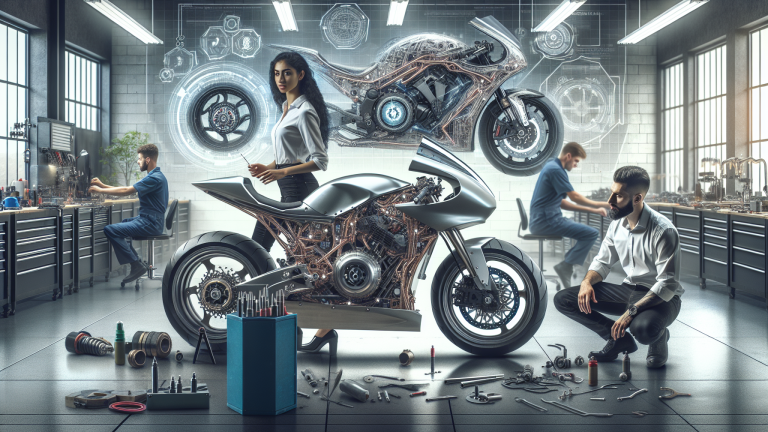
This is where fabrication technology helps. Digital design tools allow painters and builders to preview panel layouts over scanned bodywork. CNC-machined parts improve alignment, which makes fine striping and upholstery fit look sharper. Modern suspension tuning lets larger baggers carry ornate visual programs without riding like show-only bikes. The new guard succeeds because it respects old visual language while using current methods to tighten execution.
Building a Cohesive Paint and Upholstery Package
A cohesive custom build starts with a design brief, even if the owner never calls it that. Before ordering parts or choosing colors, define the bike’s dominant style, intended use, reference era, and visual hierarchy. Decide what should attract attention first: stance, paint, wheel fitment, or cockpit. Then determine supporting elements. If gold leaf striping is the hero feature, the seat should echo that richness without introducing conflicting motifs. If the seat is the tactile centerpiece, the paint can be quieter and more architectural.
I advise builders to collect references in categories rather than one mixed folder. Separate paint examples, seats, wheel styles, fairings, bars, and cultural references. Doing so reveals patterns. Owners often think they want “everything,” but a board review usually shows a consistent preference for either ornate luxury or technical sharpness. That clarity prevents costly revisions later. It also improves communication with specialists, because painters, seat makers, and fabricators need precise direction to create a unified result.
Budgeting should follow the same logic. Spend where the eye and body interact most. Paint and upholstery usually justify investment because they shape both the first impression and the riding experience. Use recognized materials and processes: high-build primer, epoxy sealer where appropriate, quality urethane clears, UV-stable thread, weather-resistant adhesives, and proper seat pan preparation. For gold leaf, ask whether the shop uses genuine leaf or imitation, how they seal it, and how they handle repair work. For upholstery, ask about foam layering, waterproof barriers, and how the stitch pattern affects long-term wear.
Finally, evaluate the build in multiple environments. View the bike outdoors, in shaded light, and under artificial lighting. Sit on it wearing riding gear. Check whether the seat’s quilting aligns with the tank centerline, whether the leaf striping stays consistent across removable panels, and whether the style remains coherent when saddlebags, fairings, and accessories are installed. Strong design survives these tests. If it only works in studio photos, it is not finished.
Where the Style Is Going Next
The next phase of Chicano paint trends and related custom design is not a rejection of tradition, but a refinement of it. Builders are using cleaner panel structures, better color discipline, and more exact fabrication to let heritage techniques breathe. Gold leaf is being paired with darker, moodier palettes and sharper bodywork. Quilted leather seats are becoming more ergonomic without losing visual richness. Performance baggers are absorbing selective luxury cues, while Chicano builds are adopting better suspension, brakes, and rider-focused geometry. That cross-pollination is healthy because it produces motorcycles that feel complete rather than trapped in one era.
The key takeaway is that design theory is practical. Understanding Chicano, performance bagger, Frisco, and beyond helps owners make better choices about paint, upholstery, and fabrication before money is wasted. Gold leaf striping adds depth, heritage, and unmistakable craftsmanship when used with discipline. Quilted leather seats add comfort, structure, and visual rhythm when matched to the bike’s silhouette and purpose. Together, they show how surface and function can support each other instead of competing.
Use this hub as your starting point for the wider subtopic. Study the silhouette first, then the paint language, then the seat and touch points. If you are planning a build, create a clear reference set, choose specialists who understand both tradition and modern execution, and commit to a coherent vision. That is how custom culture moves forward without losing the craft that made it matter.
Frequently Asked Questions
What makes gold leaf striping such an important part of Chicano motorcycle paint design?
Gold leaf striping matters in Chicano motorcycle design because it does much more than add shine. It functions as a precision accent that defines shapes, sharpens transitions, and gives a paint scheme a sense of ceremony and intention. In a style language rooted in mural influence, cultural storytelling, and disciplined handwork, gold leaf creates a visual rhythm that helps the entire composition feel complete. It can trace panel edges, frame pinstriped forms, highlight scrollwork, or add contrast against deep blacks, rich candies, maroons, charcoals, and other lowrider-inspired tones that often appear in Chicano aesthetics.
What separates gold leaf from ordinary metallic paint is its optical behavior. Real leaf catches light differently, producing a depth and movement that changes as the bike moves or as the viewer shifts position. That quality is especially valuable on motorcycles, where curves, tanks, fenders, and side covers constantly interact with light. In practical design terms, gold leaf can make a bike feel more dimensional, more refined, and more custom without overwhelming the broader artwork. It supports the paint story rather than competing with it.
There is also a cultural and craftsmanship component. Chicano design traditions value hand-executed detail, patience, and visual balance. Applying gold leaf striping correctly requires planning, symmetry, steady layout, and finishing discipline. Because of that, it signals skill. On a well-built custom, the leaf is a statement about standards: the builder did not stop at color alone, but committed to layered finish work that reflects heritage, pride, and professional-level execution.
How do designers balance mural storytelling, line work, and gold leaf without making a motorcycle look too busy?
The key is hierarchy. Strong Chicano-inspired paint design usually begins with a clear focal idea, whether that is a mural vignette, a central emblem, a script element, or a panel structure built around classic lowrider influences. Once that focal point is established, every other detail should support it. Gold leaf striping is most effective when it clarifies structure and adds motion at the edges of the composition rather than trying to dominate every surface. Fine line work, filigree, fades, and leaf all need assigned roles.
Experienced designers often control complexity by organizing the bike into visual zones. The tank may carry the main narrative or symbolic imagery, while the fenders use cleaner striping and controlled repetition to echo the theme. Gold leaf can then bridge those zones by outlining panels, accenting borders, and reinforcing symmetry. This creates continuity without visual overload. Negative space is equally important. Leaving room for dark paint, smooth fades, or quiet sections of color allows the detailed areas to breathe and appear more intentional.
Color discipline also matters. If the mural palette, line work, and upholstery all pull in different directions, the bike starts to feel fragmented. The best customs usually limit themselves to a focused family of tones and finishes, then use gold leaf as a strategic highlight. That restraint is what gives the final result elegance. In Chicano design, richness does not come from adding everything at once; it comes from layering detail in a way that feels composed, ceremonial, and deeply considered.
Why are quilted leather seats so closely connected to Chicano paint trends and custom identity?
Quilted leather seats are closely tied to Chicano paint trends because they bring the same values of rhythm, pattern, and hand-finished craftsmanship into the tactile side of the motorcycle. If paint establishes the visual language of the build, upholstery gives that language physical presence. Diamond quilting, pleated sections, stitched geometry, and carefully chosen leather textures can echo the flow of pinstriping, the spacing of painted panels, or the structure of mural framing. That creates a stronger overall identity, where the seat does not feel like a separate accessory but a continuation of the custom story.
There is also an emotional and cultural dimension to upholstered detail. In Chicano-influenced design, surfaces matter because they communicate care, pride, and intentional presentation. A quilted leather seat suggests that the builder values finish quality from every angle, including the areas the rider actually interacts with. It is a craftsmanship decision as much as a style decision. The stitching pattern, thread color, leather sheen, and contouring all contribute to whether the seat reads as traditional, elegant, aggressive, or modernized.
Comfort is part of the equation as well. A properly built quilted seat is not just decorative. It can improve support, distribute pressure more evenly, and create a more refined riding experience. When done correctly, the seat complements the visual richness of the paint while reinforcing the motorcycle’s function as a ridden object, not just a showpiece. That combination of beauty, comfort, and custom identity is exactly why quilted leather remains such a defining feature in this design space.
What should riders consider when choosing colors, stitching patterns, and materials for quilted leather seats?
Riders should start by looking at the bike as a complete composition rather than choosing upholstery in isolation. The seat needs to relate to the paint’s tone, line quality, and level of detail. On a motorcycle with dark candies, monochrome murals, or black-and-gold striping, a seat in black, oxblood, saddle, charcoal, or deep brown may reinforce the mood more effectively than a bright contrasting color. Thread choice is just as important. Matching thread can create a subtle, luxurious look, while contrasting thread can deliberately emphasize geometry and craftsmanship.
Pattern selection should reflect the visual tempo of the bike. Diamond quilting often works well with traditional Chicano and lowrider-inspired builds because it introduces classic symmetry and elegance. Horizontal pleats can feel cleaner and more streamlined, especially on bikes leaning toward a modern interpretation. Tighter stitching patterns usually look more refined and intricate, while larger quilt sections can read bolder and more relaxed. The right decision depends on the scale of the motorcycle and how much visual competition already exists in the paint package.
Material quality is critical. Genuine leather offers a rich feel, ages with character, and suits high-end customs, but it requires care and environmental awareness. Premium synthetic options can provide durability, weather resistance, and a consistent finish that works well for frequently ridden bikes. Foam density, seat pan construction, and stitch durability matter just as much as the outer material. A beautiful seat that collapses, wrinkles prematurely, or fails under weather exposure undermines the whole build. The best upholstery choices combine visual harmony with long-term performance, especially if the motorcycle is intended for both show and regular road use.
How can builders give Chicano paint and upholstery traditions a modern edge without losing authenticity?
Authenticity comes from understanding the principles behind the style, not from copying old formulas without thought. Chicano motorcycle design is rooted in storytelling, disciplined line work, cultural memory, pride of presentation, and handcrafted detail. Builders can modernize the look by refining proportions, simplifying certain elements, experimenting with cleaner panel architecture, or using updated color relationships, but those changes should still respect the style’s core values. Gold leaf striping, for example, can be used in a more restrained way on a contemporary build while still preserving the sense of elegance and ceremonial finish that makes it meaningful.
One effective approach is to mix traditional craftsmanship with modern editing. A builder might use classic mural placement and hand-laid leaf, then pair them with tighter overall graphics, less cluttered transitions, or a more controlled palette. The same is true for upholstery. Quilted leather can lean traditional through diamond stitching and rich materials, or feel more current through slimmer profiles, sharper seam placement, and understated thread choices. The bike still reads as culturally rooted, but the final expression feels timely rather than nostalgic for its own sake.
The most successful modern interpretations are informed rather than superficial. They recognize that Chicano aesthetics are not just visual motifs; they are about narrative, discipline, and identity expressed through custom work. When builders honor that foundation, they have room to innovate. The result is a motorcycle that feels deeply connected to tradition while still speaking in a modern design voice, which is exactly why gold leaf striping and quilted leather seats continue to evolve without losing their significance.