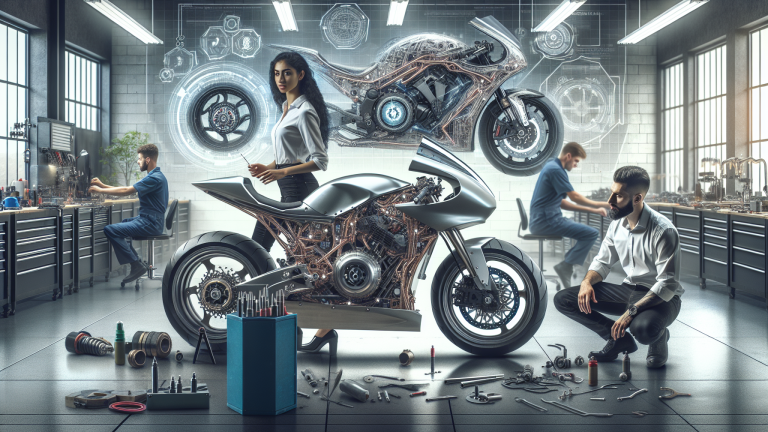
Prism Supply sits at the center of a movement that proves old motorcycle style does not have to be frozen in time. In the custom world, 1960s style usually refers to the visual language of early choppers, stripped street trackers, simple British and American silhouettes, hand-shaped tanks, skinny wheels, narrow bars, and an obvious emphasis on stance over excess. By contrast, 2026 innovation means modern fabrication methods, better materials, digital design workflows, improved coatings, refined electronics packaging, and a more disciplined approach to reliability. When those two forces are combined well, the result is not nostalgia cosplay. It is a machine that honors period proportion while solving the weaknesses that made many vintage-inspired builds frustrating to ride, maintain, or reproduce.
I have worked around custom fabrication shops long enough to know the gap between a stylish show bike and a durable street bike is wider than most people think. Builders can copy a silhouette in a weekend, but reproducing the feel of a true era while integrating precise machining, repeatable production, and modern rider expectations takes a rarer skill set. That is why Prism Supply matters within the Custom Culture and Builders conversation. The company represents a practical bridge between legendary builders who established the visual grammar of American custom motorcycles and a newer generation that uses CNC machining, CAD modeling, boutique small-batch manufacturing, and disciplined product development to push the style forward without sanding off its soul.
This hub article maps that landscape. It profiles why Prism Supply belongs in any discussion of 2026 New Guard builders, explains which legendary influences still shape the category, and shows how fabrication technology has changed the business of custom culture. It also serves as the entry point for deeper articles on individual builders, parts design, shop methods, and trend lines. If you want to understand how traditional 1960s styles are being reinterpreted today, start with the shops that can speak both languages fluently: heritage and engineering.
Why Prism Supply matters in the New Guard builder conversation
Prism Supply is best understood as a modern custom manufacturer with a builder’s eye. Instead of treating vintage style as a catalog costume, the shop approaches components the way serious fabricators do: identify what made an older part visually right, then redesign the hidden details so it works better in the real world. That philosophy shows up across controls, handlebars, tanks, seats, and finishing details. The value is not only aesthetic. A well-developed modern reinterpretation can improve fitment consistency, structural integrity, serviceability, and installation time, all of which matter to riders and to small shops building customer bikes on deadlines.
In the current New Guard scene, credibility comes from making products that can survive actual use. Many custom parts look convincing in photos but reveal weak engineering when vibration, weather, and heat cycles enter the picture. Shops like Prism Supply earn attention because they understand packaging constraints, frame geometry, cable routing, mounting loads, and rider ergonomics. That is the difference between simply selling style and actually contributing to the craft. It also explains why this brand belongs beside builder profiles rather than only in a parts roundup. The product line is a design argument about how custom motorcycles should evolve.
Just as important, Prism Supply reflects a broader 2026 shift in custom culture. The most influential builders today are not only welders or painters. They are hybrid operators who combine fabrication, media fluency, direct-to-consumer commerce, and limited manufacturing. They document prototypes, test ideas publicly, refine them quickly, and turn shop solutions into repeatable offerings. That model lets a small operation have national influence without becoming a faceless mass producer.
How 1960s custom style still shapes modern builds
The 1960s remain the foundational decade because the core design principles are still relevant. Weight reduction, visual clarity, mechanical honesty, and a handbuilt look remain attractive precisely because modern motorcycles often feel over-faired, over-wired, and over-finished. Classic elements such as peanut tanks, ribbed seats, fork gaiters, high pipes, simple number plates, and tall sissy bars persist because they communicate purpose immediately. Even when a builder uses modern internals or updated metallurgy, those forms still deliver instant cultural recognition.
However, historical accuracy and functional quality are not the same thing. Original 1960s customs often suffered from poor brakes, crude welds, weak electrics, limited suspension travel, and highly variable geometry. Builders who understand the era do not blindly copy those shortcomings. They preserve proportion, negative space, and tactile simplicity while correcting stress points and improving rideability. For example, a bike can carry a narrow vintage silhouette yet hide stronger mounting tabs, cleaner harness routing, and better bushing material. From ten feet away it looks period correct. From the saddle it feels sorted.
That is where Prism Supply’s work fits. The company channels the emotional cues of the 1960s without treating old limitations as sacred. In practical terms, that means parts designed to look lean and traditional while being produced with modern tolerances and a repeatable standard of quality.
Legendary builders who established the visual grammar
Any hub covering New Guard and legendary builders needs to acknowledge the older names that defined the template. Arlen Ness helped mainstream radical customization by proving that silhouette and finish could be as important as factory engineering. Denver Mullins, through Denver’s Choppers, reinforced the stretched, expressive side of chopper culture. Indian Larry became an enduring symbol of handbuilt authenticity, blending showmanship with deeply personal fabrication. Ed Roth, though often associated with hot rods and counterculture art more broadly, expanded the idea that a custom vehicle could be both transportation and cultural statement. Meanwhile, shops influenced by the West Coast long-bike tradition, early club customs, and postwar garage experimentation established the stripped proportions that later generations still quote.
These builders were not identical in method or taste, but they shared several traits. They treated the motorcycle as an artistic whole rather than a collection of bolt-ons. They used available tools creatively. They made visual risk central to the build. And they built identities around recurring signatures, whether that was frame attitude, paint style, metal shaping, or attitude. Modern shops inherit those lessons even when they use TIG welders, 3D scanners, or CNC mills instead of hacksaws and basic lathes.
The strongest 2026 builders study these figures carefully. Not to imitate every surface detail, but to understand why the bikes worked visually. Good modern interpretation starts with proportion analysis: axle line, backbone height, wheel diameter, bar rise, seat pitch, and how the empty space around the engine shapes the bike’s character.
What makes a 2026 New Guard builder different
New Guard builders differ from earlier generations mainly in process discipline. They are still driven by taste, but they validate ideas through measurement, prototyping, and documentation. A modern builder may begin with a sketch, convert it into CAD, test mounting points with laser-cut templates, machine a prototype in aluminum, revise after road use, then release a refined production part in small batches. This workflow reduces guesswork and preserves the handmade ethos where it matters most: final assembly, finish choices, and the builder’s eye for stance.
Another difference is platform versatility. Where earlier builders often specialized around one donor family, many current shops move between Harley-Davidson Sportsters, Dynas, Softails, unit Triumphs, Japanese standards, and even electric-adjacent design influences. They understand how to translate a visual language across frames and drivetrains. That cross-platform skill is critical for a company like Prism Supply because parts have to solve multiple fitment realities without losing a coherent identity.
Media has changed the role as well. In 2026, a respected builder is part fabricator, part educator, and part publisher. Build photos, shop videos, product explainers, and road tests are not extras. They are how reputation is built and how techniques spread through the scene. The best shops use that visibility to raise standards rather than just chase attention.
Where fabrication technology changes the game
Fabrication technology is the force that lets traditional 1960s styles become more usable and scalable. TIG welding provides cleaner, more controllable joins than many period builds ever had. CNC machining makes small parts more precise and repeatable, especially brackets, control pieces, and spacers where alignment matters. CAD software allows a builder to model clearances before cutting material, reducing expensive trial and error. Waterjet and laser cutting produce tabs and plates with consistency that speeds assembly and improves fit. Powder coating, Cerakote, modern plating chemistry, and better prep methods all improve durability when compared with many older finishes.
Even basic metrology matters. Digital angle finders, surface plates, fixture tables, and alignment tools help builders preserve the visual line they intended while keeping the motorcycle structurally honest. If a rear fender is perfectly centered, a seat pan follows the frame correctly, and controls are positioned with ergonomic intent, the bike feels right because the build process was right. Technology does not replace taste. It protects taste from sloppy execution.
| Area | 1960s Typical Approach | 2026 Improved Approach | Benefit |
|---|---|---|---|
| Bracket fabrication | Hand cut and drilled | CAD plus laser-cut blanks | Cleaner fit and faster iteration |
| Welding | MIG, brazing, or variable manual methods | TIG with fixtures | Stronger, neater, repeatable joints |
| Part development | One-off trial and error | Prototype, test, revise, release | Better reliability and customer fitment |
| Finishes | Basic paint or chrome | Powder coat, Cerakote, advanced plating | Higher corrosion and wear resistance |
| Electrical packaging | Exposed, improvised routing | Compact hidden routing and sealed connectors | Cleaner look and easier maintenance |
Prism Supply as a hub for parts, taste, and cultural direction
What makes Prism Supply especially useful as a hub topic is that the company connects multiple layers of the custom ecosystem at once. It is a parts maker, but also a style editor, a signal of market demand, and a case study in how small fabrication brands now influence the wider builder community. When a shop develops a product that solves a common problem elegantly, that product often shapes future builds far beyond its own customer base. Other builders respond to the improved standard. Visual trends sharpen. Installation expectations rise. Even competitors are pushed toward better execution.
For readers exploring profiles of 2026 New Guard and legendary builders, Prism Supply provides a practical anchor. Through this hub, related articles can branch into builder biographies, iconic period influences, fabrication tools, materials selection, small-batch production strategy, and technical analyses of classic style cues. In other words, Prism Supply is not only a subject. It is a lens for understanding how custom culture now operates: niche, highly informed, visually literate, and increasingly engineered.
That matters because the best modern custom work is no longer divided neatly between artisan and manufacturer. The most relevant shops do both. They fabricate one-off machines, then distill what they learned into products and methods that elevate the rest of the scene.
How to evaluate builders and brands in this subtopic
When comparing shops in this category, look first at proportion. A builder can own advanced equipment and still produce awkward motorcycles if the stance is wrong. Second, inspect weld quality, mounting logic, and symmetry. Third, evaluate whether the parts appear designed for serviceability. Can cables be routed cleanly? Can hardware be accessed without disassembling half the bike? Fourth, ask whether the brand has a recognizable design language across different builds. Consistency signals intention, not accident.
Also consider transparency. Serious builders explain materials, fitment assumptions, and limitations. If a part only suits rigid-style setups or requires frame modification, that should be stated clearly. Honest shops build trust by acknowledging tradeoffs. Finally, pay attention to road use. A custom motorcycle should not just photograph well under controlled lighting. It should survive vibration, weather, and repeated miles.
Why this hub matters for future coverage
As custom culture moves deeper into 2026, the conversation will keep shifting from isolated hero builders to connected ecosystems of makers, collaborators, and informed customers. Prism Supply belongs at the center of that discussion because it demonstrates how heritage aesthetics can be preserved through modern design discipline. The lesson is bigger than one shop. Traditional 1960s styles remain powerful because they are visually efficient, emotionally direct, and mechanically legible. Innovation matters because riders expect safer, better-built, easier-to-live-with machines. The New Guard succeeds when it protects the first truth while delivering the second.
This hub gives readers a clear framework for the articles that follow: study the legends to understand the vocabulary, study modern builders to understand the evolution, and study fabrication technology to understand why today’s best customs perform differently from their ancestors. If you are building, buying, or simply researching this scene, use Prism Supply as your starting point, then explore the linked builder profiles and fabrication guides to see where the next generation is taking classic style.
Frequently Asked Questions
What does “bringing 2026 innovation to traditional 1960s styles” actually mean?
It means keeping the core visual identity of 1960s-inspired motorcycles intact while upgrading how those parts are designed, built, finished, and used in the real world. In practical terms, Prism Supply is working from a classic design language many riders already understand: narrow profiles, clean lines, hand-formed shapes, simple silhouettes, skinny wheels, purposeful stance, and a stripped-down attitude that feels rooted in early choppers, street trackers, and British and American customs. The innovation side comes in through the process and performance, not by turning the motorcycle into something visually overcomplicated or disconnected from its roots.
That can include modern fabrication methods that produce tighter tolerances, stronger welds, more consistent fitment, and better repeatability. It also includes improved materials that hold up better over time, advanced coatings that resist corrosion and wear, digital design workflows that help refine geometry and part compatibility before production, and a more thoughtful approach to usability. The result is a motorcycle or component that still looks like it belongs to the golden era of stripped, honest styling, but performs with more reliability, better finish quality, and fewer compromises than many vintage-era parts ever offered.
So the phrase is not about replacing tradition. It is about preserving the best parts of traditional style while removing avoidable weaknesses. Prism Supply’s role in that movement is important because it shows that timeless design does not have to be locked to outdated manufacturing limits. A bike can still feel raw, mechanical, and visually minimal while benefiting from the precision and durability that modern builders and riders now expect.
How does Prism Supply preserve authentic 1960s motorcycle style without making it feel outdated?
Prism Supply preserves authenticity by understanding that 1960s style is more than a list of parts. It is a proportion game. The look depends on stance, restraint, and the relationship between major visual elements such as tank height, seat line, wheel size, handlebar width, frame openness, and overall silhouette. If those proportions are wrong, no amount of vintage-inspired hardware will save the build. Prism Supply’s approach respects that reality, which is why its products and design sensibility tend to support the clean, narrow, direct look associated with period-correct customs rather than burying the bike under unnecessary detail.
At the same time, avoiding an outdated result means refusing to copy the past in a literal, flawed way. True vintage motorcycles often carried the limitations of their era, including inconsistent construction, inferior finishes, awkward ergonomics, and parts that aged poorly. Prism Supply helps translate the style rather than merely replicate the shortcomings. A part can have the right visual profile and still be engineered for better durability, cleaner installation, and more dependable day-to-day use. That balance is what makes a bike feel authentic instead of costume-like.
There is also a difference between nostalgia and relevance. A well-executed traditional build should not feel like a museum piece unless that is the intention. It should feel alive, rideable, and confident. Prism Supply supports that by staying faithful to the visual values of the 1960s while embracing modern standards in quality and execution. That is what keeps the style from becoming frozen in time. It remains recognizable, but it also remains useful and credible to contemporary riders.
What kinds of modern innovations matter most when building a traditionally styled custom motorcycle?
The most important innovations are usually the ones that improve quality, fit, safety, and longevity without drawing attention away from the motorcycle’s shape. Precision fabrication is high on that list. Better cutting, forming, machining, and welding methods create parts that align more accurately, mount more cleanly, and require less correction during installation. For a traditional custom, that matters because a simple bike leaves nowhere to hide. Every line is visible. Every bracket, mount, and finish choice becomes part of the final statement.
Material science also plays a major role. Updated metals, composites, and finishing systems can significantly improve strength, corrosion resistance, and long-term appearance. In older eras, many parts looked right when new but degraded quickly under real use. Modern coatings and refined finishing methods help preserve the character of the bike while reducing maintenance headaches. That is especially valuable for riders who want a machine that captures a vintage spirit but can still be trusted on the street, at shows, or on longer rides.
Digital design workflows are another major advantage. Computer-aided design, prototyping, and repeatable production standards make it easier to refine geometry, test clearances, and produce parts with consistent outcomes. That does not make a custom motorcycle feel sterile. In fact, it often protects the handmade quality by ensuring that the foundational pieces are right from the start. Builders can then spend more time on shaping, tuning, and aesthetic refinement instead of correcting preventable errors. Prism Supply’s relevance in this space comes from recognizing that innovation should support tradition, not overpower it. The best modern updates are often the least visually obvious but the most meaningful in ownership experience.
Why are riders and builders drawn to 1960s-inspired motorcycles in the first place?
Riders and builders are drawn to 1960s-inspired motorcycles because the style feels direct, human, and honest. There is an immediacy to those machines that remains powerful decades later. They tend to emphasize line, silhouette, and attitude rather than excess bodywork or overengineered visual complexity. A traditional custom often reveals the essentials of the motorcycle instead of concealing them. You see the frame, the tank, the wheel spacing, the bars, and the stance in a very clear way. That clarity gives the bike personality, and it gives the builder room to say something distinct with relatively simple elements.
There is also a cultural appeal. The 1960s remain a foundational period for custom motorcycle identity, especially in early chopper and stripped street performance circles. That era established a design vocabulary that still influences modern builds: lean forms, reduced visual clutter, practical modifications, and a focus on the emotional impact of the machine’s profile. For many enthusiasts, that language represents freedom from trends. It feels timeless because it was built around essentials rather than decoration for its own sake.
What makes the attraction even stronger today is the opportunity to enjoy that aesthetic without inheriting every old limitation. Builders want the soul of traditional style, but they also want parts that fit properly, finishes that last, and bikes that can actually be ridden with confidence. That is where companies like Prism Supply become especially important. They help connect the emotional draw of the past with the practical expectations of the present. The result is a custom motorcycle that feels rooted in history but fully relevant to modern ownership.
How does Prism Supply influence the future of custom motorcycles while staying true to tradition?
Prism Supply influences the future by proving that heritage and progress are not opposing ideas. In the custom motorcycle world, there is often a false choice presented between strict traditionalism and total modernization. Prism Supply helps dissolve that divide. It shows that a builder can remain loyal to the visual and cultural DNA of 1960s customs while still expecting modern standards in craftsmanship, material performance, and production quality. That message matters because it shapes how future builds are conceived, sourced, and judged.
Its influence is also practical. When a company consistently supports traditional forms with better-engineered parts and more refined manufacturing, it raises the baseline for the entire scene. Builders begin to expect cleaner fitment, better finishes, and smarter design. Riders begin to expect classic-looking machines that are not fragile, frustrating, or purely decorative. Over time, that changes the culture. Traditional style stops being seen as something that must come with compromise, and starts being recognized as a viable platform for continued development.
Most importantly, Prism Supply helps keep tradition active instead of static. A style survives when people can reinterpret it responsibly across generations. If 1960s-inspired design were treated as sacred but untouchable, it would eventually lose relevance outside of collectors and purists. By bringing 2026 innovation into the conversation, Prism Supply helps ensure that old motorcycle style continues to evolve in capable hands. The look remains familiar, but the standards keep improving. That combination is exactly what gives traditional custom culture a future.