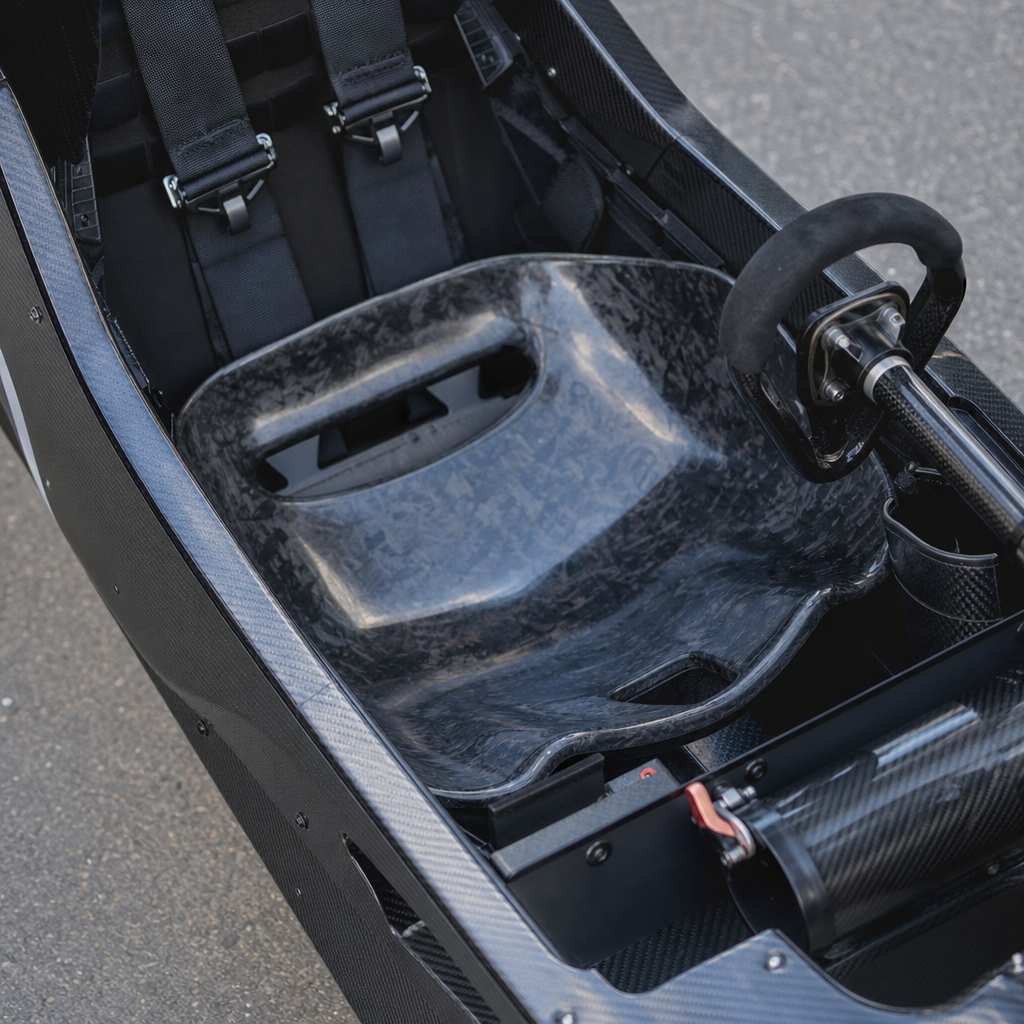
Forged carbon seat bases are changing how builders approach motorcycle ergonomics, rider support, and overall package weight, especially within today’s fabrication tech landscape of 3D printing, advanced composites, and modern wiring integration. In practical terms, a seat base is the structural platform between the foam and the chassis, and its shape, stiffness, mounting method, and mass affect comfort, control, durability, and service access. Forged carbon, unlike traditional woven carbon fiber, uses chopped carbon fibers compressed in resin, allowing complex shapes, localized reinforcement, and a distinctive marbled appearance. I have used aluminum, fiberglass, ABS, and laminated carbon seat pans on custom builds, and forged carbon stands out when a project needs low weight, tight packaging, and repeatable fitment without sacrificing structural confidence.
This matters because the seat is not just a place to sit. It determines hip angle, knee bend, reach to the bars, pressure points on the sit bones, and how a rider’s weight transfers during braking, acceleration, and cornering. On café racers, scramblers, and performance customs, a poorly designed seat base can create hot spots, tank pinch issues, and unstable body positioning even when premium foam is used. A well-designed forged carbon seat base solves several problems at once: it can spread load better across the subframe, create accurate clearance for electronics and wiring, and reduce unnecessary weight high on the chassis. For builders working at the intersection of custom culture and fabrication tech, that combination is exactly why forged carbon has become a serious material choice rather than a cosmetic trend.
Why seat base design matters for ergonomics and weight distribution
Motorcycle ergonomics begin with three contact points: seat, pegs, and handlebars. The seat base anchors that triangle. If the base is too flat, too narrow, or too flexible in the wrong area, the foam cannot maintain consistent support. The rider then sinks unevenly, rotates the pelvis backward, and places more load on the lower spine and wrists. In workshop testing, I have seen riders blame clip-ons or rearset position when the real issue was a seat pan that cupped the wrong section of the foam or forced the seating pocket too far rearward. A forged carbon seat base gives the builder tighter control over the contour, edge radius, and local stiffness, which translates directly into better rider posture and pressure management.
Weight distribution is equally important. The rider is a large percentage of total system mass on a motorcycle, so a few centimeters of seating position change can noticeably alter front-to-rear load balance. A seat base that places the rider too far back can lighten the front end, reduce front tire feedback, and slow turn-in. A base that supports the rider in a more neutral or slightly forward pocket can improve front contact patch confidence without making the riding position cramped. Because forged carbon can be molded with precise depth and mounting geometry, it helps builders fix the rider where the chassis works best instead of accepting the compromise created by a generic universal pan.
There is also the issue of structural load paths. A seat base should not act like a trampoline over unsupported spans, nor should it focus rider weight into tiny mounting tabs. Good forged carbon design uses broad support areas, bonded inserts, and ribbing or section depth to distribute load into the subframe. This is especially useful on heavily modified bikes where the rear loop, battery tray, and electronics bay have all been reworked. By shaping the underside intentionally, the seat base can become part of the packaging strategy, not an afterthought.
How forged carbon compares with woven carbon, fiberglass, aluminum, and printed polymers
Forged carbon is often misunderstood because people compare its appearance before they compare its engineering behavior. Woven carbon fiber offers excellent directional stiffness when fibers are aligned with expected loads, but it becomes labor-intensive around compound curves, undercuts, and tight mounting features. Seat bases rarely see purely simple loads. They need stiffness in several directions, impact tolerance from road shock, and enough form freedom to clear frame rails, fuse blocks, control modules, and latch hardware. Forged carbon addresses this by using chopped fiber distributed through the resin matrix under pressure, producing more isotropic behavior than a cosmetic twill laminate.
Fiberglass remains a common seat base material because it is affordable and forgiving. It can work well for one-off customs, but it is typically heavier for a given stiffness target and often requires extra thickness to avoid flex. Aluminum pans are durable and easy to revise during fabrication, yet they can ring, fatigue around bends, and telegraph vibration unless isolated carefully. Printed polymers such as nylon, PETG, ABS, or carbon-filled filaments are excellent for prototyping, ducting, and trim, but a fully printed structural seat base for a road motorcycle still needs cautious engineering. Heat, long-term creep, fastening loads, and UV exposure all matter. In my experience, printed parts are ideal for validation bucks, foam support features, wire guides, and mold tooling, while forged carbon is stronger as the final structural shell.
| Material | Primary advantage | Main limitation | Best use in a custom build |
|---|---|---|---|
| Forged carbon | Low weight, complex shapes, strong localized reinforcement | Higher material and tooling cost | Final seat bases on premium or performance-focused builds |
| Woven carbon | High stiffness with aligned layup and classic carbon appearance | Less efficient around complex contours | Panels with predictable load direction and cosmetic visibility |
| Fiberglass | Affordable, repairable, accessible for one-off fabrication | Usually heavier and thicker | Prototype or budget custom seat pans |
| Aluminum | Simple fabrication and easy mounting changes | Can transmit vibration and add weight | Bracket-rich builds and rapid shop fabrication |
| Printed polymers | Fast iteration and precise packaging validation | Variable structural durability in real service | Prototypes, jigs, ducts, covers, and secondary supports |
Fabrication workflow: combining 3D printing, scanning, and forged carbon layup
The most effective workflow I have used starts with measurement and digital capture, not resin. A builder can profile the frame rails, shock clearance, and desired seating pocket using calipers, contour gauges, or a handheld scanner such as a Creality Raptor, Revopoint, or Artec unit. That data moves into CAD, usually Fusion 360, SolidWorks, or Rhino, where the seat base is modeled around the chassis and rider requirements. At this stage, the value of 3D printing is huge. A quick PETG or nylon prototype lets you test latch position, battery access, ECU clearance, and foam depth before committing to composite tooling.
Once the geometry is proven, the printed part can serve several roles. On simpler jobs, it becomes a direct buck for hand-finishing and mold creation. On more advanced jobs, the CAD model is split into tooling surfaces, draft is added, and a proper mold is machined or printed and post-processed. Release consistency, flange design, and insert placement matter here. Seat bases often need bonded aluminum or stainless inserts for mounting points, and those should sit on load-spreading pads rather than in thin unsupported walls. Vacuum bagging improves consolidation, while compression molding produces the most repeatable forged carbon finish if the shop has the setup.
This is where modern fabrication tech becomes a system rather than a set of disconnected tricks. 3D printing reduces development time, forged carbon delivers the final structural performance, and digital design keeps tolerances realistic. Instead of trimming a universal pan repeatedly and hoping the foam hides the gaps, the builder can design around the actual motorcycle. That means fewer rattles, cleaner panel gaps, and better serviceability when the seat lifts off.
Integrating wiring, electronics, and service access into the seat base
Any serious hub article on fabrication tech has to treat wiring as part of the structure conversation, because on many custom motorcycles the area under the seat is now the densest packaging zone on the bike. Builders are fitting lithium batteries, solid-state control modules, keyless systems, GPS trackers, USB charging, and compact fuse boxes into spaces that older bikes used only for a tool roll. A forged carbon seat base can improve this dramatically if it is designed with channels, stand-off zones, and access strategy from the start.
I prefer to separate the seat base into three functional layers: rider support on top, structural shell in the middle, and service envelope underneath. The underside should include deliberate clearance over connectors and harness bends, with enough room to avoid pinching when the foam compresses. Wiring should follow protected routes with abrasion sleeves, proper strain relief, and sealed connectors such as Deutsch DT or Superseal where exposure is likely. If the seat uses a front tongue and rear latch, ensure the harness does not cross the latch path. It sounds obvious, but this is one of the most common avoidable failures on tight custom builds.
There are practical thermal and electromagnetic considerations too. A regulator-rectifier or high-current module under the seat needs airflow and heat sinking, not a sealed composite pocket. Likewise, battery terminals should never sit close to bare carbon edges or hardware where vibration can create an unintended contact path. Carbon composites are not wiring conduits. They require grommets, isolation, and disciplined routing. Builders who treat the seat base as part of the electrical layout get cleaner installs and fewer intermittent faults later.
Ergonomic tuning: foam, contour, rider position, and real-world comfort
A forged carbon seat base only delivers ergonomic gains if the foam system and rider geometry are developed with equal care. Seat comfort is not just softness. It depends on foam density, compression set resistance, base contour, and how pressure spreads across the ischial tuberosities. A base that supports a wider foam section under the sit bones can feel better with firmer foam than a narrow pan feels with soft foam. This is why premium saddle makers often use layered constructions, combining a stable support foam with a thinner comfort layer and controlled edge transitions.
On custom motorcycles, the biggest ergonomic mistakes are usually visible in side profile. Builders chase a razor-thin seat for style, then discover there is not enough foam depth to prevent pan feel after thirty minutes. The better approach is to use the forged carbon shell to create recessed pockets under non-load zones, preserving a slim visual line while keeping critical support depth where the rider actually sits. That can also lower perceived seat height without drastically reducing suspension travel or peg clearance. For shorter riders, that is a meaningful advantage.
Real-world validation matters more than workshop optimism. Test the seat with the intended bar and peg setup, in the rider’s actual boots, with the bike held level. Check whether the rider slides into the tank under braking, whether the seating pocket allows body repositioning in corners, and whether pillion-delete styling has compromised hip support. A good seat base keeps the rider planted when needed and mobile when performance riding demands it. Forged carbon makes that balance easier because the shape can be highly specific without becoming heavy.
Limits, costs, and when forged carbon is the right choice
Forged carbon is not automatically the right answer for every build. Material cost is higher than fiberglass or simple formed aluminum, and achieving consistent quality requires process control. Resin ratio, consolidation pressure, cure schedule, and insert bonding all affect final strength. If a shop is building a budget scrambler with a flat bench seat and minimal under-seat packaging, a well-made fiberglass or aluminum pan may be entirely sufficient. The rider will not gain much from an expensive composite part if the geometry is generic and the rest of the chassis remains unresolved.
Where forged carbon earns its place is on projects with constrained packaging, premium finish requirements, or a clear performance goal. Think of a tightly packaged tracker with relocated electronics, a lightweight sport custom where every high-mounted gram matters, or a limited-production builder who needs repeatable fit from part to part. In those cases, the ability to prototype with 3D printing, finalize in carbon, and integrate modern wiring cleanly produces measurable value. The seat base becomes lighter, stiffer where it should be, easier to package, and more supportive for the rider.
For builders mapping this subtopic as a fabrication tech hub, the takeaway is straightforward: 3D printing accelerates design validation, forged carbon enables advanced final structures, and disciplined wiring design turns a good-looking custom into a reliable machine. Start with rider position and chassis load paths, model the space accurately, prototype aggressively, and only then commit to composite production. Do that, and forged carbon seat bases genuinely improve ergonomics and weight distribution instead of merely adding visual novelty. If you are planning a new build, review your seat, electronics tray, and rider triangle as one system, then choose materials that solve all three problems together.
Frequently Asked Questions
What makes a forged carbon seat base different from a traditional fiberglass, metal, or woven carbon seat base?
A forged carbon seat base differs primarily in how the composite material is made and how it behaves in a finished part. Instead of using continuous woven cloth layers laid in a visible pattern, forged carbon uses chopped carbon fiber pieces suspended in resin and compressed into shape. That manufacturing difference matters because a seat base is not just a cosmetic panel—it is the structural foundation that supports the rider, carries the foam, interfaces with mounts and electronics, and helps determine how loads are distributed into the chassis.
Compared with fiberglass, forged carbon can offer a better strength-to-weight ratio, improved stiffness where needed, and a more premium engineering profile. Compared with stamped or hand-formed metal, it can reduce weight, resist corrosion, and allow more complex shapes without the same fabrication compromises. Compared with traditional woven carbon, forged carbon is often better suited to highly contoured geometries, localized reinforcement, and molded integration of mounting features, wire channels, or hardware pockets. That makes it especially attractive in modern custom motorcycle builds where packaging is tight and every component must do more than one job.
From an ergonomics standpoint, forged carbon also gives builders more freedom to create a seat pan that actually follows the intended rider position rather than forcing the rider to adapt to a flat or simplified base. The shape can be tuned to support the pelvis more evenly, reduce pressure points, and maintain foam thickness where comfort is needed most. In real-world use, the benefit is not just reduced mass, but a more refined structural platform that improves comfort, rider stability, and packaging efficiency at the same time.
How does a forged carbon seat base improve motorcycle ergonomics and rider comfort?
Ergonomics start with structure, and the seat base is the structure directly under the foam. If that platform is poorly shaped, too flexible, too rigid in the wrong places, or badly mounted, the rider feels it quickly. A forged carbon seat base can improve ergonomics because it allows much more intentional control over contour, stiffness, and support zones. Builders can create a pan that better matches the rider triangle—how the hips, knees, and bars relate—rather than simply building around whatever shape is easiest to fabricate.
One of the biggest advantages is load distribution. Instead of concentrating the rider’s weight onto a narrow section of foam or allowing the foam to bottom out over hard edges, a properly designed forged carbon base can spread those loads across a broader area. That helps reduce hot spots, improves long-distance comfort, and gives the rider a more planted feel under braking, acceleration, and cornering. This is especially important on performance-oriented or custom motorcycles where compact dimensions can otherwise compromise comfort.
Another ergonomic benefit is predictable stiffness. Too much flex in a seat pan can make the seat feel vague, unstable, or fatiguing. Too little compliance in the wrong area can make the ride harsh. Forged carbon allows the builder to tune the part so it is structurally firm where mounting loads occur but shaped intelligently enough to support the foam and rider without abrupt transitions. That tuning can improve body positioning, reduce rider movement, and help the motorcycle feel more connected and controllable. When combined with modern foam design and accurate digital modeling, a forged carbon seat base becomes a key part of the overall rider-support system, not just a lightweight replacement for an older material.
Does reducing seat base weight actually make a noticeable difference in motorcycle performance and handling?
Yes, but the answer is more nuanced than simply saying “lighter is always better.” A seat base is not one of the heaviest parts on a motorcycle, so replacing it alone will not transform the machine the way a major wheel, brake, or chassis change might. However, reducing weight in the seat assembly can still be meaningful, especially when the build philosophy is based on cumulative gains. Modern custom and high-performance builds often improve the motorcycle by trimming mass from many individual components rather than relying on one dramatic change.
A forged carbon seat base contributes in two important ways. First, it lowers overall vehicle mass, which helps with acceleration, braking, and responsiveness. Second, because the seat assembly sits relatively high in the motorcycle’s package, reducing weight there can slightly benefit the center of gravity. Even small reductions in higher-mounted components can support a more agile, less top-heavy feel. That matters most on compact custom motorcycles, race-inspired builds, and machines where every packaging decision affects how the bike transitions and communicates with the rider.
There is also a practical performance angle beyond handling. A lighter, well-engineered seat base can simplify removal for maintenance, reduce stress on mounting points, and create more room for wiring, electronic modules, or battery placement. Those indirect advantages can improve serviceability and packaging efficiency, which are major priorities in today’s fabrication environment. So while the seat base alone is not a miracle performance part, a forged carbon version can absolutely be a worthwhile contributor to a sharper, cleaner, better-balanced overall motorcycle.
Is a forged carbon seat base durable enough for everyday riding, vibration, and long-term use?
When designed and manufactured correctly, yes—a forged carbon seat base can be extremely durable in real-world riding conditions. Durability depends less on the material name alone and more on engineering details such as fiber-to-resin balance, part thickness, reinforcement strategy, mounting design, edge treatment, and how loads are introduced into the structure. A seat base experiences constant vibration, repeated loading from the rider, environmental exposure, and occasional impact or mishandling during servicing. A properly made forged carbon component can handle those demands very well.
One major factor is mounting design. Many failures in composite parts happen not because the panel itself is weak, but because hardware locations are poorly reinforced or loads are concentrated into small areas. A good forged carbon seat base will use smart inserts, spreader plates, bonded reinforcements, or shaped mounting bosses to manage stress. It will also account for how the seat is removed and reinstalled over time. If the builder integrates these features properly, the base can remain stable and strong over years of riding.
Another consideration is environmental resistance. Unlike steel, forged carbon will not rust, and unlike some lower-grade hand-laid composites, it can be produced with very consistent structural properties when process control is good. That said, durability still depends on finish quality, resin system selection, heat resistance, and protection from abrasion or poor fitment. Everyday riders should not think of forged carbon as fragile by default. In a well-executed application, it is a serious structural material. The key is working with a builder or manufacturer who understands that a seat base must manage repeated dynamic loads, not just look advanced on a finished bike.
How do forged carbon seat bases fit into modern fabrication methods like 3D printing, CAD design, and integrated wiring layouts?
Forged carbon seat bases fit extremely well into today’s digital fabrication workflow, which is one reason they are becoming more relevant. In modern motorcycle building, the seat base is no longer treated as an isolated panel. It is increasingly designed as part of a complete package that includes frame geometry, subframe clearance, electronics placement, battery access, fuse or module mounting, and the final seating posture. CAD modeling makes it possible to define all of those relationships before a physical part is made, and forged carbon is well suited to turning those digital designs into compact, complex, structurally efficient components.
3D printing plays an important supporting role. Builders can print prototypes, buck forms, tooling aids, fitment check models, foam interfaces, or even secondary mounting parts before committing to the final composite piece. That speeds development and allows ergonomic adjustments to be tested in the real world. Once the geometry is refined, forged carbon can be used to create a production-ready seat base with tighter packaging and better mechanical properties than many purely printed structural parts. This combination of digital prototyping and composite manufacturing is especially valuable when working around custom subframes or highly constrained under-seat spaces.
Integrated wiring is another major advantage. Because a forged carbon seat base can be shaped with great precision, it can include channels, recesses, stand-offs, or clearance zones for wiring looms, control units, lighting hardware, and connectors. That helps builders avoid the common problem of pinched wires, crowded electronics, or seats that are difficult to remove without disturbing the electrical system. In practical terms, a forged carbon seat base can become part of the motorcycle’s packaging strategy: lighter than traditional alternatives, more structurally refined, and better aligned with the needs of modern electronics, modular servicing, and tightly integrated custom design.