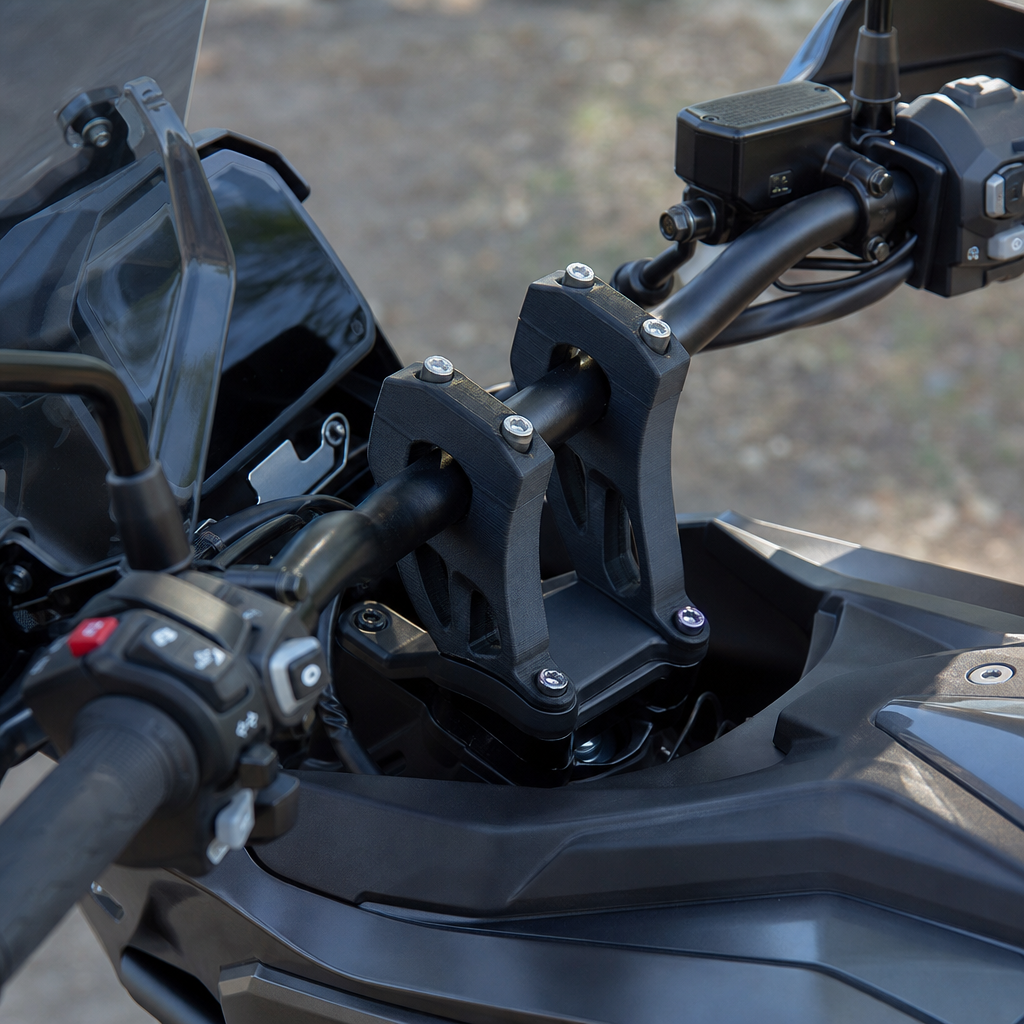
Custom 3D-printed risers are changing how builders dial in handlebar position on the 2027 ST, because they let you test angle, pullback, stack height, cable routing, and clamp geometry before committing to machined metal or composite production parts. In practical terms, a riser is the structure that lifts and positions the handlebar above the upper triple clamp, while handlebar angle describes how the grips rotate relative to the rider’s wrists, shoulders, and torso. On the 2027 ST, getting that relationship right matters more than many riders expect. A few degrees too much sweep can load the wrists, pinch the scapulae, and make low-speed steering feel vague. Too little rise or incorrect rearward offset can force the rider to hinge at the lower back, overreach during braking, and lose fine control when standing on the pegs or shifting body weight mid-corner.
I have worked through this process on modern sport-touring and naked-platform customs, and the lesson is consistent: rider fit is not a cosmetic detail. It directly affects comfort, steering precision, brake modulation, and confidence over long miles. That is why fabrication tech has become central to custom culture’s new guard. Builders now use desktop and industrial additive manufacturing, carbon fiber layup, and digitally planned wiring paths not as gimmicks, but as practical tools to shorten iteration cycles and improve final execution. Instead of guessing with off-the-shelf bar backs, a builder can print multiple riser prototypes in nylon or reinforced polymer, evaluate clearances at full lock, revise the clamp interface, and then machine the final version in aluminum or engineer a hybrid component with metallic load paths and printed fitment fixtures.
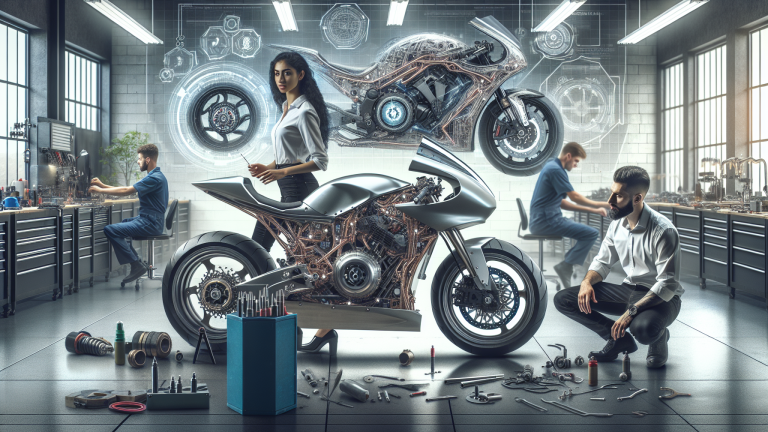
This article is the hub for fabrication tech within the broader custom builders conversation, using the 2027 ST riser project as the real-world anchor. It explains how 3D printing supports prototyping and fit validation, where carbon fiber belongs and where it does not, and why clean wiring integration is inseparable from handlebar design. If you are trying to find the perfect handlebar angle for the 2027 ST, the answer is not a single universal number. The correct solution comes from measuring rider posture, understanding steering geometry, checking interference points, and choosing materials and processes that match actual structural demands.
Why the 2027 ST handlebar angle is a fabrication problem, not just a parts problem
The 2027 ST presents a familiar challenge in modern motorcycle ergonomics: the stock cockpit usually satisfies broad-market expectations, but custom riders often need a narrower target. Height, inseam, shoulder width, glove size, boot position, seat foam density, and intended use all influence where the grips should sit. Riders using the ST for aggressive back-road work often want firmer front-end feedback and a slightly more neutral wrist plane. Riders building a long-distance machine may prefer additional rise and modest pullback to reduce shoulder fatigue. Once handguard mounts, phone or GPS brackets, heated grip controllers, and upgraded master cylinders enter the picture, the available space around the top clamp gets crowded quickly.
That is where custom risers become a fabrication issue. The builder is not merely selecting catalog dimensions; they are managing a system. Clamp bolt spacing, bushing compression, bar diameter, steering lock clearance, ignition surround shape, instrument line-of-sight, and cable bend radius all have to coexist. On the 2027 ST, even small changes in riser offset can alter where the controls land relative to the tank at full lock. In the workshop, I treat this as a packaging exercise first and a styling exercise second. If the rider cannot turn lock-to-lock without pinching a brake hose, stressing the clutch line, or contacting the fairing, the design is wrong regardless of how clean it looks in renders.
Three-dimensional printing solves the early-stage uncertainty. A printed riser mockup can be fitted to the bike, checked with the actual handlebar and controls installed, and revised in hours rather than weeks. That speed matters. Instead of making one expensive billet part and hoping the wrist angle is right, a builder can test several geometries back to back. The resulting fit data often improves every later fabrication decision on the bike, including mount design, dash placement, switch housing orientation, and routing strategy for wires and hoses.
Using 3D printing to prototype custom risers accurately
The best use of 3D printing in riser development is prototyping, fixturing, and design validation. It is not a shortcut around load engineering. For the 2027 ST, the workflow starts with careful measurement of the upper clamp, bar diameter, fastener spacing, and steering envelope. Many builders now capture this with calipers, contour gauges, and structured-light scanning. Even a phone-based photogrammetry pass can help visualize nearby surfaces, though I still verify all critical dimensions manually. CAD software such as Fusion, SolidWorks, or Rhino then becomes the central workspace where stack height, pullback, spread, and clamp face shape can be adjusted parametrically.
Material choice matters during prototyping. PLA prints fast, but it creeps under heat and deforms too easily for realistic shop fitting if the bike sits in the sun. PETG improves temperature tolerance, while nylon, PA-CF, and other engineering filaments provide better dimensional stability and more realistic stiffness. In my experience, nylon-based prototypes are most useful when you need to evaluate clamp fit, cable channels, and real assembly sequence. They can survive repeated install cycles and reveal whether the wrench access is practical. The goal is not to prove ultimate strength. The goal is to expose design errors before the expensive phase begins.
Print orientation and infill also matter. If a mockup splits at the clamp ear during a light torque check, it may tell you more about layer direction than geometry. I usually print two versions: one optimized for speed to test position, and one heavier, with more walls, to test assembly feel. This approach helps identify chamfer needs, washer seat depth, and whether a radiused transition is sufficient around the bolt pocket. Builders who skip this stage often discover late problems such as trapped socket access, bar knurl interference, or insufficient clearance for the throttle housing harness.
| Fabrication method | Best use on a 2027 ST riser project | Main advantage | Key limitation |
|---|---|---|---|
| FDM 3D printing in nylon or PA-CF | Prototype geometry, cable paths, installation testing | Fast iteration at low cost | Not ideal for final high-load riser structure |
| CNC-machined aluminum | Final riser body and clamp interfaces | High strength, predictable tolerances | Higher cost and longer lead time |
| Carbon fiber laminate | Covers, ducts, trim, and non-primary brackets | Low weight and premium finish | Complex load design and hidden failure risk |
| Printed jigs and drilling fixtures | Align wiring exits, mounting holes, and accessory brackets | Improves repeatability | Requires accurate CAD baseline |
Finding the perfect handlebar angle through rider fit, measurement, and iteration
The perfect handlebar angle for the 2027 ST is the one that keeps the wrists neutral through the rider’s most common operating positions while preserving steering authority and control access. In plain terms, when the rider is seated naturally with relaxed shoulders, the forearm should flow into the hand without forced inward or outward wrist bend. Elbows should retain a soft bend, not lock straight. The rider should be able to brake hard without sliding into an overreach and should still have enough leverage for slow-speed maneuvers. Those are functional targets, not aesthetic ones.
To get there, I start with baseline measurements: seat-to-grip reach, grip height above seat, grip width, and the rider’s shoulder width and elbow angle. Then I watch the rider on the actual bike. A static measurement can miss obvious problems, such as a rider who rotates the elbows outward to compensate for too much pullback. Tape marks on the bar and temporary spacers under a printed riser prototype make testing much faster. On road-oriented ST builds, a change of 5 to 10 millimeters in rise or offset can be felt immediately, and 2 to 4 degrees of bar rotation can transform wrist comfort over a long ride.
Clearance checks are equally important. With the front wheel off the ground, turn from lock to lock and inspect every line and harness. The front brake hose should maintain a smooth arc with no tension spikes. Electrical harnesses at the switch pods should not twist sharply near their exits. If the 2027 ST uses ride-by-wire throttle hardware, the housing position and cable or wire path need special attention because throttle return feel and connector stress are less forgiving than on older simple cable setups. The perfect angle is not perfect if it only works parked in the garage.
Where carbon fiber fits into modern custom fabrication
Carbon fiber is often discussed alongside 3D printing because both signal advanced fabrication, but they do different jobs. For a 2027 ST riser project, carbon is generally best used around the cockpit rather than as the primary riser structure itself. Carbon can excel for instrument shrouds, wire covers, small fairing infills, and accessory mounting panels where weight savings, stiffness, and surface finish matter. It can also complement a riser project by cleaning up the visual transition between the upper clamp, the gauge area, and the bar mounts.
The reason builders stay cautious with carbon risers is straightforward. Carbon laminate behavior depends on fiber orientation, resin system, layup quality, compaction, and edge treatment. A handlebar riser experiences concentrated clamping loads, impact loads, vibration, and torsion. Aluminum’s behavior in this application is well understood, machining tolerances are predictable, and failure modes are easier to inspect. Carbon can be engineered for structural use, but doing it correctly requires proper laminate design, validated inserts, and rigorous testing. That is usually outside the scope of a one-off street custom unless the builder has composites experience and a clear engineering process.
Where carbon shines in this subtopic hub is as part of a hybrid workflow. A printed core or mold can speed composite part development. A builder can print a plug for a cockpit trim panel, refine fit against the ST’s dash and upper clamp, then create a carbon skin component that hides wiring and gives the front end a bespoke finish. In other words, 3D printing handles shape exploration, while carbon handles final lightweight skinning where appropriate. Used this way, both technologies support the larger goal of a cleaner, more integrated cockpit.
Wiring integration: the overlooked factor that determines whether a custom cockpit feels factory-level
Wiring quality is what separates a thoughtful custom from a motorcycle that only looks good in photos. Every handlebar angle change on the 2027 ST affects wire length, bend radius, connector placement, and weather sealing. If risers move the bar upward and rearward, the switchgear harnesses may need rerouting behind the top clamp or through revised guide points. If accessory controls are added, the harness density around the steering head increases. Without planning, this creates abrasion points, ugly loops, and restricted steering.
I plan wiring at the same time I model the risers. That means identifying where harnesses can pass safely, where printed clips or guides can reduce movement, and how service access will work later. Heat shrink with adhesive lining, proper open-barrel crimps, braided sleeving, DR-25, and sealed connectors such as Deutsch DT or OEM-equivalent Sumitomo types are worth using when the bike will see weather. Equally important is strain relief. A wire should never be asked to support itself across an unsupported span near a moving steering joint. Printed guides are especially useful here because they let the builder test routing before committing to machined tabs or composite covers.
Good wiring also improves maintenance. A clean loom with proper branch points makes troubleshooting heated grips, auxiliary lighting, GPS power, or bar-end indicators far easier. It reduces buzz and rattles because loose harnesses are not knocking the headstock area. Most riders notice the finish quality even if they cannot explain why. The cockpit simply feels intentional, and that is the standard this fabrication category should aim for.
From prototype to final part: validating safety, finish, and long-term usability
Once the ideal riser geometry is proven on the 2027 ST, the final production route should match the stakes of the component. For most custom builds, that means CNC-machined 6061-T6 or 7075 aluminum for the primary riser body, quality fasteners with known grade, and torque values based on the bar and clamp manufacturer’s guidance. I radius stress transitions generously, avoid unnecessary pocketing, and verify that fastener engagement remains adequate after any height or offset change. If rubber isolation bushings are retained, I confirm they are not being loaded in unintended directions. If the design converts to a rigid mount, I account for the increased transmission of vibration to the rider and electronics.
Validation should include more than a short parking-lot ride. I check full-lock clearance again, inspect witness marks after the first rides, and retorque hardware after initial heat cycles and vibration exposure. If the bike carries luggage or sees rough pavement, I pay attention to how added mass and repeated steering inputs influence clamp stability. Surface finish matters too. Hard anodizing or quality type II anodizing helps corrosion resistance and preserves the look of the part, but the finish should never hide poor machining or sharp edges around stress areas.
The broader lesson for fabrication tech is simple. Three-dimensional printing, carbon work, and wiring design are not isolated specialties. On a custom 2027 ST cockpit, they are linked parts of one disciplined process: define rider needs, model the problem accurately, prototype fast, select the right final material, and integrate every visible and hidden system cleanly. If you are building within the new guard of custom culture, start with fit, use 3D printing to remove guesswork, apply carbon where it genuinely adds value, and treat wiring as a design feature. Do that, and the perfect handlebar angle becomes repeatable, comfortable, and worthy of the machine. Start with measurements, print a prototype, and let real-world testing guide the final build.
Frequently Asked Questions
Why are custom 3D-printed risers useful when dialing in the perfect handlebar angle on the 2027 ST?
Custom 3D-printed risers are valuable because they let builders test fitment and ergonomics before investing in final production parts. On the 2027 ST, small changes in riser height, pullback, and handlebar rotation can noticeably affect wrist comfort, elbow bend, shoulder position, and overall control feel. A printed prototype makes it possible to experiment with those dimensions in the real world, on the actual bike, instead of relying only on measurements, CAD screenshots, or guesswork. That means you can sit on the motorcycle, evaluate your reach to the grips, check tank and fairing clearance at full lock, and see whether the angle supports a neutral posture in both relaxed cruising and more aggressive riding.
Another major advantage is speed. If the first version puts too much load on the wrists or rotates the grips into an awkward position, the design can be revised quickly and reprinted. Builders can test multiple combinations of stack height, offset, clamp geometry, and cable routing features without machining several expensive metal parts. This iterative approach is especially useful on a platform like the 2027 ST, where the ideal setup often depends on rider size, seat position, intended use, and even glove thickness. In short, 3D printing helps narrow down the exact riser geometry that feels right, so the final machined aluminum or composite part is based on proven rider feedback rather than trial and error after production.
What handlebar angle usually feels best on the 2027 ST, and how do you know when you have it right?
There is no single best handlebar angle for every 2027 ST rider, because the correct position depends on body proportions, riding style, seat setup, and the specific bar bend being used. In general, the goal is to create a neutral hand and wrist position when the rider is seated naturally. If the grips are rotated too far back, the wrists may feel kinked inward and the elbows may tuck into an unnatural position. If the bars are rotated too far forward, the rider often has to reach excessively, which can increase tension in the shoulders, upper back, and hands. The ideal angle usually places the grips where the hands fall naturally with minimal wrist extension and minimal pressure on the palms.
A good practical test is to sit on the bike with eyes closed, relax the shoulders, let the hands reach forward naturally, and then compare that hand position to the actual grip position. If the bars meet the hands without forcing the wrists to bend, you are likely close. Another sign of a correct setup is balanced control input at low and moderate speeds. The steering should feel precise without making the rider brace against the grips. During longer rides, a proper angle also reduces numbness, forearm fatigue, and hot spots in the palm. On the 2027 ST, builders often find that the best result comes from balancing angle with riser height and pullback together rather than adjusting bar rotation alone, because all three dimensions influence comfort and leverage at the same time.
What dimensions should be tested in a 3D-printed riser prototype besides simple rise or height?
Height is only one part of the equation. A well-designed 3D-printed riser prototype for the 2027 ST should also evaluate pullback, fore-aft offset, clamp width, bar cradle profile, and the way the riser body interacts with the upper triple clamp and surrounding components. Pullback changes how close the grips sit to the rider, which can dramatically affect torso angle and elbow bend. Fore-aft offset influences leverage and can alter steering feel, especially when paired with a specific handlebar bend. Clamp geometry matters too, because the contact surface between the riser and bar should distribute load evenly and hold the bar securely in the intended rotational position.
Cable and hose routing is another critical variable that should be built into the prototype stage. On the 2027 ST, even a modest increase in stack height or a shift in angle can change how brake lines, clutch lines, and switch wiring travel during full steering lock. A printed prototype can reveal whether lines bind, stretch, rub, or create a messy routing path that will become a long-term annoyance. Builders should also check clearance to the tank, dash, nacelle, windscreen area, and any accessory mounts. Finally, the prototype should be used to validate rider ergonomics in motion, not just in the garage. A setup that looks correct on paper may feel very different under braking, in slow-speed turns, or when standing the bike upright from a lean. Testing these dimensions early leads to a more refined final riser design.
Are 3D-printed risers safe to ride on, or should they only be used for mock-up and fitment testing?
In most cases, 3D-printed risers should be treated primarily as mock-up, fitment, and ergonomic test parts unless they have been specifically engineered, material-qualified, and validated for structural use. Handlebar risers carry meaningful loads from steering input, rider leverage, road vibration, and impact events. On the 2027 ST, those loads can be significant enough that a casual print in a common hobby material may not provide the reliability needed for real riding. Layer adhesion, print orientation, infill strategy, heat resistance, and long-term fatigue behavior all affect performance, and these variables can be difficult to control to the same standard as a properly machined metal production component.
That said, a printed riser can still be extremely useful in the development process. It can be installed for static checks, rider positioning, cable routing evaluation, and carefully controlled low-risk assessments where appropriate. Some professional shops may also use advanced engineering-grade materials and reinforced printing methods for more demanding prototype work, but even then, the part should only be used within a clearly defined testing plan. The safest path is to use 3D printing to confirm the geometry, then manufacture the final riser in a material and process suited to real service loads, such as CNC-machined aluminum or another properly validated structural solution. If the goal is confidence, consistency, and road safety, the printed version is best viewed as a development tool rather than the final answer.
How do you turn a successful 3D-printed riser prototype into a final production-ready part for the 2027 ST?
Once a 3D-printed riser prototype proves the handlebar angle, reach, and overall rider position, the next step is to convert that geometry into a production-ready design with proper engineering margins. The first priority is capturing the final dimensions accurately, including rise, pullback, bar clamp diameter, bolt spacing, hardware engagement, and any integrated cable-routing features. At that stage, the design should be reviewed for stress paths, fastener clamping loads, wall thickness, corner radii, and manufacturing tolerances. In other words, the prototype tells you what feels right, but the production design must also address what will survive real-world loads over time.
From there, material selection becomes critical. Many builders move to CNC-machined aluminum because it offers predictable strength, durability, and finishing options while remaining relatively efficient to produce in small runs. Others may evaluate advanced composites or hybrid designs, depending on the project goals. The final part should also be tested for repeatability, alignment, and compatibility with stock or intended aftermarket controls on the 2027 ST. That includes checking torque specs, anti-slip clamp performance, cable travel at full lock, and any possible interference under suspension movement or rider input. A successful transition from printed prototype to finished part is not just about copying the shape. It is about preserving the ergonomic benefits discovered during testing while upgrading the design into something structurally sound, manufacturable, and dependable for long-term use.