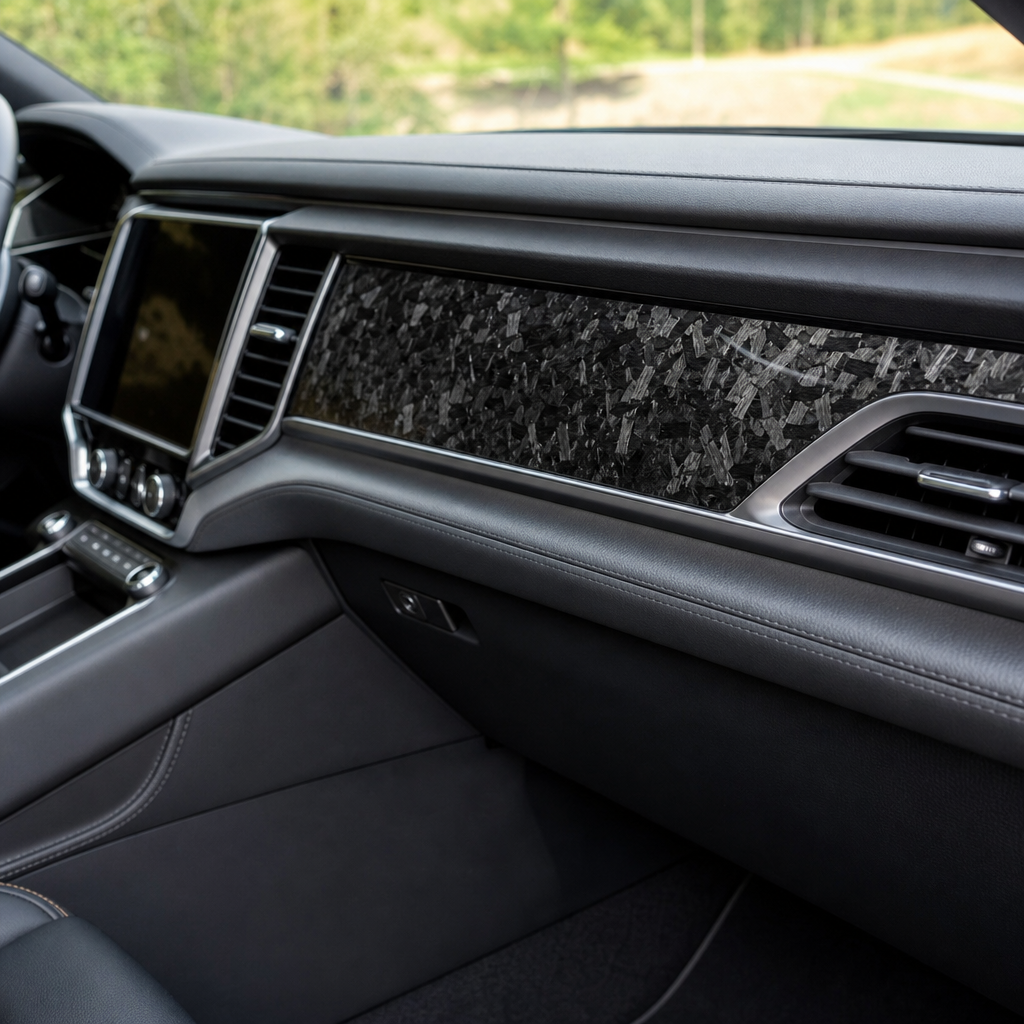
Forged carbon dash inserts turn one of the most visible weak points in many 2026 interiors—molded plastic trim—into a focal point that feels engineered, tactile, and genuinely premium. In custom automotive fabrication, forged carbon refers to chopped carbon fiber pieces compressed in resin, creating a marbled pattern that differs from traditional woven carbon cloth. Dash inserts are the decorative or semi-structural trim panels across the dashboard, center stack, passenger side fascia, switch surrounds, and instrument brow. Replacing factory plastic with forged carbon matters because the dashboard sits in the driver’s field of view on every trip; if it looks cheap, the cabin feels cheap, regardless of horsepower or paint.
I have built interior trim parts in fiberglass, vacuum-bagged twill carbon, ABS, and forged carbon, and the dashboard consistently delivers the biggest perceived upgrade per square inch. Unlike exterior aero, which may only be appreciated when parked, dash inserts change the sensory quality of the cabin every time the car starts. They also reveal whether a builder understands modern fabrication technology. A well-executed forged carbon interior program rarely stands alone. It usually depends on 3D scanning for fitment, CAD for design iteration, additive manufacturing for molds and brackets, proper layup or compression techniques for carbon, and disciplined wiring practices so trim modifications do not create rattles, warning lights, or service headaches.
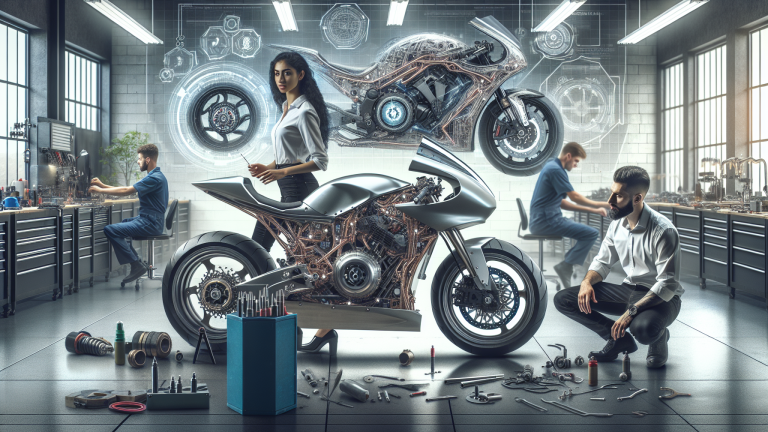
This hub article covers that full fabrication tech stack. It explains how forged carbon dash inserts are designed, produced, installed, and integrated with electronics in 2026 vehicles, where dashboards are crowded with airbags, ambient lighting, touch controls, driver-monitoring hardware, and networked modules. It also points to the broader subtopic this page anchors: 3D printing, carbon fabrication, and wiring. If you are planning a luxury interior conversion, building customer cars, or evaluating a shop’s competence, this guide shows what good work looks like, where shortcuts usually appear, and how to choose methods that balance aesthetics, durability, cost, and safety.
Why forged carbon works so well on modern dashboards
Forged carbon suits dashboard trim because it solves both a design problem and a manufacturing problem. Visually, the random-chip pattern looks more contemporary than plain gloss black plastic and less expected than standard 2×2 twill weave. That matters in 2026 cabins, where OEMs often use piano-black surfaces that scratch quickly and show fingerprints under every LED strip. Forged carbon breaks up light, hides minor hairline marks better than glossy plastic, and reads as motorsport-derived luxury rather than generic metallic film.
Manufacturing is the second advantage. Traditional woven carbon excels on broad, gently curved parts, but dashboards often include compound curves, tight radii around vents, switch cutouts, and deep returns near screens. Chopped fiber feedstock can pack into these shapes more consistently than woven cloth, reducing bridging and distortion. In practice, that means fewer cosmetic compromises around climate panels, shifter surrounds, and passenger-side sculpted trim. Builders can produce full replacement inserts or overlay skins, though full replacements are almost always the better long-term option because overlays can stack thickness, interfere with clips, and create edge lines that betray the conversion.
There are tradeoffs. Forged carbon is not automatically lighter than every OEM part, especially when a shop overbuilds thickness or uses excess resin. The visual pattern is also inherently variable, so customers expecting a mirrored left-right weave must be educated early. High-gloss finishes can still reflect sunlight, and poor UV-stable clearcoat choice can yellow over time. The right answer is not “forged carbon everywhere.” The right answer is selective use on the highest-contact, highest-visibility trim areas, paired with coatings and edge treatments appropriate to the cabin’s lighting and heat load.
Design workflow: scanning, CAD, and validation before carbon is cut
The cleanest forged carbon dash insert projects start digitally. On recent builds, I scan the OEM trim with structured-light tools such as Creaform HandySCAN, Artec Eva, or Einscan systems, then rebuild the geometry in CAD rather than relying blindly on a mesh. Reverse engineering allows proper draft, clip alignment, relief for harnesses, and dimensional control around screen bezels. Dash parts that look simple often have hidden snap features, anti-rattle pads, foam isolators, and tolerance-critical standoffs. If those are ignored, the finished panel may fit on the bench and buzz on the road.
CAD also lets a builder decide early whether the forged carbon part will be a direct replacement, a bonded skin over a printed substrate, or a hybrid with metal inserts. Replacement panels are ideal for premium work because they preserve OEM assembly logic. Hybrid construction can be effective when the decorative visible face is carbon but the backside needs heat-staked studs, integrated ducts, or complex attachment points. In those cases, I often model sacrificial trim bucks, bond-in bosses, and service openings before any material is ordered.
Validation should include more than a dry fit. Heat expansion, screen proximity, airbag seam clearance, and tactile access to switches all matter. On one late-model build, a beautiful prototype panel had to be scrapped because the hazard switch opening was dimensionally correct but too sharp at the edges, causing a sticky return on the switch cap once cabin temperatures climbed. A professional process uses test fixtures, repeated install-removal cycles, and road evaluation over rough surfaces before a production-finish forged carbon set is cleared for delivery.
Where 3D printing fits in a high-end trim program
3D printing is central to modern interior fabrication, but not because printed parts should replace everything. Its best role is acceleration and precision. FDM printing with engineering filaments like ABS, ASA, nylon, polycarbonate blends, or carbon-filled nylon is excellent for prototype bucks, bond fixtures, clip validation parts, hidden bracketry, and jigs that hold trim in the exact orientation needed for trimming or clearcoat cure. SLA and MJF can produce finer detail for switch bezels or test components where surface accuracy matters.
In real shop use, 3D printing saves the most money before carbon work begins. Printing a center-stack test panel to confirm vent alignment, USB port clearance, and ambient light channel depth is far cheaper than discovering those errors after compression molding and finish sanding. Printed negative molds can also support low-volume custom jobs, especially when post-processed, sealed, and reinforced. For one-off builds, I have used printed core structures under carbon skins to preserve OEM geometry while adding bespoke contours that would have been labor-intensive in foam and filler.
Material choice is not trivial. PLA is useful for quick conceptual checks, but it softens too easily for cabin-adjacent production aids exposed to heat. ASA resists UV better than ABS, while nylon handles impact well but can absorb moisture. Carbon-filled filament improves stiffness but can be abrasive to nozzles and does not replace structural carbon laminate. The best shops treat 3D printing as one stage in the fabrication chain: scan, model, print, test, revise, then commit to forged carbon tooling and finish work.
Carbon fabrication methods, finish standards, and quality checkpoints
Not all forged carbon parts are made the same. Some are compression molded from pre-measured chopped fiber and resin systems under controlled pressure and heat. Others are hand-packed into molds and vacuum assisted. The process determines cosmetic consistency, void content, backside cleanliness, and repeatability. For visible interior trim, consistency matters more than marketing language. A customer looking across a dashboard will notice resin-rich cloudy patches, pinholes near edge returns, and random gloss distortion long before asking how the part was cured.
Surface finish is where premium work separates itself. The visible face should be flat without sanding waves, edges should be crisp but not knife-sharp, and clearcoat should be UV-stable, interior-safe, and compatible with expected cabin temperatures. SPI, Glasurit, PPG, and BASF coating systems are commonly trusted in top paint environments because they level well and remain serviceable. Satin and matte finishes are worth serious consideration on dashboards because they reduce glare compared with deep gloss while preserving the forged pattern.
Quality control should be documented, especially for a hub topic like fabrication tech where process discipline matters across every sub-article. The table below outlines the checkpoints I consider non-negotiable on forged carbon dash insert jobs.
| Stage | What to verify | Common failure | Best practice |
|---|---|---|---|
| Scan and CAD | Clip locations, vent openings, switch travel, airbag clearance | Nominal fit without tolerance allowance | Test assemblies from printed prototypes before tooling |
| Tooling | Mold release, edge support, repeatable part thickness | Warped parts and weak corners | Use stable tooling and defined layup volumes |
| Lamination | Fiber distribution, resin ratio, backside integrity | Void pockets and resin-rich areas | Control charge weight and compaction pressure |
| Trimming | Uniform gaps, protected mounting faces | Chipped edges and asymmetry | CNC trim or fixture-guided hand finishing |
| Coating | Gloss level, UV stability, low distortion | Orange peel, yellowing, glare | Use automotive-grade clears and proper cure cycles |
| Installation | Clip retention, anti-rattle isolation, no wiring interference | Buzzing panels and broken tabs | Replicate OEM attachment logic and road-test |
Wiring integration: the part most builders underestimate
Dashboard trim no longer exists apart from electronics. A 2026 vehicle may route ambient light pipes, capacitive touch pads, passenger airbag indicators, cameras, solar sensors, microphone grilles, start buttons, and HVAC interfaces through or around decorative panels. Replacing trim without a wiring plan creates expensive problems. I have seen excellent cosmetic fabrication undone by pinched LIN bus wiring, mispositioned LED strips, and blocked thermal sensors that caused automatic climate systems to behave erratically.
Good wiring work starts with service information. OEM wiring diagrams, connector views, and depinning procedures from factory manuals or systems such as ALLDATA and Mitchell are essential. Harness modifications should use proper automotive TXL, GXL, or equivalent wire where needed, OEM-style terminals, sealed splices when appropriate, and abrasion protection such as Tesa fleece tape, braided sleeving, or split loom depending on location. Soldering has its place, but in vibration-prone interiors, correctly executed crimping with the right die set is usually the more durable answer because it preserves flexibility at the joint.
Routing is just as important as connection quality. Added wiring for illuminated forged carbon inserts, logo backlighting, or relocated controls must avoid sharp carbon edges, HVAC ducts, and fastener traps. Any carbon-backed part near electronics should be checked for isolation where conductive contact could matter. Builders also need to think about diagnostics. If a panel must be removed later for screen service or airbag work, the harness should include service loops, connector access, and documentation. Luxury is not only how the dash looks on delivery day; it is whether the car remains easy to service two years later.
Choosing between overlays, full replacements, and hybrid builds
Customers usually ask a simple question: should they cover the factory trim or replace it entirely? For genuine high-end results, full replacement forged carbon dash inserts win. They maintain correct edge thickness, preserve vent and switch geometry, and avoid the double-layer look common in adhesive-backed overlay kits. Overlays are attractive because they are cheaper and quicker, but they often create visible lips, reduce clearance around buttons, and age poorly when cabin heat attacks adhesive or the underlying plastic coating.
Hybrid builds are the practical middle ground for some platforms. A hybrid may use a printed or machined substrate with a forged carbon skin on the visible face, allowing accurate attachment features and lower tooling cost for short production runs. This works well for niche vehicles, restomods, or custom dashboards where OEM parts are unavailable. The key is honesty about what the customer is buying. A hybrid can be excellent if engineered well, but it should not be sold as a monolithic molded carbon replacement if it is actually a bonded assembly.
Budget, intended use, and vehicle value should guide the choice. On a daily-driven performance SUV with complex ADAS hardware and multiple dashboard airbags, replacing only the decorative strips may be the smartest move. On a show build or premium restomod, a complete coordinated program covering dash, console, door pulls, and switch surrounds may justify bespoke tooling. The best fabricators discuss these options early, price them transparently, and explain where the visual and durability gains justify the added cost.
How this hub connects 3D printing, carbon, and wiring across the wider build
Forged carbon dash inserts are the ideal entry point into the larger fabrication tech conversation because they force all three disciplines—3D printing, carbon, and wiring—to work together. The same scan-to-CAD workflow used for dash trim also supports custom gauge pods, printed vent adapters, switch panels, and speaker enclosures. The same carbon knowledge used here applies to mirror caps, seat backs, steering trim, and console structures. The same wiring discipline required for ambient dash lighting carries over to audio upgrades, digital displays, motorsport switches, and clean power distribution.
As a sub-pillar hub, this topic should lead readers toward deeper articles on specific processes: selecting printable materials for heat-exposed interiors, understanding forged carbon versus woven laminate, designing serviceable harness extensions, integrating CAN-aware accessories safely, and finishing composite parts for OEM-plus fit and texture. What unifies those articles is a single principle: premium custom work is systems work. Beautiful parts fail when they are designed in isolation. The builders defining the new guard are the ones combining fabrication tools with OEM-level engineering discipline.
That is why forged carbon dash inserts represent more than a cosmetic trend. Done correctly, they show a shop can read modern interiors, use digital tools intelligently, fabricate composites to a visible standard, and integrate electronics without compromising function. For owners, that means the luxury feel is not superficial. It is backed by fitment accuracy, durability, and serviceability—the qualities that separate a serious build from a car that only looks good in photos.
Replacing 2026 plastic trim with forged carbon dash inserts is one of the clearest ways to elevate an interior, but the material alone does not create luxury. The result depends on the full fabrication process: accurate scanning, disciplined CAD, intelligent use of 3D printing, controlled composite manufacturing, and wiring integration that respects how modern dashboards actually work. When those pieces come together, forged carbon delivers what factory plastic rarely can—visual depth, tactile quality, and a cabin atmosphere that feels intentionally crafted rather than mass-produced.
The strongest takeaway from this hub is that fabrication tech should be evaluated as a connected workflow, not a menu of trendy materials. A forged carbon panel that fits perfectly because it was scanned and prototyped correctly, survives heat because the resin and clear were chosen intelligently, and installs without electrical issues because the harness was planned properly will always outperform a cheaper cosmetic shortcut. That same connected approach applies across the broader custom culture landscape, from printed brackets to composite aero to fully integrated interior rewiring.
If you are building, buying, or commissioning custom interior work, use this page as your starting point and judge every shop by the same standard: can it design precisely, fabricate cleanly, and wire responsibly? Start with the dash, ask detailed process questions, and follow the linked subtopics to build a complete fabrication plan that looks luxurious and performs like it belongs in the car.
Frequently Asked Questions
What are forged carbon dash inserts, and how are they different from the plastic trim found in many 2026 interiors?
Forged carbon dash inserts are replacement or overlay trim pieces made from chopped carbon fiber suspended in resin and compressed into shape under pressure. Instead of the straight, repeating weave you see in traditional carbon fiber cloth, forged carbon has a distinctive marbled, random pattern that looks more sculpted and technical. That visual difference matters because it gives the dashboard a bespoke, high-end appearance rather than the mass-produced feel often associated with molded plastic trim.
In many 2026 interiors, the factory dash trim is one of the most obvious cost-control areas. Even in otherwise well-equipped vehicles, manufacturers often use injection-molded plastic panels with painted, brushed-look, or faux-metal finishes. From a distance they may look acceptable, but up close they can feel hollow, scratch easily, and lack the tactile depth people expect from a premium cabin. Forged carbon addresses that weakness by replacing those surfaces with something that feels engineered and intentional.
Beyond appearance, forged carbon also creates a different sensory experience. It has visual depth, a more substantial hand feel, and a finish that catches light in a more complex way than painted plastic. Depending on the design, these inserts can be used across the dashboard, center stack, passenger-side fascia, climate control surrounds, and switch panels. The result is not just “carbon fiber trim,” but a more cohesive interior upgrade that turns a previously forgettable dashboard area into a focal point.
Why are forged carbon dash inserts considered a luxury upgrade instead of just a cosmetic modification?
They are considered a luxury upgrade because they improve more than color or style—they elevate material quality, perceived craftsmanship, and the overall cabin atmosphere. Luxury interiors are defined by the way surfaces look, feel, and interact with light. When a dashboard is dominated by basic molded plastic, it can undermine the rest of the interior, no matter how advanced the screens or how good the seats are. Forged carbon helps correct that imbalance by introducing a material associated with performance engineering, precision manufacturing, and upscale customization.
The luxury appeal also comes from exclusivity. Plastic trim is standardized and repeatable; forged carbon naturally varies from piece to piece because of the random orientation of the chopped fibers. That means each insert has its own pattern, which gives the interior a more custom, less off-the-shelf feel. For many owners, that uniqueness is a major part of the appeal. It feels closer to coachbuilt detailing than to a simple aftermarket accessory.
There is also a quality story behind the upgrade. A well-made forged carbon insert is typically designed for exact fitment, carefully finished, and clear-coated to create gloss, satin, or matte effects depending on the desired aesthetic. When done properly, the piece integrates with the factory dashboard lines rather than fighting them. In other words, the goal is not to make the interior look louder; it is to make it look more intentional, more tactile, and more expensive. That is why forged carbon is widely seen as a legitimate premium interior enhancement rather than just visual decoration.
Are forged carbon dash inserts durable enough for daily driving, heat, sunlight, and constant interior use?
Yes, high-quality forged carbon dash inserts are absolutely capable of handling daily driving conditions, but durability depends heavily on materials, finishing, and fabrication quality. The dashboard is a demanding environment. Interior trim is exposed to UV light, cabin heat buildup, changing temperatures, skin oils, cleaning chemicals, and repeated contact from passengers and drivers. A properly fabricated forged carbon insert is built with those realities in mind, using stable resin systems, precise molding, and a protective topcoat designed to resist fading, yellowing, and surface wear.
The protective finish is especially important. Most premium inserts are sealed with an automotive-grade clear coat, which not only enhances the visual depth of the forged carbon pattern but also acts as the first line of defense against scratches and UV exposure. Matte and satin finishes can offer a more understated OEM-plus appearance, while gloss finishes maximize contrast and depth. In either case, the quality of the final coating often determines how well the insert holds up over time.
That said, not all products on the market are equal. Low-cost overlay pieces or poorly cured parts may be more vulnerable to warping, edge lifting, hazing, or premature finish degradation. For best results, buyers should look for inserts produced specifically for the vehicle platform, with proven fitment and a finish intended for automotive interiors. With proper care—gentle cleaning, avoiding harsh solvents, and using sun protection where practical—good forged carbon dash inserts can remain attractive and stable for years of regular use.
How are forged carbon dash inserts installed, and do they replace the factory trim or go over it?
Installation can happen in two main ways: full replacement or overlay application. Full replacement inserts remove the original trim panel and substitute a forged carbon component in its place. This approach usually delivers the most refined result because the part is designed as the visible finished piece, with proper contours, attachment points, and edge transitions. It tends to look more integrated and more like a factory premium option, especially on high-visibility areas such as the passenger dash strip or center stack fascia.
Overlay inserts, by contrast, are designed to bond directly over the original plastic trim. This option can be more affordable and less invasive, while still dramatically improving the appearance of the interior. A high-quality overlay should be vehicle-specific, thin enough to preserve fit around buttons and seams, and shaped to follow the original trim lines cleanly. When done well, overlays can look excellent, but the outcome depends on precision manufacturing and careful surface preparation.
Regardless of the method, preparation is critical. The existing trim must be thoroughly cleaned, free of dressing residues, and correctly aligned before final attachment. Replacement parts may require removal of dash panels, clips, screws, vents, or switch assemblies, which is why many owners prefer professional installation. Modern dashboards are tightly packaged, and improper removal can damage clips, soft-touch surfaces, or adjacent electronics. If the goal is a luxury finish rather than a temporary styling change, professional fitting is often worth it because alignment, edge consistency, and secure mounting make a major difference in the final appearance.
Will forged carbon dash inserts match the rest of the interior, or will they make the cabin look too aggressive or out of place?
When selected thoughtfully, forged carbon dash inserts can integrate beautifully with the rest of the interior and enhance the cabin without overpowering it. A lot depends on finish choice, panel coverage, and the design language of the vehicle. Forged carbon already has a more organic and less repetitive appearance than woven carbon, which often makes it easier to blend into modern interiors. Its marbled texture can feel sophisticated and architectural rather than overtly “race car,” especially when paired with satin or matte coatings instead of ultra-high gloss.
Balance is the key. If the inserts are used on the main dashboard trim, center stack accents, and select switch surrounds, they can create a premium, unified theme. If every surface is covered indiscriminately, the effect can become busy. The best interior upgrades respect the original shape of the dashboard and use forged carbon to highlight the areas where plastic looked weakest or cheapest. This targeted approach usually produces the most upscale result and helps the material feel intentional rather than excessive.
Color and texture coordination also matter. Forged carbon tends to pair well with black interiors, dark leather, brushed metal accents, Alcantara, and performance-oriented design themes, but it can also complement lighter cabins if the finish is restrained and the surrounding materials are clean and modern. For owners who want a subtle OEM-plus appearance, a satin forged carbon insert is often the safest route. For those who want stronger visual drama and depth, gloss finishes make the pattern more pronounced. In either case, when the parts are properly designed and matched to the vehicle, forged carbon can make the dashboard look more expensive, more custom, and far more premium than the plastic trim it replaces.