The 2026 return of Brat Style motorcycles is not a nostalgic rerun but a sharp redesign movement built around narrow frames, minimalist design, and a broader design theory that now connects Chicano lowrider influence, Performance Bagger aggression, Frisco stance, and custom fabrication culture. In builder circles, “Brat Style” originally described stripped, everyday customs from Japan that favored slim silhouettes, flat lines, practical rideability, and visual restraint over chrome-heavy excess or catalog-bolted theatrics. In 2026, that language has evolved. Builders are keeping the narrow profile and clean side view, yet they are applying it across platforms that once lived in separate camps: old UJMs, Sportsters, Dyna and FXR variants, softail-based customs, lightweight twins, and even bagger-derived projects. That shift matters because custom culture is no longer organized only by brand loyalty or regional scenes. It is organized by design logic: how a bike carries mass, how it reads in profile, how fabrication supports proportion, and how cultural references are translated into modern builds.
I have watched this change happen in real shops and at shows where younger builders study stance before paint, frame line before horsepower, and visual tension before parts cost. A Brat-influenced build now begins with subtraction. The question is not what can be added, but what can be removed without weakening function or identity. That is why narrow frames and minimalist design have become central in 2026. They create a disciplined canvas that highlights wheel choice, tank shape, seat line, bar height, and tire-to-fender spacing with unusual clarity. This article serves as the hub for the full design theory behind that comeback. It explains where Brat Style fits relative to Chicano, Performance Bagger, Frisco, and adjacent custom traditions, what visual principles define each one, how fabrication technology has changed execution, and how builders can combine influences without producing a confused motorcycle. For readers following the wider Custom Culture and Builders conversation, this is the core map of the subtopic.
What Brat Style Means in 2026
In practical terms, Brat Style in 2026 means a motorcycle designed around a narrow visual corridor, minimal interruption, and a calm, intentional profile. The centerline matters. From the headstock to the tail, the bike should read as one composed gesture rather than a stack of unrelated parts. Classic cues remain familiar: flatter seats, shortened rear sections, compact tanks, modest fenders, mid-height or low bars, and simplified finishes. What has changed is refinement. Builders are using better weld quality, cleaner harness routing, hidden electronics trays, laser-cut tabs, 3D-scanned mockups, and tighter tolerance fabrication. A decade ago, many low-budget “brat” builds looked unfinished. The 2026 version is cleaner, more resolved, and often far more expensive to execute well.
That narrower frame appearance is not always created by literally narrowing the frame rails. Often, the effect comes from controlling the eye. Slim tanks, tucked exhaust routing, tighter primary-side packaging, smaller lighting units, and abbreviated side covers reduce visual width. Wheel and tire selection matter too. An over-tired build instantly loses the delicate line Brat Style depends on. So do bars that sit too wide or controls that project away from the body. The best current examples retain usability while editing away visual noise. The result is not bare for the sake of being bare. It is minimalism with hierarchy, where every visible component earns its place.
The Core Design Principle: Proportion Before Parts
The most important rule across Brat Style and its neighboring custom genres is simple: proportion comes before parts. Builders who understand this can make modest budgets look intelligent, while builders who ignore it can spend heavily and still produce awkward motorcycles. Proportion includes wheelbase feel, steering angle impression, tank-to-seat relationship, engine visual dominance, and the amount of daylight between components. On a narrow minimalist build, small mistakes become obvious because there is nowhere to hide them. A seat that rises too abruptly, a tank tunnel that sits too high, or a rear tire that visually outweighs the front can break the entire composition.
When we lay out a build in the shop, the side profile always gets evaluated before paint, upholstery, and polishing decisions. We photograph the bike from ten feet away and study the silhouette in black and white. That process immediately reveals whether the frame line flows, whether the visual mass sits too rearward, and whether the bike has a coherent attitude. This method also explains why Brat Style has become useful as a design discipline beyond the original scene. It teaches builders to simplify. Once the silhouette works, details can support it. If the silhouette fails, details cannot save it. That principle also links Brat Style directly to Chicano, Frisco, and Performance Bagger builds, each of which follows its own proportion logic.
Design Theory Across Chicano, Performance Bagger, Frisco, and Beyond
These styles are often discussed as if they are only aesthetic labels, but each one is really a theory about posture, motion, and cultural meaning. Chicano design draws heavily from lowrider tradition. It favors elegance, flowing paint, chrome, longer visual lines, and a low, graceful stance that suggests boulevard cruising and pride of presentation. Performance Bagger design approaches the motorcycle as a muscular road weapon. It emphasizes planted front ends, aerodynamic body integration, larger brakes, suspension upgrades, and a visual language of speed and stability. Frisco style, by contrast, is lean, direct, and urban. It often uses higher bars, compact tanks, tall stance cues, and a stripped honesty rooted in older San Francisco street customs. Brat Style sits nearby but is distinct: lower drama, fewer statements, more reduction, and a profile built around everyday rideability and visual restraint.
Understanding these differences prevents shallow mashups. A Chicano-inspired bike can borrow Brat-like cleanliness, but if it loses ornament, paint depth, and long visual sweep, it stops reading as Chicano. A Performance Bagger can benefit from minimalist control placement and hidden wiring, yet if it becomes too visually thin, it loses the planted authority that defines the format. Frisco and Brat can overlap in simplicity, but Frisco typically projects more vertical energy and front-end presence. In other words, good customization is not random influence collecting. It is selecting a primary design language, then using secondary references carefully so the final build still speaks in one voice.
How Narrow Frames and Minimalist Design Actually Work
Narrow-looking motorcycles feel modern because they direct attention to line, not clutter. To achieve that effect, builders work across several systems at once: frame trimming, seat pan design, tank fitment, electrical packaging, intake and exhaust routing, and wheel spacing. The trick is integration. For example, relocating electrics under the seat only works if heat, serviceability, and wire bend radius are still respected. Swapping to a slimmer tank only works if knee position and fuel capacity remain practical. Minimalist design fails when it becomes performative inconvenience.
Good execution depends on fabrication accuracy. CAD templates, CNC-cut brackets, and compact battery technology have made cleaner layouts possible, but the handwork still decides the outcome. Uneven tab placement, bad gusset transitions, and visible harness loops ruin the minimalist illusion immediately. Finishing choices also matter. Powder coat can visually flatten a frame, while selective raw metal, brushed stainless, or nickel accents can create contrast without visual overload. In 2026, many standout builds also use subtle color strategies: off-black, warm silver, tobacco leather, cream, or muted metallics instead of loud graphics. That palette helps the narrow silhouette remain the focus.
| Style | Primary Visual Goal | Typical Stance | Signature Elements | Common Mistake |
|---|---|---|---|---|
| Brat Style | Clean, narrow, restrained profile | Low and level | Flat seat line, compact tank, reduced clutter | Looking unfinished instead of intentional |
| Chicano | Elegant lowrider-inspired flow | Low, long, graceful | Deep paint, chrome, fishtails, long fenders | Using lowrider cues without proportion discipline |
| Performance Bagger | Speed, stability, road dominance | Aggressive, planted, forward-driven | Fairing integration, brakes, suspension, hard bags | Adding power parts without chassis balance |
| Frisco | Direct, raw street attitude | Taller visual posture | High bars, narrow tank, stripped details | Confusing roughness with authenticity |
Fabrication Technology and the New Guard Builder Mindset
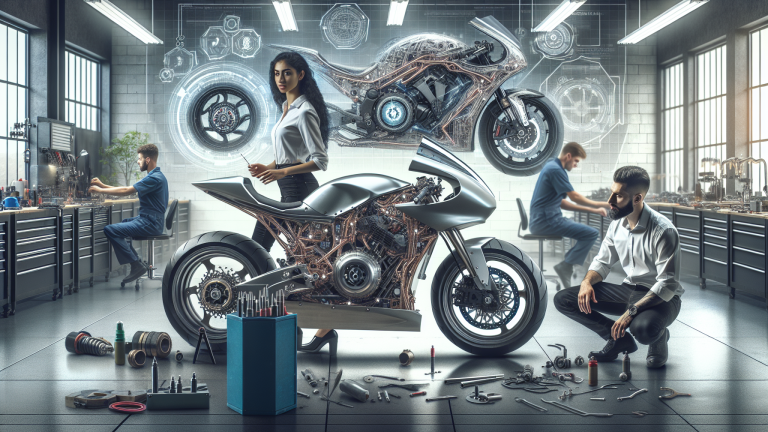
The comeback is tied directly to fabrication tech. Desktop 3D scanning, cardboard-aided design refined into digital templates, affordable TIG capability, compact ECUs, and small-format lithium batteries have changed what independent builders can achieve. Ten years ago, many custom garages relied on cutting until something fit. Today, younger fabricators mock up seat arcs, fender radii, and bracket depth before final welding. That precision supports minimalist design because clean visual work requires hidden structural intelligence. The less the viewer sees, the more the builder must solve behind the scenes.
The New Guard builder mindset also differs from earlier eras. Instead of defining authenticity by how old a method is, many current shops define authenticity by whether the final motorcycle honestly expresses its design intent. That means using modern machining where it improves fit, using OEM engineering where it improves reliability, and fabricating only where fabrication adds value. A well-executed Brat-inspired build in 2026 might combine a vintage tank profile, a hand-shaped aluminum tail section, a CAN-bus-friendly electrical strategy, and suspension geometry corrected through precise measurements rather than guesswork. That is not dilution. It is evolved custom craftsmanship.
Choosing a Base Bike and Avoiding Style Confusion
The best base bike depends on which theory leads the project. For Brat Style, midsize standards, Sportsters, parallel twins, and some older Japanese fours remain excellent because they begin with manageable dimensions and simpler bodywork. For Chicano builds, long visual lines and substantial fenders matter more, so big twins and touring-adjacent platforms often make more sense. Performance Bagger work usually starts with modern Harley touring models because frame stiffness, fairing support, brake availability, and aftermarket suspension development are already there. Frisco builds tend to favor platforms that can handle narrow tanks, raised controls, and a stronger front-end statement without looking bulky.
Style confusion usually starts with shopping instead of sketching. Builders buy a tank from one trend, bars from another, wheels from a third, and then wonder why the bike has no identity. The fix is disciplined planning. Decide on the dominant design language first. Then define three non-negotiables: stance, silhouette, and use case. A commuter-oriented Brat build should not be compromised by decorative parts that reduce steering lock or fuel range. A Performance Bagger should not sacrifice braking and suspension function in pursuit of a thinner side view. The strongest customs always look like they could only have turned out one way.
Why This Hub Matters for the Wider Custom Culture Conversation
This design theory hub matters because it connects scenes that are often covered separately but built through related decisions. Whether the motorcycle ends up low and elegant, hard-charging and aerodynamic, tall and direct, or stripped to a narrow minimalist line, the builder is still solving the same core problems: mass distribution, stance, cultural reference, fabrication quality, and visual coherence. Understanding those shared principles makes every subtopic article more useful, from paint and metal finishing to chassis setup, wheel fitment, seat construction, and bar-control ergonomics.
The 2026 Brat Style comeback is therefore bigger than one label. It signals a wider return to editing, proportion control, and intentional restraint in custom motorcycle design. For readers exploring Chicano, Performance Bagger, Frisco, and beyond, the key takeaway is to treat style as a system, not a costume. Start with the line of the bike. Build around purpose. Use fabrication technology to hide complexity, not to show off process. And study the cultural roots of every reference before borrowing it. If you are building, documenting, or simply learning this space, use this hub as your starting point, then follow the connected articles to go deeper into each design language and the methods that make it work.
Frequently Asked Questions
What does “Brat Style” mean in 2026, and why is it coming back now?
In 2026, Brat Style refers to far more than a retro custom motorcycle look. It describes a design approach centered on narrow frames, flat visual lines, stripped-down bodywork, practical ergonomics, and disciplined minimalism. The original Brat Style movement, associated with Japanese custom builders, emphasized motorcycles that looked clean, lean, and usable every day rather than overloaded with decorative parts. That foundation still matters, but the current comeback is happening because riders and builders are again prioritizing proportion, silhouette, and authenticity over excess. In an era when many customs became visually crowded or performatively “extreme,” Brat Style re-emerged as a more intelligent answer: lighter in appearance, more resolved in composition, and easier to ride in real conditions.
What makes the 2026 revival especially important is that it is not simply imitating older Japanese customs. Builders are now blending the original Brat Style restraint with broader American and global custom influences, including Chicano lowrider visual discipline, Performance Bagger front-end aggression, Frisco stance, and high-skill fabrication culture. The result is a motorcycle language that feels modern rather than nostalgic. People are responding to it because it offers clarity. A narrow frame, a purposeful tank, a clean seat line, and carefully chosen details create a bike that looks custom without looking forced. That balance is exactly why Brat Style has become relevant again.
How do narrow frames and minimalist design define the modern Brat Style look?
Narrow frames and minimalist design are the core of the modern Brat Style comeback because they control how the bike reads from every angle. A narrow-framed motorcycle appears lighter, more agile, and more intentional. It reduces visual bulk through the center section of the bike and allows the tank, seat, and wheels to work together as a single composition instead of separate parts fighting for attention. In Brat Style, that visual slimness is not accidental. Builders actively shape the motorcycle around proportion, removing anything that interrupts the line or widens the silhouette unnecessarily.
Minimalist design in this context does not mean unfinished or bare for the sake of being bare. It means every element has a reason to exist. The seat line is flatter, the rear loop is cleaner, the side profile is less cluttered, and the controls, lighting, and fenders are chosen to support the whole shape rather than dominate it. The bike may still carry custom fabrication, but the craftsmanship is often visible in what has been edited out just as much as what has been added. That is a key distinction. Brat Style minimalism is disciplined, not empty. It relies on strong linework, balanced mass, and practical rideability, so even highly customized builds still feel coherent and usable. In 2026, that restraint is exactly what gives the style its authority.
How is the 2026 Brat Style movement connected to Chicano lowriders, Performance Baggers, and Frisco stance?
The connection is less about copying one scene into another and more about shared design logic. Chicano lowrider culture, at its best, is deeply concerned with line, stance, silhouette, finish, and emotional presence. Performance Bagger culture brings a more aggressive posture, muscular front-end confidence, and a performance-oriented sense of intent. Frisco stance contributes elevated attitude through tank and bar positioning, long visual flow, and a certain rebellious geometry. The 2026 Brat Style movement pulls from all of these worlds, but filters them through a much stricter minimalist lens.
That is why modern Brat Style bikes can look simple while still feeling culturally layered. A builder might use a slim profile and restrained bodywork rooted in Japanese everyday customs, then introduce a tougher fork-and-bar attitude influenced by Frisco builds, a stronger visual shove from the front inspired by Performance Baggers, and a line-conscious respect for stance that echoes lowrider aesthetics. None of these influences need to be loud to be present. In fact, the best 2026 builds show them subtly. The motorcycle remains lean and reduced, yet it carries more visual theory than earlier versions of Brat Style did. That hybridization is one reason the movement feels fresh. It is operating as a design conversation across custom scenes rather than a closed-off niche style.
Is Brat Style mainly about appearance, or is rideability still part of the philosophy?
Rideability is still central to the philosophy, and that is one of the reasons Brat Style continues to resonate with serious builders. Historically, Brat Style was associated with stripped, everyday customs that looked good without sacrificing the ability to actually be ridden. That practical origin remains a major part of its identity. A true Brat-inspired build is usually not trying to become an unrideable sculpture. Instead, it aims to simplify the motorcycle while preserving useful ergonomics, manageable weight distribution, and a riding position that works in real-world conditions.
In 2026, that practical focus has become even more valuable because riders are increasingly skeptical of trends that prioritize social media impact over function. Builders working in the modern Brat Style space often pay close attention to seat height, bar reach, suspension setup, wheel and tire balance, and how the bike behaves in urban riding as well as longer use. The style’s narrowness and visual restraint can actually help function when done correctly, because reducing unnecessary parts often reduces clutter, weight, and maintenance complications. Of course, not every bike labeled “Brat Style” will execute this well, but the authentic philosophy has always been about restraint serving both form and use. That combination of clean aesthetics and practical rideability is exactly what separates a thoughtful Brat build from a bike that is merely stripped down.
What makes a custom bike genuinely Brat Style instead of just minimal or unfinished?
A genuinely Brat Style motorcycle has a deliberate sense of proportion, line, and purpose. It does not simply remove parts and call that a concept. The tank, seat, subframe, wheels, bars, and stance all need to work together to create a slim, level, visually calm machine. The silhouette should feel settled. The details should feel edited. The build should communicate restraint, not absence of effort. That is the difference between Brat Style and a bike that just looks incomplete. Real Brat Style requires design discipline, because minimalism exposes mistakes immediately. If the frame looks too bulky, the seat line breaks awkwardly, the bars fight the tank, or the tire choice ruins the profile, there is nowhere to hide.
Craftsmanship is another major factor. In 2026, the best Brat Style customs are often highly fabricated bikes wearing a very quiet surface language. Mounting points are cleaner, wiring is better concealed, bracketry is more refined, and transitions between components are tighter. Builders understand that minimalist motorcycles demand stronger execution, not less of it. A genuine Brat Style build also tends to retain an everyday logic. It looks as though it could be ridden regularly, parked anywhere, and appreciated over time rather than only under show lighting. Ultimately, the style is defined by intentional reduction. If a motorcycle feels narrow, balanced, useful, and visually disciplined—while carrying subtle cultural influence and quality fabrication—it fits the 2026 Brat Style revival in a meaningful way.