Ceramic coating for custom matte finishes has become a core protection strategy in modern fabrication shops, especially as 3D printing, carbon composite work, and advanced wiring push custom builds toward more delicate surfaces and tighter tolerances. In practical terms, a ceramic coating is a liquid-applied, silica- or polysilazane-based protective layer that bonds to paint, vinyl, plastics, and some composites; a matte finish is any low-gloss surface engineered to diffuse light rather than reflect it. When those two worlds meet, application discipline matters more than product marketing, because a matte panel cannot be corrected the same way a gloss panel can. I have seen builders save a six-figure project with proper prep and coating selection, and I have also seen a rushed installer permanently streak hand-sprayed satin clear on a one-off body kit.
This matters in 2026 because custom culture is no longer just paint and wheels. The new guard of builders works across additive manufacturing, carbon fiber layups, CNC-cut aero, digitally designed harnesses, and mixed-material interiors. A single vehicle may combine a matte PPF-wrapped hood, exposed forged carbon mirror caps, SLS-printed vent pods, Cerakote-coated brackets, and heat-shrunk motorsport wiring in visible areas. Each material ages differently under UV, oils, washing chemicals, and road fallout. Ceramic coating is not a magic shield, but when matched correctly to the substrate, it reduces contamination, eases maintenance, and preserves the intended low-sheen look without adding unwanted gloss.
As the hub article for fabrication tech under custom culture and builders, this guide explains how ceramic coating fits into the wider workflow of 3D printing, carbon fabrication, and wiring integration. It answers the practical questions builders actually ask: What can be coated, what should not be coated, how do you prep matte surfaces without changing texture, which tools and standards matter, and where do common failures start? The goal is simple: help fabricators, detailers, and owners protect custom matte finishes while respecting the engineering and craft behind the build.
Why matte protection now belongs in the fabrication workflow
In 2026, ceramic coating is no longer a final cosmetic add-on; it is part of fabrication planning. The reason is material complexity. Traditional detailing assumed painted metal panels with relatively predictable hardness and repair methods. Today, a custom shop may install vacuum-infused carbon splitters, FDM-printed prototypes, MJF nylon ducts, TPU grommets, laser-cut switch panels, and bodywork finished in matte clear or stealth film. If protection decisions happen after assembly, the shop often discovers incompatibilities too late.
Matte finishes create a unique challenge because they rely on controlled surface texture to create low reflectivity. Abrasion, aggressive polishing, solvent swelling, or residue buildup changes the way light scatters. That means defect removal options are limited. On gloss paint, you can often polish away water spots or high spots. On matte paint, polishing increases gloss and creates a visible patch. The safer strategy is contamination prevention from day one. That is exactly where a suitable ceramic coating helps: less mineral bonding, less bug etching, less oil absorption, and easier cleaning with pH-balanced products.
Builders should think about coating at the same stage they choose clearances, fastener finishes, and thermal barriers. For example, an exposed carbon roof panel with a satin automotive clear may need infrared curing limits, while a printed ABS electronics cover near a windshield needs a product with lower solvent aggressiveness. A harness tray finished in textured powder coat may benefit more from a trim coating than a paint coating. The takeaway is direct: substrate-specific planning prevents expensive surface changes later.
How ceramic coating behaves on matte paint, matte PPF, vinyl, and coated metal
The first rule is that ceramic coating should preserve the existing sheen, not redefine it. High-quality coatings designed for matte and satin finishes form a thin, transparent layer measured in microns. They do not fill texture enough to make a true matte panel look glossy when applied correctly. Problems usually come from overapplication, poor leveling, incompatible carrier solvents, or installers trying to stack layers unnecessarily.
Matte paint is the most sensitive substrate. OEM frozen finishes from brands such as BMW Individual or Mercedes-Manufaktur, as well as custom satin clears from Glasurit, PPG, or BASF systems, can generally be coated after full cure and careful decontamination. The installer must avoid abrasive claying unless absolutely necessary and instead use chemical decontamination first. Iron removers, dedicated tar removers, and gentle wash media are safer than mechanical correction. Panel wipe products should be tested in a hidden spot because some matte clears temporarily darken when saturated.
Matte PPF is often the most forgiving option for custom builds. Premium films from XPEL Stealth, STEK DYNOmatt, and SunTek Reaction have self-healing top layers and consistent texture, making them ideal for daily-driven customs. Coating these films can improve hydrophobicity and reduce dye transfer, especially on wrapped rocker panels and fender flares. However, some film manufacturers already integrate top-coat chemistry, so the installer should verify warranty compatibility before application.
Vinyl wraps and coated metals require more nuance. Matte wrap films can be coated, but edges, seams, and recessed channels are vulnerable to residue buildup. Powder-coated brackets, skid plates, and fabricated trim pieces often accept ceramic well, yet textured finishes trap excess product if the installer uses too much. A thin, methodical application with short-pile microfiber towels is safer than trying to chase maximum slickness.
3D printing and surface protection: what custom builders need to know
3D printing has changed fabrication because it compresses design cycles. Builders now prototype dash pods, sensor mounts, ducting, switch bezels, and aero mockups in hours, not weeks. But printed parts vary dramatically in porosity, heat resistance, and chemical tolerance. A ceramic coating can protect some printed components, especially visible matte-finished trim, but only after the right post-processing.
FDM parts in PLA are poor candidates for engine-bay or high-UV use, with or without coating. PLA softens too easily and degrades under heat. PETG and ASA perform better, while ABS remains common for interior and enclosed applications if vapor smoothing or primer systems are used correctly. Nylon parts made by SLS or MJF are increasingly popular for functional custom work because they deliver better dimensional stability and more uniform texture. Those parts can be dyed or painted, then coated once sealed and cured.
In my experience, the biggest mistake is coating raw printed texture and expecting durability. Layer lines and open pores trap prep solvents, dust, and coating residue. Better results come from a structured sequence: print orientation for visible faces, sanding or media finishing where appropriate, filler-primer for cosmetic parts, a matte topcoat matched to the use case, then a compatible ceramic layer. If the part is intended to stay raw for a technical look, use a test piece first. Some coatings darken nylon or make black-dyed polymers look patchy under direct light.
For hub-level planning, builders should separate printed parts into three classes: cosmetic interior, exterior low-heat, and structural-adjacent functional. Only the first two regularly benefit from ceramic coating. Structural-adjacent parts are usually better served by engineering-grade materials, mechanical design validation, and maintenance access rather than cosmetic protection chemistry.
Carbon fiber, forged carbon, and exposed composites under matte coatings
Carbon parts are central to modern custom builds, but the word carbon hides several very different realities. A dry carbon aero blade with UV-stable satin clear behaves differently from a wet-lay cosmetic panel, a forged carbon trim insert, or an epoxy-rich part that was finished in-house. Ceramic coating can help all of them resist contamination and washing damage, yet it cannot fix resin instability, pinholes, or poor post-cure control.
Exposed carbon usually fails from UV exposure, heat cycling, and moisture ingress at edges before it fails from ordinary dirt. That is why prep and finishing standards matter more than brand claims. If a part has been cleared with a quality automotive matte clear and allowed to cure correctly, coating is straightforward. If the weave is raw under thin resin, or if the shop rushed demolding and sanding, coating may lock in visual defects and complicate refinishing.
Forged carbon deserves special mention because its chopped-fiber pattern can visually mask micro-marring while highlighting uneven darkening. Installers should level coating carefully and inspect under diffuse and point-source lighting. Carbon mirror caps, intake covers, seat shells, and splitters also experience different thermal loads, so product choice must reflect placement. A trim coating that works on an interior console may not survive sustained engine-bay temperatures.
| Fabrication material | Common matte finish path | Coating benefit | Main risk |
|---|---|---|---|
| Matte paint | Satin or frozen clearcoat | Easier cleaning, reduced spotting | High spots cannot be polished out |
| Matte PPF | Stealth film with self-healing topcoat | Hydrophobicity, stain resistance | Warranty conflicts if unapproved |
| 3D-printed nylon | Dyed or painted low-sheen part | Less dirt retention, easier wipe-down | Darkening or patchiness on porous surfaces |
| Exposed carbon | UV-stable satin clear over composite | Reduced contamination, easier maintenance | Does not solve poor resin or edge finish |
| Powder-coated metal | Textured or smooth matte powder | Chemical resistance, simpler washing | Residue buildup in texture if overapplied |
Wiring, electronics packaging, and the overlooked surfaces around them
Advanced wiring is one of the least discussed parts of custom fabrication, yet it shapes how finished builds age. Modern projects often use motorsport connectors, Raychem DR-25, concentric twisting, 3D-printed pass-throughs, CAN-based accessories, and modular fuse or solid-state power systems from brands such as Motec, Haltech, ECUMaster, or RaceGrade ecosystems. These systems create visible fabrication surfaces that owners touch and clean: switch panels, printed enclosures, powder-coated mounting plates, carbon electronics covers, and trunk-mounted electrical boards.
Ceramic coating is useful here because fingerprints, dust, and cleaner residue collect quickly on matte black surfaces. On show cars and high-end street builds, the visual standard inside a hatch area or rear seat delete panel is now close to engine-bay quality. A coating on coated aluminum panels, satin clear over carbon boards, or painted ABS switch fascias can simplify maintenance and reduce the need for repeated wiping, which is what often creates shine spots.
There are limits. Do not treat ceramic coating as an electrical insulation upgrade or moisture-proofing substitute. Connectors still need proper sealing, strain relief, service loops, abrasion protection, and current-safe design. Adhesive-lined heat shrink, Deutsch DT or DTM connectors, proper crimp tooling, and documented circuit planning matter far more than any surface treatment. The right way to think about coating in wiring zones is cosmetic and maintenance-oriented, not electrical or structural.
The 2026 application guide: prep, install, cure, and maintenance
The safest ceramic coating process for custom matte finishes starts with identification, not washing. Confirm the exact substrate, finish system, cure status, and manufacturer guidance. Ask whether the panel is matte paint, matte PPF, wrap film, powder coat, Cerakote, hydro-dipped trim under matte clear, or a printed part with a painted top layer. Once identified, perform a test spot in an inconspicuous area.
Wash with a residue-light, pH-balanced shampoo. Decontaminate chemically before touching the surface mechanically. Use iron remover where appropriate, tar remover where needed, and a dedicated matte-safe cleaner for stubborn oils. Dry with filtered air and soft towels. If correction is required, stop and reassess, because visible defect removal on matte surfaces is usually a refinishing task, not a polishing task.
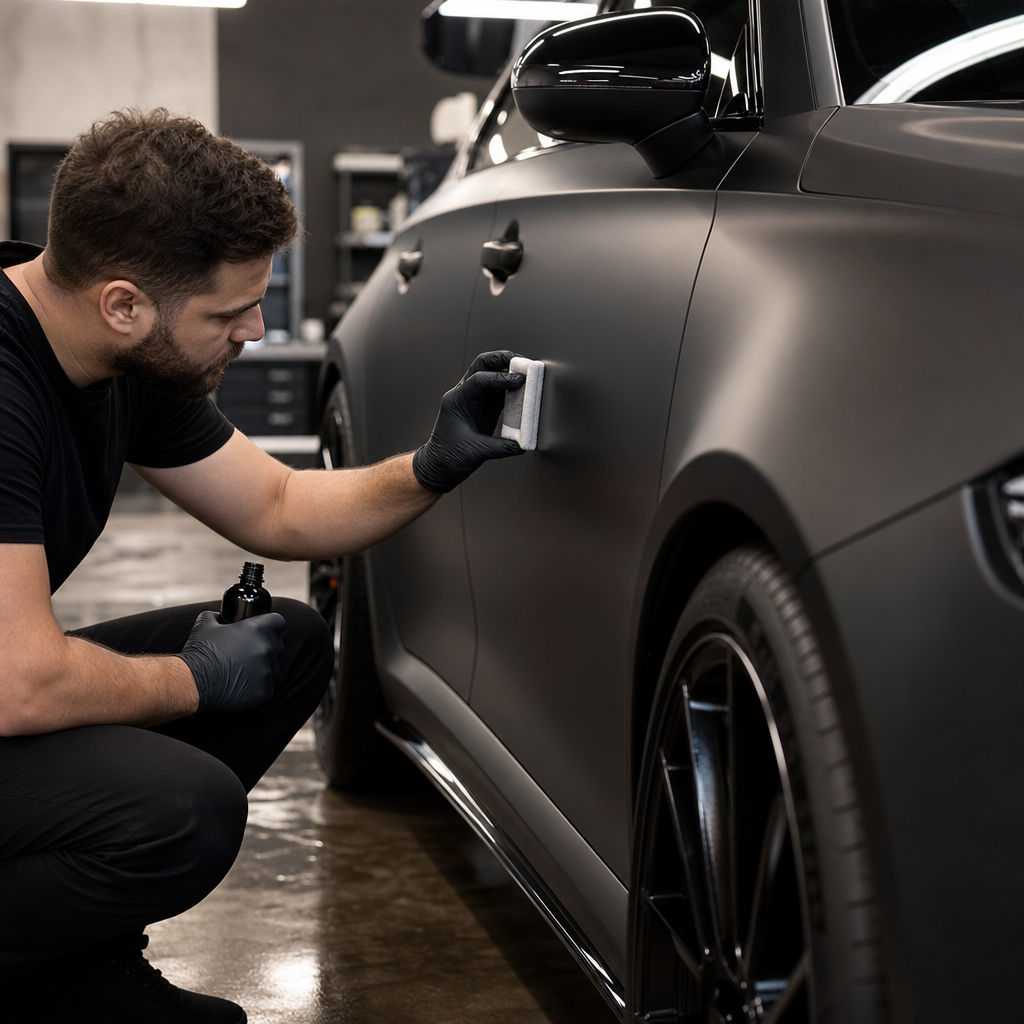
Apply coating in small sections using a suede applicator or brand-specific block. Spread evenly, watch the flash behavior, then level with minimal pressure. Temperature and humidity materially change working time, so 65 to 75 degrees Fahrenheit with controlled humidity remains the most forgiving shop range. Use bright diffuse inspection lighting plus a handheld point light to catch streaking. On textured matte surfaces, less product is usually better.
Curing discipline separates professional results from avoidable failures. Respect initial set times, avoid moisture during the first hours, and delay chemical washing until the coating fully cures per manufacturer guidance. For maintenance, use pH-neutral soaps, dedicated drying towels, and mineral-removal chemistry when needed. Avoid wash-and-wax products, gloss enhancers, and abrasive spot cleaning. If a build includes coated printed parts, carbon trim, and matte film, document each surface in the delivery packet so the owner knows exactly how to care for it.
For builders developing a fabrication tech content hub, that documentation mindset is the larger lesson. 3D printing, carbon fabrication, and advanced wiring all reward process control. Ceramic coating for custom matte finishes works best when it is integrated into design, finishing, and owner education rather than treated as a last-minute shine product. Protect the texture, match the chemistry to the material, and use test panels before committing to a one-off part or complete vehicle. Done correctly, coating preserves the intent of the build: clean surfaces, easier maintenance, and a matte look that stays deliberate instead of slowly turning blotchy, stained, or uneven. If you are planning a custom project in 2026, map your materials early, choose coating-compatible finishes, and build a care plan before the first part goes on the car.
Frequently Asked Questions
1. What makes ceramic coating different on a custom matte finish compared with a gloss finish?
Ceramic coating behaves differently on matte surfaces because the goal is protection without changing the appearance that makes the finish unique. A gloss surface is designed to reflect light evenly, so many coatings can enhance shine and depth without causing concern. A matte finish, by contrast, is engineered to scatter light through a controlled surface texture. That texture is what creates the flat, satin, frozen, or stealth look. If the product, prep method, or wipe technique is wrong, the coating can partially level that texture, leave uneven dark patches, or create shiny high spots that are far more visible than they would be on gloss paint.
On custom builds, this matters even more because matte finishes are often found on mixed-material assemblies rather than a single painted panel set. A fabrication shop may be coating matte paint, PPF, vinyl wraps, textured plastics, exposed carbon composite panels, trim pieces, and low-sheen powder-coated hardware all in the same project. Each substrate can absorb, flash, and cure a coating differently. In 2026 application workflows, the best practice is to use a ceramic coating specifically labeled as safe for matte or satin surfaces, verify substrate compatibility, and perform a test spot in a low-visibility area before full application.
The other major difference is correction. On gloss paint, swirls or hazing can often be polished out before coating. On matte finishes, polishing is usually not an option because it changes the sheen and can permanently create glossy spots. That means surface prep has to be much more disciplined. Decontamination, panel wipe, residue removal, and environmental control must be handled carefully because the installer has less room to fix mistakes afterward. In short, ceramic coating on matte surfaces is less about adding visual drama and more about preserving the intended texture, reducing contamination bonding, improving cleanability, and protecting a finish that can be difficult and expensive to repair.
2. Which custom matte surfaces can be ceramic coated safely in 2026 fabrication and detailing environments?
Most properly selected ceramic coatings can be used on a wide range of matte substrates, but “safe” depends on both the chemistry of the coating and the exact material underneath it. In modern custom fabrication environments, common candidates include matte paint systems, satin or frozen OEM-style finishes, matte vinyl wraps, matte paint protection film, low-gloss powder coat, certain sealed carbon composite parts, textured exterior plastics, and some interior trim surfaces. The key is that the coating must be compatible with the porosity, flexibility, heat exposure, and surface energy of the material being treated.
For example, matte paint and matte PPF are among the most common ceramic-coated surfaces because they benefit substantially from easier washing and reduced staining. Matte wraps also respond well when the coating is designed for film and vinyl rather than only for hard clearcoat. On carbon composite parts, the answer depends on the resin system and top layer. If the carbon is clear-coated or otherwise sealed, coating is typically straightforward. If the surface is raw, hand-finished, or unusually porous, product selection and test application become essential. The same logic applies to advanced fabrication parts such as custom housings, additively manufactured trim, and protective covers used around wiring and electronics. Some 3D-printed polymers and textured engineering plastics can accept a coating nicely, while others may streak, darken inconsistently, or reject the coating entirely.
In 2026, the smartest shop process is to identify every surface category before coating begins: painted panels, film-covered panels, trim plastics, composite aero pieces, wheel faces, calipers, and underhood cosmetic pieces. Then match each category with the correct coating or leave it uncoated if compatibility is uncertain. Temperature resistance also matters around EV conversions, battery enclosures, turbo systems, and dense wiring bays where heat cycling is more severe. A coating that performs beautifully on exterior matte paint may not be suitable for a high-heat composite cover near power electronics. So yes, many custom matte surfaces can be coated safely, but only when the installer treats the project as a material-specific process rather than a one-product-fits-all job.
3. How should a matte-finish vehicle or custom component be prepared before ceramic coating is applied?
Preparation is where ceramic coating success is won or lost on matte finishes. Because matte surfaces generally cannot be polished to correct defects without altering sheen, the prep stage has to remove contamination thoroughly while preserving the original texture. Start with a safe pre-rinse and pH-appropriate wash to eliminate loose dirt, traffic film, fabrication dust, and shop residue. If the build has recently gone through bodywork, wrap installation, composite trimming, or wiring integration, pay special attention to tape residue, fingerprints, adhesive traces, polishing dust from adjacent gloss parts, and airborne contaminants that may have settled during assembly.
After washing, use iron removers, tar removers, or specialty decontamination products only if they are confirmed safe for the specific matte surface. Some aggressive chemicals can stain wraps, disturb fresh finishes, or leave patchy darkening on sensitive low-gloss materials. Mechanical decontamination such as clay should also be approached carefully. On some matte paint or film surfaces, aggressive clay media can mar the finish or create visible changes in texture. A fine-grade method with plenty of lubrication, or in some cases a chemical-only decontamination approach, is often safer. Once contamination is removed, use a residue-free panel wipe that is appropriate for the substrate. The objective is to eliminate oils, surfactants, and installation residues without softening the film, swelling the surface, or leaving a haze.
Environmental control is equally important. Matte coating work should be performed in clean, stable conditions with controlled temperature and humidity, strong but diffused lighting, and enough access to inspect the panel from multiple angles. On complex custom builds, isolate sensitive sections such as exposed connectors, open electronics, raw composite edges, suede-like interior materials, and unfinished printed parts. Masking is not optional when tolerances are tight. Finally, conduct a test spot and confirm three things before proceeding: the coating flashes correctly, it wipes cleanly, and it does not alter the sheen. That disciplined prep sequence is the reason high-end shops get a uniform result on matte builds while rushed applications often end with streaking, patchiness, or unwanted gloss changes.
4. What is the correct application process for ceramic coating on matte finishes, and what mistakes should be avoided?
The correct application process starts with using a coating formulated for matte or satin surfaces and then applying it in a controlled, methodical pattern. Work one small section at a time so the product can be leveled before it flashes too aggressively. In many cases, a crosshatch pattern with even pressure gives the most uniform coverage. The installer should watch for subtle visual cues rather than the more obvious rainbowing often seen on gloss paint. Matte surfaces can be trickier to read, so timing matters. Once the coating reaches the proper flash point, level it gently with a clean, high-quality microfiber and follow with a second towel if needed to ensure no residue remains. The goal is an invisible, even layer that protects the surface without adding gloss, smears, or heavy spots.
One of the biggest mistakes is over-applying product. Excess coating does not equal better protection. On matte finishes, too much product increases the chance of high spots, dark patches, and uneven sheen. Another common error is allowing the coating to dwell too long before leveling, especially in warm or dry conditions. That can cause grabby wipe-off and residue that becomes difficult to remove without reworking the section. Poor towel management is another frequent problem. Towels loaded with partially cured coating can drag product across the texture and leave streaks that stand out badly on low-gloss surfaces. Fresh towels, frequent rotation, and disciplined section control make a major difference.
Installers should also avoid machine polishing before or after coating unless the finish type explicitly allows it, which most matte systems do not. If a mistake occurs, correction options are limited compared with gloss finishes. That is why test spots, lighting checks, and environmental consistency are so important. In fabrication shops handling custom bodywork, carbon parts, and complex trim interfaces, application order also matters. Coat areas that are easiest to access first, then move toward tighter contours, vents, edges, and material transitions. This reduces the risk of leaning on freshly coated panels or dragging applicators across neighboring surfaces. The best 2026 workflow is deliberate, substrate-aware, and conservative: thin layers, small sections, careful leveling, and immediate inspection.
5. How long does ceramic coating last on matte finishes, and how should it be maintained to preserve the original look?
Durability depends on the coating chemistry, the substrate, the quality of prep and installation, and the way the vehicle or component is used afterward. In real-world conditions, a professionally applied ceramic coating on matte paint, matte PPF, or satin wrap can provide meaningful protection for several years, but the number on the product label is only part of the story. A garage-kept custom build that is washed correctly and sees limited foul-weather use will retain performance much longer than a daily-driven project exposed to hard water, road salts, industrial fallout, bug impact, and repeated chemical exposure. On high-contact areas such as front clips, rocker zones, wheel-adjacent trim, and lower aero components, performance may taper sooner simply