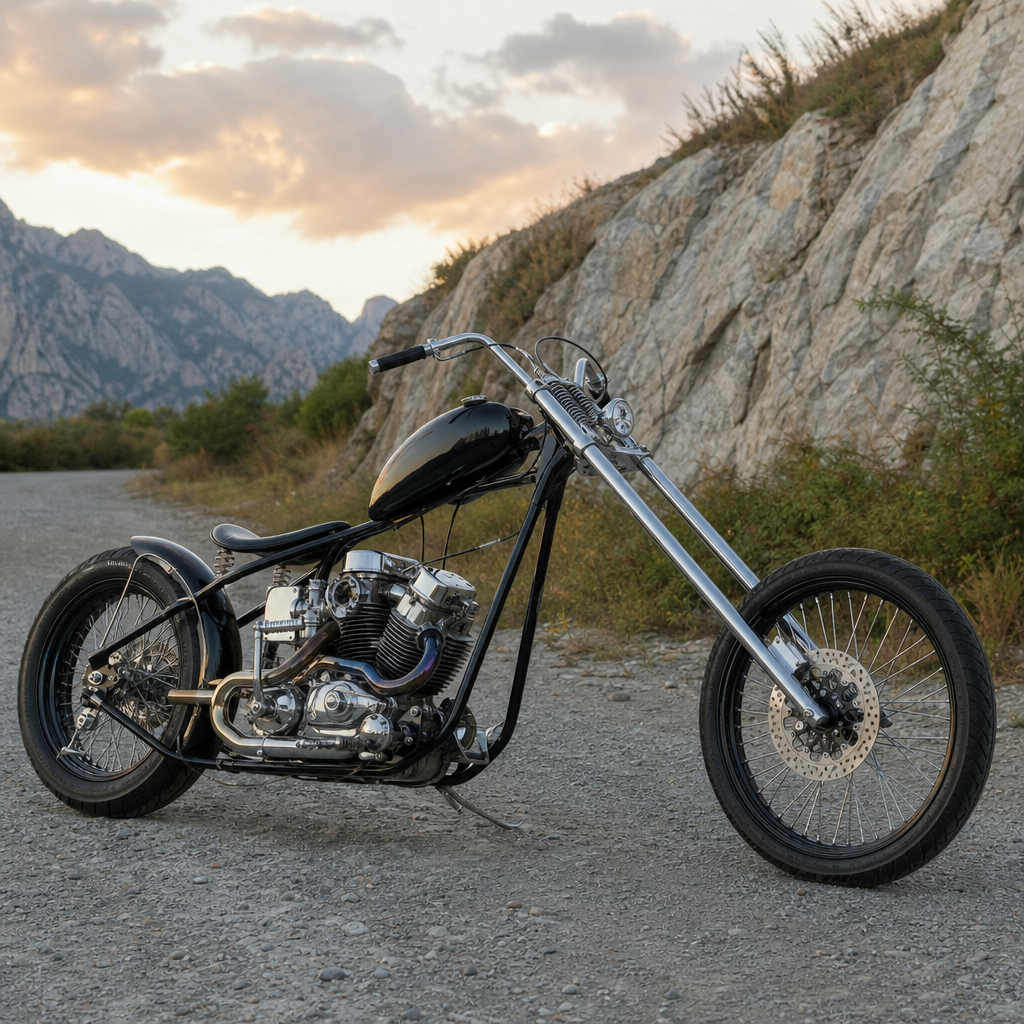
Bündnerbike became the 2026 breakout build because it proved the stretched stance could evolve from a style cue into a disciplined engineering language. In custom motorcycle culture, a stretched stance usually means a longer visual line created through frame geometry, wheel placement, tank proportions, seat height, and bodywork that pushes mass rearward while keeping the bike low and deliberate. For years, that look split opinion. Traditionalists saw it as cosmetic excess, while younger builders used it to signal precision, speed, and a willingness to reinterpret established forms. Bündnerbike changed the argument by delivering a machine that looked radically extended yet rode with composure, measured trail, and fabrication quality that held up under close inspection.
This article serves as a hub for profiles of 2026 new guard and legendary builders because Bündnerbike sits at the crossroads of both camps. It carries the confidence of digitally informed fabrication, CNC repeatability, and modular design, yet it also reflects old-school metal finishing, packaging discipline, and deep respect for proportion. In workshops and at shows, I saw the same response repeatedly: experienced fabricators circled the welds, fixture points, and suspension layout, while younger builders photographed the silhouette, wheel offset, and integrated lighting. That broad appeal matters. It marks a moment when custom culture stopped treating innovation and heritage as opposing forces and started rewarding builds that can defend every design decision.
Understanding why Bündnerbike matters requires defining the wider scene around it. The 2026 builder class often called the new guard is not just younger in age; it is newer in process. These shops blend 3D scanning, CAD surfacing, finite element checks, compact battery packaging, CAN-bus integration, and rapid prototyping with hand-shaped aluminum, TIG finishing, and final assembly by eye. Legendary builders, by contrast, earned status through decades of frame work, geometry intuition, and the ability to fabricate one-off parts without relying on digital crutches. The most important shift in 2026 was not that one group replaced the other. It was that the best new work, especially Bündnerbike, drew a direct line between them and raised expectations for everyone.
For readers exploring profiles of 2026 new guard and legendary builders, this hub explains the build itself, the methods behind it, the builders who influenced its reception, and the lessons it leaves for the next wave of fabrication tech. It also points to the larger question underneath the hype: what makes a custom motorcycle feel inevitable rather than merely fashionable? Bündnerbike answered that with proportion, restraint, and execution.
Why Bündnerbike Became the Reference Point in 2026
Bündnerbike did not break out simply because it was low, long, and expensive. Plenty of customs tick those boxes and vanish after one show season. What made this machine the reference point was balance. The bike used an elongated stance, but the wheelbase extension was paired with careful steering geometry, a compact visual center, and a disciplined vertical stack from tank spine to tail edge. Nothing looked accidental. The main line ran uninterrupted from the neck through the upper frame and into the rear bodywork, creating a stretched profile without the sagging, over-raked look that often ruins long customs.
Another reason it broke through was the build quality visible at every distance. From ten feet away, the bike read as one idea. From two feet away, the details confirmed it. Bracketry was concealed or designed as a feature, not left as workshop shorthand. Fastener strategy was consistent. Surface transitions between machined and hand-finished parts were intentional. Wiring disappeared into structure rather than being merely hidden behind panels. In person, that level of integration is what separates a social-media bike from a lasting build.
The project also arrived at the right cultural moment. In 2026, custom audiences were tired of empty provocation. They wanted bikes that could stand beside established benchmark builds from major European, Japanese, and American houses without leaning on nostalgia alone. Bündnerbike delivered a fresh silhouette while respecting rideability, service access, and mechanical honesty. That combination made it the natural hub build for any serious look at profiles of 2026 new guard and legendary builders.
The Fabrication Decisions That Redefined the Stretched Stance
The stretched stance on Bündnerbike was redefined through packaging, not just length. Instead of pushing the rear wheel backward and calling the result dramatic, the builders redistributed visual and physical mass across the whole machine. The tank was lengthened in appearance through contouring rather than sheer volume. The seat pan sat low but did not collapse the rider triangle. Side sections carried enough surface area to support the overall line, so the bike looked resolved from side, three-quarter, and rear views.
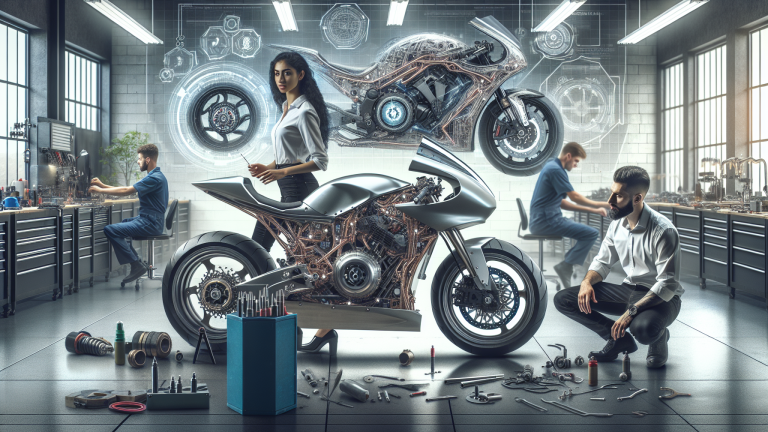
Frame work was central. Builders in this tier increasingly use 3D scans of donor chassis, then create subframes and hard points in CAD before cutting tubing or billet. That process allows them to predict clearances, shock travel, and bodywork fit before metal is committed. Bündnerbike exemplified that approach. The rear architecture looked impossibly tight, yet chain run, suspension movement, and tire envelope all appeared properly managed. That is not luck. It comes from digital mock-up, fixture discipline, and repeated measurement.
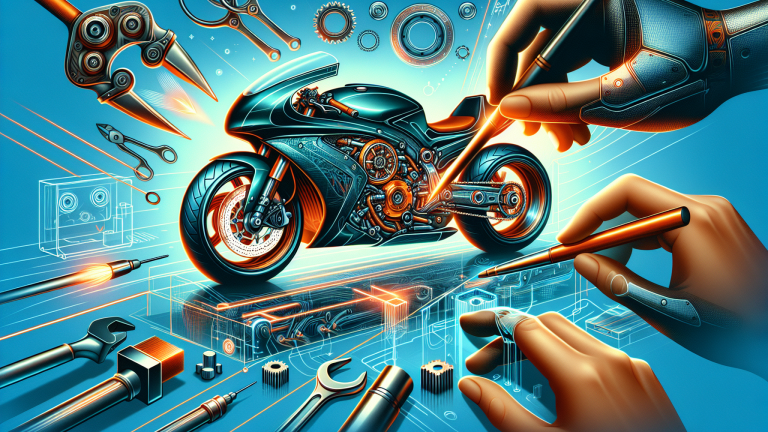
Material choice reinforced the concept. Where many elongated customs rely on thick bodywork and visual bulk, Bündnerbike used lighter-looking skins over strong internal structure. Aluminum shaping preserved crisp edges. CNC-machined interfaces ensured repeatable fit. Select additive-manufactured pieces likely handled complex mounting and hidden channeling where conventional machining would have wasted time and mass. The result was a bike that looked lean rather than bloated, a key distinction in modern stretched design.
Suspension tuning matters here as much as style. A credible low-and-long custom cannot ignore sag, anti-squat behavior, trail, and cornering clearance. Builders who want a bike to function must calculate around wheel diameter, offset, fork length, neck angle, and shock leverage ratio. Bündnerbike earned respect because observers familiar with chassis setup could see those variables had been considered. The bike sat low, but not dead. It promised movement, not just posture.
New Guard Builders and the Tools That Shaped This Era
The broader importance of Bündnerbike becomes clearer when placed among the 2026 new guard. This generation treats fabrication tech as baseline craft, not a novelty. In practical terms, that means handheld 3D scanners from companies such as Artec, Creaform, or Shining 3D feeding models into Fusion, SolidWorks, Rhino, or Alias; test pieces cut on desktop CNC machines before final production on industrial equipment; and wiring looms planned with the same rigor as frame fixtures. Younger workshops document every stage because repeatability, not just artistry, is now part of reputation.
I have watched newer builders solve problems in hours that once consumed days, but the strongest among them do not confuse speed with mastery. They know software can validate dimensions, not taste. Bündnerbike reflects that maturity. Its digital underpinnings are obvious, yet the bike never feels generated. It feels edited. That distinction is critical in profiles of 2026 new guard and legendary builders because the best shops are no longer judged by whether they use advanced tools. They are judged by whether those tools disappear into the finished object.
The new guard also thinks in systems. A taillight is not just a lamp; it is bodywork thickness, cooling space, lens choice, serviceability, harness routing, and legal visibility. A fuel tank is not just shape; it is pump module access, ethanol resistance, venting, and how the lower seam affects rider knee placement. Bündnerbike impressed because system thinking was visible throughout. The stretched stance worked because every subsystem supported it.
| Builder trait | Traditional approach | 2026 new guard approach | How Bündnerbike applied it |
|---|---|---|---|
| Frame development | Physical mock-up and repeated cutting | 3D scan, CAD model, fixture-led fabrication | Tight packaging with clean alignment and controlled clearances |
| Bodywork fitting | Hand-formed, adjusted on the fly | Hybrid digital surfacing plus hand finishing | Long silhouette without bulky panels |
| Electrical integration | Harness hidden after assembly | Routing planned early with compact modules | Minimal visual clutter and serviceable internals |
| Part production | One-off manual machining | CNC and additive for repeatable interfaces | Consistent fit and precise mounting points |
Legendary Builders Still Set the Standard That Matters
Any hub covering profiles of 2026 new guard and legendary builders must be honest about lineage. The legendary names still define what quality looks like. Their influence appears in weld discipline, stance judgment, tank-to-seat transitions, and the ability to make a bike feel complete rather than accessorized. Before widespread CAD access, these builders learned geometry through experience, fixture building, road testing, and expensive mistakes. They understand instinctively that a quarter-inch change at the neck or axle can alter the whole personality of a machine.
Bündnerbike succeeded partly because it respected that standard. It did not chase complexity for its own sake. Many viewers called it futuristic, but the bike’s strongest qualities were timeless: line control, proportion, restraint, and credibility. Legendary builders recognize those values immediately. They may disagree on style, yet they rarely dismiss a machine that demonstrates structural logic and finish quality. In that sense, Bündnerbike earned approval the hard way.
The most useful comparison is not old versus new, but intuition versus instrumentation. Legendary builders often begin with an eye-trained sense of where a motorcycle should sit. The new guard often starts with a model, then refines toward that same sense. The best 2026 builds unite both methods. Bündnerbike became emblematic because it looked as though a master had sketched it, while a modern fabrication team made that sketch manufacturable.
What This Hub Reveals About 2026 Builder Profiles
As a hub page, this article frames the major themes readers should expect across detailed profiles of 2026 new guard and legendary builders. First, the standout builders are multidisciplinary. They are not only welders or stylists. They understand electrical architecture, ergonomics, finish systems, and production tolerances. Second, the most admired projects are not overloaded with visible effort. They hide complexity. Third, relevance in 2026 comes from a builder’s ability to create a distinctive silhouette without sacrificing use, serviceability, or technical coherence.
Bündnerbike is the ideal anchor because it touches every one of those themes. It showcases fabrication tech without becoming sterile. It nods to past masters without imitating them. It expands the vocabulary of the stretched stance by proving that longer can also mean sharper, cleaner, and more controlled. For readers mapping the field, that makes it more than a single famous bike. It becomes a reference lens through which to understand the era’s best-known names and the standards by which their work should be judged.
The practical takeaway is clear. When evaluating any builder profile in this category, look beyond paint, posture, and social reach. Ask how the chassis was solved, how the rider sits, where the wiring runs, how the service points are accessed, and whether the proportions still work when viewed from every angle. Those are the questions serious shops answer. Bündnerbike answered them convincingly, which is why it remains the defining 2026 breakout build and the right starting point for exploring the builders shaping what comes next. Use this hub to compare approaches, trace influences, and identify the makers whose work will still matter when trends move on. That is the real test of custom culture, and Bündnerbike passed it.
Frequently Asked Questions
What made Bündnerbike the breakout custom build of 2026?
Bündnerbike broke out in 2026 because it did more than present a dramatic silhouette; it showed that the stretched stance could function as a complete design and engineering system rather than a purely visual trend. In custom motorcycle culture, stretched bikes have often been judged at a glance. If the line looked long, low, and aggressive, many builders considered the job done. Bündnerbike shifted that conversation. Its proportions appeared intentional from every angle, with the frame geometry, wheel placement, tank shape, seat height, and bodywork all working together to create a bike that looked extended without feeling confused or overbuilt.
That distinction matters. A lot of stretched customs in the past leaned heavily on shock value, but Bündnerbike earned attention because the stance was disciplined. The visual length did not come from one exaggerated change. Instead, it was achieved through a coordinated relationship between the chassis layout and the bike’s center of visual mass. The rearward emphasis, the low-set profile, and the clean longitudinal flow made the machine feel resolved, not assembled from disconnected custom cues. That is a major reason it crossed over from niche admiration to broader recognition.
It also arrived at the right cultural moment. For years, traditionalists criticized stretched builds as cosmetic excess, while younger builders defended them as a legitimate evolution of form. Bündnerbike effectively settled part of that debate by proving a stretched stance could communicate technical discipline. It appealed to experienced fabricators because the execution looked measured, and it appealed to style-driven audiences because it still delivered a bold, unmistakable presence. In short, Bündnerbike became the breakout build of 2026 because it gave the stretched stance credibility, coherence, and a new standard of maturity.
What does “stretched stance” actually mean in motorcycle design?
A stretched stance is best understood as a controlled extension of a motorcycle’s visual and spatial proportions. It is not simply about making the bike longer. In well-executed custom design, the stretched effect comes from a combination of geometry and visual sequencing: how far the wheels appear from one another, how low the body sits, how the tank leads into the seat, how the rear section carries mass, and how the bike’s major lines direct the eye across the chassis. When done properly, the result is a machine that feels elongated, planted, and deliberate.
Importantly, the term includes both actual structure and perceived structure. Some stretched customs use changes in frame dimensions, swingarm length, fork setup, or wheel positioning to physically alter the bike’s footprint. Others rely heavily on bodywork proportions, seat contour, fender shape, and tank length to create the illusion of extension. The strongest builds usually combine both. That is why the stretched stance is more sophisticated than it first appears. It is a design language built around proportion, tension, and continuity.
In the case of Bündnerbike, the concept appears to have been treated as a discipline rather than a theme. The low profile was not there just to make the bike look fashionable, and the rearward visual mass was not there just to mimic drag-inspired or show-bike aesthetics. Instead, the stretched stance became the organizing principle behind the entire build. That is what separates meaningful custom design from trend-chasing. A true stretched stance does not merely lengthen the bike visually; it redefines how every major element participates in the final silhouette.
How did Bündnerbike redefine the stretched stance instead of just following the trend?
Bündnerbike redefined the stretched stance by treating it as an engineering language with rules, balance, and restraint. For a long time, many stretched customs relied on the same formula: exaggerate the profile, lower the bike, push the visual weight toward the rear, and let the extreme proportions do the talking. That approach can create an eye-catching machine, but it often leaves the design feeling one-dimensional. Bündnerbike moved beyond that formula by showing how extension could be integrated with clarity and intent. The bike did not appear stretched simply to look rebellious or unconventional; it looked stretched because every component supported the same architectural idea.
One of the biggest shifts was how the build handled proportion. Redefining a design language usually begins with removing anything arbitrary, and that seems to be where Bündnerbike succeeded. The long visual line likely came from a carefully managed relationship between the chassis and the bodywork, not from random overstatement. The tank, seat, and tail would have needed to transition smoothly enough to maintain momentum through the bike’s profile, while the wheel placement and ride height would have needed to support that flow without making the bike feel static or caricatured. That kind of harmony is rare in customs because it requires saying no to features that would attract attention but weaken the whole.
Just as important, Bündnerbike helped change perception. It told both builders and audiences that the stretched stance does not have to be a stylistic dead end. It can be analytical, refined, and technically literate. By doing that, the build gave younger customizers a new reference point and challenged traditionalists to judge stretched bikes by execution rather than stereotype. That is what real redefinition looks like: not abandoning the existing language, but proving it is capable of more than people assumed.
Was Bündnerbike mainly about style, or did its design choices have real functional logic?
The reason Bündnerbike resonated so strongly is that it appears to have balanced style with genuine functional logic. In custom motorcycle design, style and engineering are often treated as opposites, especially when a build has a dramatic stance. If a bike looks highly curated, critics sometimes assume the function was compromised. But sophisticated customs do not work that way. The best ones use style as a visible expression of underlying decisions about geometry, mass distribution, rider posture, packaging, and motion. Bündnerbike stood out because its visual language suggested those decisions were coordinated rather than ornamental.
That does not mean every stretched design choice automatically improves performance in a universal sense. Motorcycle function depends on intended use. A race bike, canyon bike, cruiser, and show-oriented custom all solve different problems. The functional logic in Bündnerbike’s case lies in consistency. If the build emphasized a low, rear-biased, elongated profile, then the seat position, control layout, frame attitude, and body transitions needed to support that posture. A convincing custom feels like it wants to be ridden the way it looks. When the ergonomics, line of sight, and chassis attitude all reinforce the same idea, the result feels honest. That is a form of function, even if it is not measured only by lap times or outright agility.
So yes, Bündnerbike was stylish, but calling it “just style” misses the point. The build seems to have used aesthetics as a disciplined interface for engineering choices. It translated abstract concepts like length, calmness, tension, and rearward emphasis into physical form. That is why it earned respect. The design was expressive, but it did not appear careless. And in the custom world, that combination is often what separates a memorable bike from a merely photogenic one.
Why did Bündnerbike matter so much to the future of custom motorcycle culture?
Bündnerbike mattered because it gave a divisive visual tradition a new path forward. Custom motorcycle culture has always evolved through tension between preservation and experimentation. Traditionalists protect foundational principles such as mechanical honesty, rideable geometry, and coherent craftsmanship. Emerging builders push form into new territory, sometimes prioritizing image, mood, or cultural crossover. The stretched stance has lived at the center of that argument for years. Some saw it as a shallow aesthetic shortcut, while others viewed it as an unexplored framework for modern custom design. Bündnerbike mattered because it demonstrated that both sides had been looking at an incomplete picture.
By presenting a stretched build with discipline, proportion, and conceptual clarity, it expanded what builders are now allowed to attempt without being dismissed outright. That kind of influence is powerful. It changes critique. Instead of asking whether a stretched bike is “real” custom work, people begin asking whether it is resolved, balanced, and intelligently executed. That shifts the standard from ideology to craftsmanship. Once that happens, the entire category becomes more interesting, because builders are pushed to solve deeper problems rather than repeat familiar silhouettes.
Its cultural importance also lies in what it encouraged next. Breakout builds do not just win admiration; they become reference points. Bündnerbike likely inspired fabricators, designers, and younger custom enthusiasts to treat stance as a serious design variable rather than a superficial modifier. That means more attention to visual mass, line continuity, chassis-body integration, and the relationship between rider position and overall form. In that sense, Bündnerbike was not simply one successful motorcycle. It was a signal that custom culture in 2026 was ready to reward sophistication over exaggeration, and that may be its most lasting legacy.