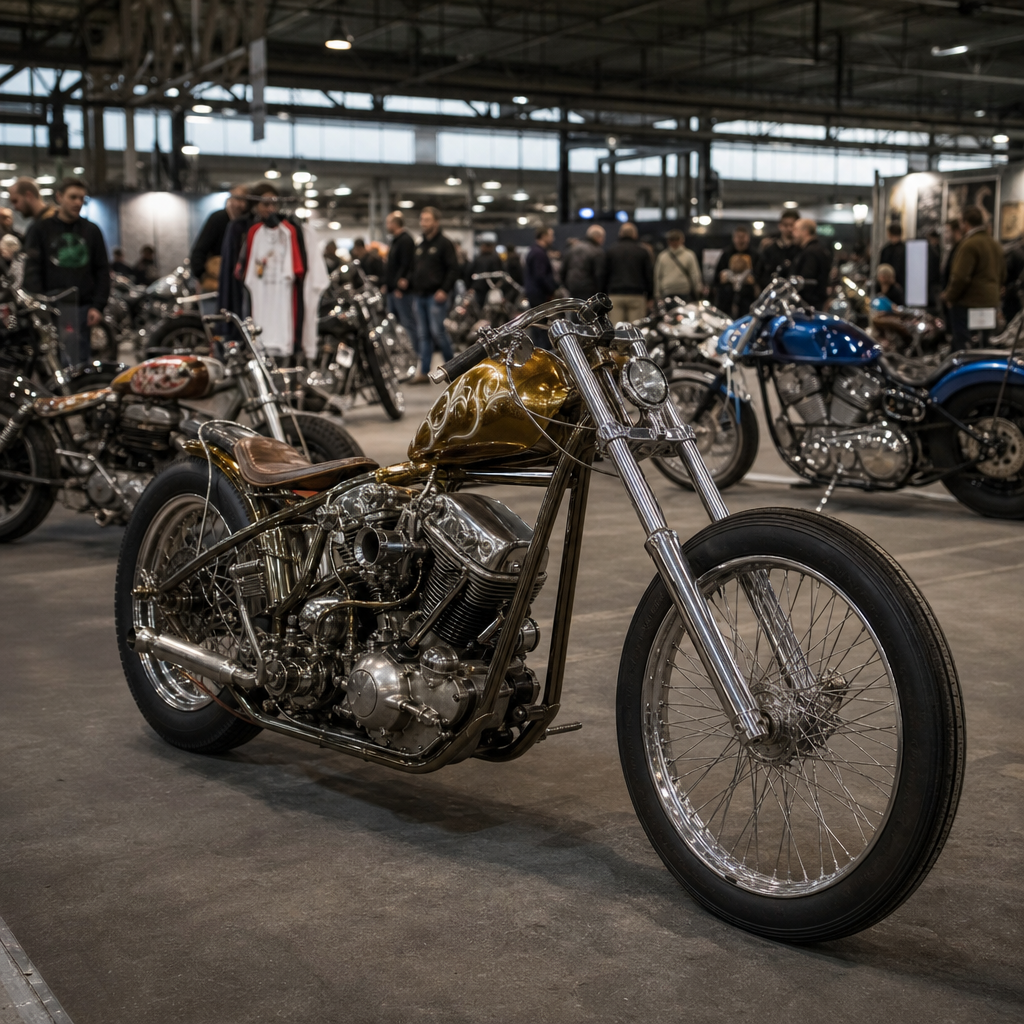
Motor Bike Expo Verona has become the central meeting point for custom culture in Europe, and in 2026 it stands as the world’s largest event for riders, builders, parts brands, painters, tuners, and fabrication specialists who shape the modern motorcycle scene. In practical terms, a custom event is more than a trade show. It is a concentrated platform where design trends, technical methods, aftermarket parts, and builder reputations are tested in public. When people call Motor Bike Expo the biggest custom gathering, they mean scale, international reach, and influence across chopper, performance bagger, café racer, street tracker, restomod, and race-inspired custom segments.
For anyone tracking the 2026 new guard and legendary builders, Verona matters because it brings both groups into direct comparison. The new guard are younger or newly prominent builders using digital design, CNC machining, 3D scanning, advanced TIG welding, composite work, and modern electronics to reinterpret motorcycle style. Legendary builders are the established names whose shops, show wins, media visibility, and long-term craft standards created the visual language that today’s custom scene still borrows from. At Motor Bike Expo, these categories are not abstract. They sit next to each other in halls filled with finished motorcycles, frame jigs, sheet metal shaping tools, suspension upgrades, and crowds that can immediately tell whether a machine is all surface or truly engineered.
I have covered custom shows where bikes looked impressive under lights but revealed weak fabrication, poor geometry, or unfinished electrical work on closer inspection. Verona is different because serious builders know the audience is educated. Visitors include shop owners, race technicians, paint specialists, and long-distance riders who understand rake, trail, wheel fitment, ECU mapping, brake line routing, and homologation realities. That level of scrutiny is why this event matters as a hub topic. If you want to understand who leads custom culture in 2026, which fabrication technologies actually matter, and how established masters compare with rising talent, Motor Bike Expo is one of the clearest places to look.
This hub article maps that landscape. It explains why Verona is a global benchmark, how the 2026 builder field can be understood, which profiles define the new guard, what keeps legendary builders relevant, and how fabrication technology is changing the standards for custom motorcycles. It also serves as a guide for deeper reading across this subtopic, helping readers connect builder identity, workshop process, and the broader evolution of custom culture.
Why Motor Bike Expo Verona sets the benchmark for custom culture
Motor Bike Expo earned its authority through specialization. Many motorcycle shows divide attention across commuting, touring, racing, and lifestyle displays. Verona carved out a reputation by treating customization as a primary discipline rather than a side attraction. That focus matters because custom motorcycles require a different evaluation framework from production launches. A show-quality custom is judged on stance, proportion, weld execution, surface finish, component integration, rideability, and originality. The event’s value comes from putting all of those criteria in one place.
Its January timing also shapes the industry calendar. Builders arrive with winter-finished projects, brands debut new aftermarket parts before the riding season, and media teams identify visual trends that will spread through workshops and social channels for the rest of the year. I have seen a tank treatment, wheel pairing, or subframe detail appear at Verona and then show up months later in client briefs across Europe. The expo is not simply reflecting taste; it helps set it.
Another reason the event matters is cross-border participation. Italian design culture remains crucial, but Verona consistently draws builders and suppliers from Germany, France, Spain, the UK, Scandinavia, the Netherlands, the United States, and Japan. That international mix creates productive friction. European homologation discipline meets American show-bike bravado. Japanese minimalism meets Italian craftsmanship. German engineering precision meets hand-formed metal traditions. When those approaches share floor space, visitors can see what is trend-driven and what is genuinely advancing the craft.
The 2026 builder landscape: new guard versus legendary names
The simplest way to read the 2026 builder field is to separate influence by career stage, then look at technique. Legendary builders still matter because they established recognizable signatures: stretched silhouettes, impossible paint depth, hidden wiring, radical rake control, elegant hardtail lines, or performance customs that actually handle. Their reputations were built over years of delivering complete motorcycles, not just attractive mockups. At Verona, those names anchor credibility.
The new guard gains attention differently. Many have grown through digital-native channels, releasing process videos, CAD previews, dyno sessions, and metal-forming clips that make their competence visible before a bike ever reaches a show stand. They often combine old-school hand skills with tools once associated with aerospace or prototyping environments. In 2026, the strongest young builders are not rebelling against craftsmanship; they are extending it with precision workflows.
For readers using this page as a hub, the main profile categories are clear. Some builders specialize in heritage reinterpretation, using modern brakes, suspension, and engine management to make older platforms genuinely usable. Others focus on ultra-clean contemporary customs where every bracket, mount, and cable path is resolved like industrial design. A third group builds competition-informed machines such as flat-track, endurance, or supermoto-influenced customs. A fourth group dominates paint, finish, and visual storytelling. Legendary names can appear in any of these lanes, but what separates the best 2026 new guard builders is technical completeness across all of them.
| Builder profile | What defines it in 2026 | What to examine at Verona |
|---|---|---|
| Heritage restomod specialist | Classic base bikes updated with modern suspension, brakes, wiring, and fueling | Geometry, parts integration, road usability, compliance details |
| Performance custom fabricator | Race-derived handling, power, and braking in a bespoke package | Chassis setup, exhaust routing, cooling, dyno claims |
| Coachbuilt artisan | Hand-formed bodywork, signature metal finishing, visual proportion | Panel fit, weld quality, symmetry, paint preparation |
| Digital-first new guard shop | CAD, CNC, 3D scanning, rapid prototyping, electronics integration | Repeatability, hidden engineering, sensor packaging, clean assembly |
Profiles of the 2026 new guard builders
The most important 2026 new guard profile is the hybrid fabricator who can move from screen to workshop without losing feel. In real projects, that means scanning a stock frame, mocking revised ergonomics in CAD, machining one-off mounts, then hand-finishing visible surfaces so the bike still feels human rather than sterile. These builders understand that digital precision solves fitment problems, but emotional appeal still comes from proportion, material choice, and restraint. At Verona, their best bikes look inevitable, as if no line could have been drawn differently.
A second profile is the electronics-literate custom shop. Ten years ago, many custom builders treated wiring as a necessary annoyance. In 2026, standout new shops integrate CAN-aware systems, programmable ECUs, compact battery solutions, LED lighting logic, and switchgear that does not compromise reliability. They know how to preserve the clean look buyers want while still supporting diagnostics and serviceability. That is a serious skill, especially on modern donor bikes where electronics cannot simply be stripped without consequences.
The third profile is the performance-led builder influenced by racing rather than nostalgia. These shops use adjustable suspension from Öhlins or Bitubo, high-spec brakes from Brembo, lightweight wheel sets, and ECU tuning platforms such as Dynojet Power Vision or Woolich Racing where applicable. Their customs are built to be ridden hard, not just photographed. When I evaluate this category, I look for heat management, cornering clearance, steering lock, rider triangle, and tire choice before I worry about paint. If those fundamentals are wrong, the build is costume rather than motorcycle.
The fourth new guard profile centers on finish specialists who understand that paint, coating, upholstery, and hardware selection can create identity without overbuilding the bike. The best of them use Cerakote, anodizing, vapor blasting, nickel plating, laser-etched details, and subtle leatherwork to control texture and contrast. Their work succeeds because they know when not to add another visual layer. That discipline is increasingly valuable in a social media era that rewards excess.
Why legendary builders still define the standard
Legendary builders remain essential in 2026 because they prove durability of vision. A famous name matters only if the work still holds up against current expectations for execution and engineering. The strongest veterans have adapted without surrendering identity. They still shape tanks and fenders by eye, but they also understand modern braking packages, revised frame stiffness, reliable charging systems, and customer expectations for bikes that start, idle, and survive real road use.
Another advantage is historical memory. Established builders know which trends failed before. They have seen extreme wheel sizes compromise handling, hidden components become impossible to service, and radical ergonomics create bikes owners do not ride. That experience gives them a practical filter that many newer shops have not earned yet. When a legendary builder rejects a fashionable detail, there is usually a technical reason behind it.
For visitors at Motor Bike Expo, legendary profiles usually fall into three groups. First are the show-circuit icons whose motorcycles influenced magazine covers and international judging standards. Second are the master fabricators respected by peers even if they are less famous to the public. Third are the platform specialists who became authorities on Harley-Davidson, BMW boxer, Ducati, Triumph twin, or Japanese four-cylinder customs through decades of repeat excellence. This hub topic should be read through that lens: reputation is meaningful when it is supported by a body of work, customer outcomes, and craftsmanship that survives close inspection.
Fabrication technology shaping the 2026 custom scene
Fabrication technology is the bridge between the new guard and the old masters. The biggest change is not that machines replaced handwork. It is that better tools allow builders to spend more time refining design and less time correcting preventable errors. 3D scanning lets a shop model tight clearances around engines, radiators, forks, and airboxes before cutting material. CNC machining makes repeatable rearsets, triple clamps, spacers, and bracketry possible at a quality level clients now expect. Tube notching software reduces waste in frame modifications and subframe builds.
Metal shaping remains foundational. English wheels, shrinker-stretchers, planishing hammers, bead rollers, and disciplined TIG technique still separate serious shops from assemblers. What has changed is process control. Builders increasingly document fixture points, use digital angle measurement, and verify alignment at multiple stages rather than relying entirely on intuition. That does not make the work less artisanal. It makes the final motorcycle straighter, safer, and easier to reproduce when a customer wants a second build in the same language.
Materials are evolving too. Aluminum remains central for tanks, tail sections, and intake solutions because of its weight and finish potential, but composites have matured in the custom world. Carbon fiber is now used more selectively, often for structural stiffness or heat shielding rather than visual shouting. Stainless exhaust fabrication has become cleaner, with better purge discipline and more intentional collector design. Even additive manufacturing has found a place in prototyping dash housings, light mounts, and fitment checks before final machining. At Verona, the shops worth watching are the ones using each method for a clear reason, not for novelty.
How to use this hub to explore builders, trends, and deeper coverage
As a hub page, this article should help readers decide where to go next within the broader custom culture and fabrication topic. If your interest is in people, start by comparing new guard builders by specialty: performance, coachbuilding, electronics integration, or heritage restomod. If your interest is in craft, follow the fabrication trail from design sketch to frame work, body shaping, finishing, and final setup. If your priority is influence, compare the lasting methods of legendary builders against the faster, digitally enabled workflows now entering top-tier shops.
Motor Bike Expo Verona is the ideal anchor for those comparisons because it condenses the global custom ecosystem into one event. You can identify who is building for applause, who is building for clients, and who is quietly advancing the standard for the entire industry. The real lesson from the 2026 show is that the custom scene is healthiest when tradition and innovation are in dialogue. Hand-formed skill still matters. So do data, measurement, software, and modern electronics. The best builders are fluent in both languages.
For anyone following profiles of 2026 new guard and legendary builders, keep this framework in mind: judge motorcycles by engineering honesty, fabrication quality, aesthetic coherence, and ride intent. Those four factors reveal far more than hype or awards alone. Explore the connected articles in this subtopic with that lens, and you will understand not just who stands out at Verona, but why their work matters to the future of custom motorcycles.
Frequently Asked Questions
What makes Motor Bike Expo Verona the world’s largest custom motorcycle event in 2026?
Motor Bike Expo Verona has earned that reputation because it brings together the full custom motorcycle ecosystem at a scale few other events can match. In 2026, it is not simply a show for finished bikes on display. It functions as a major gathering point for riders, custom builders, aftermarket parts manufacturers, painters, tuners, fabricators, designers, and industry professionals who actively shape the direction of motorcycle culture. That matters because size alone does not define importance in the custom world. What makes an event truly dominant is the concentration of influence under one roof, and Motor Bike Expo delivers exactly that.
The event is widely seen as Europe’s central meeting point for custom culture, which gives it global relevance. Builders use the show to present new work, brands launch products to a highly targeted audience, and visitors get direct access to the people behind the machines, components, and design ideas driving the scene forward. Trends in styling, fabrication techniques, paintwork, performance upgrades, and workshop standards often become visible here before they spread more broadly through the market. That is why many in the industry view Motor Bike Expo as more than a consumer event. It is a live testing ground for reputation, craftsmanship, innovation, and demand.
Why is Motor Bike Expo important for the custom motorcycle industry, not just for fans?
Motor Bike Expo matters to the industry because it serves as a practical platform where commercial opportunity and cultural credibility meet. For fans, it is exciting because they can see exceptional motorcycles, meet builders, and discover new products. For the industry, however, the stakes are much higher. Builders use the event to prove their capabilities in front of peers, media, and potential customers. Parts brands gain a chance to show how their components perform, fit, and appeal in real-world custom applications. Painters, tuners, and fabrication specialists can demonstrate both technical quality and creative identity to a highly informed audience.
This is especially important in the custom sector, where trust and reputation are everything. A workshop or brand can spend years building a name, but at a major event that reputation is tested in public. Visitors compare details closely, industry professionals evaluate execution, and collaborators often decide whom they want to work with based on what they see firsthand. In that way, Motor Bike Expo becomes a marketplace of ideas, standards, and relationships. It helps set expectations for quality, reveals where design is heading, and gives the wider motorcycle industry a snapshot of what custom culture is demanding next.
What can visitors expect to see at Motor Bike Expo Verona in 2026?
Visitors can expect a broad and immersive view of the modern custom motorcycle world. That includes hand-built motorcycles, radical one-off creations, performance-oriented custom projects, paint and bodywork showcases, aftermarket components, fabrication techniques, and displays from both independent workshops and established brands. One of the strengths of Motor Bike Expo is that it does not reduce custom culture to one style. You are likely to encounter everything from classic-inspired builds and stripped-down garage customs to highly engineered machines that blend design, electronics, machining, and performance tuning.
Beyond the bikes themselves, the event offers value because it reveals how custom motorcycles are actually made. Visitors can connect the finished machine to the people and processes behind it, from frame work and metal shaping to engine tuning, suspension setup, finishes, and detailing. That makes the show useful for different types of attendees. Casual enthusiasts can enjoy the visual impact and energy of the event, while experienced riders and builders can study technical solutions, compare parts, and identify emerging methods. In short, Motor Bike Expo is as much about learning and industry insight as it is about spectacle.
Who should attend Motor Bike Expo 2026 in Verona?
Motor Bike Expo 2026 is relevant to a much wider audience than many people assume. Dedicated custom bike fans will naturally find plenty to explore, but the event is equally valuable for professional builders, independent workshops, aftermarket suppliers, tuners, painters, designers, media, retailers, and riders who want a deeper understanding of where the motorcycle scene is going. If someone works in or around motorcycles, this is the kind of event where useful connections are made quickly because the audience is highly focused and informed.
It is also a strong event for riders who may not consider themselves part of the traditional custom world. Anyone interested in personalization, performance upgrades, workshop craftsmanship, or the future of motorcycle design can benefit from attending. Because the show acts as a concentrated hub for trends and technical ideas, it allows visitors to understand what is gaining momentum across Europe and beyond. Whether the goal is inspiration, networking, product discovery, or market intelligence, Motor Bike Expo offers a rare combination of creativity and business relevance in one place.
How does Motor Bike Expo influence motorcycle trends and builder reputations?
Motor Bike Expo influences trends because it puts a large volume of new ideas into direct public view at the same time. When major builders, niche fabricators, and aftermarket brands all present work together, patterns become visible very quickly. You can see shifts in aesthetics, materials, stance, paint styles, engineering choices, and performance priorities across many builds at once. That kind of concentrated exposure helps the market identify what feels fresh, what is becoming standard, and what is likely to shape the next phase of custom development. The event therefore acts like a barometer for the scene, showing not just what exists now, but where attention is moving next.
For builders, the impact on reputation can be significant. A strong appearance at Motor Bike Expo can validate a workshop’s skill, style, and professionalism in front of customers, collaborators, distributors, and media outlets. The opposite is also true: in a setting where craftsmanship is closely inspected, weak execution is difficult to hide. This is why the event carries so much weight. Success there is not only about attracting admiration. It can lead to business opportunities, partnerships, international visibility, and long-term brand credibility. In practical terms, Motor Bike Expo is one of the places where reputations are built, challenged, and confirmed in real time.