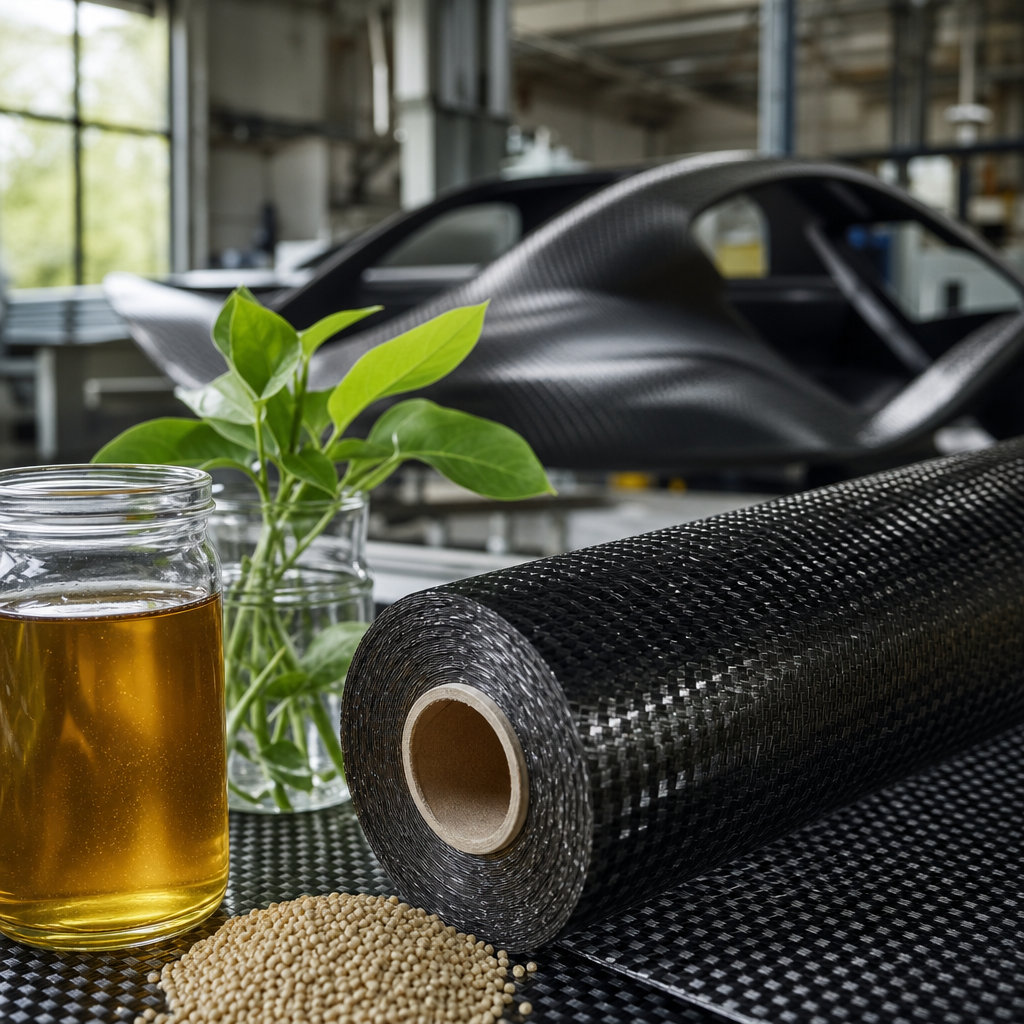
Bio-based resins are moving carbon fiber fabrication from a petroleum-heavy craft toward a lower-impact manufacturing discipline, and by 2027 they will shape how custom builders, race shops, marine fabricators, and small-batch OEM suppliers approach composite parts. In practical terms, a bio-based resin is a polymer system made partly from renewable feedstocks such as plant oils, lignin, sugars, tall oil, or other biomass-derived intermediates rather than entirely from fossil sources. Carbon fiber fabrication is the process of combining reinforcing carbon cloth, tape, or chopped fiber with a matrix resin to create strong, lightweight structures. For the custom culture and builders world, that matrix matters as much as the fiber, because it dictates layup behavior, cure time, heat resistance, emissions, finish quality, and repairability.
I have worked with prepreg panels, vacuum infusion, wet layup bodywork, printed jigs, and motorsport harness routing, and the pattern is clear: builders are no longer judging materials only by strength and appearance. They now ask whether a resin prints cleanly into molds made on large-format additive systems, whether it infuses tightly around complex wiring channels, whether it meets shop exposure limits, and whether customers will pay more for a visibly sustainable part. Those are not marketing questions. They affect cycle time, labor, warranty risk, and even whether a one-off hood or seat shell can be legally shipped into markets with tighter chemical disclosure rules.
This hub page covers fabrication tech across three linked areas: 3D printing, carbon composites, and wiring integration, with bio-based resins as the central thread connecting them. That focus matters because modern custom fabrication is increasingly hybrid. A builder may print a mold, machine inserts, laminate a carbon skin, bond brackets, and embed wiring for sensors, lighting, or battery management in one project. If you understand where bio-based resin systems fit, where they still lag conventional epoxies or vinyl esters, and how they interact with adjacent fabrication methods, you can make better decisions for 2027 programs instead of chasing trends.
Why bio-based resins are becoming central to carbon fabrication
The main reason bio-based resins matter is not that they magically eliminate environmental impact. Carbon fiber itself remains energy intensive to produce, and every composite process has waste streams. The real gain is more specific: replacing a portion of fossil-derived resin content with renewable content can reduce cradle-to-gate emissions, lower volatile organic compound exposure in some formulations, and help fabricators meet procurement or brand sustainability targets without abandoning composite performance. In many shops, the resin system is also the easiest variable to change first because it does not require redesigning every toolpath, cutter, or fixture.
By 2027, expect broader use of partially bio-based epoxies in cosmetic panels, interior structures, aero pieces, motorcycle bodywork, marine trim, and niche EV enclosures. Suppliers such as Sicomin, Entropy Resins, Gurit, and other established formulators have already pushed the market beyond early “green” products that sacrificed handling or thermal performance. The most credible systems now publish renewable carbon content, viscosity ranges, glass transition temperature after cure, and compatibility with infusion or wet layup processes. That data matters more than broad claims because a hood skin and a battery box lid do not ask the same things from a resin.
For builders, the short answer is this: bio-based resin is viable today when selected by process and temperature requirement, not by label alone. A dashboard panel, fairing, mirror cap, seat pan, or display plinth may be an excellent candidate. A suspension bracket, brake-adjacent duct, or underhood structural element may still require a higher-temperature conventional system or a carefully validated bio-content epoxy. The smart move is to classify parts by load, temperature, cosmetic priority, and service environment before committing material families.
How 3D printing, carbon composites, and wiring now work as one fabrication stack
In advanced custom shops, 3D printing is no longer a separate novelty bench. It is the front end of composite production. Large-format FGF and pellet extrusion systems can print tooling bucks, mold sections, vacuum fixtures, trim templates, and drill guides. Desktop FDM printers produce connector holders, clip prototypes, and mockups for harness runs. SLA and DLP printers support smaller precision pieces, especially where surface finish or fit-checking matters. When bio-based resin enters the workflow, the printed tool and the composite laminate need to behave predictably together under vacuum, exotherm, and post-cure heat.
Wiring is part of the same stack because modern carbon parts increasingly include embedded functionality. Think steering wheels with shift lights, center consoles with hidden antenna pathways, motorcycle tail sections with integrated LED channels, or EV swap panels carrying CAN bus branches and sensor pigtails. Composite design has to reserve bend radius, access windows, strain relief points, and service loops. In my experience, the best fabricators now design these features before the first ply schedule is finalized, often using the printed prototype to test harness routing physically. That approach reduces the common mistake of building a gorgeous carbon shell and only then discovering there is no clean path for power, data, or grounding.
As a hub topic, fabrication tech should be viewed as a linked decision chain. Material choice influences print tooling temperature, cure schedule influences adhesive choice, and wiring architecture influences laminate thickness in local zones. Bio-based resins sit in the middle of that chain because they affect curing behavior, secondary bonding, machining dust, odor, and final part stability.
Choosing the right bio-based resin for 2027 build programs
Selection starts with process. For vacuum infusion, viscosity is critical. A resin that is too thick may stall flow through tight cosmetic weaves or core transitions. For wet layup, workable pot life and predictable wet-out are more important than headline renewable content. For prepreg-adjacent workflows or compression-style laminates, cure kinetics and final glass transition temperature usually decide whether the material is production-ready. Builders should also check mixed viscosity, recommended vacuum level, cure schedule, post-cure requirements, exotherm limits by mass, and whether the system is amine-blush resistant.
Mechanical data should be read in context. Tensile strength of the neat resin matters less than interlaminar shear performance in the final laminate, fiber volume fraction achieved in your process, and heat retention after post-cure. Automotive and powersports shops often underestimate heat soak. A cosmetic engine cover can see temperatures that expose weak matrix choices quickly. Marine builders may face hydrolysis risk and long-term moisture uptake. Interior trim may prioritize low odor, reduced hazardous content, and Class A finish. There is no universal best resin; there is only a best resin for a defined duty cycle.
| Application | Preferred process | Key resin requirements | Main caution |
|---|---|---|---|
| Cosmetic body panels | Infusion or wet layup | Low viscosity, UV-stable clear compatibility, good surface finish | Print-through if cure is rushed |
| Interior structural trim | Vacuum bag wet layup | Low odor, balanced toughness, secondary bond strength | Post-cure may be needed for summer cabin heat |
| Underhood covers | Infusion or prepreg-style tooling | Higher Tg, chemical resistance, dimensional stability | Bio-content alone does not guarantee heat performance |
| Embedded wiring panels | Layered layup with printed inserts | Controlled exotherm, adhesive compatibility, machinability | Service access must be designed before lamination |
Ask suppliers direct questions. What ASTM or ISO methods were used? Is renewable content measured by mass balance or direct biogenic input? What happens to Tg after a realistic shop cure rather than a lab oven schedule? Can the resin tolerate secondary bonding after abrasion and solvent wipe? Good suppliers answer with technical data sheets, processing notes, and limitations. If they cannot, the system is not ready for production use.
Real shop workflows: from printed tooling to finished carbon parts
A practical 2027 workflow often begins with CAD, where the builder models not just the visible panel but flange depth, vacuum ports, trim allowance, insert pockets, and wiring paths. The next step may be a printed prototype for ergonomic and assembly checks. If geometry is approved, the shop prints a tooling buck or mold master, seals it, surfaces it, and validates it for cure temperature. Only then does composite fabrication begin. Bio-based infusion epoxies work especially well here because they can pair with printed tooling in low- to medium-temperature programs without the smell and handling profile of some older systems.
Consider a custom motorcycle tail section with integrated brake light wiring. The shop prints the internal duct geometry and harness clips, tests fit with the subframe, then creates a split mold. During layup, a sacrificial channel or bonded conduit is placed between laminate layers at a neutral, low-stress zone. After cure, the harness is fed through with a pull string, strain relieved near the mounting points, and isolated from sharp carbon edges using grommets or overbraid. This is better than drilling after the fact because late modifications often create delamination starters and ugly visible fastener solutions.
Another example is a restomod center console for an EV conversion. The visible shell is cosmetic carbon made with a bio-based epoxy chosen for finish and low odor, while hidden brackets are printed from a heat-tolerant polymer and bonded in using a compatible structural adhesive. Channels for charging status LEDs, USB power, and low-voltage control wiring are planned into the layup. The result is lighter than MDF or fiberglass alternatives, cleaner to package, and more repeatable if the builder offers a short production run.
Performance limits, compliance, and the tradeoffs builders cannot ignore
Bio-based does not mean biodegradable, and it does not automatically mean safer in every context. Most systems still require disciplined PPE, accurate mix ratios, controlled shop temperature, and proper waste handling. Sensitization risks remain real with epoxy chemistry. Builders should use nitrile gloves, eye protection, local extraction, and documented cure practices. If sanding cured laminates, use dust capture and respirators suited to fine composite dust. Sustainability claims lose credibility the moment a shop ignores worker exposure and scrap management.
There are also performance boundaries. Some high-bio-content systems still trail top-tier aerospace or motorsport epoxies in hot-wet performance, maximum service temperature, or fracture toughness. That does not disqualify them. It means validation is mandatory. Run coupon tests, bond test pieces, expose samples to actual underhood or marine conditions, and inspect after thermal cycling. For customer-facing parts, perform UV and clearcoat compatibility checks. I have seen attractive “eco” laminates fail not because the resin was inherently weak, but because the builder skipped post-cure, overmixed a hot batch, or assumed a clear finish would hide print-through.
Compliance pressure will increase through 2027. OEM-adjacent suppliers and premium aftermarket brands are being asked for material traceability, substance disclosures, and lifecycle narratives. Even small custom shops benefit from keeping resin lot records, cure logs, and supplier declarations. Those records help with warranty claims and strengthen trust when clients ask what makes a part genuinely lower impact rather than merely styled that way.
What this hub means for the future of custom culture fabrication
The bigger shift is cultural as much as technical. New-guard builders are blending digital design, additive manufacturing, composites, and electrical integration into one craft language. The best shops no longer divide people into “carbon guy,” “printer guy,” and “wiring guy” who barely coordinate. They use shared CAD, documented material specs, repeatable layup notes, and service-minded packaging. Bio-based resins support that evolution because they invite a more deliberate approach to process selection, traceability, and end-use fit instead of reflexively choosing the same petroleum resin for every job.
As the hub for fabrication tech, this page should point builders toward deeper topics: printed molds for short runs, resin infusion best practices, carbon repair strategy, EMI considerations around embedded wiring, connector sealing, and adhesive selection for mixed-material assemblies. The unifying idea is simple. Smart fabrication in 2027 is integrated fabrication. A part should be light, manufacturable, electrically functional where needed, and materially defensible when a customer asks how it was made.
Bio-based resins will not replace every conventional system by 2027, but they will earn a permanent place in serious composite workflows. Start with parts that reward their strengths, validate them under real conditions, and connect material choice to tooling, finishing, and wiring decisions from day one. Builders who do that will produce cleaner, smarter, more credible carbon parts. The next step is straightforward: audit your current resin use, identify one pilot project, and build a documented process you can scale.
Frequently Asked Questions
What are bio-based resins, and how are they changing carbon fiber fabrication by 2027?
Bio-based resins are polymer systems formulated with a meaningful portion of carbon content derived from renewable raw materials instead of relying entirely on petroleum-based chemistry. In the composites world, that can include feedstocks such as plant oils, lignin, sugars, tall oil, and other biomass-derived intermediates used to build epoxy, polyurethane, polyester, vinyl ester, or related resin systems. The key point is that these materials are not simply “natural glues.” They are engineered structural resins designed to work with high-performance reinforcement like carbon fiber fabric, tape, and preform architectures.
By 2027, their impact on carbon fiber fabrication is expected to be practical rather than theoretical. Builders and fabricators are increasingly under pressure to reduce environmental impact without giving up mechanical performance, process control, or surface finish quality. Bio-based resin systems help address that by lowering dependence on fossil feedstocks and, in many cases, improving the life-cycle profile of composite parts. For custom automotive builders, race shops, marine fabricators, and small-batch OEM suppliers, this means they will have more options to specify lower-impact laminates for body panels, interior components, structural fairings, marine trim, and selected semi-structural parts.
The shift also changes purchasing and design conversations. Instead of evaluating only strength, stiffness, cure time, and cost, fabricators are increasingly comparing renewable content, emissions profile, workplace exposure characteristics, and end-of-life compatibility. In short, bio-based resins are moving carbon fiber fabrication from a petroleum-heavy craft toward a more modern manufacturing discipline where sustainability, process repeatability, and performance are considered together.
Do bio-based resins perform as well as traditional petroleum-based resins in carbon fiber parts?
In many applications, yes, but the correct answer depends on the resin chemistry, the percentage of bio-based content, the cure schedule, and the performance target of the part. A well-designed bio-based epoxy or similar system can deliver strong fiber wet-out, good adhesion to carbon reinforcement, solid interlaminar properties, and attractive cosmetic results. For many non-critical and moderately demanding structural applications, current bio-based formulations can already compete with conventional resin systems on the metrics that matter most to fabricators: workable viscosity, manageable pot life, dimensional stability, and consistent cured laminate quality.
That said, not all bio-based systems are interchangeable with aerospace-grade petroleum-derived resins, and they should not be marketed that way unless validated through real testing. Heat resistance, glass transition temperature, fatigue behavior, moisture uptake, UV durability, chemical resistance, and post-cure requirements can differ significantly from one formulation to another. A race shop making lightweight ducting or interior panels may find a bio-based resin more than adequate, while a fabricator producing parts exposed to elevated temperatures, repeated impact, or long-term marine immersion may need a more specialized system.
The real takeaway is that performance should be judged by the finished laminate, not by the marketing label alone. If the resin is paired correctly with the fiber architecture and the manufacturing method, bio-based systems can absolutely support high-quality carbon fiber fabrication. By 2027, the gap between mainstream bio-based options and traditional systems will continue to narrow, especially in custom, marine, motorsport, and small-production environments where tunable process windows and application-specific testing matter more than one-size-fits-all claims.
What benefits do custom builders, race shops, and marine fabricators gain from switching to bio-based resin systems?
The most obvious advantage is a lower reliance on fossil-derived chemistry, which helps businesses align with customer expectations, brand sustainability goals, and emerging procurement standards. For small-batch manufacturers and custom fabricators, this matters because buyers increasingly want performance parts that also reflect responsible material choices. A shop that can document renewable content and a reduced environmental footprint gains a stronger position when selling to premium clients, eco-conscious marine customers, or OEM partners building greener supply chains.
There are also practical production benefits in many newer formulations. Some bio-based resin systems are being engineered for improved handling, lower odor profiles, and cleaner shop use compared with legacy materials. Depending on the formulation, fabricators may see advantages in wet layup behavior, infusion consistency, cured surface appearance, or reduced volatile emissions. These are not universal benefits across every product, but they are important enough that many shops are now trialing bio-based resins not just for sustainability reasons, but because they can simplify day-to-day fabrication workflows.
From a business standpoint, early adoption can create market differentiation. A race shop offering lightweight carbon fiber components made with lower-impact resin can position itself as forward-thinking without abandoning performance. A marine fabricator can promote reduced petrochemical dependence for customers who care about environmental stewardship on the water. A small OEM supplier can meet incoming documentation requirements more easily if material traceability and renewable-content reporting become standard by 2027. In other words, the benefit is not only technical. It is operational, commercial, and reputational as well.
Are bio-based resins suitable for all carbon fiber fabrication methods, including wet layup, vacuum infusion, and prepreg-style processes?
Bio-based resins are becoming available across a growing range of processing methods, but suitability depends on the exact formulation and manufacturing setup. For wet layup, the critical variables are viscosity, working time, fiber wet-out, and cure behavior. Many bio-based epoxy systems already perform well here, especially for custom bodywork, panels, covers, ducts, and marine trim components where hand lamination and vacuum bag consolidation are common. Shops transitioning from conventional systems should still verify how the resin behaves in corners, tight radii, and cosmetic laminates, because flow and bleed characteristics can vary.
Vacuum infusion is another promising area, but it places stricter demands on resin consistency and flow performance. Infusion-grade systems need low enough viscosity to travel efficiently through dry carbon stacks while maintaining predictable gel time and minimizing void formation. Some bio-based resins are specifically designed for this purpose and can deliver excellent laminate quality when matched with the right reinforcement schedule, flow media, and vacuum discipline. However, not every bio-based resin marketed for composites will be ideal for infusion, so process validation is essential before scaling production.
Prepreg-style and higher-control manufacturing routes are also evolving. As the market matures, more bio-based resin chemistries are being tailored for controlled resin content, elevated-temperature cure cycles, and improved storage stability. By 2027, expect wider adoption in semi-automated and repeatable small-batch production environments, particularly where fabricators want premium finish quality and tighter process control. The important point is that bio-based resin is not a single material category with one behavior. It is a broad family of chemistries, and each must be selected according to the fabrication method, tooling, cure schedule, and performance target.
What should fabricators look for when choosing a bio-based resin for carbon fiber parts in 2027?
First, look beyond the headline claim of “bio-based” and ask how much renewable content the system actually contains, how that content is measured, and whether the supplier can provide technical documentation to support it. A resin with a small renewable fraction may still offer benefits, but it should not be confused with a formulation built around a more substantial biomass-derived chemistry. Material transparency matters, especially if the part will be sold into regulated, premium, or sustainability-focused markets.
Second, evaluate processing fit. A good resin on paper can still be a poor match for a shop’s equipment or workflow. Fabricators should review viscosity range, pot life, cure profile, exotherm behavior, post-cure recommendations, storage conditions, compatibility with vacuum bagging consumables, and surface finish characteristics. If the shop uses infusion, it should confirm flow performance. If it produces cosmetic parts, it should test clarity, print resistance, and sanding or finishing response. If parts see heat, moisture, impact, or UV exposure, those conditions should be reproduced during validation trials.
Finally, assess the total value proposition. Cost per gallon or kilogram is only part of the story. Shops should consider scrap reduction, cure reliability, labor efficiency, customer perception, and whether the supplier offers dependable technical support. The best bio-based resin for 2027 will be the one that balances renewable sourcing with real manufacturing performance, not the one with the boldest sustainability language. When selected carefully, these systems can help fabricators produce carbon fiber parts that are lighter on fossil inputs while still meeting demanding quality and durability expectations.