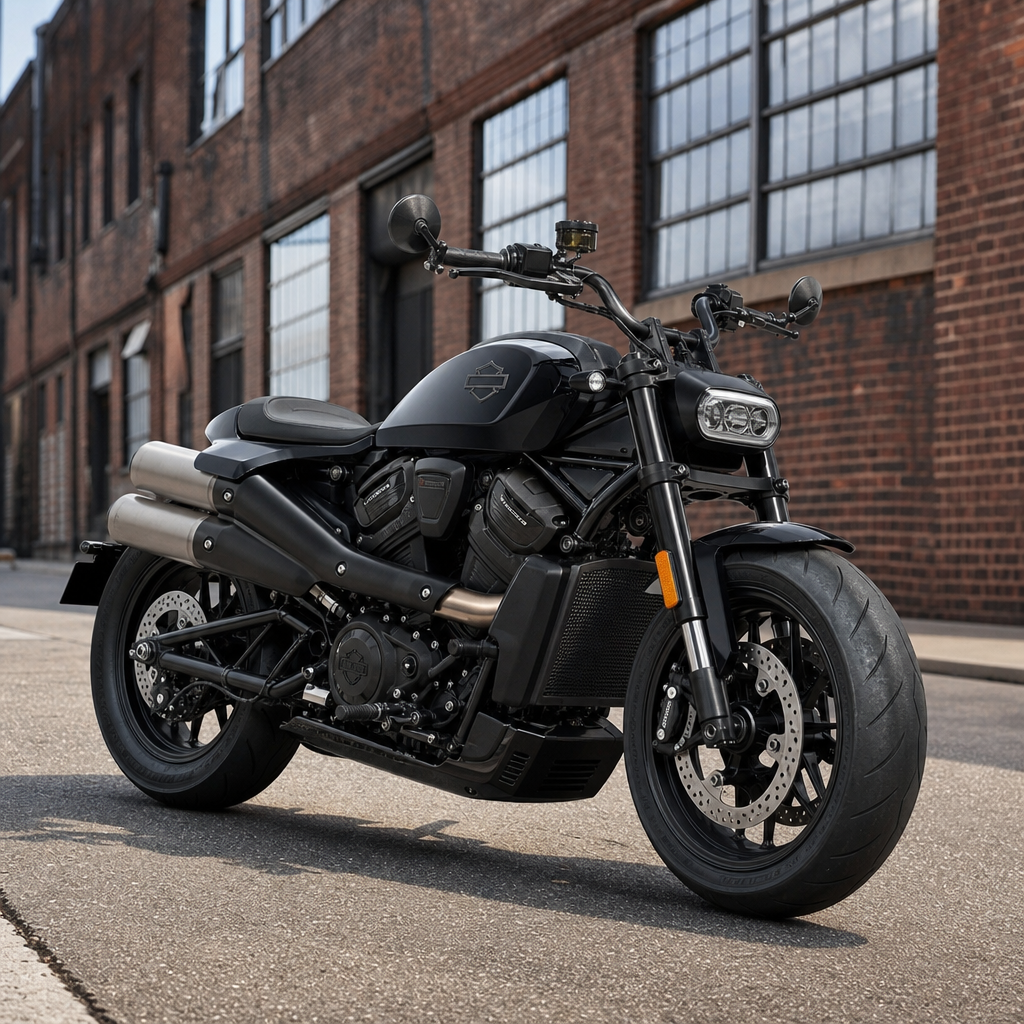
Streetfighter motorcycle design has always been a reaction against excess bodywork, conservative ergonomics, and the assumption that performance must look polished. The idea is simple: expose the machine, sharpen the stance, and make every visible part justify its presence. In the Harley-Davidson context, that idea carries extra weight because the brand’s visual language has long centered on cruisers, touring rigs, and nostalgic forms. The 2027 Bronx revives a question many builders have been asking in shops for years: what happens when Harley’s mechanical identity is translated into a true naked performance platform?
The answer matters far beyond one model launch. It sits at the intersection of custom culture, fabrication technology, and regional style history. A streetfighter strips away decoration to foreground chassis geometry, mass centralization, braking hardware, wheel fitment, intake routing, and rider triangle. A naked bike, properly understood, is not simply a faired sportbike with the plastics removed; it is a complete design philosophy built around exposed structure, immediate control inputs, visual aggression, and urban usability. When Harley enters that space seriously, it does more than add a product line. It validates years of experimentation by independent builders who have been grafting club-style, performance bagger, Frisco, and Chicano influences onto V-twin platforms while using CNC parts, 3D scanning, and digital prototyping to rethink proportion and purpose.
I have worked around custom V-twin projects where a half inch in fork height or a change from a 19-inch front wheel to a 17 transforms the whole reading of the bike. That experience makes one thing clear: design theory is not abstract in motorcycle culture. It is packaging, leverage, airflow, weight transfer, and silhouette translated into emotion. The 2027 Bronx is important because it creates a new reference point for Harley-Davidson naked design, but it also serves as a hub for understanding the broader language of modern American customization. To read the Bronx correctly, you have to place it beside Chicano lowrider elegance, performance bagger function, Frisco minimalism, and the wider “beyond” category where younger builders mix flat-track cues, supermoto stance, race-derived components, and software-assisted fabrication into one coherent machine.
What Streetfighter Design Means in a Harley-Davidson Context
Streetfighter design emerged from riders modifying crashed or stripped sportbikes for road use, but its deeper logic is broader: reduce visual and mechanical compromise between rider and machine. On a Harley-Davidson platform, that logic becomes especially interesting because the company’s engines, frame traditions, and customer expectations are not rooted in supersport architecture. A Harley streetfighter therefore cannot be a copy of a European naked. It has to retain torque-rich power delivery, a strong visual engine presence, and the long-established American emphasis on stance and identity.
That is where the Bronx concept, and now the 2027 Bronx as a projected production expression, becomes significant. The liquid-cooled Revolution Max architecture already proved that Harley can build a structurally efficient engine platform with modern power density, variable valve timing, and a broad torque curve. In naked-bike form, that architecture supports the core principles of streetfighter design: compact wheelbase, upright but assertive ergonomics, fully visible engine mass, short tail treatment, and a front end that communicates intent before the bike even moves. This is not styling for styling’s sake. A steeper steering head angle, shorter trail, radial-mount brakes, cast or forged lightweight wheels, and tightly controlled fuel-tank volume all contribute to quicker transitional behavior and stronger rider confidence in urban and canyon environments.
For Harley enthusiasts, the Bronx also reframes the old tension between authenticity and innovation. The authentic Harley signal is no longer limited to air-cooled fins, chrome, and feet-forward posture. It can include exposed aluminum structure, TFT instrumentation, ride modes, and aggressive suspension travel if those choices serve the riding purpose. The best custom builders understood this years ago. They stopped asking whether a naked Harley was allowed and started asking what geometry, weight distribution, and component selection would make one work.
How the 2027 Bronx Can Redefine the H-D Naked
If the 2027 Bronx succeeds, it will not be because it looks radical in photos. It will succeed if Harley gets the proportions and hard points right. Naked-bike buyers notice packaging immediately. They look at seat-to-peg distance, bar width, radiator shroud integration, swingarm visual mass, and whether the tail section appears tacked on or structurally resolved. In practical terms, the Bronx needs a low visual center of gravity without looking heavy, a compact fuel tank that still supports real range, and a rider triangle that works for both short urban sprints and two-hour backroad sessions.
Based on current high-performance naked benchmarks, Harley would need suspension and brake specifications that support serious use rather than brochure marketing. That means fully adjustable fork and shock units, premium calipers, modern ABS calibration, and wheel sizes that open the door to mainstream sport tire choices. A naked Harley cannot ask riders to accept compromised tire fitment or limited ground clearance simply because the badge carries heritage. The category is too mature for that. Ducati’s Streetfighter line, Triumph’s Speed Triple, KTM’s 1290 and 990 Duke families, Yamaha’s MT range, and BMW’s S 1000 R have taught riders to expect immediate throttle response, clean electronics, and chassis composure under hard braking.
The Harley advantage lies elsewhere: mechanical character, visual distinction, and the ability to bridge custom culture with factory engineering. Where some naked bikes feel like stripped derivatives, the Bronx can feel native to a broader ecosystem of customization. Owners should be able to imagine clip-on conversions, taller moto bars, forged wheel swaps, subframe edits, race body accents, and software tuning packages without fighting the platform. That adaptability is a design asset, not an afterthought.
Design Theory Across Chicano, Performance Bagger, Frisco, and Beyond
This subtopic matters because modern Harley design language is no longer linear. The strongest builds borrow across scenes while respecting the logic of each one. Chicano style is often misunderstood as pure decoration, but at its best it is a disciplined composition built around line flow, low stance, stretched visual rhythm, immaculate paint, spoke wheels, engraved details, and the cultural vocabulary of Southern California lowriding. Performance bagger design starts from function: suspension travel, cornering clearance, braking power, aerodynamic management, and long-distance control at speed. Frisco style strips a bike to essentials, often emphasizing a narrow tank, lifted stance, mid controls, minimalist fenders, and a tough, upright attitude rooted in postwar custom practice.
What younger builders are doing now is more complex. They might use Chicano paint principles on a performance bagger chassis, apply Frisco sparseness to a water-cooled powertrain, or mix club-style T-bars with naked-bike suspension geometry and race-spec brakes. The result is not confusion when done well. It is design synthesis. The key is understanding what each style solves.
| Style | Primary Design Goal | Signature Elements | Where It Influences the Bronx Conversation |
|---|---|---|---|
| Chicano | Elegant line and cultural identity | Low stance, rich paint, long visual flow, spoke wheels | Surface treatment, silhouette discipline, finish quality |
| Performance Bagger | Real speed with touring capability | Tall shocks, big brakes, fairing function, tuned suspension | Handling expectations, component legitimacy, rider ergonomics |
| Frisco | Mechanical honesty and stripped purpose | Narrow tank, upright posture, minimal bodywork | Naked-bike purity, exposed structure, urban toughness |
| Beyond | Cross-genre innovation | CNC parts, digital mockups, mixed wheel strategies, modern electronics | Platform adaptability, fabrication freedom, next-generation identity |
Seen this way, the 2027 Bronx is not separate from custom culture. It is a factory platform entering an active design conversation. Builders will judge it by whether it speaks fluently enough to join that conversation.
Fabrication Technology and the New Guard Builder Mindset
The “New Guard” in Harley customization is defined less by age than by process. These builders are comfortable moving from hand sketches to CAD, from cardboard templates to CNC-machined brackets, and from intuition to repeatable measurement. In my experience, the shops producing the most convincing cross-genre bikes are obsessive about digital verification. They 3D-scan stock frames before designing subframe kits, model exhaust routing to preserve lean angle, and prototype intake covers in printed polymers before committing to billet or composite production.
This matters for naked-bike design because exposed motorcycles reveal poor thinking instantly. On a faired platform, messy wiring, awkward brackets, and unresolved transitions can hide under panels. On a naked Harley, every coolant line, radiator mount, harness run, and reservoir placement becomes part of the visual composition. Good fabrication is therefore aesthetic discipline. Precision-machined rearsets, laser-cut tabs, hydroformed or hand-shaped aluminum panels, and properly planned harness channels do more than improve finish quality; they make the bike believable.
The return of a Harley naked also creates aftermarket opportunity. Expect builders to develop modular tail sections, radiator guards, belly pans, bar conversion kits, adjustable rearsets, lightweight wheel packages, and software calibration support. Established tools and standards will shape that work. Chassis alignment tables, FaroArm or similar measurement systems, MotoSpec-style suspension setup methods, and ECU tuning environments such as Dynojet Power Vision or bespoke flashing solutions will influence how the platform evolves. The strongest shops will not chase visual novelty alone. They will measure trail after ride-height changes, check swingarm angle under load, and validate cooling performance in traffic, because modern performance design fails when it ignores systems integration.
Real-World Lessons from Custom Harleys and Modern Nakeds
The best way to evaluate the 2027 Bronx is to compare it with what already works in the field. Performance bagger racing in series such as King of the Baggers changed perceptions because it demonstrated that American V-twins could be engineered for corner speed, stability, and braking repeatability. Those race bikes are specialized, but their lessons translate directly: chassis stiffness must be balanced with compliance, rider leverage matters as much as peak horsepower, and weight carried high punishes quick transitions. Builders who converted Softails or Sportster-based platforms into pseudo-nakeds learned similar lessons at a smaller scale. When they swapped to taller rear shocks without recalculating front ride height, bikes gained attitude but lost stability. When they fitted superbike bars without considering tank clearance at full lock, the result looked right and worked poorly.
Modern European naked bikes offer another benchmark. The KTM Duke family shows how upright ergonomics can coexist with sharp steering. The Triumph Speed Triple demonstrates the importance of front-end feel and premium damping. Ducati’s Streetfighter models prove that dramatic styling only works when the electronics, brakes, and cooling package support the promise. Harley does not need to imitate these machines, but it does need to answer the same rider questions clearly: Is the throttle calibration clean at low speed? Does the bike hold a line on rough pavement? Can average riders access the performance without wrestling the chassis? Is heat management acceptable in stop-and-go traffic?
Those are not secondary details. They determine whether the Bronx becomes a serious platform or a styling exercise. In custom culture, credibility is earned on the road, not at unveilings.
Why This Hub Matters for Builders, Riders, and the Future of American Design
As a hub for “Design Theory: Chicano, Performance Bagger, Frisco, and Beyond,” this page frames a larger body of work. Each style deserves its own deeper article, but the essential point is already visible: American motorcycle design is entering a synthesis phase. Builders are no longer confined to strict scene boundaries, and fabrication technology now supports ideas that once remained sketches or one-off experiments. The 2027 Bronx arrives at exactly the right moment because it gives this synthesis a factory anchor.
For riders, the benefit is choice with coherence. You can appreciate the ceremony and craftsmanship of a Chicano bike, the ruthless effectiveness of a performance bagger, the stripped honesty of a Frisco build, and the aggressive utility of a naked streetfighter without pretending they are unrelated. They are connected by design decisions about stance, exposure, control, and cultural signal. For builders, the Bronx could become a blank canvas with enough engineering integrity to support serious reinterpretation. For Harley-Davidson, it is an opportunity to prove that heritage can generate new forms instead of repeating old ones.
The key takeaway is straightforward: the return of the H-D naked is not just about one motorcycle. It is about a broader design vocabulary becoming visible across the brand and the custom world around it. Watch the geometry, the component quality, and the adaptability of the platform. Then follow the builders who push it further. If you want to understand where American custom performance is heading next, start with the Bronx, then explore the Chicano, performance bagger, Frisco, and hybrid builds that will define what comes after.
Frequently Asked Questions
What makes the 2027 Bronx a true streetfighter rather than just another naked motorcycle?
The distinction comes down to design intent. A naked bike can simply be a faired motorcycle with the bodywork removed, but a true streetfighter is usually conceived around visual aggression, mechanical honesty, and a more confrontational riding stance. In the case of the 2027 Bronx, the streetfighter identity is defined by the way the bike appears reduced to its essential functions: engine, frame, suspension, brakes, and rider. Nothing looks decorative for its own sake. The proportions matter here as much as the hardware. A compact front end, a muscular midsection, a high tail, and a planted stance all communicate that the motorcycle is built to move quickly and react sharply.
What gives the Bronx additional credibility is the Harley-Davidson context. Harley has historically built much of its public image around low silhouettes, long wheelbases, abundant visual mass, and designs tied to heritage. A streetfighter asks for almost the opposite. It values tension over nostalgia, compactness over flourish, and purpose over ornament. So when Harley presents a machine like the Bronx, it is not just entering another segment; it is testing whether its design language can survive translation into a form that demands exposed structure, dynamic geometry, and a visually disciplined use of components. That challenge is exactly why the Bronx matters in streetfighter design theory.
In practical terms, a true streetfighter also suggests a certain rider experience. You expect leverage from a wide handlebar, quicker directional changes, strong braking authority, and ergonomics that balance street usability with a readiness for hard acceleration and aggressive corner entry. If the 2027 Bronx delivers those traits while keeping the visual composition tight and unapologetically mechanical, then it earns the streetfighter label in a way that goes beyond marketing. It becomes a motorcycle that looks like its performance priorities are visible before the engine is even started.
Why is the return of the Bronx significant for Harley-Davidson’s design identity?
The Bronx is significant because it forces Harley-Davidson to answer a question the brand has circled for years: can Harley build a performance-focused motorcycle that still feels authentically Harley without leaning on retro cues, cruiser ergonomics, or touring symbolism? That is a much deeper issue than simply launching a new model. Brand identity in motorcycle design is often carried through silhouette, engine presentation, riding position, and surface treatment. Harley has long been associated with visual heaviness, laid-back proportions, and a sense of historical continuity. The Bronx challenges all of that by prioritizing immediacy, athleticism, and visual minimalism.
From a design theory standpoint, this makes the Bronx a stress test for the brand’s visual DNA. If Harley’s identity depends only on chrome, low seats, teardrop tanks, and familiar cruiser architecture, then a naked performance bike will always feel like an outsider in the lineup. But if Harley’s identity can be expressed through mechanical confidence, strong engine presence, and a distinctly American sense of boldness and mass, then the Bronx becomes an opportunity rather than a contradiction. It allows Harley to modernize without pretending to be another manufacturer.
The return of the Bronx also matters because it acknowledges a long-standing gap in Harley’s range. Riders and builders have asked for a machine that translates the company’s engineering ambitions into a more contemporary urban-performance format. A successful Bronx would show that Harley can participate in the global conversation around performance naked bikes while preserving something of its own character. That is strategically important, but it is also culturally important. It suggests Harley is willing to evolve its visual language instead of repeating it, and that willingness is often what separates a living design tradition from a museum piece.
How does streetfighter design balance exposed mechanical elements with a clean, intentional look?
This is one of the central challenges of the entire category. Streetfighters celebrate exposure, but exposure alone does not create good design. If every hose, bracket, wire, and mounting point is visible without hierarchy, the result can feel unfinished rather than purposeful. The best streetfighter design edits the motorcycle carefully. It reveals the parts that communicate function and performance, then integrates or suppresses the parts that create visual noise. In other words, the machine should look raw, but never accidental.
On a bike like the 2027 Bronx, that balance would depend on disciplined packaging. The engine should act as the visual anchor, with the frame and swingarm supporting it rather than competing with it. The radiator, exhaust routing, electronics, and lighting all need to be treated as design elements, not afterthoughts. Modern naked bikes live or die by how well they manage these necessary components. A radiator that looks oversized and disconnected, a headlight that seems generic, or exposed plumbing that interrupts the main visual lines can weaken the whole composition. By contrast, when these parts are arranged with intention, they reinforce the streetfighter message that every visible element has a job and belongs exactly where it is.
There is also a subtle relationship between visual cleanliness and perceived performance. A bike that looks tightly packaged appears more advanced, more focused, and more confidence-inspiring. That is especially important for Harley-Davidson, whose success with a streetfighter depends partly on convincing riders that this is not an experiment in style alone. The Bronx needs to look engineered, not merely stripped down. The ideal result is a motorcycle that feels brutally honest at first glance, then increasingly sophisticated the longer you study the details.
What design features would help the 2027 Bronx stand out in the modern naked-bike segment?
To stand out, the Bronx would need more than generic performance-bike styling. The naked-bike segment is crowded with sharp bodywork, compact LED lighting, exposed engines, and abbreviated tails. Those are baseline expectations now, not differentiators. What would give the 2027 Bronx real presence is a distinctive proportion strategy and a clear visual signature rooted in Harley-Davidson’s strengths. That could mean a notably muscular engine presentation, a fuel tank form that communicates mass and authority without becoming bulky, and a stance that feels grounded and powerful rather than merely light and edgy.
Another key area is front-end identity. Modern streetfighters often use compact headlights and aggressive shrouds, but many end up looking interchangeable. The Bronx would benefit from a lighting and intake treatment that is unmistakable at a glance, especially if it can avoid retro imitation while still feeling brand-specific. The same is true of the tail section, wheel design, and exhaust. If those components are handled with confidence, they can create a visual rhythm that separates the bike from competitors that rely on the same industry-wide design formulas.
The materials and finishes matter as well. Harley has an opportunity to use surface treatment in a way that emphasizes structural honesty and premium engineering. Contrasts between cast, machined, painted, and textured components can give the bike depth without overstyling it. Color should support the architecture, not distract from it. Most importantly, the Bronx should avoid looking overworked. The strongest streetfighter designs do not beg for attention with excessive cuts and angles. They project authority through proportion, restraint, and visible function. If Harley gets that balance right, the Bronx could stand apart precisely because it looks confident enough not to mimic everyone else.
Does the Bronx represent a shift in how riders and manufacturers think about performance motorcycle design?
Yes, because motorcycles like the Bronx reflect a broader change in what performance is supposed to look like and feel like. For a long time, high performance was visually tied to full fairings, race-derived bodywork, and a polished aerodynamic identity. Streetfighters challenged that idea by arguing that speed, responsiveness, and excitement could be expressed through exposure rather than enclosure. They turned the engine and chassis into the visual story. That approach has grown from a subcultural custom aesthetic into a major design philosophy across the industry.
The Bronx is especially interesting within that shift because it comes from a manufacturer not traditionally associated with this kind of design. When Harley-Davidson engages the streetfighter format, it signals that performance no longer belongs to one visual tribe. It can be interpreted through different brand histories, different national identities, and different rider expectations. That widens the definition of what a performance motorcycle can be. It also acknowledges that many riders now want versatility in addition to speed: upright ergonomics, everyday usability, sharp handling, and strong visual character in one package.
Manufacturers have noticed that riders are increasingly attracted to motorcycles that feel direct and authentic rather than heavily mediated by styling conventions. The Bronx fits that cultural moment if it succeeds in presenting performance as something visible, tangible, and emotionally immediate. In that sense, it is not just a product revival. It is part of an ongoing argument in motorcycle design: that stripping away excess can reveal not less identity, but more. For Harley-Davidson, embracing that argument could influence far more than one model. It could reshape how the brand approaches modern performance design altogether.