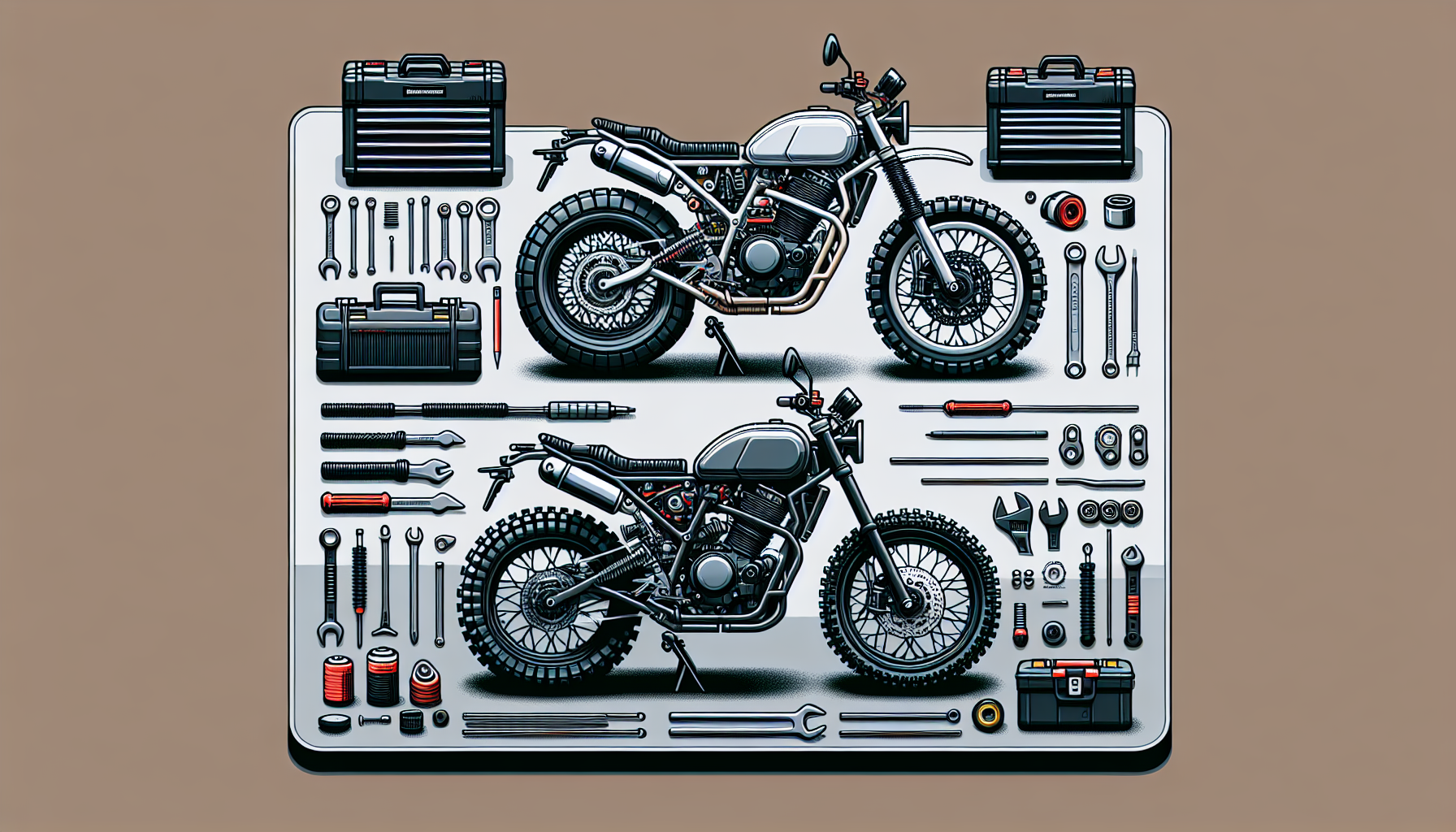
Scrambler conversions turn a standard street motorcycle into a machine that can handle broken pavement, gravel roads, fire trails, and everyday commuting with equal confidence. In custom culture, a scrambler is not just a styling exercise with knobby tires and a high pipe. It is a practical project bike category built around suspension travel, wheel choice, ground clearance, rider control, and durability. I have worked on enough mixed-use builds to know the difference between a bike that only looks rugged in photos and one that survives washboard roads, creek crossings, and long days standing on the pegs.
For riders exploring project bikes, scrambler conversions matter because they sit at the sweet spot between cost, usability, and character. A donor bike that starts as a UJM, retro twin, lightweight single, or even a middleweight naked can become an off-road capable custom without the complexity of building a full rally machine. The best scrambler builds respect the base motorcycle’s geometry and limitations while improving traction, ergonomics, braking feel, and protection. This makes the category ideal as a hub topic within custom culture: it touches fabrication, parts sourcing, budget planning, workshop technique, registration rules, and riding purpose.
Before turning wrenches, define the key terms. A donor bike is the base motorcycle being modified. Ground clearance is the space between the lowest hard part and the terrain. Suspension travel is the total movement available at the fork and rear shocks. Unsprung weight includes wheels, tires, brake assemblies, and other components not supported by the suspension, and reducing it improves control. A project bike is any machine rebuilt or modified in stages, often with a target use case and budget. In a scrambler conversion, the target use case should be explicit: gravel touring, city riding with trail capability, weekend green lanes, or aggressive dual-surface fun.
That clarity matters because every decision has tradeoffs. More aggressive tires add grip off-road but often reduce road manners and tread life. Longer suspension can improve bump absorption but may upset steering geometry. A high-mounted exhaust looks correct and helps with obstacle clearance, yet heat management and leg protection become serious concerns. The smartest builders start with function, then style follows naturally. If you are creating a project bike hub page, this is the central lesson that supports every related article: successful custom motorcycles are designed backward from the riding environment, not forward from a mood board.
Choosing the Right Donor Bike for a Scrambler Conversion
The best donor bike for a scrambler conversion is usually simple, mechanically healthy, and common enough that parts are easy to source. In my experience, air-cooled twins from Triumph, Honda, Yamaha, Suzuki, and Kawasaki remain popular because they offer accessible frames, straightforward electronics, and predictable maintenance. Singles such as the Yamaha SR400, Suzuki DR650, Honda XR-based street conversions, or Royal Enfield Bullet and Himalayan platforms are also strong candidates. Modern fuel-injected naked bikes can work, but added sensors, ABS routing, and tightly packaged exhaust systems increase labor and cost.
Engine character matters more than peak horsepower. A usable scrambler needs controllable torque at low and midrange rpm, not a race-bike top end. Weight also matters. A 180-kilogram machine with balanced steering, decent leverage, and proper tires is often more effective on rough surfaces than a heavier bike with a powerful engine and limited suspension. Frame layout is another filter. A double-cradle or semi-cradle frame usually gives more mounting options for skid plates and lower protection. Subframe strength is important if you plan to carry luggage, run side panels, or reposition the seat line.
Condition should outrank bargain price. Compression, charging output, wheel bearing play, steering head smoothness, rust inside the tank, fork stanchion damage, and the state of the wiring loom all affect build cost. I have seen cheap donor bikes become expensive because the owner chased appearance mods before correcting worn fork bushings, stretched chains, or weak stators. For project bikes, the right starting point is a motorcycle with a clean title, strong engine health, and a complete set of hard-to-find components like airbox parts, side covers, and instrument mounts.
| Donor type | Why it works | Main limitation | Best use case |
|---|---|---|---|
| Air-cooled twin | Simple layout, strong aftermarket, classic proportions | Usually heavier than singles | Road-biased scrambler with gravel capability |
| Lightweight single | Low weight, good torque, easier trail manners | Less comfort at highway speed | Backroad and green-lane project bike |
| Retro factory platform | Already close in style and ergonomics | Higher entry cost | Clean conversion with moderate fabrication |
| Modern naked bike | Better brakes and electronics | Complex packaging and limited protection options | Performance-focused urban scrambler |
As a hub for project bikes, donor selection connects directly to articles on budget builds, first-time custom projects, and platform-specific guides. It is the decision that determines every later compromise.
Core Modifications That Make a Bike Truly Off-Road Capable
A real scrambler conversion starts with the chassis. Tires are the first major change because they transform confidence immediately. For mixed-surface use, 50/50 or 60/40 patterns from brands such as Pirelli, Michelin, Mitas, Continental, and Dunlop offer a practical balance. Tire width should remain sensible. Oversized rear tires often look dramatic but slow steering and reduce compliance on uneven terrain. Tube versus tubeless setup depends on wheel type; cast wheels can survive gravel but spoked wheels generally handle repeated impacts better, especially when paired with appropriate rim widths and tire pressures.
Suspension is the next priority. Heavier springs alone do not create off-road performance; damping control and usable travel are what riders feel. Upgraded fork springs matched to rider weight, cartridge emulators on older damper-rod forks, and quality rear shocks from YSS, Hagon, Ikon, Öhlins, or K-Tech make a bigger real-world difference than cosmetic accessories. If you increase ride height, check rake, trail, chain run, side stand length, and brake hose slack. A bike that gains 30 millimeters of suspension without geometry correction can become nervous on tarmac or wallowy on dirt.
Protection is essential. A skid plate should mount to robust points and clear the exhaust, drain plug, and frame movement. Engine guards can help at low speed, though poorly designed bars may transfer impact loads into the frame. Handguards protect levers and hands from brush and crashes. High-mounted front fenders can improve mud clearance, but they need careful bracing and hose routing to avoid instability. Wide handlebars, serrated foot pegs, and a seat that lets the rider shift weight fore and aft matter as much as hard parts because control begins with rider position.
Exhaust, intake, and fueling changes should be handled conservatively. Many project bikes lose reliability because builders fit open pipes and pod filters without understanding fueling. On carbureted bikes, jetting must be corrected for intake and exhaust changes, preferably with plug readings, throttle-position testing, and attention to temperature. On EFI bikes, fueling modules or ECU reflashes may be required. The goal is tractable delivery, not noise. Off-road riding rewards smooth throttle pickup, strong low-end response, and manageable heat more than dyno-sheet gains.
Fabrication, Fitment, and Workshop Planning
Most scrambler conversions become expensive not because parts are costly, but because fitment was underestimated. The workshop phase demands measuring before ordering. Check fork diameter, axle spacing, shock length, chain alignment, wheel offset, caliper bracket compatibility, and clearance at full suspension compression. Remove the springs and cycle the suspension if necessary. This is the only reliable way to verify tire-to-fender, tire-to-swingarm, and chain-to-guide clearance. I have prevented more than one cracked mudguard and cut tire by doing this basic step before final assembly.
Fabrication should be reversible where possible. Bolt-on brackets for lights, number boards, luggage loops, and heat shields preserve resale value and simplify maintenance. Cutting the rear subframe can clean up the silhouette, but it changes seat options, weight distribution, and passenger practicality. If you shorten a subframe, reinforce properly and keep local inspection rules in mind. Electrical planning is equally important. Relocating the battery, regulator-rectifier, and fuse box may improve appearance, yet heat, vibration, and water ingress become bigger concerns off-road. Use proper connectors, abrasion-resistant sleeving, and secure mounting points.
Tooling affects quality. At minimum, a serious project bike builder should have a torque wrench, bearing drivers, a multimeter, calipers, thread repair tools, soldering equipment, and a way to safely lift the bike. Service literature is non-negotiable. Factory workshop manuals provide torque values, wear limits, and procedures that online forums often get wrong. For fabricated parts, use cardboard templates before cutting metal, and account for service access. A beautiful skid plate that blocks oil changes or a custom side panel that requires seat removal plus wiring disassembly will become a long-term irritation.
This is where a project bike hub earns its value. Related topics naturally branch into welding basics, garage layout, tool kits for custom builds, and how to inspect a used motorcycle before purchase. Scrambler conversions are one of the clearest examples of why planning beats improvisation.
Budget, Reliability, and Legal Considerations
The most overlooked truth in custom culture is that budget discipline creates better motorcycles. Set spending tiers before you buy the donor: safety-critical, performance-critical, cosmetic, and optional. Safety-critical includes tires, brakes, wheel bearings, chain and sprockets, cables, and lighting. Performance-critical includes suspension, ergonomics, and protection. Cosmetic parts come last. I routinely advise builders to reserve 15 to 20 percent of the budget for unexpected repairs because old bikes reveal hidden problems once disassembled. That reserve often covers carb rebuilds, fork tubes, electrical faults, or fasteners ruined by corrosion.
Reliability should be engineered in from the start. Use OEM-quality consumables where it matters. SKF or NTN bearings, EBC or Brembo brake components where appropriate, DID or RK chains, and correct-grade stainless or zinc-coated hardware improve long-term durability. Apply threadlocker only where specified, grease pivots correctly, and route cables for full steering lock with no tension. Water resistance is especially important on scramblers. Dielectric grease on connectors, properly vented fuel systems, and protected air intakes prevent the sort of failures riders blame on “bad luck.” Most repeated breakdowns on project bikes trace back to preventable assembly errors.
Legal issues vary by region, but common concerns include exhaust noise, turn signal spacing, tire load ratings, fender coverage, plate mounting angle, lighting compliance, and emissions equipment. In the United Kingdom, MOT standards can affect lighting and structural changes. In the United States, state inspection rules differ widely. In the European Union, homologation and approval requirements can be stricter. Before welding or deleting parts, verify what keeps the motorcycle road legal and insurable. It is frustrating to finish a conversion that cannot pass inspection or that creates liability after an accident.
Insurance is another practical detail many builders miss. Declared modifications may change premiums, but undeclared changes can create claim disputes. Photograph the build, keep receipts, and document major work. For a project bike hub page, this section points naturally toward companion articles on custom bike insurance, budgeting a build, and making modified motorcycles street legal.
Common Mistakes and What a Finished Scrambler Should Feel Like
The most common mistake is building for a photo shoot instead of a riding scenario. High pipes that roast the rider’s leg, flat tracker seats that hinder movement, ultra-short fenders that spray mud into the airbox, and cheap universal shocks that look right but perform terribly are all familiar problems. Another mistake is copying one platform’s solution onto another. A fork swap that works on a CB750 may create impossible steering stem issues on an XS650. Every donor bike has its own geometry, strength points, and aftermarket support limits.
A finished scrambler should feel coherent. On the road, it should track straight, absorb potholes without kicking off line, and steer with light but predictable inputs. On gravel, it should let the rider stand comfortably, weight the front wheel, and use throttle to adjust direction without abrupt fueling. Brakes should be progressive, not grabby. The engine should pull cleanly from low rpm, and nothing should rattle loose after an hour on rough ground. That sense of coherence is the true standard for project bikes. It tells you whether the builder understood the machine as a system, not as a collection of trendy parts.
Use this scrambler conversions guide as the foundation for your wider project bike journey. Start with a realistic donor, spend first on safety and control, fabricate with serviceability in mind, and respect legal and mechanical limits. Done properly, a standard bike can become an off-road beast that still works on Monday morning. Explore the related project bike articles in this hub, map your build before buying parts, and create a scrambler that earns its stance every time the pavement ends.
Frequently Asked Questions
What actually makes a motorcycle a real scrambler conversion instead of just a cosmetic build?
A real scrambler conversion is defined by function first and appearance second. Plenty of bikes wear block-pattern tires, a bench seat, and a high-mounted exhaust, but those parts alone do not make the motorcycle better off pavement. A proper scrambler build is designed to improve control, traction, durability, and confidence on mixed surfaces such as broken asphalt, gravel roads, fire trails, and rough backroads. That means looking at suspension travel and damping, wheel and tire sizing, ground clearance, rider ergonomics, handlebar leverage, skid protection, gearing, and the bike’s ability to absorb repeated hits without shaking itself apart.
In practical terms, a true scrambler conversion starts with how the bike behaves when traction is inconsistent and the surface is uneven. The suspension should have enough travel and quality damping to keep the tires in contact with the ground rather than bouncing across it. The riding position should let the rider sit comfortably on the road and stand naturally when terrain gets rough. The wheels and tires should be chosen for the intended balance of pavement and dirt use, not just for looks. Ground clearance matters because vulnerable components like the exhaust, sump, and frame rails need to survive rocks, ruts, and debris. Even details such as footpeg choice, bar width, and brake feel affect whether the bike is manageable when surfaces deteriorate.
Durability is another major separator. A cosmetic scrambler may look the part in photos, but a real one uses secure mounting points, dependable electrical routing, protected controls, and components that can withstand vibration and contamination. If the build cannot handle repeated use on rough terrain without loosening fasteners, bottoming the suspension, or smashing low-hanging parts, it is not truly built for the job. The best scrambler conversions are balanced motorcycles that still commute well, corner predictably on pavement, and remain controllable when the road ends. That broad competence is what makes the category so appealing.
What is the best base motorcycle for a scrambler conversion?
The best base motorcycle is not always the most fashionable one. It is the platform that gives you the strongest starting point for your goals, budget, mechanical ability, and intended terrain. In general, a good scrambler donor bike is mechanically simple, reasonably light, easy to find parts for, and built around a riding position that can be adapted for both seated and standing use. Mid-sized standards, twins, singles, and older universal Japanese motorcycles are common choices because they offer straightforward frames, broad aftermarket support, and fewer packaging complications than fully faired sport bikes or very low cruisers.
Weight matters more than many first-time builders realize. A heavy street bike can be converted into a scrambler-style machine, but if it remains excessively heavy with limited suspension and low clearance, it will always be harder to manage on loose terrain. Lighter motorcycles are easier to pick up, easier to control at low speed, and less punishing when the surface gets unpredictable. Engine character also matters. A broad, tractable powerband is far more useful on dirt and gravel than a peaky engine that demands constant high-rpm riding. Torque, smooth fueling, and predictable throttle response make a bike much friendlier off road than outright horsepower does.
Chassis design should also guide your choice. Bikes with enough room for longer shocks, more versatile wheel options, and practical exhaust routing are usually better candidates. If the frame geometry, subframe strength, or exhaust layout severely limit tire clearance and suspension improvement, the project becomes expensive quickly. It is also smart to think about brake setup, wheel sizes, and whether the bike’s electronics are simple or complex. A modern bike with ABS, ride-by-wire, and tightly integrated sensors can still be converted, but the process may be far more involved than working on a simpler standard motorcycle.
For many riders, the best donor is the one that already gets 60 to 70 percent of the way there. If the motorcycle has upright ergonomics, modest weight, reliable mechanicals, and enough aftermarket support to improve suspension, protection, and tires, it is often a strong candidate. The smartest builds begin with honesty about intended use. If you mostly ride pavement with occasional gravel and rough roads, a converted standard can work brilliantly. If you want serious trail capability, starting with a platform that already has off-road-friendly geometry and suspension may save money and produce a much better result.
Which modifications matter most if I want my bike to perform better off road?
The most important modifications are the ones that improve control and resilience rather than appearance. Tires are usually the first major upgrade because they determine how much grip and stability you have on loose surfaces. The right tire depends on your real riding split. A 70/30 or 50/50 dual-sport tire can transform confidence on gravel and hard-packed dirt while still remaining usable on pavement. After tires, suspension is typically the next big priority. Better springs, improved damping, and carefully chosen ride height changes do more for real-world scrambler performance than decorative bodywork ever will.
Rider ergonomics are equally important. Wider handlebars can provide more leverage, making the bike easier to correct on rough terrain. Proper footpegs, especially those with better grip and support, improve control when standing. Handlebar position, peg placement, and seat shape should work together so the rider can shift body position naturally. A scrambler that forces an awkward crouch or makes standing difficult will feel compromised the moment the road deteriorates. Controls should also be tuned for mixed-surface use, including clutch feel, brake lever reach, and throttle response.
Protection upgrades are often overlooked until the first impact. A skid plate, handguards, durable engine protection, and sensible routing of exposed hoses or electrical components can prevent minor incidents from becoming ride-ending failures. Ground clearance should be addressed if the bike has low exhaust routing or vulnerable components beneath the engine. Exhaust changes can help, but they should be chosen for clearance and heat management, not just style or sound. On many builds, modest gearing changes are also worthwhile. Lower gearing can improve slow-speed tractability and make the bike easier to manage on climbs, loose surfaces, and technical sections.
It is also important to keep modifications balanced. Adding aggressive tires without improving suspension can create a bike that looks capable but still deflects and bottoms out. Raising ride height without considering steering geometry can make the bike nervous on pavement. Installing a loud high pipe without checking rider heat, luggage compatibility, or passenger clearance can introduce new problems. The strongest scrambler conversions prioritize a coherent package: tires for traction, suspension for composure, ergonomics for control, protection for durability, and setup changes that match how the bike will actually be ridden.
Do I need to change the wheels, suspension, and exhaust for a proper scrambler build?
Not always, but those are three of the most influential areas in any serious conversion. Whether you need to change them depends on the limitations of the base bike and the level of off-road performance you expect. Wheels matter because diameter, width, and construction affect tire choice, obstacle rollover, steering feel, and durability. A larger front wheel can improve confidence on rough surfaces and loose terrain, but wheel swaps are not always simple. They can involve brake compatibility, axle spacing, fender clearance, speed sensor placement, and geometry changes. If your existing wheels already support useful dual-sport tire options and your riding will be relatively mild, a full wheel conversion may not be necessary.
Suspension, however, is often the area where meaningful improvement is most needed. Many standard street motorcycles are undersprung or underdamped for rough terrain, and their stock travel may be limited. Even if you do not perform a dramatic long-travel conversion, upgrading fork internals, fitting better rear shocks, and selecting spring rates for rider weight and intended use can make a major difference. Good suspension does not just make the bike softer. It improves tire contact, stability under braking, comfort over washboard surfaces, and control when the bike is loaded with gear or ridden aggressively on poor roads.
Exhaust changes are more situational than many people assume. A high exhaust is associated with classic scrambler style, and in some cases it does improve ground clearance and water crossing safety. But it is not mandatory for every build. If the stock system is already tucked in well and does not limit suspension, tire clearance, or lean angles over rough ground, leaving it alone can save money and complexity. High pipes also bring challenges such as heat shielding, passenger safety, possible luggage interference, and noise compliance. If you change the exhaust, it should be because it solves a clearance or durability problem, not because every scrambler is expected to wear one.
So the short answer is no, you do not automatically need to change all three. But you should evaluate all three carefully. Wheels influence capability and tire options, suspension determines how well the bike actually handles rough ground, and exhaust routing affects clearance and practicality. A good conversion improves the areas that genuinely hold the platform back and avoids expensive changes that contribute more to image than performance.
Can a scrambler conversion still be comfortable and reliable enough for everyday commuting?
Yes, and that is one of the biggest advantages of a well-executed scrambler build. The goal is not to create a